French Medical Terms: Learn Essential Health Terms With Pronunciation Audio
最終更新日: 2026年4月6日

Learning French medical vocabulary might seem like a niche goal, but it's actually super practical. Whether you're planning to work in healthcare in France, studying medicine in a French-speaking country, or just want to navigate a doctor's visit while traveling, knowing the right terms can make a huge difference. Plus, medical French has this interesting history where tons of English medical terms actually come from French roots. Pretty convenient when you start noticing the connections!
- Why French medical vocabulary shows up everywhere in English
- General medical vocabulary you'll actually use
- French medical terms for common illnesses
- Emergency phrases and urgent care
- General medical terms for healthcare professionals
- Pharmacy and medication vocabulary
- Cultural differences in French healthcare
- Making medical terminology stick long term
- French resources for mastering French medical terminology
Why French medical vocabulary shows up everywhere in English
Here's something interesting. When you look at English medical terms, you'll find French all over the place. Words like "malaise," "triage," and "ambulance" came straight from French into English medical vocabulary. This happened because French was the language of medicine and science for centuries in Europe.
The thing is, French medical vocabulary in English isn't just about borrowed words. The whole structure of how we name medical conditions often follows French patterns. Think about terms like "grand mal" seizures or "petit mal" seizures. We kept the French because it sounded more professional and precise.
Medical schools in France were leading institutions during the development of modern medicine. Doctors and researchers published their findings in French, and those terms stuck around globally. Even today, when you're learning medical terminology in English, you're actually learning a lot of French without realizing it.
General medical vocabulary you'll actually use
Let's start with the basics you'd need in any medical situation.
French | English |
|---|---|
le médecin | Doctor |
l'hôpital | Hospital |
la pharmacie | Pharmacy |
When you're describing symptoms, you need:
French | English |
|---|---|
la douleur | Pain |
la fièvre | Fever |
la toux | Cough |
nauséeux / nauséeuse | Nauseous |
fatigué / fatiguée | Tired |
Body parts are essential.
French | English |
|---|---|
la tête | Head |
le bras | Arm |
la jambe | Leg |
le ventre | Stomach / Belly |
le dos | Back |
So "J'ai mal à la tête" means "I have a headache."
For appointments and consultations:
French | English |
|---|---|
le rendez-vous | Appointment |
l'ordonnance | Prescription |
les symptômes | Symptoms |
une analyse de sang | Blood test |
une radiographie | X-ray |
French medical terms for common illnesses
When you're actually sick, you need specific vocabulary.
French | English |
|---|---|
le rhume | Cold |
la grippe | Flu |
une infection | Infection |
une allergie | Allergy |
l'asthme | Asthma |
la diarrhée | Diarrhea |
la constipation | Constipation |
le diabète | Diabetes |
l'hypertension | High blood pressure |
l'arthrite | Arthritis |
une maladie cardiaque | Heart disease |
une fracture | Fracture / Break |
une entorse | Sprain |
une coupure | Cut |
une brûlure | Burn |
une ecchymose / un bleu | Bruise |
Emergency phrases and urgent care
Emergency vocabulary can literally save your life or someone else's.
French | English |
|---|---|
urgence | Emergency |
les urgences | Emergency room |
Au secours! | Help! |
Aidez-moi! | Help me! |
une crise cardiaque | Heart attack |
un accident vasculaire cérébral / AVC | Stroke |
une réaction allergique grave | Severe allergic reaction |
de l'adrénaline | Adrenaline |
EpiPen | EpiPen |
inconscient / sans connaissance | Unconscious |
Il ne respire pas. | He's not breathing. |
Elle saigne beaucoup. | She's bleeding a lot. |
- "J'ai besoin d'une ambulance" means "I need an ambulance." The emergency number in France is 15 for medical emergencies (SAMU), 17 for police, and 18 for fire department. The European-wide number 112 also works.
Who is your emergency contact? That's "Qui est votre contact d'urgence?" or "Qui est votre personne à contacter en cas d'urgence?"
General medical terms for healthcare professionals
Are you a doctor looking for tailor-made medical French lessons? Healthcare professionals need way more specialized vocabulary than tourists or casual learners.
Medical specialties have specific names.
French | English |
|---|---|
un chirurgien | Surgeon |
un anesthésiste | Anesthesiologist |
un radiologue | Radiologist |
une infirmière / un infirmier | Nurse |
un aide-soignant | Nursing assistant |
When examining patients, you'll use phrases like:
French | English |
|---|---|
Où avez-vous mal? | Where does it hurt? |
Depuis quand? | Since when? |
Sur une échelle de 1 à 10? | On a scale of 1 to 10? |
les antécédents médicaux | Medical history |
les antécédents familiaux | Family history |
Diagnostic terms get technical fast.
French | English |
|---|---|
le diagnostic | Diagnosis |
le pronostic | Prognosis |
le traitement | Treatment |
des examens complémentaires | Additional tests |
Prescribing medication requires precision.
French | English |
|---|---|
Prenez ce médicament trois fois par jour. | Take this medication three times a day. |
Avant les repas. | Before meals. |
Après les repas. | After meals. |
Au coucher. | At bedtime. |
Pharmacy and medication vocabulary
French pharmacies are different from American drugstores.
French | English |
|---|---|
le pharmacien / la pharmacienne | Pharmacist (trained healthcare professional who can give medical advice) |
un médicament | Medication / Medicine |
un médicament sur ordonnance | Prescription medication |
un médicament en vente libre | Over-the-counter medication |
un générique | Generic medication (usually cheaper than brand-name) |
le médicament de marque | Brand-name medication |
un antidouleur / un analgésique | Painkiller |
un antibiotique | Antibiotic (always requires a prescription in France) |
un antihistaminique | Antihistamine (for allergies) |
un anti-inflammatoire | Anti-inflammatory |
la posologie | Dosage |
les effets secondaires | Side effects |
les contre-indications | Contraindications |
déconseillés pendant la grossesse | Not recommended during pregnancy |
un comprimé | Tablet |
une gélule | Capsule |
un sirop | Syrup |
une pommade | Ointment / Cream |
des gouttes | Drops |
un spray | Spray |
Cultural differences in French healthcare
Understanding medical French vocabulary means understanding how healthcare works in France. The French healthcare system operates differently from American or British systems, and the vocabulary reflects that.
"La Sécurité sociale" is France's national health insurance system. Almost everyone has a "carte Vitale," a green card with a chip that handles insurance claims automatically. When you see a doctor, they'll ask for your "carte Vitale" first thing.
"Le médecin traitant" is your designated primary care doctor. You're supposed to register one with the Sécurité sociale, and you need to see them before specialists for better reimbursement rates. This system is called "le parcours de soins coordonnés."
French doctors often use "le tiers payant," meaning you don't pay upfront for the portion covered by insurance. You only pay your share directly. This is different from paying everything and getting reimbursed later.
"Une mutuelle" is supplementary private insurance that covers what the Sécurité sociale doesn't. Most French people have one because the national system doesn't cover 100% of costs.
Prescriptions in France use a color-coded system. The percentage of reimbursement depends on the medication's classification. Your pharmacist explains this when you pick up medications.
Making medical terminology stick long term
Learning medical vocabulary requires different strategies than casual French. These terms are technical and specific, so you need focused practice.
- Spaced repetition works incredibly well for medical terms. The vocabulary is large enough that you'll forget without systematic review. Using flashcard apps that schedule reviews based on how well you know each term saves tons of time.
- Creating associations helps with difficult terms. "Foie" (liver) sounds like "fwa," which you might connect to "foie gras" (fatty liver, literally). These connections, even silly ones, make terms stick.
- Grouping vocabulary by body systems or medical specialties gives you logical chunks instead of random lists. Learn all cardiovascular terms together, then move to respiratory terms.
- Using the vocabulary actively matters more than passive recognition. Practice describing symptoms in French, even to yourself. Explain medical procedures in French. The production effort cements the vocabulary.
- Reading French medical case studies or patient scenarios gives you context. You see how multiple terms work together in realistic situations, which beats isolated vocabulary lists.
French resources for mastering French medical terminology
- French TV shows like Hippocrate give you real hospital scenarios with authentic dialogue. You'll pick up not just vocabulary but how doctors and patients actually communicate in France. The formality levels, the way bad news gets delivered, the bedside manner, all that cultural context matters.
- Reading French health articles or patient information leaflets helps too. Websites like "Ameli.fr" (the French national health insurance site) use clear, accessible medical French. You can learn how French healthcare works while building vocabulary.
- Medical French podcasts exist specifically for learners. Some are designed for healthcare professionals moving to France, others for medical students. These usually explain terms in context and give you pronunciation practice.
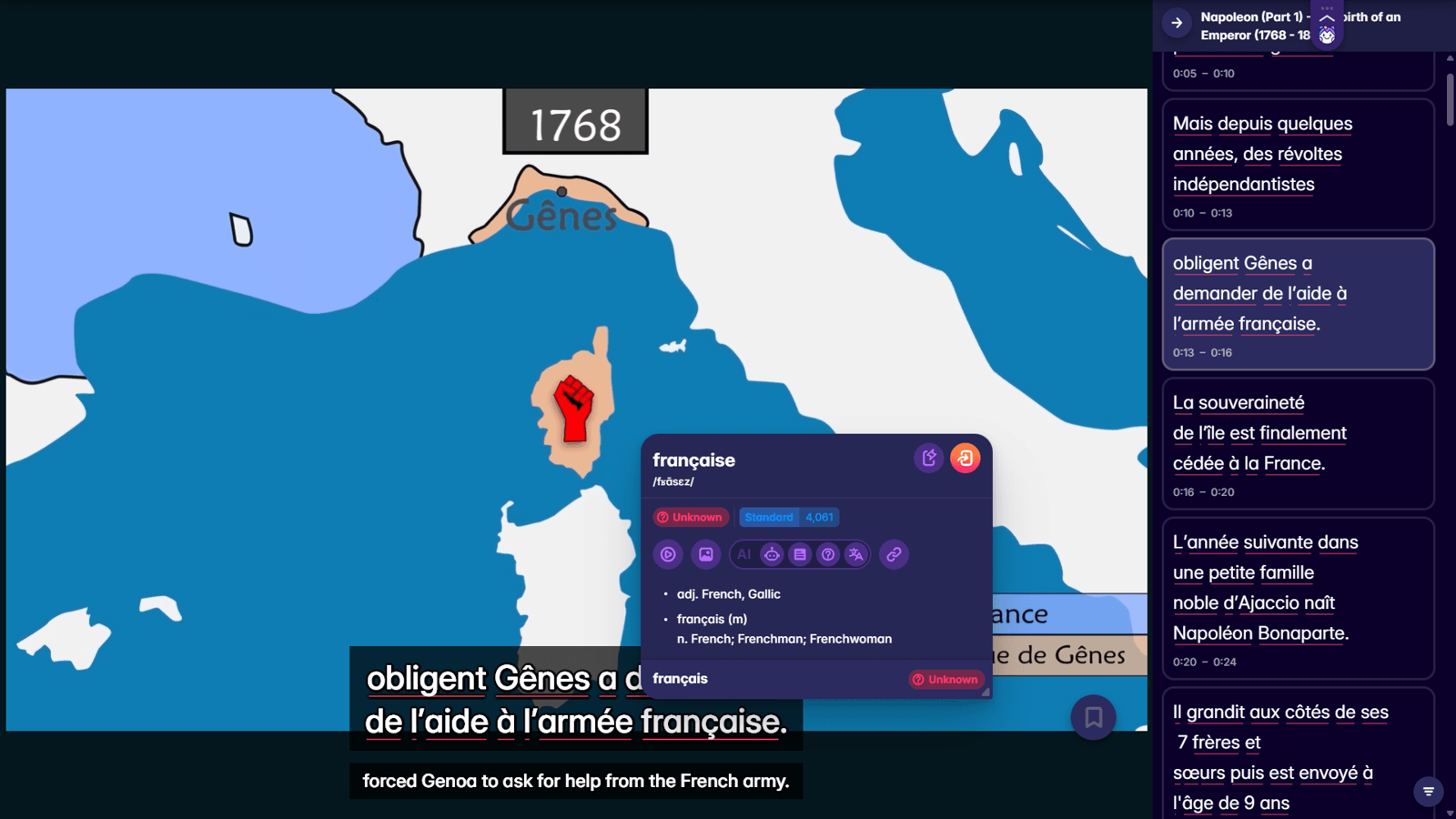
Anyway, if you want to use these strategies with actual French medical content, Migaku's browser extension and app let you look up medical terms instantly while watching French healthcare videos or reading French medical articles. Makes immersion learning way more practical. There's a 10-day free trial if you want to check it out.
Medical French vocabulary opens doors when you're pursuing healthcare work in France
The vocabulary builds on itself, starting with basic terms and expanding into specialized areas as you need them. Real immersion with French medical content beats textbook study every time. Watch French doctors explain procedures, read French health articles, and listen to French medical podcasts. You'll absorb vocabulary naturally while understanding how French healthcare actually works.
If you consume media in French, and you understand at least some of the messages and sentences within that media, you will make progress. Period.
Keep expanding your knowledge — it will come in handy one day!