French Shopping Vocabulary: Useful French Vocabulary You Need for Shopping
最終更新日: 2026年3月23日

Shopping in France is one of those experiences that can feel either incredibly rewarding or completely overwhelming depending on how much French you know. Walking into a boutique or browsing a local market becomes way more enjoyable when you can ask about prices, find your size, or haggle a bit at the farmers' market. This guide covers all the essential French shopping vocabulary you'll need to navigate stores, supermarkets, and markets like someone who actually knows what they're doing.
Types of shops you'll encounter in France
French-speaking countries have some pretty specific names for different types of stores, and knowing these will save you from wandering around lost. The general word for shop or store is "magasin" , but there are tons of specialized shops that each have their own name.
- A "boulangerie" is your bread shop, where you'll find baguettes, croissants, and other pastries.
- The "pâtisserie" focuses more on fancy cakes and desserts.
- You've got the "boucherie" for meat.
- The "poissonnerie" is for fish.
- The "fromagerie" is for cheese.
- For everyday shopping, you'll visit the "supermarché" (supermarket) or "hypermarché" (a massive supermarket, usually on the outskirts of town).
- Smaller convenience stores are often called "épicerie" .
- You might see "Carrefour City" or "Monoprix" which are chain stores.
- Clothing stores are "magasin de vêtements" or just "boutique" for smaller fashion shops.
- Pharmacies are "pharmacie" (pretty easy to remember), and you'll need to go there for basic medicine since French supermarkets don't sell that stuff like American ones do.
- The "marché" or market is where things get really fun. These outdoor or covered markets happen on specific days in most French towns, and you can buy fresh produce, cheese, meat, flowers, and sometimes clothes or household items.
Essential vocabulary for navigating stores
When you walk into any shop in France, you'll probably hear "Bonjour" from the staff. Always, always say "Bonjour" back. Seriously, this is important. French shopping culture is way more formal than just wandering around ignoring people.
Here are the basics you need:
French | English |
|---|---|
acheter | To buy |
vendre | To sell |
prix | Price |
coûter | To cost |
cher | Expensive |
bon marché | Cheap / Inexpensive |
pas cher | Not expensive |
caisse | Checkout / Cash register |
carte bancaire / carte | Credit / Debit card |
espèces | Cash |
reçu / ticket de caisse | Receipt |
When you want to ask how much something costs, you say "Combien ça coûte?" or more formally "Quel est le prix?"
If you're looking for something specific, you can ask "Avez-vous..." (Do you have...) or "Je cherche..." (I'm looking for...). The response might be "Oui, bien sûr" (Yes, of course) or "Non, désolé" (No, sorry).
You'll see signs pointing to "caisse" when it's time to pay. The person working there might ask "Ce sera tout?" (Will that be all?) before ringing you up.
French vocabulary for shopping clothes
Clothing shopping in France requires some specific vocabulary, especially since sizing works differently than in the US or UK.
The word for size is "taille" . When a shop assistant asks "De quelle taille?" they're asking what size you need. French sizes run differently from American or British sizes, so a French size 38 is roughly a US size 6 or UK size 10.
Here's the clothing vocabulary you'll use most:
French | English |
|---|---|
vêtements | Clothes in general |
chemise | Shirt (usually button-down) |
t-shirt | T-shirt |
pantalon | Pants / Trousers |
jean | Jeans |
robe | Dress |
jupe | Skirt |
manteau | Coat |
chaussures | Shoes |
pointure | Shoe size (differs from American sizing) |
cabine d'essayage / cabine | Fitting room |
When you want to try something on, ask "Est-ce que je peux l'essayer?" (Can I try this on?).
The staff might ask "Ça vous va?" which means "Does it fit you?" or more literally "Does it suit you?"
If something's too small, say "C'est trop petit" . Too big is "C'est trop grand" . You can ask "Avez-vous une taille plus grande?" (Do you have a bigger size?) or "une taille plus petite?" (a smaller size?).
Colors matter too when shopping. "Couleur" is color. Basic ones:
French | English |
|---|---|
noir | Black |
blanc | White |
rouge | Red |
bleu | Blue |
vert | Green |
jaune | Yellow |
gris | Gray |
marron | Brown |
Materials come up often:
French | English |
|---|---|
coton | Cotton |
laine | Wool |
soie | Silk |
cuir | Leather |
polyester | Polyester |
Grocery shopping and supermarket phrases
The supermarket is where you'll probably use French shopping vocabulary most often, especially if you're staying in France for any length of time.
"Faire les courses" means to go grocery shopping. The shopping cart is "caddie" or "chariot". A basket is "panier".
Produce section vocabulary is super useful.
French | English |
|---|---|
fruits et légumes | Fruits and vegetables |
pomme | Apple |
orange | Orange |
banane | Banana |
tomate | Tomato |
carotte | Carrot |
pomme de terre | Potato |
oignon | Onion |
salade | Lettuce / Salad |
Dairy section:
French | English |
|---|---|
lait | Milk |
beurre | Butter |
fromage | Cheese |
yaourt / yogourt | Yogurt |
crème | Cream |
Meat and fish:
French | English |
|---|---|
viande | Meat |
poulet | Chicken |
boeuf | Beef |
porc | Pork |
poisson | Fish |
saumon | Salmon |
Bakery items:
French | English |
|---|---|
pain | Bread |
baguette | Baguette |
croissant | Croissant |
pain de mie | Sandwich bread |
Quantities matter when shopping.
French | English |
|---|---|
un kilo | A kilogram |
une livre | 500 grams (literally a pound, but it's actually 500g in France) |
cent grammes | 100 grams |
une bouteille | A bottle |
une boîte | A can or box |
un paquet | A package |
Market shopping and interacting with vendors
The outdoor market experience in France is totally different from supermarket shopping. Vendors are usually way more talkative and helpful, and there's a bit of an art to shopping there.
You'll hear vendors calling out their prices and specials. "Deux euros le kilo!" (Two euros per kilo!) or "Trois pour cinq euros!" (Three for five euros!).
Don't just grab produce yourself at French markets. Usually the vendor picks items for you. You tell them what you want: "Je voudrais trois tomates, s'il vous plaît" (I would like three tomatoes, please). They'll pick them out and bag them.
Useful market phrases include "C'est combien?" (How much is it?), "Je peux goûter?" (Can I taste?), especially useful at cheese or olive stands.
"Ça fait combien?" means "How much does that come to?" when you're ready to pay for everything you've selected.
Some vendors might give you "un petit extra" (a little extra) if they like you or you're a regular customer. Just smile and say "Merci, c'est gentil" (Thanks, that's kind).
Common shopping phrases and questions
Let me give you some complete phrases you can use in real shopping situations.
When entering a shop:
- Bonjour, je regarde.
Hello, I'm just looking. - Bonjour, je cherche un cadeau.
Hello, I'm looking for a gift.
Asking for help:
- Excusez-moi, où se trouve...?
Excuse me, where is...? - Pouvez-vous m'aider?
Can you help me? - Avez-vous ça en bleu?
Do you have this in blue?
At the checkout:
- Je peux payer par carte?
Can I pay by card? - Acceptez-vous les cartes étrangères?
Do you accept foreign cards? - J'ai besoin d'un sac.
I need a bag.
Returns and exchanges:
- Je voudrais échanger ceci.
I would like to exchange this. - Je voudrais me faire rembourser.
I would like a refund. - Avez-vous le reçu?
Do you have the receipt? (This is what they'll ask you)
General polite phrases:
- Merci beaucoup.
Thank you very much. - Bonne journée.
Have a good day. (when leaving) - Au revoir.
Goodbye.
Guide to the shopping culture in France
Beyond just vocabulary, shopping in France has some cultural expectations that are worth knowing.
- French shops, especially smaller boutiques, are way more formal than American stores. Always greet the shopkeeper when you enter and say goodbye when you leave. Ignoring the staff is considered super rude.
- In markets and small shops, don't touch produce unless the vendor hands it to you. This is the opposite of American supermarkets, where you pick through everything yourself.
- Shop hours are different. Many stores close for lunch, especially in smaller towns. Sunday shopping is limited. Don't assume stores are open when you want them to be.
- Haggling isn't really done in regular stores, but at flea markets ("marché aux puces") or antique markets, you can politely negotiate. Use phrases like "Vous pouvez faire un prix?" (Can you give me a better price?) or "C'est votre meilleur prix?" (Is that your best price?).
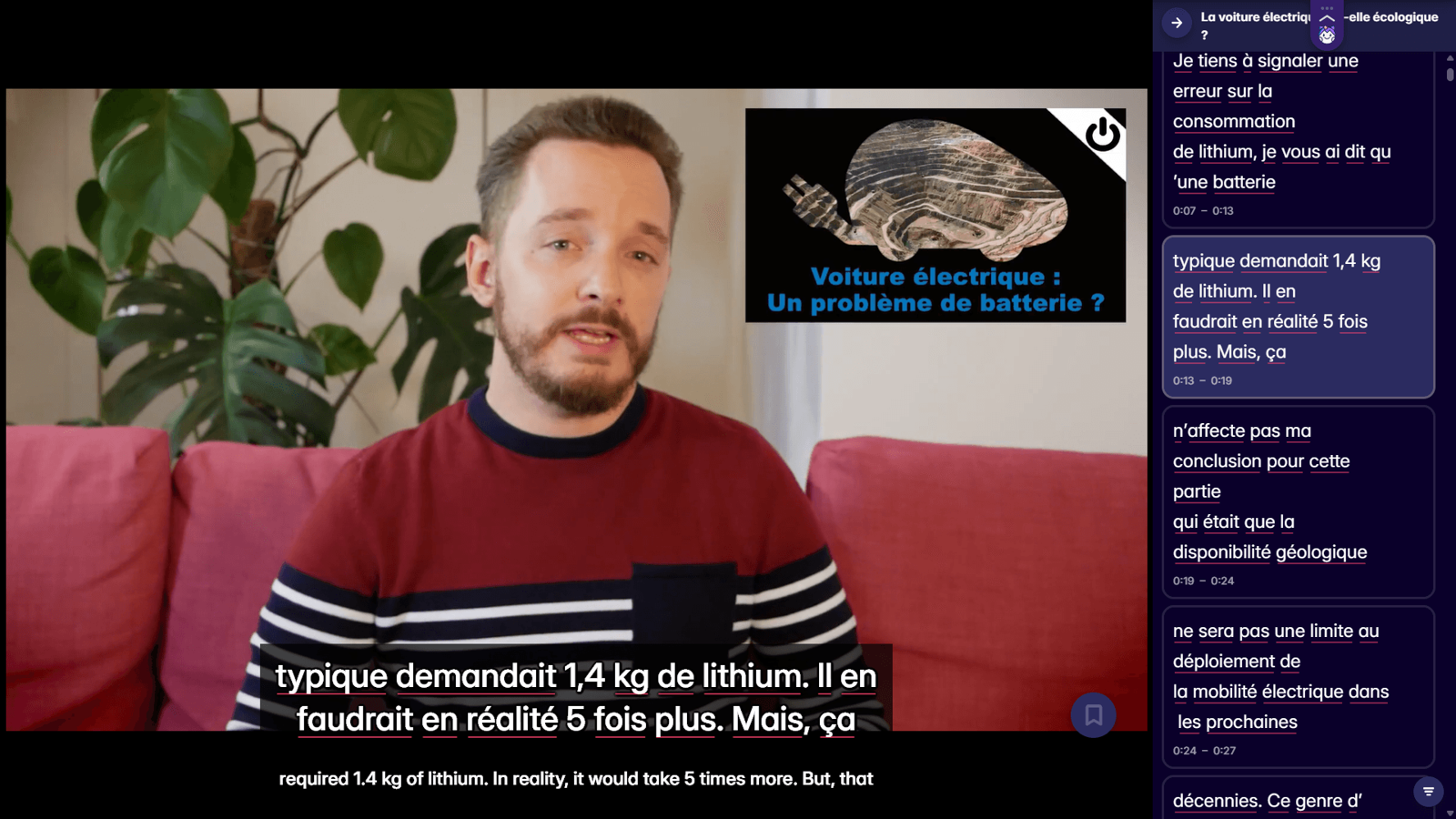
Anyway, if you want to practice this vocabulary with real French content, Migaku's browser extension lets you look up words instantly while watching French shows or reading French websites. Makes learning from real-world content way more practical. There's a 10-day free trial if you want to check it out.
Are you excited for your shopping trip?
The vocabulary itself is just a tool. The real goal is being able to walk into any shop or market in France and feel comfortable navigating the experience. That confidence comes from practice, making mistakes, and gradually building up your ability to understand and respond.
Start with one type of shopping that's relevant to you. And the next step is to go through lists of vocabulary related to that, and watch many travel vlogs about it. This targeted approach can prepare you faster than browsing through vocabulary aimlessly.
If you consume media in French, and you understand at least some of the messages and sentences within that media, you will make progress. Period.
The beauty of shopping vocabulary lies in its practicality.