Playa del Carmen for Digital Nomads: Coworking, Beaches, Visa Options
最終更新日: 2026年5月30日
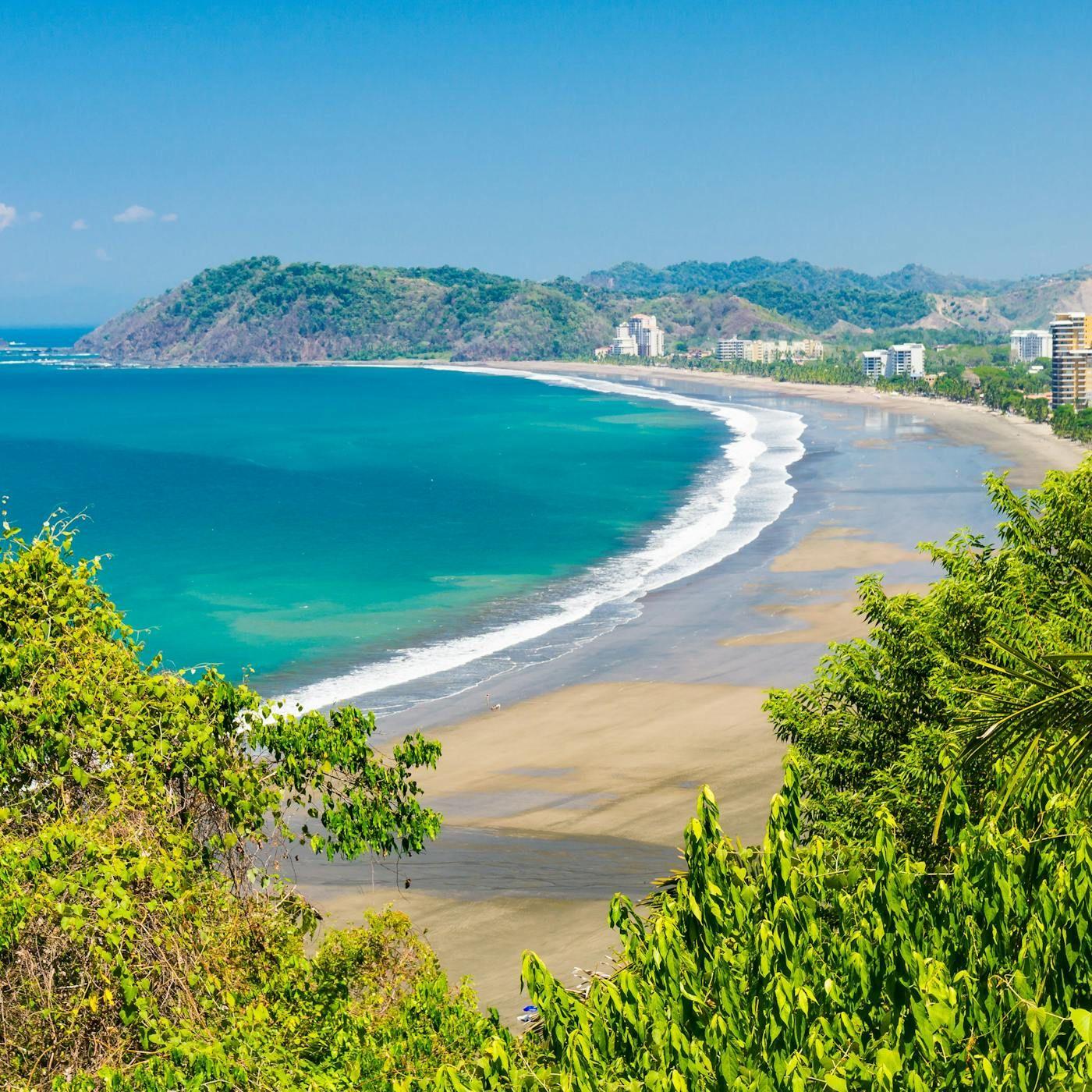
Playa del Carmen sits on Mexico's Caribbean coast in the state of Quintana Roo, and in 2026 it remains one of Latin America's most established bases for remote workers thanks to fiber internet, walkable beach neighborhoods, and a straightforward path to legal residency. This guide covers the visa routes, current costs, coworking options, and the practical pitfalls you should plan around before booking a one-way flight.
Last updated: May 30, 2026
Why Playa del Carmen Works for Remote Workers
Playa, as residents call it, is about an hour south of Cancún International Airport and roughly 65 km north of Tulum. It's smaller and more compact than Mexico City or Guadalajara, which suits nomads who want to live without a car, walk to the beach, and find a coworking desk within a 10-minute bike ride.
The city's character has shifted over the past decade from beach-town backpacker stop to a year-round expat hub, with sizable Argentinian, Italian, French, American, and Canadian communities. English is widely spoken in tourist zones and coworking spaces, but daily errands (utility offices, the bank, the local market) still happen in Spanish.
Key practical advantages for nomads:
- No dedicated digital nomad visa, but the Temporary Resident Visa is well-suited to remote workers and grants up to four years of legal stay.
- Fiber internet is widely available, with average broadband download speeds of 77.5 Mbps and upload of 63.0 Mbps as of late 2025.
- Quintana Roo recorded a 76% reduction in intentional homicides in early 2026 compared to 2024, per SESNSP data.
- Time zone (Eastern Standard Time, no DST) overlaps with the US East Coast year-round, useful for clients in New York or Toronto.
Visa Options for Remote Workers
Mexico has no dedicated digital nomad visa. Three legal stay options are relevant in 2026.
Tourist permit (FMM)
Most short-stay visitors enter on the Forma Migratoria Múltiple. It allows a maximum of 180 calendar days as a single-entry document, with the actual length determined at the port of entry by the immigration officer. A growing number of travelers report receiving 30 days or fewer in 2026, so do not assume you'll get the full 180.
The 2026 FMM fee is MXN 983 (roughly USD 50–57). For air arrivals it's bundled into the airline ticket; land arrivals of 7 days or fewer are free. Cancún and most major Mexican airports now use a digital FMM (eFMM); paper forms remain at land crossings.
The FMM is not designed for long-term living. Border-running ("perpetual tourism") has become noticeably harder, with shorter stamps and more questioning.
Temporary Resident Visa (Residente Temporal)
This is the standard route for remote workers planning to stay longer than six months. It's initially valid for one year and renewable up to four years total.
Financial thresholds shifted in 2025–2026. Since July 2025, consulates calculate requirements based on the UMA (Unidad de Medida y Actualización), set at MXN 117.31 per day for 2026. Under current rules, applicants typically need:
- About USD 4,400 net monthly income over the previous 6 months, OR
- About USD 72,000–74,000 in savings or investments held over the previous 12 months.
Figures vary slightly by consulate, so confirm with the specific Mexican consulate you'll apply at.
Fees in 2026:
Item | Cost (2026) |
|---|---|
Consular visa application (US) | USD 56 |
1-year Temporary Resident card (INM, Mexico) | MXN 11,141 |
Conversion to Permanent Residency | MXN 13,579 |
Government residency card fees doubled in 2026 following legislation passed in autumn 2025, so older blog posts citing roughly half these amounts are outdated.
Processing at the consulate runs about 10 working days. After consular approval, you must enter Mexico and complete the canje (exchange) at the Instituto Nacional de Migración within 30 days of entry, or the approval becomes invalid.
For a comparison of how other countries structure their remote-worker permits, see this overview of digital nomad visa requirements.
Permanent Resident Visa
Generally reached after four years on temporary residency, or applied for directly with higher thresholds: roughly USD 7,400/month income or USD 300,000 in savings as of 2026. Useful if you plan to settle indefinitely, less relevant for nomads cycling between countries.
Document Checklist for the Temporary Resident Visa
Gather these before booking your consular appointment:
- Passport valid at least 6 months past intended entry, plus a photocopy of the bio page.
- Completed visa application form (Solicitud de Visa Mexicana), signed.
- One passport-style photo (white background, no glasses, varies slightly by consulate).
- Proof of finances: 6 months of bank statements showing the income threshold, OR 12 months of statements showing the savings threshold. Statements must be stamped or otherwise verified by the bank in many consulates.
- Proof of employment or self-employment (employer letter, business registration, or accountant letter for freelancers).
- USD 56 application fee, paid in the format the consulate specifies (often cashier's check or money order).
- For the in-Mexico canje step: proof of address in Mexico (a lease or utility bill), the consular visa sticker, the FMM/eFMM from your entry, and the INM application forms.
In early 2026, RENAPO rolled out a biometric CURP process requiring in-person fingerprint and facial verification. If you'll need a CURP (Mexico's unique population ID) or RFC (tax ID) for opening accounts, signing leases, or registering for utilities, plan a SAT appointment after you receive your residency card.
Cost of Living in 2026
Playa is no longer cheap by Mexican standards. Tourism demand keeps rents in the central zones close to Mexico City prices.
Expense | Typical monthly cost (early 2026) |
|---|---|
1-bedroom apartment, average | MXN 15,500 (~USD 870) |
1-bedroom range | MXN 13,500–17,500 (USD 755–980) |
2-bedroom apartment, average | MXN 20,000 (~USD 1,120) |
2-bedroom range | MXN 16,000–23,000 (USD 895–1,285) |
Single-person modest lifestyle | MXN 30,000–40,000 (USD 1,680–2,240) |
Single-person comfortable lifestyle | MXN 45,000–65,000 (USD 2,500–3,600) |
Housing typically consumes 35–45% of monthly budgets for expats. The popular zones (Centro, Playacar, Zazil-Ha) command tourism-market prices. Negotiating a 6- or 12-month lease in Spanish, paid in pesos, can knock 20–30% off the Airbnb rate for the same apartment.
For a sense of how nomad-popular cities compare on cost and lifestyle, this writeup on other popular digital nomad destinations is a useful reference point.
Neighborhoods and Where to Live
Playa is roughly organized around Quinta Avenida (5th Avenue), a pedestrian street running parallel to the beach.
- Centro (5–14 streets): Closest to the beach and 5th Ave bars and restaurants. Lively, noisy at night, easy for short stays.
- Zazil-Ha / Colosio: North of Centro. Quieter, more residential, popular with families and longer-term nomads. Many coworking spaces are along Avenida 10 in this stretch.
- Playacar (Fase I and II): Gated communities south of the ferry pier. Quieter, greener, walkable to the beach, higher rents.
- Ejidal / Gonzalo Guerrero: Inland, more local, cheaper rents but fewer amenities aimed at foreigners.
If you're comparing how nomads typically evaluate residential zones, this guide to the best neighborhoods for expats lays out a framework that translates well to Playa.
Coworking and Internet
Working from cafés is feasible but inconsistent, especially in high season (December–March). Most full-time nomads settle into a coworking membership.
- Nest Coworking (Av. 10 between Calle 12 and 14, Gonzalo Guerrero): monthly memberships from MXN 3,800 with 24/7 access.
- Bunker Coworking (Av. 10 Norte at Calle 38, Zazil-Ha): 500 Mbps fiber, unlimited printing, 24/7 access available from weekly plans.
- CoWork-In (Playacar Fase II): monthly memberships from MXN 2,100.
For home internet, the main residential fiber providers are Telmex (Infinitum), Izzi, and Totalplay. In Playa, Totalplay leads on download speeds (averaging 118.3 Mbps over the 12 months through September 2025) and Telmex leads on upload (averaging 83.7 Mbps). Typical Airbnb fiber connections deliver 30–80 Mbps. If your work involves video calls, ask the host for a screenshot of a recent speed test before booking.
Tourist Taxes and Local Fees
Quintana Roo charges several layered fees:
- VISITAX: Mandatory for foreign tourists visiting Quintana Roo. The 2026 rate is MXN 285 (~USD 15) per person, unchanged from 2025. Children under 4 are exempt; Mexican nationals and residents are exempt. The QR code is verified by scan at Quintana Roo airports on departure. Pay through the official portal visitax.gob.mx.
- Municipal lodging fee: MXN 54 per room per couple per night, collected by hotels at check-in.
- State and federal lodging tax: 6% state lodging tax plus 16% federal IVA on hotel rooms.
If you transition to legal residency, you stop owing VISITAX.
Taxes for Remote Workers
Mexico considers you a tax resident if you spend 183+ days in Mexico in a calendar year, OR if Mexico is your "center of vital interests" (50%+ of income from Mexican sources, or main place of professional activities).
Mexican tax residents are taxed on worldwide income via ISR (Impuesto Sobre la Renta) at 11 progressive brackets from 1.92% to 35%, with the top 35% rate beginning above MXN 3,898,140 (about USD 195,000) in 2026. Non-residents pay 15–30% on Mexican-source income only, with the first MXN 125,900 exempt.
Key 2026 deadlines and admin:
- Annual return (declaración anual): due April 30 following the tax year.
- Self-employed: monthly provisional payments due by the 17th.
- RFC (tax ID) requires a CURP plus a SAT appointment and in-person e.firma biometric enrollment, renewed every 4 years.
- Standard IVA (VAT) is 16%, reduced to 8% in the 20 km northern border zone (not relevant for Playa).
If you're a US citizen, remember you still file with the IRS regardless of where you live; Mexico and the US have a tax treaty but no totalization agreement on social security. Talk to a cross-border accountant before you cross the 183-day threshold.
Safety, Healthcare, and Common Pitfalls
The U.S. State Department maintains a Level 2 "Exercise Increased Caution" advisory for Quintana Roo, unchanged since August 12, 2025, the same level applied to France, Italy, and the UK. On February 22, 2026, the U.S. Mission Mexico issued a brief shelter-in-place advisory following security operations tied to a Jalisco cartel response; it was lifted the next day, with Quintana Roo returning to normal on February 23, 2026.
Practical safety habits:
- Use authorized taxis (sitio stands) or licensed ride-hail; avoid hailing unmarked cars at the ADO terminal late at night.
- Download the free "Guest Assist" app recommended by the U.S. Embassy for bilingual emergency services in Cancún, Playa del Carmen, Tulum, and Cozumel.
- Keep copies of your passport and residency card; carry only what you need.
- Watch the Sargassum forecast March through October; beach conditions vary by week.
For healthcare, Playa has private hospitals (Hospiten and Costamed are widely used by expats) and many English-speaking GPs. Most nomads carry international health insurance; once you have residency you can enroll in IMSS or buy private Mexican insurance, which is often cheaper than US-based international policies.
Common pitfalls:
- Missing the 30-day canje window after entering Mexico with a consular visa.
- Assuming the FMM gives you 180 days; check the actual date stamped or entered electronically.
- Importing vaping devices and e-cigarettes, which face import restrictions in Mexico.
- Underestimating high-season rents (December–March) when negotiating annual leases.
FAQs
Can I work remotely from Playa del Carmen on a tourist permit?
Mexican law tolerates remote work for a foreign employer or foreign clients while you're on an FMM, but it does not authorize you to work for Mexican entities. If you plan to stay longer than your stamp allows or want to open a Mexican bank account, apply for Temporary Residency.
How long does the Temporary Resident Visa actually take?
Around 10 working days at the consulate, plus the canje at INM in Mexico, which can take from 2 weeks to 2 months depending on the office's workload.
Do I need to speak Spanish?
You can survive in Playa without it. You'll live better with it. Bureaucratic processes (utilities, leases, INM, SAT) happen in Spanish, and outside the tourist core, English is hit-or-miss.
Is the internet reliable enough for video calls?
In most apartments with fiber, yes. Check the specific unit's connection before signing; older buildings sometimes still run on slower copper.
What about Tulum or Mérida instead?
Tulum is more expensive and has weaker infrastructure. Mérida is cheaper and safer but inland and hot, with no beach. Playa balances coastal access, infrastructure, and a larger nomad community.
If you're moving to Playa del Carmen and want daily life in Spanish to feel less like a hurdle, try Migaku to learn from Mexican shows, YouTube, and the conversations you'll actually have at the panadería.