Renewing Your Residence Card in Japan: Step by Step
最終更新日: 2026年5月29日
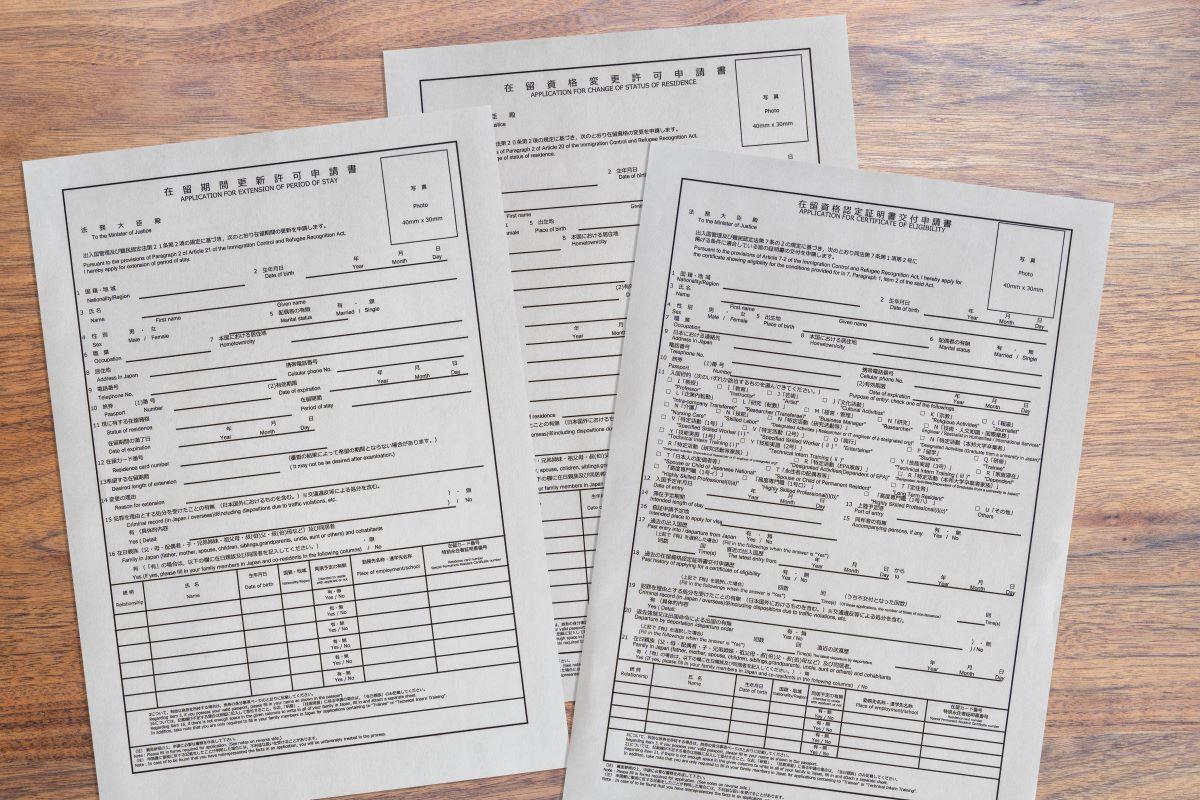
Renewing your residence card in Japan means filing either an Extension of Period of Stay (for most work, study, and family visas) or an Application for Renewal of Residence Card Validity Period (for permanent residents and Highly Skilled Professional ii holders) with the Immigration Services Agency of Japan (出入国在留管理庁). The process is straightforward if you start early, bring the right paperwork to the Regional Immigration Services Bureau that covers your registered address, and pay the correct revenue stamp fee.
Last updated: May 29, 2026
Who Needs to Renew, and When
There are two separate procedures that people often lump together under "residence card renewal." Knowing which one applies to you decides the form, the fee, and the timing.
- Extension of Period of Stay (在留期間更新許可申請): For most status holders (Engineer/Specialist in Humanities/International Services, Student, Dependent, Spouse of Japanese National, Business Manager, etc.). Your visa status has an expiry date, and you are asking Immigration to extend it.
- Renewal of Residence Card Validity Period (在留カード有効期間更新申請): For Permanent Residents (永住者) and Highly Skilled Professional ii (高度専門職2号) holders. Their status has no expiry, but the physical card itself must be renewed every 7 years.
- Minors: A residence card issued to a person under 16 is valid only until the day before their 16th birthday and must be renewed.
Renewal windows
Situation | When you can apply |
|---|---|
Period of stay is 6 months or longer | From about 3 months before expiry |
Permanent Resident card renewal | Within 2 months before card expiry |
Minor turning 16 | Within 6 months of the 16th birthday |
Lost, stolen, or damaged card | Within 14 days of noticing (or of re-entering Japan) |
Apply as early as the window opens. Immigration offices in Tokyo, Yokohama, Osaka, and Nagoya are heavily backed up, and a same-week appointment is rare.
What Happens If You Miss the Deadline
If you let your period of stay lapse without filing, you become an overstayer, which can trigger detention, fines, and a re-entry ban. For permanent residents specifically, failing to renew the physical card can carry penalties of up to one year of imprisonment with work or a fine of up to JPY 200,000 under Article 71-2 of the Immigration Control Act.
There is one cushion to be aware of: under the amended Immigration Control and Refugee Recognition Act (promulgated June 21, 2024), permanent residence status itself will not be revoked solely for forgetting to carry the card or for missing the card-renewal application. You can still be fined, but you do not lose PR over a paperwork lapse.
If you file on time and Immigration has not issued a decision by your expiry date, you enter a "deemed lawful stay" period of up to 2 months after the original expiry (or until a decision is issued, whichever comes first). Workers can keep working and students can keep studying during that window.
The 2026 Changes You Need to Know About
Two big shifts are reshaping the renewal process this year.
1. New Online Residence Application System (January 5, 2026)
From 9:00 on January 5, 2026, the Immigration Services Agency replaced the older online filing portal with a new Online Residence Application System. The Electronic Notification System used for reporting job, school, and spouse changes was also updated. Online filing now costs less than counter filing for most procedures, which I'll cover in the fees section.
2. The Specified Residence Card (特定在留カード) launching June 14, 2026
Under the same amendment act promulgated in 2024, Japan is introducing a Specified Residence Card (Tokutei Zairyū Card, 特定在留カード) on June 14, 2026. The new card consolidates the existing Residence Card and the My Number card into one document. Several fields, "Period of stay," "Type of permission," "Date of permission," and "Date of issuance," will no longer be printed on the surface and instead live in the IC chip.
A few important clarifications:
- Holders of current Residence Cards or Special Permanent Resident Certificates are not required to switch. Existing cards remain valid.
- Issuing a Specified Residence Card takes roughly 10 days longer than a standard residence card because of the My Number integration step. If you renew on or after June 14 and opt into the new card, plan for the extra processing time.
Document Checklist for Extension of Period of Stay
Exact documents depend on your status, but the core set is consistent. Bring originals and a copy of anything in a foreign language, with a Japanese translation where the form requires it.
- Application for Extension of Period of Stay (在留期間更新許可申請書), downloadable from the ISA website. Different annexes for work statuses, student, dependent, spouse, etc.
- Passport and current residence card (you must present both, and Immigration will hand them back at the counter).
- Photograph: 4 cm × 3 cm, taken within the last 3 months, plain background. Not required for applicants under 16.
- Proof of activity in Japan, depending on status:
- Workers: certificate of employment (在職証明書), latest withholding tax slip (源泉徴収票), company registration extract (登記事項証明書) for new or small employers.
- Students: certificate of enrollment (在学証明書), academic transcript, attendance record.
- Spouse/Dependent: family register copy of the Japanese spouse, marriage certificate, household certificate (住民票) listing all members, sponsor's tax certificates.
- Tax and residence documents: 住民税の課税(納税)証明書 from your municipal office, usually for the most recent fiscal year. For Business Manager renewals, expect heavier scrutiny: from October 16, 2025, the capital requirement rose to ¥30 million, at least one full-time local hire is required, and competency and Japanese-language elements were added.
- Revenue stamp (収入印紙) for the fee, bought at a post office or at the Immigration Bureau on the day.
Document Checklist for Permanent Resident Card Renewal
PR holders are not asking for status, only for a new physical card. The paperwork is lighter:
- Application for Renewal of Period of Validity of Residence Card (在留カード有効期間更新申請書)
- Passport and current residence card
- One photograph (4 cm × 3 cm, taken within the last 3 months)
- A document that confirms your occupation, if requested (employment certificate, business registration, or similar)
- Revenue stamp for the fee
File within the 2-month window before the card expires. If your name, nationality, or date of birth has changed, those updates are handled through separate notifications, also within 14 days of the event.
Fees and Processing Time
The Immigration Services Agency raised most fees on April 1, 2025. Pay by revenue stamp (収入印紙), available at any post office or at the Immigration Bureau cashier.
Procedure | In-person fee | Online fee |
|---|---|---|
Extension of Period of Stay / Change of Status | JPY 6,000 | JPY 5,500 |
Permanent Residence application | JPY 10,000 | JPY 10,000 |
Multi Re-entry Permit | JPY 7,000 | JPY 6,500 |
Single Re-entry Permit | JPY 4,000 | slightly lower |
Certificate of Authorized Employment | JPY 2,000 | JPY 1,600 |
A fee-ceiling amendment bill approved by the Cabinet on March 10, 2026, would raise the statutory upper limit to ¥100,000 for extension/change of status and ¥300,000 for permanent residence. This is only an upper limit; the actual fees will be fixed later by Cabinet Order. For now, the April 1, 2025 figures above are what you pay. A January 2026 government policy package also signaled that residence-related fees will be reviewed and raised during fiscal 2026, so confirm the current amount on the ISA fees page before filing.
Processing time is typically 2 to 6 weeks at the Immigration Office, with most cases resolved in about 2 weeks to 1 month. Expect longer waits if Immigration requests supplementary documents, if you renewed during March or April (the peak), or if you opt into the new Specified Residence Card on or after June 14, 2026 (add roughly 10 days).
Step-by-Step Application Process
- Confirm your renewal window. Check the expiry date on your residence card. Most status holders can apply 3 months out; PR holders apply within 2 months of card expiry.
- Choose in-person or online. Online filing through the new Online Residence Application System (launched January 5, 2026) is cheaper and saves a counter visit, but you'll need a registered account and electronic certificate.
- Gather and translate documents. Tax certificates from your city office, employment certificates from HR, school certificates from your university's international office. Build in a week for these.
- Fill out the application form. Download the correct form for your status from the ISA site. Use black ink, write your name as it appears on your passport, and double-check the address on your residence card matches your current 住民票.
- Submit at the correct Regional Immigration Services Bureau. You must file at the bureau with jurisdiction over the address registered on your residence card. Going to the wrong office means turning around.
- Receive a postcard. Immigration will mail you a postcard when a decision is ready, usually 2 to 6 weeks later. Keep it: you need to bring it to pick up the new card.
- Pick up the new card and pay the fee. Bring the postcard, your passport, the old residence card, and the revenue stamp. The new card is issued on the spot.
Common Pitfalls
- Filing at the wrong bureau. Jurisdiction follows your registered address, not your workplace or school.
- Outdated 住民票 address. If you moved and didn't update your address at the city office within 14 days, fix that first.
- Unpaid resident tax. Immigration looks at tax payment status. Unpaid 住民税 or unpaid pension contributions can delay or jeopardize a renewal, especially for permanent residence applications and Business Manager renewals.
- Forgetting to report changes. Job changes, school transfers, divorce, or marriage must be notified within 14 days through the Electronic Notification System. A gap on your record raises questions at renewal.
- Letting the card lapse during travel. If you'll be abroad near your expiry date, file before leaving or arrange a representative filing.
- Assuming the Specified Residence Card is mandatory. It is not. Existing residence card holders are not required to switch as of 2026.
FAQs
Can I leave Japan while my renewal is pending?
Yes, with a valid re-entry permit or under the special re-entry system, but be aware that if your status expires while you are abroad and no decision has been made, your deemed lawful stay protection may not apply. Talk to the bureau before leaving.
My residence card was stolen overseas. What do I do?
Report the loss to local police, get a report, and apply for re-issuance within 14 days of re-entering Japan.
Do I need a Japanese-speaking helper?
Not legally, but the forms and counter staff often operate in Japanese. Some bureaus have interpreters; major bureaus (Tokyo, Osaka, Nagoya) usually do, smaller offices may not.
Can I switch to permanent residence at renewal time?
You file a separate Application for Permanent Residence (¥10,000) rather than a renewal. Many people time these together. See Getting Permanent Residency in Japan for the eligibility paths.
My renewal was denied. What now?
Immigration will issue a notice with reasons. You can refile with corrected documents or, in some cases, depart and re-apply. See Japan Visa Rejected: Reasons and Solutions.
I'm renewing a Spouse of Japanese National visa. What's different?
Immigration looks closely at the genuineness of the marriage, shared address, joint finances, and communication. The first renewal after marriage is the most scrutinized. See Japan Spouse Visa Interview Process.
Where do I find the latest official fee?
The ISA fees page at moj.go.jp/isa and the ISA procedures portal are the authoritative sources. Confirm before buying the revenue stamp.
Living in Japan is a long game, and dealing with Immigration, city offices, and HR paperwork in Japanese gets easier the more of the language you actually understand. If you're settling in for the long haul, try Migaku to learn Japanese from the news, dramas, and YouTube channels you already watch.