Shadowing: How to Actually Use It (2026 Guide)
最終更新日: 2026年5月3日
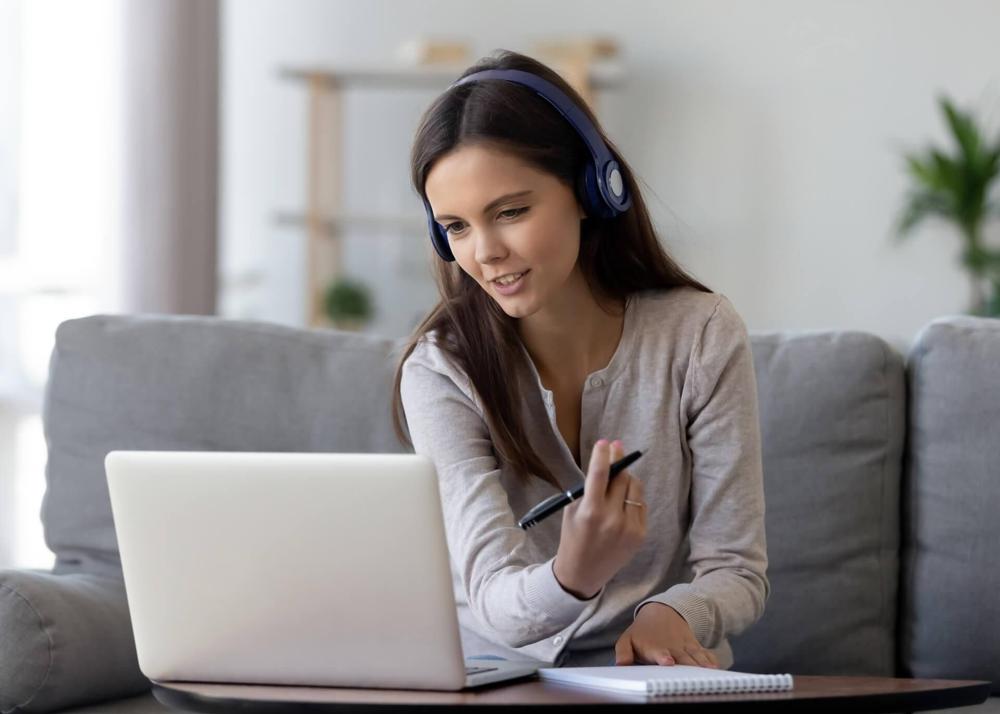
You've probably seen a polyglot on YouTube mumbling along to a podcast at a cafe and calling it shadowing. Maybe you tried it for a week, felt silly, and quit. The technique works, but most learners skip the setup that makes it work. Below is what shadowing actually is, what the research supports, and how to bolt it onto the immersion routine you're already running.
- What Shadowing Actually Is
- What the Research Says (and Doesn't)
- Why Shadowing Works (The Cognitive Case)
- Picking the Right Audio
- A Four-Step Routine That Actually Works
- Shadowing in Different Languages: What Changes
- A Worked Example: One Week of Shadowing a Spanish Clip
- Cultural and Social Context
- Where Shadowing Fits in an Immersion Routine
- Common Mistakes and How to Fix Them
What Shadowing Actually Is
Shadowing is the practice of listening to audio in your target language and repeating it out loud as you hear it, with a delay of anywhere from zero to a couple of seconds. You're not translating. You're not waiting for the speaker to finish a sentence. You're tracking their voice in real time, copying rhythm, pitch, vowel length, and the way syllables clump together.
The technique was first formalized for language learning by Japanese researcher Katsuhiko Tamai in 1992, and later refined by Shuhei Kadota (2007, 2012) as a training tool for conference interpreters and EFL learners. Kadota's model treats shadowing as a workout for the phonological loop, the short-term auditory buffer that holds sound in your head long enough for you to parse it. If that buffer is weak in your target language, fast native speech turns to mush. Shadowing strengthens it.
There are three flavors worth knowing, all examined in a September 2025 paper by Zafarova M.F. in the International Journal of Pedagogics:
- Simultaneous (or synchronous) shadowing. You repeat with essentially no delay, overlapping the speaker. Hardest on working memory, best for prosody.
- Delayed shadowing. You lag the speaker by one to three seconds. Easier to keep up with, better for comprehension because your brain has a moment to register meaning.
- Prosodic shadowing. You deliberately ignore meaning and focus on copying pitch contour, stress, and rhythm, often on sentences you already understand.
Most learners benefit from starting delayed and meaning-focused, then moving to simultaneous and prosodic once the material feels easy.
What the Research Says (and Doesn't)
Shadowing has a better evidence base than most techniques that get sold to language learners. A few studies worth knowing:
- Hamada (2016), in Language Teaching Research, found that lower-intermediate learners improved significantly after shadowing sessions of 10 to 15 minutes, three to four times per week, for six weeks. That's a realistic dose, not a polyglot fantasy.
- Kadota (2007) recommends three to five hours of practice per week for measurable fluency gains. That's closer to what interpreting students do.
- Foote and McDonough (2017), in the Journal of Second Language Pronunciation, documented clear pronunciation and prosodic fluency gains in ESL learners using shadowing with mobile technology, meaning learners could pick their own audio and shadow on their phones.
- A 2025 quasi-experimental study by Anis, Weda, and Halim at SMPN 2 Galesong Utara saw an experimental class's mean listening score rise from 66.25 to 77.40 after a shadowing intervention, while the control class's mean actually dropped slightly. The independent samples t-test returned p = 0.000.
- A December 2025 peer-reviewed piece by Daniela Feistritzer in the Nordic Journal of Language Teaching and Learning argues shadowing is still underused in European classrooms despite the evidence.
What the research does not claim: that shadowing teaches grammar, builds vocabulary from scratch, or replaces reading and listening input. It's a targeted tool for pronunciation, prosody, and listening processing speed. Treat it like strength training for a specific muscle group, not like a full workout.
Why Shadowing Works (The Cognitive Case)
It helps to understand why the technique produces gains, because the mechanism tells you how to practice. Three things are happening in parallel when you shadow well.
First, your phonological loop is being forced to hold foreign sound sequences just long enough to reproduce them. For most adult learners of a distant language, this buffer is the bottleneck. You hear a sentence in Japanese, and by the time your brain has finished processing the first clause, the speaker is three clauses ahead. Shadowing trains the loop to keep up under load, which is the same reason interpreting schools use it.
Second, you are building motor memory in the articulators (tongue, lips, jaw, soft palate). Reading a word silently tells your brain the word exists. Saying it out loud, in sync with a native speaker, tells your mouth how to make it. Spanish learners who have only read the rolled R will never produce one; learners who shadow a telenovela for three weeks often can.
Third, and most underrated, shadowing trains prosody, the music of a language. English speakers learning Mandarin often drill individual tones in isolation and then butcher them in connected speech because tones interact with sentence intonation. Shadowing whole phrases fixes this in a way tone drills cannot. The same applies to Japanese pitch accent, French liaison, and the stress-timing of Brazilian Portuguese.
The practical takeaway: if a shadowing session is not making your mouth tired and your ears sharper, you are not doing enough of it, or the material is too easy.
Picking the Right Audio
This is where most shadowing attempts fail. The audio you pick determines whether the practice is useful or just frustrating noise.
Three criteria:
- You understand roughly 80 to 90% of it without effort. If every third word is new, you're not shadowing, you're guessing. If every word is obvious, you're not being challenged. For Japanese learners around N4 to N3, Nihongo con Teppei and Comprehensible Japanese (Intermediate playlist) hit this zone. For Spanish learners at B1 to B2, Dreaming Spanish Intermediate videos and News in Slow Spanish work well. For French, InnerFrench is the standard pick.
- It's spoken at a natural pace by one clear voice. Interview podcasts with crosstalk are a nightmare to shadow. Solo-host shows and audiobook narrators are far better. Easy German's street interviews are good for listening but poor for shadowing; Coffee Break German is better.
- You can get a transcript. Shadowing without ever seeing the text leaves you memorizing mispronunciations. Podcasts that publish transcripts, YouTube videos with accurate captions, and audiobooks paired with the ebook all work.
One underrated option: take a scene from a show you've already watched and loved. You know the meaning, you know the emotional beat, and your brain will fight to match the actor's delivery. A two-minute scene from Terrace House or Money Heist can carry a whole week of practice.
A Four-Step Routine That Actually Works
Here's a routine built on Hamada's dose (10 to 15 minutes, three to four times per week) that you can start tomorrow. Pick a 60 to 90 second audio clip for each session. That's it. Short clips beat long ones because you can cycle them enough times to make progress in a single sitting.
- Listen twice, no talking. First pass, just absorb. Second pass, read the transcript along with the audio. If more than one word in ten is unknown, the clip is too hard. Pick something easier.
- Parallel reading with voice. Play the audio and read the transcript out loud in sync. You're not shadowing yet, you're scaffolding. Do this two or three times until your mouth can keep up with the text at full speed.
- Delayed shadowing with transcript visible. Drop the reading, but keep the transcript available as a safety net. Repeat the speaker with a one to two second lag. Focus on meaning. Glance at the text only when you lose the thread.
- Prosodic shadowing, eyes closed. Final pass, no transcript. Close your eyes, shadow with minimal delay, and exaggerate the speaker's intonation. This is where the pronunciation gains happen. You'll feel stupid. Do it anyway.
Over a week, cycle the same clip across three or four sessions. By session four, you should be able to deliver the whole clip from memory at near-native speed. That sensation, your mouth moving faster than your conscious thought, is the point.
The polyglot Alexander Arguelles, who popularized outdoor "walking shadowing," claims the outdoor element matters: the walking forces a rhythm and the open air pushes you to speak louder. It's worth trying once you're past the embarrassment phase. Park, headphones, no one around. Go.
Shadowing in Different Languages: What Changes
Shadowing is a general technique, but what you target shifts with the language. A few cases worth knowing before you start.
Japanese. The pitch accent of individual words matters, but the bigger win from shadowing is the rhythm of mora-timed speech. Each mora gets roughly equal time, which is why beginners sound choppy. Shadow a solo host like Teppei, and pay attention to how particles (は, が, を) are often reduced or softly attached to the preceding word. This is the detail most textbooks skip.
Mandarin. Tones behave differently in connected speech than in isolation. The third tone rarely fully dips. Neutral tone syllables are quick and light. Shadowing corrects the robotic textbook cadence that tone drills can create. Short clips from Mandarin Corner or Teatime Chinese work well.
Spanish. The challenge is speed and the blurring of word boundaries. Native speakers chain vowels across words (e.g. que es becoming something like quez). Shadowing makes your ear expect these reductions instead of treating them as errors.
French. Liaison, elision, and the nasal vowels require mouth positions most English speakers never use. Shadowing InnerFrench or a slow audiobook builds the motor patterns; pronunciation videos alone rarely do.
Korean. Final consonants, batchim, and the rhythm of ending particles shift meaning. Shadowing k-drama dialogue is excellent once you can read Hangul comfortably, because the emotional delivery helps anchor the intonation contour.
If your target language is not above, the principle holds: find the two or three features that distinguish native delivery from textbook delivery, and make those the focus of your prosodic pass.
A Worked Example: One Week of Shadowing a Spanish Clip
To make the routine concrete, here's what a week actually looks like for a B1 Spanish learner using a 75-second monologue from Dreaming Spanish.
Day 1 (Monday, 14 minutes). Listen twice cold. Count unknown words: seven out of around 180, about 4%. Green light. Open the transcript, read along with the audio twice. Do two rounds of parallel reading out loud. End the session. Notice that the host chains de eso into something that sounds like deso; mark it.
Day 2 (Tuesday, 12 minutes). Skip straight to delayed shadowing with transcript. The first two passes are sloppy. By pass four you're landing most of the clip with a 1.5 second lag. Your jaw is genuinely tired. Stop there.
Day 4 (Thursday, 13 minutes). One warm-up pass of delayed shadowing, then three passes of prosodic shadowing with eyes closed. Record pass three on your phone. Play it back. You'll notice one or two words where your vowels are still too English (probably the schwa leaking into a and o). Note them.
Day 6 (Saturday, 10 minutes). Final cycle. Two passes of simultaneous shadowing, no transcript, focused on matching intonation. Record once more. Compare to Monday. The difference is usually obvious: crisper consonants, faster chaining, actual melody.
Total for the week: under an hour, one clip, measurable change. Do this for six consecutive weeks with different clips and you're running the protocol Hamada tested.
Cultural and Social Context
Shadowing feels strange partly because the cultures that developed it treat spoken practice differently than Western language classrooms do. In Japan, shadowing was adopted as a classroom technique for interpreting students and spread into general English education through university programs. Students shadow together, out loud, in rooms full of peers doing the same thing. The embarrassment that Western learners feel when shadowing in public is partly a product of learning alone, without social permission to be loud and weird in another language.
This matters for practice. If you can find even one friend learning the same language and agree to shadow the same clip independently and then compare recordings, the social accountability does more for consistency than any app reminder. Language meetups, Discord servers focused on immersion, and study partners all work. If you're fully solo, lean on the recording habit instead: your week-one self is the accountability partner.
There's also a cultural point about what a "good accent" means. In some speaking communities, a slightly foreign accent is treated as neutral or even charming. In others, it flags you as an outsider and limits access to conversation. Knowing where your target language falls on that spectrum helps set realistic goals for how much shadowing effort is worth it. A learner of Japanese planning to work in a Tokyo office has a different payoff curve than someone chatting with relatives in Spanish over holidays.
Where Shadowing Fits in an Immersion Routine
Shadowing is a supplement, not a core. If you do 15 minutes of shadowing a day and nothing else, you'll have great pronunciation of a tiny slice of language. The trick is to pair it with the input-heavy work that actually builds comprehension and vocabulary, which is the approach laid out in How to Actually Learn a Language.
A sane weekly split for an intermediate learner might look like:
- Four to six hours of native content consumption (shows, podcasts, articles, books), with hover lookups and sentence mining as you go.
- Fifteen to thirty minutes a day of SRS review on sentences you've actually encountered.
- Three to four 15-minute shadowing sessions, ideally using clips from the same content you're already consuming.
That last point matters. If you're watching a Korean drama for input, shadow scenes from that drama. If you're reading a Spanish novel with audio, shadow the narrator. The overlap means each minute of shadowing reinforces vocabulary and grammar you're already seeing elsewhere, and your brain stops treating the shadowing material as foreign.
This also changes what "easy" means. In What Makes a Language Easy to Learn, a big factor is how close the target sound system is to your native one. Shadowing directly attacks that gap. Japanese learners who shadow tend to fix pitch accent issues that textbooks never touch, which is a point covered in more depth in Learning Japanese: What Actually Works.
Common Mistakes and How to Fix Them
A short list of the failure modes we see most often:
- Shadowing material that's too hard. You'll plateau fast because you're spending all your attention on decoding words. Drop to content where you understand 90% cold.
- Never looking at the transcript. You end up drilling ghost words, repeating sounds that aren't really in the audio. Always verify what the speaker actually said before the final prosodic pass.
- Mumbling. If your family can't hear you from the next room, you're not shadowing, you're lip-syncing. The mouth movement is half the training.
- Inconsistency. Two hours of shadowing on Sunday does less than 15 minutes a day, five days a week. Hamada's six-week study worked because the sessions were frequent and short.
- Ignoring meaning forever. Prosodic shadowing is useful, but if you only ever copy sounds, you're training a parrot. At least half your shadowing time should be on material you fully understand.
- Recording yourself once and never again. A 30-second recording at week one and another at week four is the single clearest way to hear progress (or diagnose what isn't moving).
- Using music or sung lyrics as shadowing material. Melody distorts vowel length and stress in ways that don't carry into speech. Songs are fun input; they're bad shadowing material.
- Shadowing while tired or distracted. The phonological loop is a working-memory system, and working memory collapses under fatigue. A focused ten minutes beats a half-asleep twenty.
One more: shadowing is not a substitute for speaking with humans. It builds the motor and auditory infrastructure that makes conversation easier, but the conversation itself still has to happen. Schedule the iTalki lesson.
Frequently Asked Questions
How long until I see results from shadowing?
With Hamada's protocol (10 to 15 minutes, three to four times per week), most learners hear a noticeable change in their own recordings by week four to six. Fluency on the specific clips you drill improves faster, often within a single week. Generalized pronunciation gains that carry into unrehearsed speech take longer, typically two to three months of consistent practice.
Can beginners shadow, or should I wait until I'm intermediate?
Beginners can shadow, but only with material designed for their level and with the transcript visible the entire time. Trying to shadow native-speed content below A2 tends to produce frustration and garbled output. Start with slow beginner podcasts and textbook audio, and focus on step two of the routine (parallel reading with voice) rather than jumping straight to delayed shadowing.
Is shadowing better than just speaking out loud while reading?
They train different things. Reading aloud builds articulation and lets you set your own pace, which is good early on. Shadowing forces you to match a native speaker's timing and prosody, which reading aloud cannot do. Most learners should do both, with reading aloud as the on-ramp and shadowing as the main lift.
Do I need to record myself, or is it enough to just listen to myself live?
Recording matters. Your internal monitor while speaking is unreliable because you hear your voice partly through bone conduction and partly through your own expectations. A phone recording played back 30 seconds later reveals mispronunciations you cannot detect in the moment. Once a week is enough.
Will shadowing give me a native accent?
Probably not a fully native accent, and that's fine. What it will give you is a clearly intelligible, rhythmically correct accent that native speakers find easy to understand. Adult learners who reach full native-like pronunciation are rare regardless of method. The realistic goal is a comfortable, confident accent, and shadowing is one of the most efficient paths to it.
Can I shadow while driving or doing chores?
Passive listening while driving is fine, but true shadowing needs your full attention and access to the transcript. Trying to shadow in the car means you can't verify what was actually said, and you'll reinforce guesses. Save shadowing for a seated session with the text in front of you, and use chore time for pure listening input instead.
What if I can't find a transcript for the audio I want to shadow?
Run the audio through an automatic transcription tool, then spot-check the result against what you hear. For popular podcasts and most YouTube content, accurate captions already exist. If nothing clean is available, that's a signal to pick different audio. The transcript is not optional.
The fastest path through everything above is to do your shadowing inside content you actually want to watch or listen to, with transcripts and lookups already handled so you're not fighting the interface. That's the workflow Migaku is built around, and you can see how Migaku works if you want to plug shadowing into a real immersion routine instead of running it as a separate chore.