Where to Live in Marseille: Safe Neighborhoods for Newcomers
最終更新日: 2026年5月27日
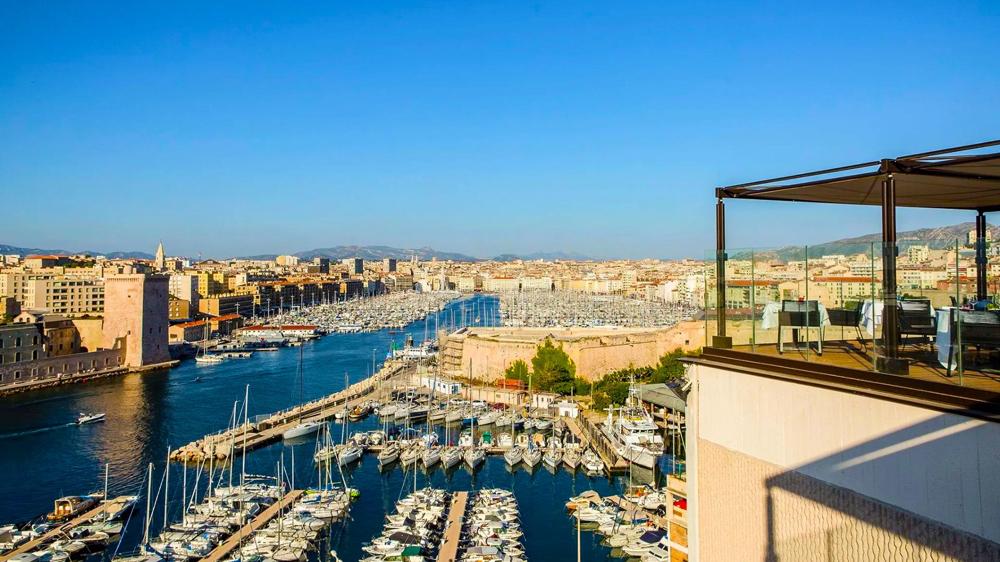
If you're moving to Marseille, the short answer is: the 6th, 7th, 8th, and 12th arrondissements are the safest, most established residential choices for newcomers, while the 1st (around Cours Julien) and parts of the 2nd (Joliette/Euroméditerranée) offer the most vibrant urban living. The right pick depends on whether you want sea views, a walkable creative quarter, or a quiet family district with good schools.
Last updated: May 27, 2026
- How Marseille Is Organized
- The Safest, Most Liveable Neighborhoods for Newcomers
- Vibrant Central Neighborhoods (Best for Singles and Creatives)
- Neighborhoods to Approach With More Caution
- What It Costs: Rent, Purchase, and Local Taxes
- Renting: Rules That Affect Newcomers in 2026
- Getting Around: Transit, Bikes, and the Low-Emission Zone
- Common Pitfalls When Choosing a Neighborhood
- FAQs
How Marseille Is Organized
Marseille is divided into 16 arrondissements arranged in a rough spiral starting at the Vieux-Port. Locals rarely say "I live in the 6th"; they say the neighborhood name (Le Camas, Endoume, Bonneveine, La Plaine). Knowing both is useful when you're searching listings on SeLoger, PAP, or Leboncoin.
The city sits inside the Métropole Aix-Marseille-Provence, which runs the transit network (RTM), the low-emission zone, and a growing list of mobility subsidies. Marseille is classified by the French government as a "zone tendue" (high-demand housing zone), which matters for rent caps, short-term rental rules, and tenant protections.
Before picking a neighborhood, sort out three things: your commute, your tolerance for noise, and whether your car (if you have one) is allowed inside the low-emission zone.
The Safest, Most Liveable Neighborhoods for Newcomers
These are the districts where most expats, remote workers, and relocating families land first. They balance safety, services, transit, and a reasonable French/international mix.
6th arrondissement: Castellane, Préfecture, Vauban
Central, walkable, and packed with cafés, bakeries, and small grocers. Castellane is a major metro and tram interchange, which makes commutes easy. The 6th is a favorite for couples and young professionals who want to be in the action without the rowdiness of the 1st. Expect dense Haussmann-style buildings, limited parking, and lively but generally safe evenings.
7th arrondissement: Endoume, Le Pharo, Bompard, Les Catalans
The 7th wraps the coast from the Vieux-Port toward the Corniche. Endoume and Le Roucas Blanc are quieter, leafier, and have sea views; Les Catalans gives you a city beach. It's residential, family-friendly, and very safe, but transit is thinner (mostly buses), so it suits people with a scooter, e-bike, or who work from home.
8th arrondissement: Périer, Bonneveine, Sainte-Anne, Le Prado
The 8th is the classic upmarket family choice. Périer has elegant townhouses; Bonneveine and Sainte-Anne sit near the Prado beaches and the entrance to the Calanques. Good schools, supermarkets, and the Metro Line 2 down to Sainte-Marguerite Dromel make daily life easy. Prices reflect this: it's one of the most expensive sectors in the city.
12th arrondissement: Saint-Barnabé, La Fourragère, Les Caillols
A practical, calmer pick further east. La Fourragère is the eastern terminus of Metro Line 1, so you can reach the Vieux-Port in about 15 minutes. Houses with small gardens are still findable here, which is rare elsewhere in the city. Good for families on a mid-range budget.
9th arrondissement: Mazargues, Le Cabot, La Cayolle (selectively)
The 9th is mixed. Mazargues and Le Cabot are calm residential pockets near the Calanques with houses and small condos; other sub-neighborhoods are more uneven. Worth visiting in person before signing.
Vibrant Central Neighborhoods (Best for Singles and Creatives)
If you want a more urban, bohemian, or nightlife-heavy setting, look here. These areas are central, walkable, and exciting, but they're also denser and noisier.
- Le Panier (2nd): The oldest quarter, north of the Vieux-Port. Narrow lanes, artisan shops, tourists during the day, quiet at night. Apartments are small and often without elevators.
- Joliette / Euroméditerranée (2nd): The redeveloped business and waterfront district. Newer buildings, modern offices, the Terrasses du Port mall, tram and metro access. Popular with relocating professionals.
- La Plaine and Cours Julien (1st/6th border): Marseille's bohemian heart. Live music, markets, street art, late-night bars. Renovation works on Place Jean Jaurès finished in recent years; the area is busier and louder than ever.
- Le Camas (5th): A quieter sibling to La Plaine. Family bakeries, leafy streets, a Sunday market, and easy walking distance to the action.
- Notre-Dame du Mont (6th): Between Castellane and Cours Julien. Lively but more residential than Cours Ju itself.
Avoid Noailles (1st) for your first apartment unless you know the building well. The neighborhood has rich North African markets and real character, but it also has a documented history of substandard housing and is now under the permis de louer (rental permit) scheme designed to combat unsafe lets.
Neighborhoods to Approach With More Caution
Marseille has a reputation problem that is often overstated by outside media, but some areas genuinely have higher rates of property crime, drug-related activity, or distressed housing. As a newcomer without local context, it's reasonable to avoid renting blind in:
- The northern arrondissements (13th, 14th, 15th, 16th), particularly the cités (large housing estates) around La Castellane, Les Flamants, Bassens, and Air-Bel.
- Parts of the 3rd around Belle de Mai (mixed: pockets are gentrifying, others remain rough).
- Certain streets of Belsunce and Noailles in the 1st.
These areas aren't off-limits and many residents live there happily, but they require local knowledge to navigate well. Visit at different times of day before committing.
What It Costs: Rent, Purchase, and Local Taxes
Marseille remains cheaper than Paris, Lyon, or Nice, but prices have crept up. According to Notaires de France data, apartment prices for non-new builds rose about 2% year-on-year between September 2024 and September 2025.
Recent reference figures:
Area | Avg. apartment price/m² | Notes |
|---|---|---|
1st arrondissement | €3,738/m² | +10.94% between 2023 and 2025 (Orpi/PriceHubble, April 2026) |
5th arrondissement | €3,593/m² net seller | 890 transactions in 2024; 99% apartments |
The 7th and 8th typically run higher; the 13th, 14th, and 15th run significantly lower.
Local taxes you'll pay as an owner:
- Taxe foncière (built property) commune rate: 44.54% in 2025 (unchanged since 2022).
- Taxe foncière (non-built property): 24.99% in 2025.
- Taxe d'habitation on secondary residences: 28.56% in 2025, with the 60% surcharge renewed.
- The national cadastral base for taxe foncière rose 1.7% on January 1, 2025, so bills went up even where the rate held steady.
- 2025 taxe foncière deadlines: October 15 (offline) and October 20 (online); payment is mandatory online above €300.
- Income-capped owners (RFR up to €29,815 for the first share, plus additional allowances per half-share) may qualify for the plafonnement relief.
Average local taxes in the 1st arrondissement run around €1,334/year per the latest Orpi data. Confirm any specific figure with impots.gouv.fr or your notaire.
Renting: Rules That Affect Newcomers in 2026
A few legal developments are reshaping the Marseille rental market:
- Rent control: Marseille is in a zone tendue and is one of the cities that could implement the national rent-cap experiment. As of early 2026, the Marseille-specific prefectural decree had not been published. Check the Préfecture des Bouches-du-Rhône website for status.
- The national rent-cap experiment (loi ELAN, November 2018) is set to expire in November 2026 unless renewed. A National Assembly bill adopted December 11, 2025 proposes making it permanent.
- Permis de louer: Already operational in sensitive sectors such as Noailles. Landlords must obtain an authorization before renting, which is meant to weed out unsafe housing.
- Short-term rentals: The Airbnb/Booking cap on a primary residence dropped to 90 days/year (from 120). Civil fines reach €15,000 for exceeding the cap. Since April 29, 2025, renting a secondary residence short-term requires changement d'usage with mandatory compensation from the first night. Fines for unauthorized changes go up to €50,000, and since November 1, 2025, a missing national registration number triggers a €1,500 fine per listing.
For renters this matters because it means more long-term inventory should come back to the market, especially in the 1st, 2nd, 6th, and 7th, where short-term rentals had been concentrated.
Getting Around: Transit, Bikes, and the Low-Emission Zone
Neighborhood choice is really a commute choice. Marseille's transit has improved noticeably in the last two years.
RTM tariffs (2025/2026):
- Single ticket: €1.70
- On-board solo bus ticket: €2.00
- Carnet of 10: €15.00
- Group-of-4 ticket: €4.90
- Monthly Pass "Pour tous": €40 (Zone Bleue), €60 (Zone Jaune), €68 (Pass Intégral with TER trains)
- Employer reimburses 50% of the pass.
- Free RTM travel since September 1, 2025 for residents under 11 and over 65.
- Airport shuttle (Saint-Charles to Marseille Provence): €10 one-way, €16 return.
New infrastructure:
- The Tram T3 extension opened January 7, 2026, adding 6.2 km and 11 stations, north to Capitaine Gèze and south to La Gaye. The line is now 9.8 km with 22 stations.
- The Neomma metro automation project (budget €580 million) is ongoing. The metro closes Monday through Thursday from 9:30 pm for the works.
Low-emission zone (ZFE-m):
- Covers 19.5 km² and roughly 314,000 residents, bounded by Cap Pinède, Capitaine Gèze, Plombières, Fleming, Duparc, Sakakini, Jean Moulin, Rabatau, and Prado 2.
- Crit'Air 4, 5, and unclassified vehicles are banned 24/7. The planned Crit'Air 3 ban (January 1, 2025) was postponed sine die.
- Violation fines: €68 or €135.
- The Crit'Air sticker costs €3.85 and is only sold via certificat-air.gouv.fr.
- The Métropole offers up to €5,000 toward an electric vehicle purchase (after scrapping a polluting one, one per household) and up to 12 months free on RTM or levélo subscriptions, available until October 31, 2027.
If you're buying a car or shipping one in, verify its Crit'Air classification before signing a lease in the ZFE perimeter.
Common Pitfalls When Choosing a Neighborhood
- Signing without visiting in the evening. A street that's calm at noon can be loud or uncomfortable at 11 pm. Walk it after dark.
- Underestimating the mistral and noise. Many central buildings have single-pane windows and traffic noise. Ask about double vitrage.
- Ignoring elevators. Plenty of 1900s buildings in the 1st, 2nd, 6th, and 7th have five or six floors and no lift.
- Forgetting the ZFE. If you drive an older diesel, you may not be able to park it where you live.
- Trusting one online price estimate. Cross-check notaires data, Orpi, MeilleursAgents, and recent comparable listings.
- Skipping the diagnostic de performance énergétique (DPE). Marseille has stock with poor energy ratings, and class G rentals are now restricted nationally.
- Confusing arrondissement averages with street-level reality. The 13th, for example, has both calm residential pockets and rougher cités.
FAQs
Is Marseille safe for a single newcomer?
Yes, in the neighborhoods listed above. Petty theft (phone snatching, bag grabs on terraces) is the main risk citywide. Avoid empty side streets late at night, keep valuables out of sight, and you'll be fine.
What's the best neighborhood for families?
The 8th (Périer, Sainte-Anne, Bonneveine) and 12th (Saint-Barnabé, La Fourragère) are the standard picks, with good schools, parks, and metro or tram access.
What about remote workers and digital nomads?
The 6th and 7th. You get cafés, coworking spaces, beaches within walking distance, and reliable fiber. Endoume and Le Camas are favorites.
Can I live without a car?
Yes, in the 1st, 2nd, 5th, 6th, and most of the 8th near a metro stop. The 7th, 9th, and outer 12th are harder without at least an e-bike or scooter.
How does Marseille compare to other French cities for cost?
Cheaper than Paris, Nice, and Lyon, similar to Bordeaux or slightly cheaper. For comparison with a northern French city, see our breakdown of the Cost of Living in Lille.
I'm relocating from Italy. Any tips on the cultural transition?
Marseille has strong Italian roots and the food culture overlaps significantly. If you're moving from Italy or considering combining trips, our Italy Itinerary for Slow Travelers may be useful for context.
Do I qualify for French citizenship through ancestry?
If you have French grandparents or great-grandparents, possibly. See French Citizenship by Descent for eligibility and the application process.
Is there emergency housing if I arrive without a lease?
The Bouches-du-Rhône prefecture activated plan hiver 2025 through March 31, 2026, with 6,726 emergency shelter places in the department (5,500 in Marseille). This is for people in genuine distress, not a substitute for a rental search.
A Final Note Before You Sign
Marseille rewards people who visit before committing. Spend a week in an Airbnb or hotel in two or three candidate neighborhoods, walk them at different hours, take the metro and bus at rush hour, and price a few groceries at the local market. The difference between the 6th and the 8th, or between Endoume and Bonneveine, is real but only obvious in person.
Landlords in Marseille move fast on good listings. Have your dossier ready: ID, last three pay slips, last tax notice, work contract, and a French guarantor or Visale guarantee. Without it, you'll lose apartments to applicants who do.
If you're moving to Marseille and want to settle in faster, picking up real spoken French through local shows, podcasts, and conversations will make every interaction (the syndic, the boulanger, your neighbors) easier. Migaku is built to help you learn French from the native content you're already watching, so try Migaku if that fits how you want to learn.