French Office Vocabulary: French Workplace Words and Phrases for Beginners & Professionals
最終更新日: 2026年3月26日

If you're planning to work for a French company or just want to sound professional when talking to French colleagues, you'll need more than the basic French knowledge you learned in high school. Office French has its own set of vocabulary that goes way beyond ordering croissants at a café. This guide covers everything from job titles and company structures to meeting phrases and workplace departments, so you can actually navigate a French professional environment without constantly reaching for Google Translate.
Company types and structures in French
Before we get into job titles, let's cover how companies are organized in France. The business landscape there has specific legal structures that affect how companies operate.
French | English |
|---|---|
une société à responsabilité limitée (SARL) | Limited liability company (most common company type) |
une société anonyme (SA) | Corporation |
une entreprise individuelle | Sole proprietorship |
une entreprise | Business / Company (general term) |
une société | Business / Company (more formal and legal) |
le bureau / les bureaux | Office building / Workspace |
la direction | Management / Executive team |
le siège social | Headquarters |
une filiale | Subsidiary / Branch |
une start-up / une jeune pousse | Startup |
Job titles and roles
French job titles can get confusing because some translate directly while others don't match English equivalents at all.
At the top, you've got:
French | English |
|---|---|
le PDG (président-directeur général) | CEO and chairman (combined role) |
le directeur général | General manager / Managing director |
le directeur financier | CFO |
le directeur des ressources humaines | HR director |
le directeur commercial | Sales director |
Middle management uses "le cadre," a uniquely French term for white-collar professionals and managers. This designation actually affects your employment status and benefits in France. "Un cadre supérieur" is upper management, while "un cadre moyen" is middle management.
For regular staff:
French | English |
|---|---|
un employé / une employée | Employee (general term) |
un salarié / une salariée | Salaried employee |
un stagiaire / une stagiaire | Intern |
un apprenti / une apprentie | Apprentice |
Some specific roles:
French | English |
|---|---|
le comptable / la comptable | Accountant |
le commercial / la commerciale | Salesperson |
le juriste / la juriste | Legal counsel |
le technicien / la technicienne | Technician |
le chef de projet / la cheffe de projet | Project manager |
l'assistant / l'assistante | Assistant |
Remote work has added "le télétravailleur" for remote worker, though many French speakers just say "en télétravail" (working remotely).
Workplace departments and their French names
Every company divides into departments, and knowing these in French helps you navigate organizational charts and understand who does what.
French | English |
|---|---|
les ressources humaines (RH) / le service du personnel | Human resources |
la comptabilité | Accounting / Finance |
le service commercial | Sales |
le marketing | Marketing |
la production / la fabrication | Production / Manufacturing |
le service client / le service après-vente (SAV) | Customer service |
la recherche et développement (R&D) | Research and development |
le service informatique / l'informatique | IT |
le service juridique | Legal department |
la logistique | Logistics / Supply chain |
les achats | Procurement / Purchasing |
When you need to find someone, you might ask "Il travaille dans quel service?" (Which department does he work in?).
HR terms and employment contracts
Did you live in France years ago or study it in high school and promptly forget everything upon leaving? Well, if you're heading back to work there, the HR vocabulary is probably new territory anyway.
French | English |
|---|---|
un entretien d'embauche | Job interview |
une offre d'emploi | Job offer |
un contrat de travail | Employment contract |
un CDI (contrat à durée indéterminée) | Permanent contract (gold standard of French employment) |
un CDD (contrat à durée déterminée) | Fixed-term contract |
l'intérim / un contrat d'intérim | Temporary work / Temporary contract |
la fiche de paie / le bulletin de salaire | Payslip |
le salaire brut | Gross salary |
le salaire net | Take-home pay |
les charges sociales | Social security contributions (substantial in France) |
les congés payés | Paid vacation (minimum 5 weeks in France) |
un arrêt maladie | Sick leave |
un congé maternité / paternité | Maternity / paternity leave |
un licenciement | Termination (by employer) |
une démission | Resignation |
la période d'essai | Probation period |
le préavis | Notice period |
Meeting vocabulary
Meetings in French workplaces follow their own protocol and vocabulary.
French | English |
|---|---|
une réunion | General meeting |
un rendez-vous | Appointment or scheduled meeting (smaller and more specific) |
convoquer une réunion | To call a meeting |
fixer une réunion | To schedule a meeting |
l'ordre du jour | Agenda |
le compte-rendu / le procès-verbal (PV) | Meeting minutes |
prendre la parole | To speak / To take the floor |
donner la parole à quelqu'un | To give someone the floor |
couper la parole | To interrupt (generally rude) |
un point à l'ordre du jour | Agenda item |
aborder un sujet | To address a topic |
reporter une décision | To postpone a decision |
trancher | To make a final decision |
une conférence téléphonique / une visioconférence | Conference call / Video conference |
mettre en sourdine | To mute |
partager l'écran | To share your screen |
Essential office objects and workspace terms
Your physical workspace has specific vocabulary too.
French | English |
|---|---|
le bureau | Office / Desk |
le poste de travail | Workstation |
la chaise de bureau | Office chair |
l'ordinateur | Computer |
l'écran | Screen / Monitor |
le clavier | Keyboard |
la souris | Mouse |
l'imprimante | Printer |
le scanner | Scanner |
le papier | Paper |
le stylo | Pen |
le crayon | Pencil |
le surligneur | Highlighter |
l'agrafeuse | Stapler |
le trombone | Paper clip |
le classeur | Binder |
le dossier | Folder / File |
le téléphone | Phone |
le portable / le mobile | Cell phone |
la messagerie | Messaging / Email system |
le courriel / l'e-mail | Email |
la salle de réunion | Meeting room |
la salle de conférence | Conference room |
l'espace de travail collaboratif | Collaborative workspace |
la cafétéria / la cantine | Cafeteria |
Cultural workplace differences to know
Understanding vocabulary helps, but French workplace culture has quirks that affect how you use that vocabulary.
Formality matters more than in many English-speaking workplaces. You typically use "vous" (formal you) with colleagues unless you're explicitly told to use "tu." Even in casual startups, hierarchy often dictates formality levels.
Lunch is serious business. "La pause déjeuner" typically lasts 1-2 hours, and working through lunch marks you as weird or overly American. The cafeteria or nearby restaurants become important social spaces where workplace relationships develop.
French colleagues tend to separate work and personal life more strictly than American workplaces. Don't expect everyone to share personal details or hang out after work. Professional relationships stay professional.
Email style is more formal. You start with "Madame" or "Monsieur," use complete sentences, and end with formal closings like "Cordialement" or "Bien à vous." Casual American-style emails ("Hey! Quick question...") will seem unprofessional.
Meetings can run long and involve considerable debate. The cultural expression of disagreement is more direct than in some cultures but follows specific social rules about hierarchy and turn-taking.
Practical tips for learning and using office French
- Start with vocabulary that applies to your specific situation. If you're in marketing, prioritize marketing terms. If you're in HR, focus there. Trying to memorize every possible business term at once doesn't work.
- Create context for new words. Don't just memorize "un bilan" means "balance sheet" or "report." Put it in a sentence: "Je dois préparer le bilan trimestriel" (I have to prepare the quarterly report). Context makes vocabulary stick.
- Listen to real French business content. Podcasts about French business, news programs discussing companies, even French LinkedIn posts give you authentic usage. You'll notice which terms actually get used versus which are just in textbooks.
- Practice writing professional emails in French. This skill matters enormously and has specific conventions. Study examples of French business correspondence to learn the formulas and tone.
- Don't be afraid to ask colleagues for clarification. "Qu'est-ce que ça veut dire exactement?" (What does that mean exactly?) is a perfectly reasonable question when someone uses a term you don't know. French colleagues generally appreciate that you're making the effort to work in their language.
- Keep a work vocabulary notebook. When you encounter new terms in meetings or emails, write them down with context. Review regularly. The repetition of workplace situations means you'll see the same vocabulary often, which helps retention.
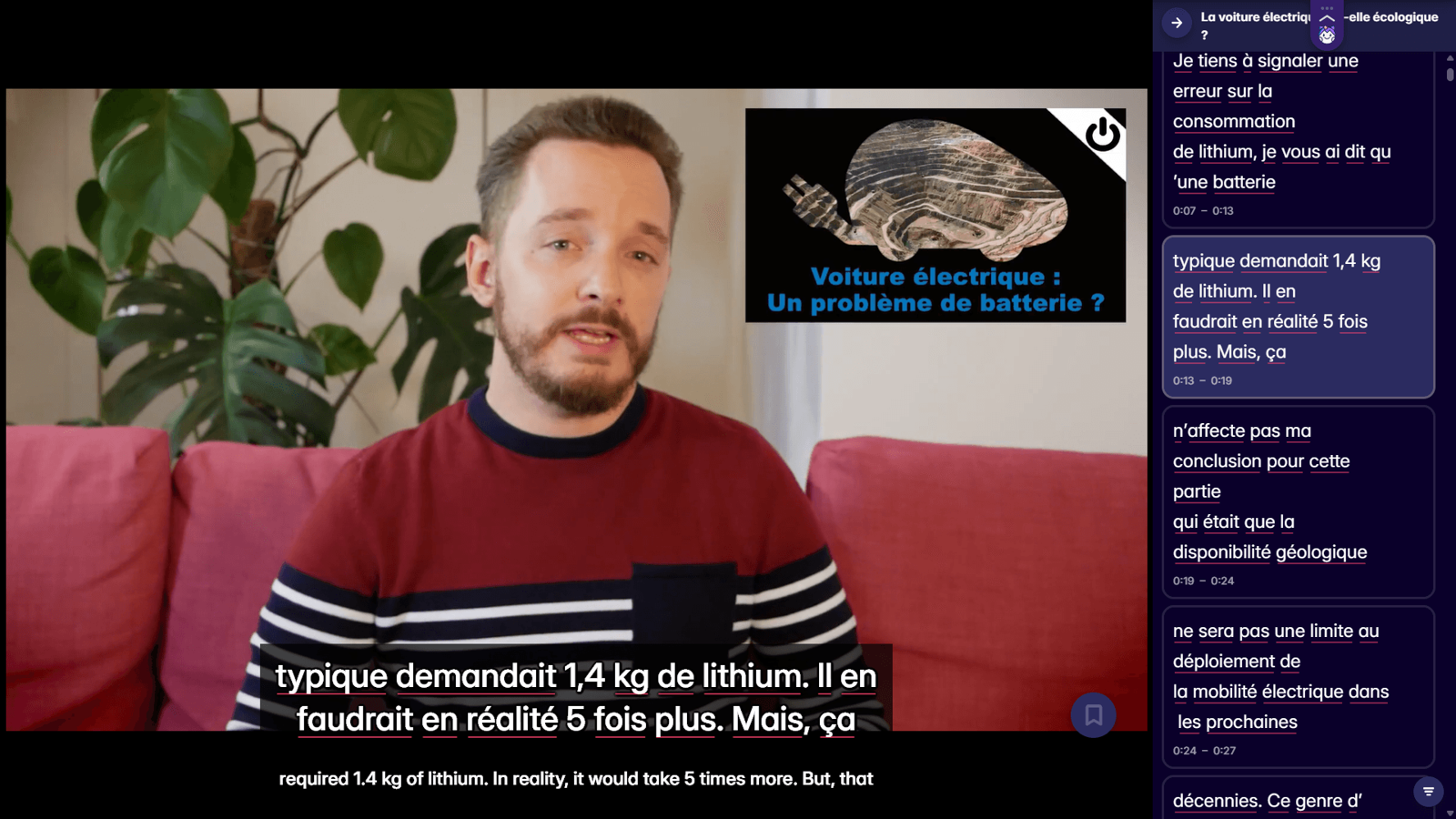
If you want to build this vocabulary faster, Migaku's browser extension and app let you look up French terms instantly while reading actual business articles or watching French workplace content. Way more effective than just memorizing lists. There's a 10-day free trial if you want to check it out.
FAQs
Common workplace vocabulary evolves just like any other part of language
Anglicisms have flooded into French business speak, especially in tech and startups. You'll hear "un brainstorming," "un deadline" (though "délai" is preferred officially), "un feedback," "le networking." Remote work vocabulary exploded after 2020. Industry-specific vocabulary changes fastest. To stay up-to-date, you can watch the latest office dramas, work culture news, or journals related to the industry you are working in.
If you consume media in French, and you understand at least some of the messages and sentences within that media, you will make progress. Period.
The effort pays off because you are not just learning the language, you are learning about the industry you are working in too!