Land Lease vs Freehold Property in Japan: What to Know
最終更新日: 2026年5月20日
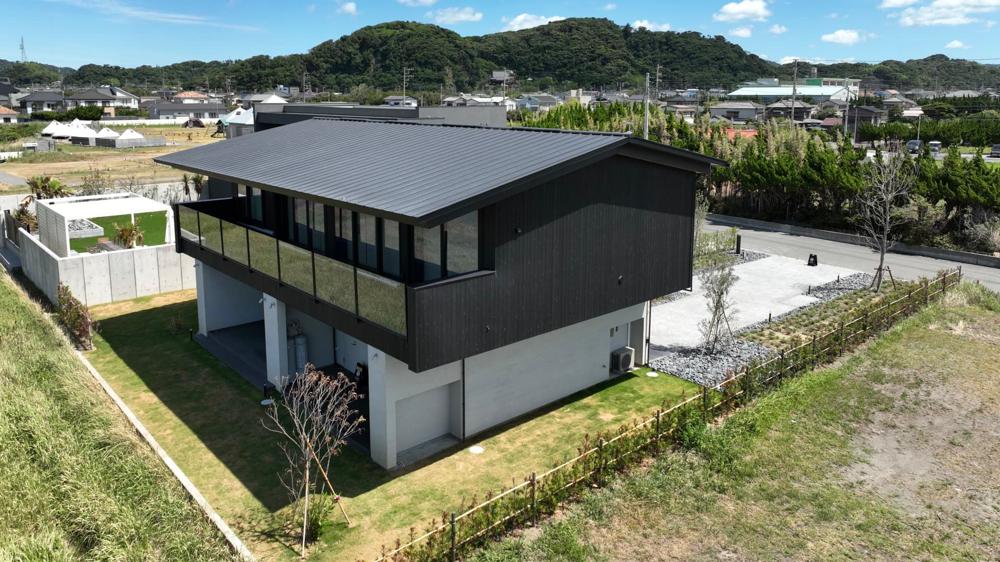
If you're buying property in Japan, you'll quickly run into two ownership categories: freehold (所有権, shoyuken) and leasehold (借地権, shakuchiken). Freehold means you own both the land and the building; leasehold means you own the building but rent the land underneath it from a separate landowner, usually under a long-term contract governed by the Act on Land and Building Leases (借地借家法).
Last updated: May 20, 2026
How Ownership Works in Japan
Real estate ownership in Japan is governed primarily by the Civil Code and the Act on Land and Building Leases (ALBL). Foreigners, including non-residents, face no nationality-based restrictions on owning real estate. You can buy on a tourist visa, you can buy remotely through a representative, and there is no requirement to have permanent residency or a Japanese spouse.
What does change based on the type of property is what exactly you own:
- Freehold (所有権): You hold registered title to both the land and any structure on it. You pay property tax on both. You can rebuild, sell, gift, or inherit without consulting any landowner.
- Leasehold (借地権): You own the building outright but lease the land from a separate owner (often a temple, a family estate, or a corporation). You pay monthly or annual ground rent (地代, jidai) and usually owe a renewal fee at contract milestones.
Leasehold itself splits into several sub-types, and the type matters a great deal for resale, financing, and long-term security.
The Main Types of Leasehold
The ALBL was reformed in 1992. Contracts signed before August 1992 fall under the Old Land Lease Law; those signed after fall under the New Land Lease Law. The differences are substantial.
Old Law Leasehold (旧法借地権)
Contracts concluded before August 1992 are governed by the Old Land Lease Law. Under this regime, initial contract length depended on the structural material of the building (wooden vs. concrete), and renewal was effectively automatic and perpetual. In practice, an Old Law leasehold behaves much like ownership: the landlord generally cannot refuse renewal without a court-recognized "justifiable reason," which is a high bar.
If you find a property advertised as 旧法借地権, the rights are strong, but you still don't own the land and you'll still pay ground rent.
Ordinary Leasehold under the New Law (普通借地権)
For contracts under the post-1992 regime, the ALBL requires a minimum term of 30 years for an ordinary land lease intended for owning a building. The first renewal is for 20 years, and each subsequent renewal is 10 years. Renewal is still typically expected, but the landlord has somewhat more room to negotiate or contest than under the Old Law.
Fixed-Term Leasehold (定期借地権)
This is where buyers need to read the contract carefully. A general fixed-term land lease for owning a building must be 50 years or more under the ALBL. A business-purpose fixed-term lease must be at least 10 years but less than 50 years. At the end of a fixed-term lease, there is no renewal. The leaseholder is typically required to demolish the building at their own expense and return the land as bare ground.
If you're buying a condo on a fixed-term lease, look at the years remaining. A 50-year lease with 12 years left is not the same investment as one with 47 years left.
Price, Financing, and Practical Trade-offs
Leasehold properties typically sell for around 60 to 70 percent of comparable freehold prices, reflecting the ongoing ground rent and the fact that you'll never own the land. That discount can be attractive in central Tokyo, where freehold land prices are punishing, but it comes with real costs.
Factor | Freehold (所有権) | Leasehold (借地権) |
|---|---|---|
Purchase price | Full market value | ~60–70% of comparable freehold |
Land ownership | Yes | No |
Ground rent | None | Monthly or annual |
Fixed asset tax on land | Yes | No (paid by landowner) |
Renewal fees | None | Periodic (varies by contract) |
Mortgage availability | Broad | Limited; many banks decline |
Resale liquidity | High | Lower |
Rebuilding | Owner's decision | Often requires landlord consent and a fee |
Financing is the big practical hurdle. Many major Japanese banks will not lend on leasehold properties, particularly fixed-term ones, or will lend only at higher rates with stricter loan-to-value caps. Some will not lend on properties where the remaining lease term is shorter than the loan term. If you need a mortgage, confirm with your bank before you fall in love with a listing.
On the upside, leaseholders do not pay fixed asset tax or city planning tax on the land portion. They pay these taxes only on the building. Over decades, that adds up.
Taxes and Acquisition Costs (2026 Figures)
Both freehold and leasehold buyers face one-time acquisition costs and ongoing annual taxes. The current rates, as of 2026, are:
One-time at purchase:
- Real Estate Acquisition Tax (不動産取得税): Standard 4%, reduced to 3% on land and residential buildings, with a 50% reduction on residential land, until March 31, 2027. Billed by the prefecture roughly 3 to 6 months after acquisition.
- Registration and License Tax (登録免許税): Land ownership transfer is reduced to 1.5% (extended through March 31, 2026); building ownership transfer is 2%; mortgage registration is 0.4%; new-build preservation registration is 0.4%.
- Stamp duty (印紙税) on the sale contract, scaled by purchase price.
- Real estate agent brokerage fee: Legally capped at 3% of the purchase price + ¥60,000 + consumption tax for properties over ¥4 million.
- Judicial scrivener (司法書士) fees for handling registration, typically ¥100,000–¥200,000.
Annual:
- Fixed Asset Tax (固定資産税): 1.4% of the assessed value, paid to the municipality by the owner of record as of January 1.
- City Planning Tax (都市計画税): 0.3% of the assessed value on land and structures within city planning zones.
The assessed value (評価額, hyoka-gaku) used for these annual taxes is typically 50 to 70 percent of construction cost for buildings and around 70 percent of market price for land. Assessments are reviewed every three years; the next major reassessment occurs in 2027.
For new residential buildings meeting criteria, there is a ¥12,000,000 deduction from assessed value for fixed asset tax purposes. Long-term superior housing acquired by March 31, 2026 receives a ¥13,000,000 deduction. To qualify, the residential floor area must be between 50 and 240 square meters and the building must be newly constructed (by March 31, 2027 under current rules).
Selling: Capital Gains and Withholding
If you eventually sell, the holding period decides the tax rate. The clock starts from January 1 of the year following acquisition.
- Short-term (held 5 years or less): Around 39% total (30% income tax + 9% resident tax).
- Long-term (held more than 5 years): Around 20% total (15% income + 5% resident).
A primary residence sale qualifies for a ¥30 million capital gains deduction. Long-held primary residences (more than 10 years) receive reduced rates of 14.21% on gains up to ¥60 million and 20.315% above that.
Non-resident sellers face a 10.21% withholding tax on the sale price of Japanese property, and non-resident landlords face 20.42% withholding on rental income. If you plan to leave Japan and sell later, factor this in.
Reporting Rules Foreign Buyers Need to Know
Japan has tightened land-transaction reporting in recent years, and 2026 brings further changes.
- Important Land Survey Act: Parties to a sale of real estate of 200 square meters or more in a designated "special monitored area" (often near military bases, borders, and critical infrastructure) must notify the Cabinet Office before contract execution. In some cases, notification is required within two weeks after contract conclusion. Failing to file is punishable by a fine of up to ¥300,000. The law is set for government review in 2027.
- Land Use Planning Act: Buyers of qualifying large parcels must report transactions to prefectural or designated city authorities within two weeks of contract signing. In 2024, roughly 18,000 such reports were filed nationwide.
- MLIT nationality reporting (from July 1, 2026): Buyers of forest land exceeding 10,000 square meters must report their nationality to local governments. Thresholds are 2,000 square meters in urbanized zones, 5,000 square meters in urban planning areas (including farmland), and 10,000 square meters in non-zoned or forest areas.
- Energy efficiency certification: Buildings whose construction commences on or after April 1, 2025 must obtain a certificate of conformity with energy efficiency standards under the Act on the Improvement of Energy Consumption Performance of Buildings. For new builds, expect this in your paperwork.
Most residential buyers won't hit the Important Land Survey Act thresholds, but if you're buying acreage, rural land, or anything near a sensitive site, factor compliance into your timeline.
Common Pitfalls
A few traps buyers fall into when comparing leasehold and freehold listings:
- Confusing fixed-term with ordinary leasehold. A 定期借地権 with 15 years remaining is a depreciating asset with a demolition obligation at the end. The listing price may look cheap; the math may not work out.
- Underestimating renewal and consent fees. Beyond ground rent, leaseholders often owe a renewal fee (更新料) at contract milestones, plus fees when rebuilding, transferring, or modifying the building. These can run into millions of yen.
- Assuming mortgages are available. Confirm in writing with at least two banks before you sign anything on a leasehold property.
- Ignoring the land-to-building tax split. On freehold properties, the land share of the assessed value matters a lot, especially in central Tokyo where land dominates.
- Skipping the title and lease history. Order the certified property register (登記事項証明書) and read every clause of the lease, especially clauses on transfer, rebuilding, and termination.
- Forgetting non-resident withholding. If you may sell while non-resident, your buyer's agent will withhold 10.21% of the sale price for the tax office.
FAQs
Can foreigners buy freehold property in Japan?
Yes. There are no nationality-based restrictions on real estate ownership. You don't need a visa, residency, or a Japanese guarantor to purchase. You will need a registered seal or, for non-residents, a signature certification from your home country.
Is leasehold a bad deal?
Not inherently. Old Law leaseholds with strong renewal rights, in good central locations, at 60 to 70 percent of freehold prices, can make sense, especially if you're not relying on a bank loan. Fixed-term leaseholds require careful math on remaining years versus demolition obligations.
Do I have to live in Japan to buy?
No. You can buy remotely through a power of attorney granted to a judicial scrivener or lawyer. Opening a Japanese bank account for ongoing payments (utilities, taxes, management fees) is much easier with residency, however.
What about inheritance?
Both freehold and leasehold rights are inheritable. Inheritance tax in Japan can be high and applies based on the heir's residency status. Consult a tax professional early if you plan to pass property to non-Japanese heirs.
How long does the purchase take?
From signed offer to keys, typically 4 to 8 weeks. Mortgage approval extends this. Reporting obligations under the Important Land Survey Act or Land Use Planning Act can add time.
Are renewal fees regulated?
No. They are negotiated in the original lease contract and often calculated as a percentage of land value or annual ground rent. Read the contract.
For related reading on renting and tenancy in Japan, see our guides on Japan Rental Contract Terms Explained, UR Housing in Japan Without Guarantor, and Breaking a Lease in Japan Penalties.
If you're moving to Japan, being able to read contracts, tax notices, and municipal correspondence in Japanese saves real money and stress. Migaku helps you learn Japanese from the kind of real-world content you'll actually encounter, so try Migaku before your next property meeting.