Mexico Temporary Resident Visa: 2026 Requirements & Walkthrough
最終更新日: 2026年5月28日
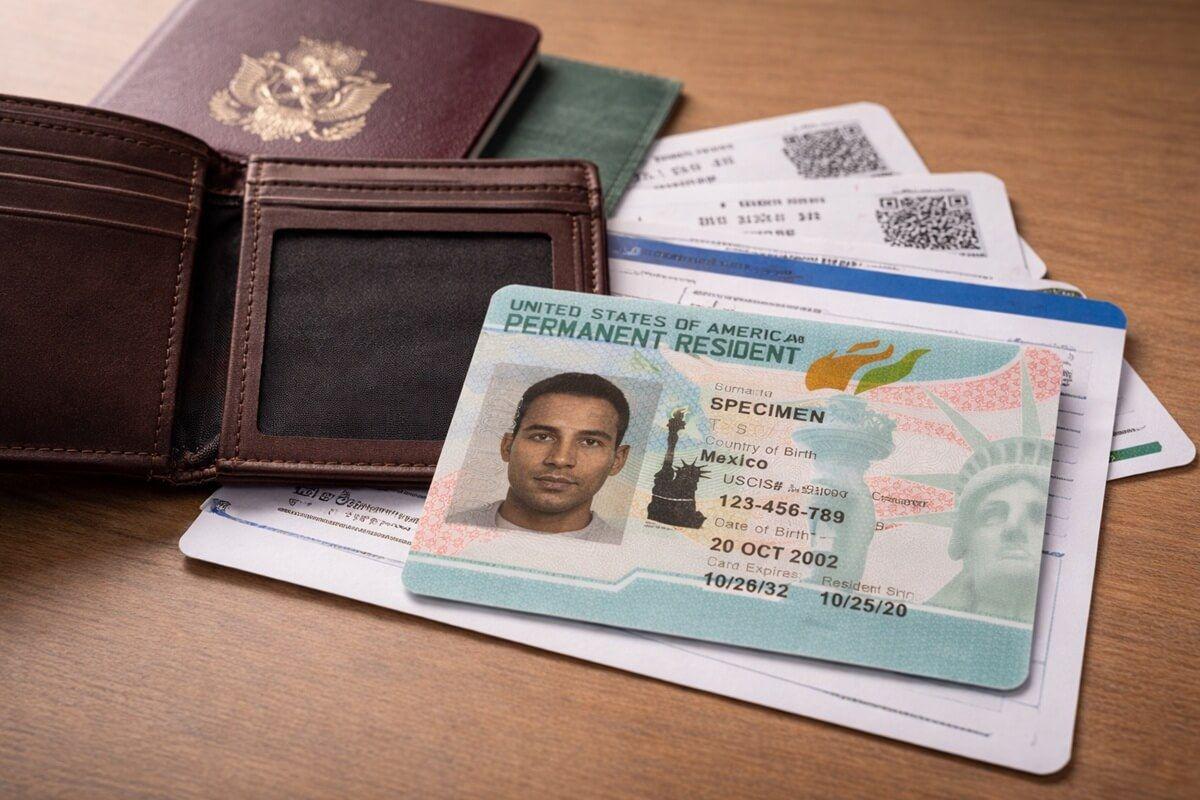
Mexico's Temporary Resident Visa (Residente Temporal) lets foreigners legally live in Mexico for more than 180 days and up to four years, with the option to renew or convert to permanent residency. In 2026, the financial thresholds, government fees, and procedural rules all changed, so this walkthrough covers exactly what applicants need to prepare this year.
Last updated: May 28, 2026
What the Temporary Resident Visa Is (and Who It's For)
The Residente Temporal is the standard residency category for foreigners who want to live in Mexico for between six months and four years. It is appropriate for retirees, remote workers, investors, students enrolled in long programs, and family members of Mexican citizens or existing legal residents.
Key structural points to understand before applying:
- The visa must be requested at a Mexican consulate or embassy outside Mexico. You cannot apply from inside the country as a tourist, except in Family Unit cases where the Mexican relative files directly with the Instituto Nacional de Migración (INM).
- The consulate issues a single-entry visa sticker valid for up to 180 days from issuance. You must enter Mexico within that window.
- Once in Mexico, you have 30 calendar days from your arrival to begin the canje (exchange) at INM, which converts the consular sticker into a physical residency card.
- The first card issued is always valid for 1 year. Subsequent renewals can be granted for 1, 2, or 3 years at INM's discretion, up to a cumulative maximum of 4 years.
- After 4 cumulative years as a temporary resident, you may apply for permanent residency without re-proving economic solvency.
This is different from the Visitor permit (FMM), which is limited to 180 days and does not authorize residence, and different from Permanent Residency, which has much higher financial thresholds and no expiration.
2026 Financial Requirements
The biggest change for 2026 is how income and savings thresholds are calculated. Since July 2025, Mexican consulates have based residency financial calculations on the UMA (Unidad de Medida y Actualización) rather than the Mexico City minimum wage. The 2026 UMA, published January 8, 2026, is MXN $117.31 per day, a 3.69% increase over 2025.
Applicants qualify by demonstrating one of two financial paths:
Qualifying path | 2026 threshold | Lookback period |
|---|---|---|
Monthly income (after tax) | ~USD $4,300–$4,400 per month (680 × UMA, varies ~$4,000–$4,500 by consulate) | Previous 6 months |
Savings or investments | ~USD $74,000 (11,460 × UMA) | Previous 12 months |
Each additional dependent (spouse, minor child) | +~USD $1,434/month or +CAD $1,843/month (220 × UMA) | Same as primary |
For reference, Permanent Residency in 2026 requires roughly USD $7,400/month in income or USD $300,000 in savings/investments, which is why most applicants begin with Temporary Resident status first.
A few practical notes on documentation:
- Bank statements must be official, stamped, and show your name, the account number, and a continuous balance or income stream covering the full lookback period.
- Income evidence can include pay stubs, pension statements, rental income contracts, or government benefit letters, as long as it is verifiable.
- Investment statements from brokerages count, but each consulate has its own view on cryptocurrency holdings. Most will not accept them.
- Mexperience uses an indicative rate of approximately 18 MXN per 1 USD for 2026 calculations; the consulate applies its own daily rate from https://www.dof.gob.mx, so build a buffer of 10–15% above the minimum.
Consulate-specific thresholds can vary by ±5–10% depending on the rate applied and local interpretation, so always confirm with the specific consulate where you plan to file.
Document Checklist
Bring originals and one full set of photocopies. Requirements are largely standardized but each consulate publishes its own checklist on its website.
Core documents:
- Passport, valid for at least 6 months beyond intended entry, with at least one blank visa page
- One photocopy of the passport biographical page
- Completed visa application form (downloadable from your consulate's website)
- One recent color passport-sized photo, white background, face uncovered, no glasses
- Proof of legal status in the country where you are applying (if not a citizen), such as a residence permit or long-term visa
- Financial evidence: 6 or 12 months of statements depending on which qualifying path you use
- Payment of the visa application fee (in the consulate's required form, usually money order or card)
Additional documents depending on qualifying basis:
- Family Unit: marriage certificate or birth certificate (apostilled and, in some consulates, translated), plus the Mexican relative's INE/CURP or residency card
- Retirement: pension letter or social security award letter
- Property in Mexico: title deed (escritura) showing the property is worth at least 40,000 × UMA (consult the consulate)
- Students: acceptance letter from a recognized Mexican institution
Double-check whether your consulate requires apostille and certified Spanish translation. Some, such as Washington and several Canadian posts, are strict; others accept English-language financial documents.
Application Walkthrough: Step by Step
Step 1: Book a consulate appointment
Use the official MiConsulado portal at https://citas.sre.gob.mx/ or https://www.miconsulado.sre.gob.mx/. WhatsApp and phone booking through +1-424-309-0009 is also available for U.S. and Canada applicants. Slots are scarce in major cities (Los Angeles, New York, Houston, Toronto, Vancouver), so booking 2–3 months ahead is realistic.
Step 2: Attend the consular interview
Arrive with originals, photocopies, and the application fee. The interview is short, usually 15–30 minutes, and conducted in Spanish or English depending on the consulate. The officer reviews financials, asks why you want to live in Mexico, and verifies your documents.
Step 3: Receive the visa sticker
Consulate processing time after the interview is typically up to 10 working days. The visa is a sticker affixed to your passport, single-entry, valid up to 180 days from issuance.
Step 4: Enter Mexico
At the port of entry, present the visa and request the FMM stamp marked "canje" (exchange). Immigration officers normally write the canje notation on the entry stamp or printed FMM. Without this, INM may refuse the canje later.
Step 5: File the canje at INM within 30 days
Within 30 calendar days of entry, file the exchange application at the INM office that covers your address in Mexico. You will:
- Submit Form Básico and a Carta de Solicitud (letter requesting the canje)
- Provide proof of address (CFE utility bill, rental contract, or notarized letter)
- Pay the INM card fee at a bank with the e5cinco form generated by INM
- Submit biometrics (fingerprints, photo, signature) at a scheduled appointment
INM card issuance after canje filing typically takes 8 to 16 weeks. End-to-end, from booking the consulate appointment to holding the physical card, expect 3 to 6 months.
Fees and Processing Times for 2026
A fee schedule revision published November 7, 2025 roughly doubled INM residency card costs starting January 1, 2026. Plan your budget accordingly.
Item | 2026 fee |
|---|---|
Consular visa application (U.S. consulates) | USD $56 (USD $54 at some, e.g. New Orleans) |
Consular visa application (Canadian consulates) | CAD $80 |
INM card, 1 year | MXN $11,140.74 |
INM card, 2 years | MXN $16,693.36 |
INM card, 3 years | MXN $21,142.58 |
INM card, 4 years | MXN $25,057.82 |
INM Permanent Residency card | MXN $13,578.96 |
Change of status (e.g. tourist to temporary) | MXN $1,847 |
Work authorization (temporary resident) | MXN $4,341 |
Visitor permit (FMM) | MXN $983 |
A 50% INM fee discount applies in 2026 to Family Unit applicants (spouses of Mexican citizens or existing legal foreign residents) and applicants sponsored by a Mexican company job offer.
The consular fee is non-refundable if the visa is denied. The total government fee burden across a 5-year journey from Temporary to Permanent residency per applicant roughly doubled from approximately MXN $25,000 (USD $1,350) in 2025 to over MXN $50,000 (USD $2,700) in 2026.
Common Pitfalls
Most rejections and delays come from a small set of avoidable mistakes.
- Missing the canje notation at the border. If the immigration officer does not mark your FMM with "canje," INM can refuse to process your card. Politely request the notation in writing while still at the booth.
- Filing the canje late. The 30-day window after arrival is strict. Missing it can void your visa.
- Insufficient financial buffer. Applying with bank balances that exactly meet the threshold often fails when the consulate applies a slightly different exchange rate. Aim for 110–115% of the published minimum.
- Statements that don't cover the full lookback. Six months of income means six full months, not five and a partial. Twelve months of savings means a continuously maintained balance.
- Applying from inside Mexico. Outside of Family Unit cases, you cannot file the Temporary Resident Visa from within Mexico. Some applicants try to convert from tourist status; this only works in specific exceptional circumstances and requires the change-of-status fee plus extra paperwork.
- Letting the card expire abroad without planning. If your temporary resident card expires while you are outside Mexico, you must re-enter within 55 days of expiration and file at INM within 5 days of returning. Inside Mexico, there is a 60-day grace period after expiration but with a fine.
- Ignoring tax residency. Spending 183 days or more in a calendar year in Mexico triggers tax residency, exposing worldwide income to Mexican taxation. Plan with a Mexican accountant before that threshold.
Frequently Asked Questions
Can I work in Mexico on a Temporary Resident Visa?
Not automatically. Temporary residents granted on financial solvency cannot work for a Mexican employer without separately requesting work authorization (permiso para trabajar) at INM, which costs MXN $4,341 in 2026. Remote work for a foreign employer is a gray area but generally tolerated.
Can my spouse and children come with me?
Yes, as dependents under the Family Unit category. You need to show additional income of approximately USD $1,434/month per dependent (220 × UMA), provide marriage or birth certificates (apostilled), and file each dependent's application alongside yours.
Do I need to speak Spanish to apply?
No. There is no language test for the Temporary Resident Visa. That said, the interview may be conducted in Spanish at some consulates, and INM offices in Mexico operate almost entirely in Spanish.
How long does the whole process take?
Plan for 3 to 6 months end-to-end: a few weeks to book and attend the consulate appointment, up to 10 working days for the sticker, travel to Mexico within 180 days, then 8 to 16 weeks at INM for the physical card.
Can I leave Mexico during the canje?
No. Once you have filed the canje application at INM, you cannot leave Mexico until the card is issued, unless you apply for and receive a special permission letter (oficio de salida y regreso) from INM. Leaving without it cancels the process.
What happens after four years?
After 4 cumulative years as a temporary resident, you may apply for permanent residency without re-proving economic solvency. This is the standard pathway for retirees and long-term residents.
Is the visa easier to get in certain consulates?
Thresholds and document requirements vary slightly. Some consulates (such as smaller posts in the U.S. and Canada) have shorter appointment waits and slightly looser interpretations. Others (Madrid, Paris, and major U.S. cities) tend to be stricter. You must apply at a consulate within your country of legal residence.
For readers comparing residency pathways elsewhere, see our Digital Nomad Visa Guide, Corporate Investor Visa Options, and Working Holiday Visa Programs.
Before filing, verify current figures with the specific Mexican consulate of application and the INM Migratory Procedures Microsite at https://www.inm.gob.mx.
If you're settling in Mexico, getting comfortable in Spanish will make every INM appointment, lease signing, and doctor's visit easier. try Migaku to learn Spanish from real Mexican shows, news, and YouTube.