Japan Winter Itinerary: Nagano, Niigata, and Powder Towns
最終更新日: 2026年5月28日
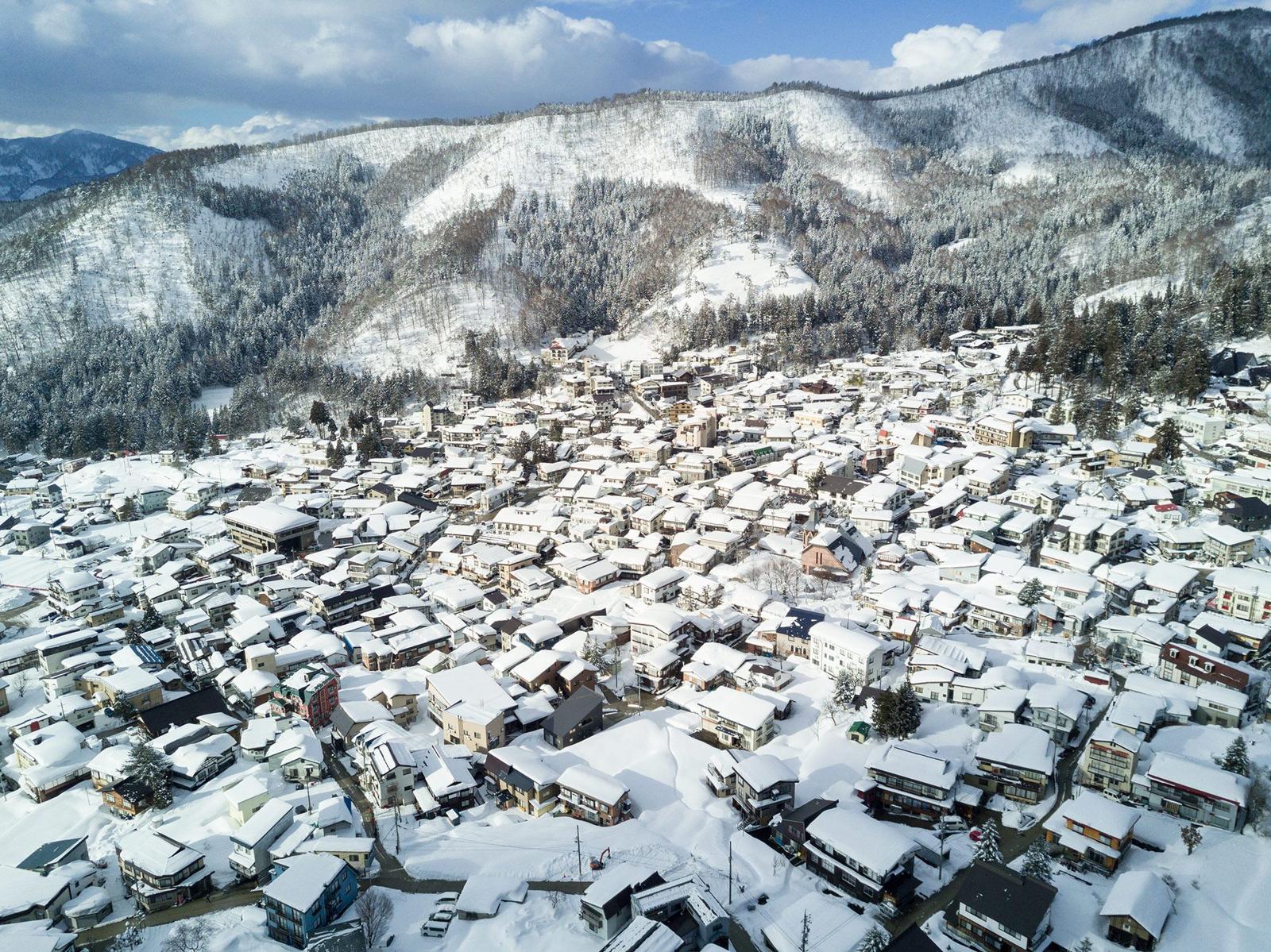
A practical Japan winter itinerary through Nagano and Niigata covers two regions of the Japan Sea coast that get reliable, dry, deep snow from December through March, easy bullet train access from Tokyo, and a dense cluster of powder resorts paired with traditional onsen towns. This guide walks through routes, costs, and logistics for the 2025–26 and 2026 seasons.
Last updated: May 28, 2026
Why Nagano and Niigata in Winter
Nagano and Niigata sit on the leeward side of the mountains that catch moisture pushing in from the Sea of Japan. The result is consistent snowfall, often measured in meters rather than centimeters at higher elevations. Compared to Hokkaido, the trip from Tokyo is shorter and cheaper: most key resorts are reachable in 80 minutes to 3 hours by Shinkansen, with no domestic flight required.
The two prefectures also pair well. Nagano hosted the 1998 Winter Olympics and has the Jigokudani snow monkeys, Zenkō-ji temple in Nagano City, and the Hakuba Valley resort cluster. Niigata has Echigo-Yuzawa (the closest ski area to Tokyo by Shinkansen), the rural Myōkō Kōgen region, and a dense network of traditional onsen ryokan.
A typical itinerary runs 7 to 10 days, splitting time between a ski base and one or two cultural or onsen stops.
Entry, Visas, and Arrival in 2026
Most Western travelers, plus many Asian nationals, can enter Japan visa-free for tourism. Japan currently maintains reciprocal visa exemptions with 74 countries and regions, with a 90-day stay for most nationalities, 30 days for Brunei and Qatar, and 15 days for Indonesia and Thailand. Travelers from countries not on the visa-waiver list can apply through the Japan eVISA system, which launched September 1, 2025 and covers short-term stays up to 90 days for tourism.
A few 2026 changes to be aware of:
- International Tourist Tax (the "Sayonara Tax") triples from ¥1,000 to ¥3,000 per person effective July 1, 2026. Tickets issued on or before June 30, 2026 keep the old ¥1,000 rate. Infants under 2 and transit passengers departing within 24 hours are exempt.
- Visit Japan Web is the standard online pre-registration for immigration and customs. Paper forms still work, but the digital process is faster at Narita and Haneda.
- Tax-free shopping changes in November 2026: tourists pay the full price including 10% consumption tax in store and claim the refund at the airport before departure.
- JESTA, the planned electronic travel authorization for visa-exempt visitors, is not yet active. It is scheduled to become mandatory in 2028.
Tokyo also charges a small accommodation tax: ¥100 per person per night for rooms priced ¥10,000–¥14,999, and ¥200 per night for rooms ¥15,000 and up. Niigata prefecture does not currently have a prefecture-wide accommodation tax, but check the municipal site for Yuzawa or Myōkō before booking.
Getting There: Shinkansen Routes and Rail Passes
Two Shinkansen lines do most of the heavy lifting:
- Hokuriku Shinkansen: Tokyo to Nagano in about 80 minutes on Kagayaki service or 95 minutes on Hakutaka. One-way ordinary reserved fare is approximately ¥8,340–¥8,500. Green Car runs around ¥11,000, Gran Class ¥14,000–¥16,200.
- Joetsu Shinkansen: Tokyo to Echigo-Yuzawa in 66 minutes, Tokyo to GALA Yuzawa in 71 minutes. The Tokyo–GALA Yuzawa one-way fare is ¥7,020.
For Myōkō, take the Hokuriku Shinkansen Hakutaka service to Joetsumyōkō, then transfer to a local train for Myōkōkōgen Station. Total time is about 3 hours and the one-way fare is approximately ¥9,240. From Myōkōkōgen Station, a local city bus to Akakura Onsen costs ¥380 in cash and takes 15 to 30 minutes.
Rail Pass Options
Pass | Price (adult / child) | Validity | Notes |
|---|---|---|---|
JR East Pass (Nagano, Niigata area) | ¥27,000 / ¥13,500 | 5 consecutive days | Foreign passport holders only |
Hokuriku Arch Pass | Foreign visitors only | 7 days | Tokyo to Kanazawa via Hokuriku Shinkansen |
Single tickets | Pay as you go | Per trip | Often cheaper for short trips |
The JR East Nagano/Niigata pass is the obvious choice if you are doing a multi-stop loop: Tokyo to Nagano, Nagano to Yuzawa, side trips to Hakuba or Myōkō, and back to Tokyo will exceed the pass price. Note that the 2025–26 sale period ended March 13, 2026, with vouchers redeemable through June 12, 2026. New seasonal sale dates are published on the JR East site.
Children under 6 do not need their own JR East Pass if they do not require a reserved seat.
A Suggested 8-Day Route
This itinerary balances skiing, cultural sights, and onsen time. Reverse it if snow conditions or your flight schedule favor Niigata first.
Day 1: Tokyo to Nagano City
Take the Hokuriku Shinkansen from Tokyo Station to Nagano (around 80 minutes). Visit Zenkō-ji temple in the afternoon and stay overnight in Nagano City or nearby Yudanaka Onsen.
Day 2: Jigokudani Snow Monkey Park
The macaques bathing in the hot springs at Jigokudani are the iconic winter Nagano image. Standalone admission in 2026 is ¥800 for adults and ¥400 for children, with winter hours of 9:00 to 16:00 from November through March.
For access, you have two main pass options:
- Snow Monkey Pass (Train + Local Bus): ¥5,100 adults / ¥2,550 children (ages 6–12). Covers one day of unlimited Nagaden Railway use, round-trip local bus between Yudanaka and the park, and park admission.
- Snow Monkey Express Bus Pass: ¥6,800 adults / ¥3,400 children. Round-trip direct express bus from Nagano Station East Exit plus park entry. Must be purchased in person at the Nagaden ticket counter.
The walk from the bus stop to the monkeys is roughly 30 to 40 minutes on a packed-snow forest path. Bring proper boots.
Days 3–5: Hakuba or Nozawa Onsen
From Nagano, you have two strong powder bases.
Hakuba Valley is 10 resorts under one combined ticket, linked by free inter-resort shuttle buses. The 2025–26 all-mountain single-day adult lift pass starts at ¥10,400. The adult threshold is 13 and older, child rates apply to ages 6–12, and children under 6 ski free. Hakuba Happo-One, Goryu, and Tsugaike all have access to long groomers and serious backcountry-adjacent terrain.
Nozawa Onsen is a smaller, more concentrated village built around 13 free public bath houses (the sotoyu). The 2025–26 season runs November 29, 2025 to May 6, 2026. Lift passes:
- 2-Day Pass: USD $88.58 adult / $52.90 child
- 3-Day Pass: USD $129.37 adult / $77.11 child
A Spring Season Pass becomes valid from March 1, 2026.
For a deeper look at the broader region including Matsumoto, see the Japan Alps Itinerary: Kamikochi and Takayama guide.
Day 6: Transfer to Myōkō or Echigo-Yuzawa
Cross from Nagano into Niigata. Myōkō Kōgen is a quieter, older resort area with deep snow and traditional onsen lodges.
- Akakura Onsen Ski Resort: 2025–26 season runs December 13, 2025 to March 29, 2026.
- Akakura Kanko Resort: runs December 19, 2025 to May 6, 2026.
- Akakura Onsen advance 1-day ticket: ¥7,000 regular (¥4,000 early-bird, sales ended end of September 2025).
- Mt. Myōkō All Mountain one-day pass: ¥8,000 standard, ¥7,300 advance, valid through the scheduled season end on March 29, 2026.
Days 7–8: Echigo-Yuzawa
Echigo-Yuzawa is the most efficient ski stop in Japan: 66 to 71 minutes from Tokyo Station, with GALA Yuzawa literally connected to the Shinkansen station. The 2025–26 GALA winter season ran December 20, 2025 to May 6, 2026.
The Yuzawa area uses combined ticketing that is well worth understanding:
- YUZAWA SNOW LINK three-mountain pass (Yuzawa Kogen, GALA Yuzawa, Ishiuchi Maruyama): can be added to any single-resort 1-day ticket for ¥3,000. Valid December 20, 2025 to March 22, 2026.
- Echigo Yuzawa Snow Pass 10: ¥5,500 advance 1-day ticket, limited to 3,000 pieces, exchangeable at any of 10 ski resorts.
- Echigo Yuzawa Snow Pass 7 season ticket: ¥150,000, usable December 20, 2025 to March 31, 2026, exchangeable for a one-day pass at any of 7 ski resorts once per day.
Return to Tokyo from Echigo-Yuzawa or GALA Yuzawa Station on the Joetsu Shinkansen.
Costs at a Glance
Rough per-person budget for 8 days, mid-range, excluding international flights:
Category | Estimate (JPY) |
|---|---|
JR East Nagano/Niigata 5-day pass | ¥27,000 |
Additional Shinkansen segments | ¥10,000–¥15,000 |
4 days of lift tickets | ¥35,000–¥45,000 |
Snow Monkey Pass | ¥5,100 |
Accommodation (8 nights mix of business hotel and ryokan) | ¥95,000–¥160,000 |
Food and onsen entries | ¥30,000–¥50,000 |
Departure tax (from July 1, 2026) | ¥3,000 |
Ryokan and Onsen Etiquette
A ryokan stay is the cultural anchor of a Nagano or Niigata winter trip. A few practical rules:
- Remove shoes at the entrance and use the slippers provided. Remove slippers before stepping onto tatami.
- Wash and rinse thoroughly at the seated showers before entering the bath. Soap does not go in the water.
- Most onsen require full nudity. Swimsuits are not standard.
- Tattoos: many traditional baths still prohibit them. Some ryokan in Hakuba, Nozawa, and Yuzawa have become more flexible, and waterproof cover-up patches are widely sold. Check before booking.
- Dinner (kaiseki) is usually served between 18:00 and 19:30 at fixed times. Arrive in time.
Common Pitfalls
- Booking too late: Hakuba and Nozawa ryokan and ski-in lodges fill up months ahead for Christmas through mid-February, and especially for Lunar New Year week.
- Underestimating transfers: Myōkō and parts of Hakuba require a train plus local bus combination. Budget at least 30 to 60 extra minutes per leg with luggage in snow.
- Shipping luggage: Use takkyūbin (Yamato or Sagawa) from your Tokyo hotel to your ski base for around ¥2,000–¥3,000 per bag. Bullet trains have limited oversized luggage space and reservation is required for bags above 160 cm total.
- Cash for rural buses: The Myōkōkōgen Station to Akakura bus and many local services still require ¥380 or similar in coins or small bills.
- Lift pass validity windows: Early-bird tickets often have hard sale cutoffs (Akakura's ended in September 2025). Buy in advance once dates are confirmed.
- Departure tax timing: If you are buying a return ticket for travel after July 1, 2026, the ¥3,000 rate applies. Tickets issued by June 30, 2026 keep the ¥1,000 rate.
FAQs
When is the best time to go for powder?
Mid-January to mid-February is the deepest, coldest period. Late December has snow but conditions can be variable. March is sunnier with softer snow, good for beginners and intermediates.
Can I do this trip without skiing?
Yes. The snow monkeys, Zenkō-ji, Nozawa's public baths, Echigo-Yuzawa's onsen ryokan, and snow festivals in February all work without ever clicking into a binding.
Do I need an International Driving Permit?
Not if you stick to trains and resort shuttles. Roads in Nagano and Niigata can be heavily snowbound and require winter tires or chains; rental is best left to experienced winter drivers.
Is English signage reliable?
At major Shinkansen stations, large resorts, and the snow monkey park, yes. At rural ryokan, small restaurants, and local buses, expect mostly Japanese. A translation app and a few set phrases go a long way.
How does this compare to Hokkaido?
Nagano and Niigata are closer, cheaper to reach from Tokyo, and culturally denser per kilometer. Hokkaido has lighter, drier snow and bigger single resorts. For a comparison route, see the Hokkaido Winter Itinerary for Snow and Onsen. If you have more time and want to avoid crowds entirely, consider the 10-Day Tohoku Itinerary for Foreigners.
If you are heading to Japan and want to read menus, talk with ryokan staff, and follow lift announcements without fumbling through an app, learning some Japanese with real content from Japan helps. try Migaku to study from the shows, news, and websites you already use.