10-Day Tohoku Itinerary for Foreigners Skipping the Crowds
Last updated: May 27, 2026
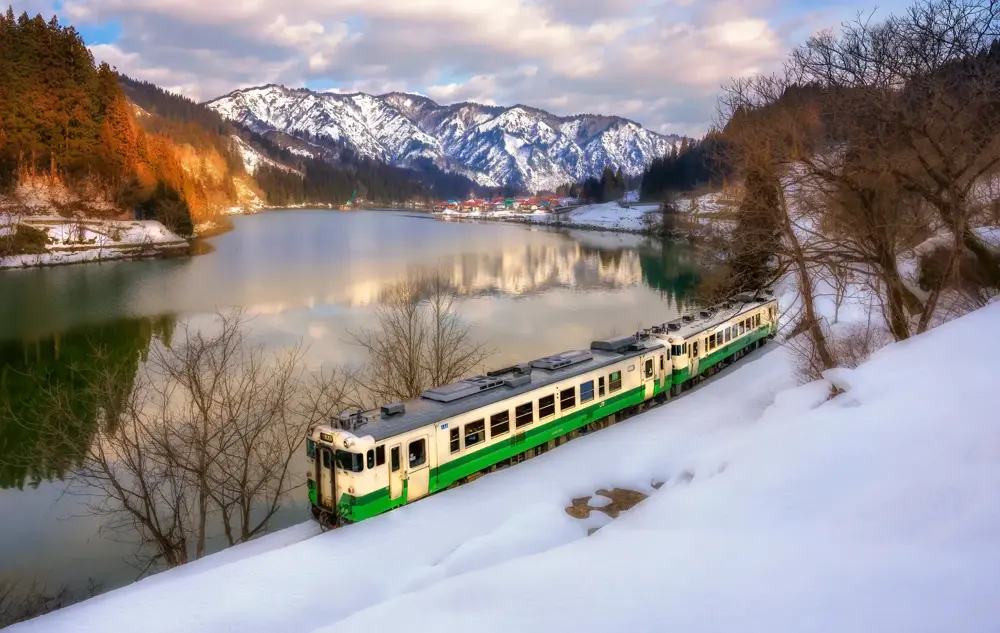
Tohoku, the six-prefecture region north of Tokyo, gives you mountain temples, coastal villages, summer festivals, and onsen towns with a fraction of the foot traffic of Kyoto or Osaka. This 10-day itinerary is built for foreign travelers who want a realistic, well-paced route through Miyagi, Iwate, Aomori, Akita, Yamagata, and Fukushima without queueing behind tour groups.
Last updated: May 27, 2026
Why Tohoku, and Why Now
Most foreign visitors fly into Tokyo, do the Golden Route to Kyoto and Osaka, and head home. That leaves Tohoku quiet, even in summer festival season. You will still encounter domestic tourists at the headline events (Aomori Nebuta, Akita Kanto, Sendai Tanabata), but the rest of your days, hiking Yamadera, soaking in Nyuto Onsen, walking the Hiraizumi temples, will feel almost empty by Japanese standards.
A few 2026 changes are worth knowing before you book:
- The new integrated JR EAST PASS launched March 14, 2026, replacing the older Tohoku-area-only pass. A 5-day pass costs ¥35,000 and a 10-day pass costs ¥50,000 (ordinary car), covering Tokyo, Sendai, Aomori, Akita, Nagano, and Niigata areas.
- Japan's international departure tax triples from ¥1,000 to ¥3,000 per person on July 1, 2026.
- From November 1, 2026, tax-free shopping switches to a refund model: you pay the full 10% consumption tax at checkout and reclaim it at the airport before departure (¥5,000 minimum spend still applies).
- Hokkaido added a prefecture-wide accommodation tax on April 1, 2026. None of the six Tohoku prefectures have confirmed an equivalent in this round, so lodging tax is mostly limited to Tokyo's existing rates (¥100 per person per night for stays ¥10,000–under ¥15,000; ¥200 for ¥15,000+).
Entry Requirements and Pre-Trip Admin
Citizens of roughly 68 countries (including the US, UK, Canada, Australia, and most of the EU) can enter Japan visa-free for up to 90 days for tourism. If you are not from a visa-exempt country:
- The JAPAN eVISA system, launched September 1, 2025, is available to several nationalities including Australia, Brazil, Canada, the UK, and the USA when applicable.
- Standard tourist visa processing through a Japanese consulate takes about one week (a minimum of 5 business days from acceptance of a complete application), per Ministry of Foreign Affairs (MOFA) guidance.
- MOFA baseline visa fees are approximately ¥3,000 (single entry), ¥6,000 (multiple entry), and ¥700 (transit), though exact fees are set by your nearest Japanese diplomatic mission.
- JESTA (Japan Electronic System for Travel Authorization) is planned for 2028 and is not required for 2026 trips.
Before you fly, reserve your JR EAST PASS or JAPAN RAIL PASS online. From April 1, 2026, JAPAN RAIL PASS holders who book through the official site can pick up at JR East reserved-seat ticket vending machines (with passport readers) at stations including Tokyo, Shinjuku, Shibuya, Ikebukuro, Ueno, Shinagawa, Hamamatsucho, Haneda Airport Terminal 3, Narita Airport Terminals 1 and 2, and Sendai.
The 10-Day Route at a Glance
This itinerary assumes a Tokyo arrival and Tokyo departure, with the 10-day JR EAST PASS (¥50,000) doing the heavy lifting. If you arrive directly into Sendai Airport on an international flight, skip Day 1's Shinkansen leg.
Day | Base | Focus |
|---|---|---|
1 | Sendai | Arrive from Tokyo via Tohoku Shinkansen |
2 | Sendai | Matsushima Bay day trip |
3 | Yamagata | Yamadera temple climb |
4 | Ginzan Onsen | Edo-era hot spring village |
5 | Akita | Kakunodate samurai district, transfer north |
6 | Lake Tazawa / Nyuto | Onsen and lake day |
7 | Aomori | Hirosaki Castle, Aomori city |
8 | Aomori | Hakkoda mountains or Oirase Stream |
9 | Hiraizumi | Chusonji and Motsuji, transfer south |
10 | Tokyo | Return via Shinkansen, depart |
Day-by-Day Breakdown
Day 1: Tokyo to Sendai
The Tohoku Shinkansen Hayabusa runs Tokyo to Shin-Aomori in roughly 2 hours 58 minutes to 3 hours 10 minutes, hitting 320 km/h. Tokyo to Sendai takes about 90 minutes. Reserved ordinary fares to Shin-Aomori start around ¥17,000–21,000 one-way, fully covered by the JR EAST PASS.
Drop your bags at your Sendai hotel, then walk Kokubuncho for an evening of gyutan (grilled beef tongue), the city's signature dish. Sendai is compact and English-friendly compared with smaller Tohoku cities, a soft landing.
Day 2: Matsushima Bay
Matsushima, one of Japan's classic "three views," is a 40-minute ride on the JR Senseki Line from Sendai. Walk the red bridges to Fukuurajima island, visit Zuiganji temple, and take a short bay cruise to see the pine-covered islets.
Get the Sendai Area Pass (¥1,420, foreign tourists only, 1 day) if you don't already have a JR EAST PASS active. It covers JR trains to Matsushima and Yamadera, the Sendai Airport Access Line, the Sendai subway, the Loople Sendai loop bus, and Miyagi Kotsu buses. Residents (or anyone needing 2 days) can use the Sendai Marugoto Pass at ¥2,930.
Day 3: Yamadera
Yamadera (Risshakuji Temple) sits on a cliff above the Senzan rail line, 1,015 stone steps from base to summit. Admission is ¥300 for adults, ¥200 junior high, ¥100 children age 4+. Open 8:00 to 17:00. From Sendai Station, the JR Senzan Line takes about 60 minutes (¥1,760 to Yamagata, less to Yamadera itself).
Climb early to beat the heat and the day-trippers, eat imoni stew at the base, then continue on to Yamagata city for the night.
Day 4: Ginzan Onsen
From Yamagata, head north to Ginzan Onsen, a snow-country hot spring village of wooden inns lining a small river. Day visitors are restricted in peak winter, but in shoulder season you can stay overnight at a ryokan and have the gaslit streets to yourself after the last bus leaves.
Day 5: Kakunodate and Transfer to Akita
Cross the Ou mountains into Akita Prefecture. Stop in Kakunodate to walk the preserved samurai district, then continue to Akita city. If you are timing the trip for early August, this is your gateway to the Akita Kanto Matsuri (August 3–6, 2026), where performers balance long bamboo poles strung with paper lanterns. Night parades run 18:15 to 21:00 on Kanto Odori Street. Entry is free; paid reserved seating is available.
The Sendai-to-Akita Shinkansen route takes roughly 2 hours 15 minutes at about ¥10,920 one-way (covered by the JR EAST PASS).
Day 6: Lake Tazawa and Nyuto Onsen
Japan's deepest lake sits about an hour from Akita by Akita Shinkansen plus local bus. Rent a bicycle to circle Tazawa, then take the bus up to Nyuto Onsen, a cluster of seven traditional hot spring inns. Tsurunoyu, the oldest, is the photogenic one. Stay one night if your budget allows.
Day 7: Aomori City and Hirosaki
Continue north. Aomori Airport connects to JR Aomori Station by JR bus in 35 minutes for ¥980, fully covered by the JR EAST PASS and Japan Rail Pass, useful if you ever need a regional flight.
Early August (August 2–7, 2026) is Aomori Nebuta Festival week. Parades run 19:00 to 21:00 most nights, with the final day adding a 13:00–15:00 daytime parade and a 19:15–21:00 fireworks and marine parade. Paid reserved seats start at ¥2,600 per person; general tickets go on sale June 28 at 10:00 a.m. at ¥3,500 plus a ¥1,000 administrative fee. The streetside crowd is free if you arrive a couple of hours early.
If festivals aren't your timing, day-trip to Hirosaki for the castle and apple orchards.
Day 8: Hakkoda or Oirase Stream
Use Aomori as a base for one nature day. The Hakkoda mountains offer cable-car access and alpine wetland hikes in summer. Alternatively, the Oirase Stream walk (Lake Towada) is a flat, forested 9 km riverside path that thins out quickly past the bus stops.
Day 9: Hiraizumi
Head back south on the Tohoku Shinkansen to Ichinoseki, then transfer to the local line for Hiraizumi, a small town with a UNESCO-listed temple complex from the 12th-century Northern Fujiwara era.
Chusonji Temple's combined admission (Konjikido, Sankozo Museum, Sutra Repository, Former Konjikido Cover Hall) costs:
- Adults: ¥800
- High school students: ¥500
- Junior high: ¥300
- Elementary: ¥200
Open 8:30 to 17:00 (until 16:30 from November 4 to February 28); admission ends 10 minutes before closing.
Getting around Hiraizumi: the Run Run loop bus is ¥150 per ride or ¥400 for an all-day pass. From Hiraizumi Station, Chusonji is a 25-minute walk, 5 minutes by regular bus, or about 10 minutes via the loop bus.
Finish the day at Motsuji's Pure Land garden, then take the Shinkansen back to Sendai for a comfortable last night.
Day 10: Back to Tokyo
Return to Tokyo on the morning Hayabusa. If you are flying out of Haneda or Narita that evening, the JR EAST PASS still covers the Narita Express and the Tokyo Monorail to Haneda.
Fees, Passes, and Budget Snapshot
Item | Cost (2026) |
|---|---|
JR EAST PASS (10 days, ordinary) | ¥50,000 |
JR EAST PASS (5 days, ordinary) | ¥35,000 |
Sendai Area Pass (1 day, foreign tourists) | ¥1,420 |
Sendai Marugoto Pass (2 days) | ¥2,930 |
Loople Sendai 1-day | ¥630 adult / ¥320 child |
Loople + Subway 1-day | ¥920 adult / ¥460 child |
Sendai Airport Access Line | ¥660 one-way, ~25 min local |
Yamadera admission | ¥300 adult |
Chusonji combined admission | ¥800 adult |
Hiraizumi Run Run bus all-day | ¥400 |
Aomori Airport to Aomori Station (JR bus) | ¥980, 35 min |
Departure tax (from July 1, 2026) | ¥3,000 per person |
Tokyo accommodation tax | ¥100–¥200 per person per night |
The Sendai Airport Access Line is local-only as of the March 14, 2026 timetable revision, so plan around the 25-minute trip rather than the older 17-minute Rapid service.
Common Pitfalls
- Buying the wrong pass. The old Tohoku-area-only JR East Pass stopped sales on March 13, 2026. Make sure you are buying the new integrated JR EAST PASS, not an outdated SKU on a reseller site.
- Assuming festival dates shift. The big three (Aomori Nebuta Aug 2–7, Akita Kanto Aug 3–6, Sendai Tanabata Aug 6–8) overlap in early August every year. You can hit two or three in one trip, but lodging in those cities books out months ahead.
- Underestimating transfer times. Tohoku is large. Akita to Aomori by Shinkansen still requires routing via Morioka. Build in buffer.
- Tax-free confusion after November 1, 2026. You will pay full price including 10% consumption tax at checkout and claim a refund at the airport. Keep receipts and passport handy.
- Cash-only inns. Many smaller ryokan in Nyuto, Ginzan, and rural Iwate still prefer cash. Withdraw at 7-Eleven or Japan Post ATMs in cities.
- Missing the Senzan Line cutoff. Yamadera admission ends 10 minutes before closing (17:00, or 16:30 in winter). A late train from Sendai will leave you with no time to climb.
FAQ
Is 10 days enough for Tohoku?
It is enough for a focused loop hitting four or five prefectures at a steady pace. Two weeks lets you add Fukushima's Aizu region or extend into coastal Iwate.
When is the best time to go?
Late July to early August for festivals, late September to early November for foliage, and February for snow festivals like Yokote Kamakura. Avoid Golden Week (late April to early May) and Obon (mid-August) for transport reasons.
Can I do this without a rental car?
Yes. The itinerary above is built entirely around trains and buses. A car helps if you want to base in Nyuto Onsen or drive Oirase Stream, but it isn't required.
Do I need to speak Japanese?
English signage is good on Shinkansen lines, in major stations, and at headline attractions. It drops off quickly at rural ryokan, small soba shops, and local buses. Even basic spoken Japanese makes a real difference outside Sendai.
What about cell service and Wi-Fi?
Coverage is reliable across all major Tohoku cities and most train lines. A travel eSIM is the simplest option for short stays; pocket Wi-Fi pickup at Narita or Haneda is the backup.
Are there other Japan routes I should compare?
For a longer slow-travel option, see this 2-week Japan itinerary off the beaten path. If you would rather stick to the standard cities, this 1-week Japan itinerary covering Tokyo, Kyoto, and Osaka is the classic loop. Pairing Tohoku with the north is also popular, in which case a 1-week Hokkaido itinerary for summer trips makes a clean extension via the Hokkaido Shinkansen.
If you are heading to Tohoku and want to handle bus drivers, ryokan check-ins, and izakaya menus with more than a phrasebook, try Migaku, it is built around learning Japanese from the shows, books, and signs you will actually encounter.