# How to Say Colors in Cantonese: Complete Beginner's Guide
> Discover how color vocabulary works in everyday Cantonese speech. Learn Cantonese colors with cultural meanings, audio, and practical examples.
**URL:** https://migaku.com/blog/chinese/cantonese-colors-guide
**Last Updated:** 2026-04-03
**Tags:** vocabulary, phrases
---
Learning colors in Cantonese is way more interesting than you might think. Sure, you could just memorize a list of color names and call it a day, but there's actually some cool cultural stuff happening here. The way Cantonese speakers talk about colors connects to traditional Chinese culture, and some of the color names work differently than what you'd expect from English. Let's dig into how Cantonese colors actually work, what they mean, and how you can start [learning Cantonese](https://migaku.com/learn-cantonese) colors efficiently!
----
## Basic colors in Cantonese
Here are the essential colors you'll need to know. These are the ones that come up constantly in everyday conversation.
- Red is 紅色 (hung4 sik1) or just 紅 (hung4). This is probably the most culturally significant color in Chinese culture. Red represents luck, happiness, and celebration. You'll see it everywhere during Chinese New Year and at weddings.
- Blue is 藍色 (laam4 sik1) or 藍 (laam4). Pretty straightforward, though Cantonese speakers sometimes use this for describing both blue and certain shades of green, which can be confusing at first.
- Yellow is 黃色 (wong4 sik1) or 黃 (wong4). Historically, yellow was the emperor's color in China, so it has associations with royalty and power.
- Green is 綠色 (luk6 sik1) or 綠 (luk6). Like I mentioned, the distinction between blue and green can be a bit fluid in Cantonese conversation.
- White is 白色 (baak6 sik1) or 白 (baak6). White has different cultural meanings than in Western cultures. It's traditionally associated with mourning and funerals.
- Black is 黑色 (hak1 sik1) or 黑 (hak1). Pretty neutral color in terms of cultural meaning, though it can represent authority or formality.
- Pink is 粉紅色 (fan2 hung4 sik1). Literally translates to "powder red color," which is a nice way to think about it.
- Purple is 紫色 (zi2 sik1) or 紫 (zi2). This color has associations with nobility and spirituality in traditional Chinese culture.
- Orange is 橙色 (caang2 sik1) or 橙 (caang2). The character is the same as the fruit, which makes it easy to remember.
- Brown is 啡色 (fe1 sik1) or 棕色 (zung1 sik1). The first one literally means "coffee color," which you'll hear more often in everyday speech.
- Grey is 灰色 (fui1 sik1) or 灰 (fui1). The character originally meant "ash," so you're basically saying "ash color."
----
## How to use colors in Cantonese sentences
Let's look at some actual sentence patterns you'll use.
> 💡The most common structure is: ***noun* + 係 (hai6) + *color* + 色 (sik1) + 嘅 (ge3).**
呢件衫係紅色嘅 (ni1 gin6 saam1 hai6 hung4 sik1 ge3) means "This shirt is red."
> 💡Another pattern puts the color before the noun: ***color* + 色 (sik1) + 嘅 (ge3) + *noun*.**
紅色嘅車 (hung4 sik1 ge3 ce1) means "red car."
In casual speech, you can drop 色 (sik1): 紅嘅車 (hung4 ge3 ce1) still means "red car" and sounds more natural.
----
## Colors that carry different cultural meanings
Here's where it gets interesting. Some Cantonese color words have slang meanings or can describe things beyond just the literal color.
- 黑 (hak1) for black can mean illegal or underground, like 黑市 (hak1 si5) meaning "black market."
- 黃 (wong4) for yellow can refer to adult content or pornography in modern slang, which is why you need to be careful with context.
- 綠 (luk6) for green has picked up the meaning of being cheated on in a relationship, borrowed from Mandarin internet slang. If someone says they've been "given a green hat," that's what they mean.
- 紅 (hung4) for red can mean popular or trending, like 紅人 (hung4 jan4) meaning a popular celebrity.
----
## Light and dark variations
Cantonese has specific ways to describe lighter or darker shades of colors. You add 淺 (cin2) before the color for light shades, and 深 (sam1) for dark shades.
- 淺藍 (cin2 laam4) means light blue.
- 深藍 (sam1 laam4) means dark blue or navy.
- 淺綠 (cin2 luk6) means light green.
- 深綠 (sam1 luk6) means dark green.
This system works for pretty much any color. It's super practical when you need to be more specific about what shade you're talking about.
----
## The cultural root and etymology of Cantonese colors
The color vocabulary in Cantonese comes directly from Chinese characters that have been used for thousands of years. The cool thing is that many color names connect to natural objects or phenomena.
- 紅 (hung4) for red originally depicted silk threads being dyed.
- 藍 (laam4) for blue comes from the indigo plant used for dyeing.
- 黃 (wong4) for yellow relates to the earth and soil of the Yellow River region.
This means when you learn Cantonese colors, you're learning words with deep historical roots. The characters haven't changed much over centuries, even though the pronunciation has evolved differently in Cantonese compared to Mandarin.
----
## Practice tips for mastering color vocabulary
1. Start by learning the basic colors without 色 (sik1) first. Just memorize 紅 (hung4), 藍 (laam4), 黃 (wong4), and so on. Once those are solid, add the full forms with 色.
2. Practice describing things around you in Cantonese. Look at your clothes, your room, things outside. Try to form simple sentences like "my phone is black" or "that car is white."
3. Use sticky notes with color names written in Chinese characters around your space. Put 藍色 on something blue, 綠色 on something green. This visual association helps a ton.
4. Watch Cantonese content with subtitles and pause when you hear color words. Check if you caught the right color and tone. Rewind and repeat until it sounds natural to you.
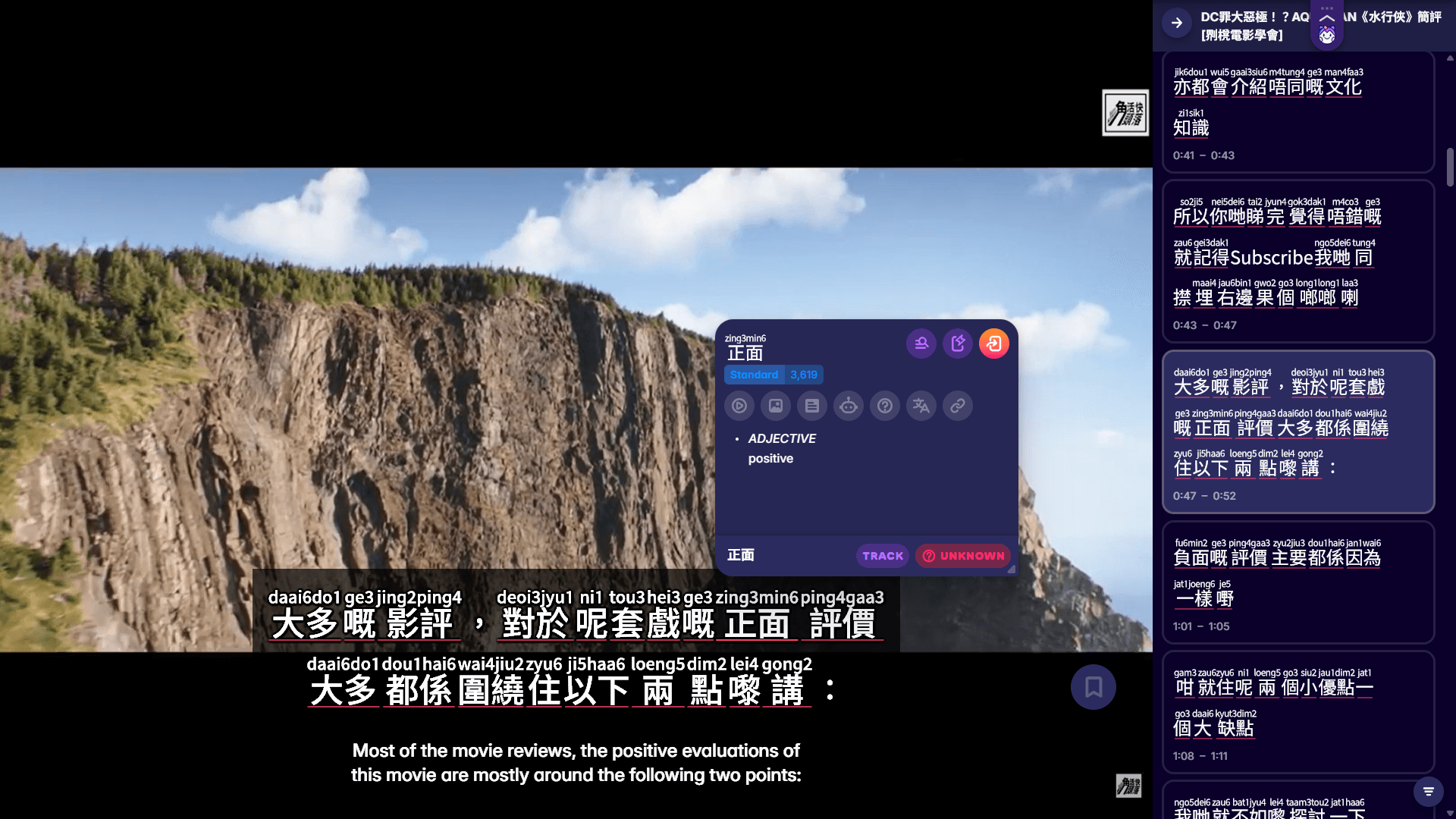
Looking to speed up your Cantonese learning with real content? Migaku's browser extension and app let you look up Cantonese words instantly while watching shows or reading articles, so you can learn colors and other vocabulary in actual context. There's a 10-day free trial if you want to check it out.
 ----
## Your path to color fluency in Cantonese language
Colors give you a foundation for describing the world around you in Cantonese. Once you've got the basic color vocabulary down, you can start combining it with other words to create more complex descriptions. Keep exposing yourself to real Cantonese content where colors come up naturally. The more you hear these words in context, the more automatic they'll become. Pretty soon, you'll be describing things in Cantonese without even thinking about it.
> If you consume media in Cantonese, and you understand at least some of the messages and sentences within that media, you will make progress. *Period*.
Color is never just visual — it is cultural.
----
## Your path to color fluency in Cantonese language
Colors give you a foundation for describing the world around you in Cantonese. Once you've got the basic color vocabulary down, you can start combining it with other words to create more complex descriptions. Keep exposing yourself to real Cantonese content where colors come up naturally. The more you hear these words in context, the more automatic they'll become. Pretty soon, you'll be describing things in Cantonese without even thinking about it.
> If you consume media in Cantonese, and you understand at least some of the messages and sentences within that media, you will make progress. *Period*.
Color is never just visual — it is cultural.