# Chinese Learning Mistakes: Common Mistakes That Learners Should Avoid From the Start
> These are the four common mistakes in Chinese learning process. Check if you are making these mistakes too when studying Chinese!
**URL:** https://migaku.com/blog/chinese/chinese-learning-mistakes
**Last Updated:** 2025-12-09
**Tags:** discussion, listicle
---
No matter if [Chinese learning](https://migaku.com/learn-chinese) is your first foreign language learning experience, or if you have already studied several languages, here we are, discussing the common pitfalls of Chinese learning!🤯Because each language is different, the common mistakes and difficulties of mastering are unique for each language as well. Moreover, understanding the challenge can help us strategize our study better! Let's have a look at these common mistakes and see how they can help us!
---
## Mandarin Chinese learners often overlook the importance of Chinese tones
The first common pitfall when learning Mandarin is not spending enough time memorizing[ the tones of the characters](https://migaku.com/blog/chinese/chinese-tone-practice). You may want to ask what the shortcut is for mastering Chinese pronunciation, but there is simply none for a language that has tones. There are so many infamous examples of wrong tones leading to wrong meanings, because Chinese uses tones and context to identify the words that you are trying to say.
The second most common mistake isn’t just getting a tone wrong; it’s assuming they are optional decorations, like linguistic sprinkles. This error neglects the melody of the sentence and leads to the “Paralysis by Analysis” stage. You’re so focused on producing four distinct pitches for every single syllable that your speech becomes a slow, robotic, and deeply stressed performance. The irony? In striving for perfect individual tones, you destroy the natural rhythm that makes speech intelligible. Natives don’t speak in perfect, textbook tones either; they speak in phrases and patterns. The key is to stop treating tones as singular notes and start practicing them as part of musical chunks—greetings, common phrases, questions. Listen to how a whole question like (What would you like to order?) rises and falls, rather than obsessing over each syllable.
Mandarin isn’t a series of isolated, perfect tones. They flow, change, and interact. The third tone, for instance, rarely drops and rises fully—it often stays low, or changes when followed by another tone. All in all, it takes extra effort to learn how to combine the tones of the characters with the speaker's tones, but the internalization of this combination is built on the fact that you know the tones of the characters well!
---
## Understanding radicals and strokes is crucial to learn Chinese characters
Another profound and common mistake is to focus solely on sound without learning the structure of Chinese characters. Because Chinese is not a phonogram language, learners can become adept at reading shū, diàn, and huǒ in pinyin, yet remain completely lost when encountering the characters (Book), (Electric), or (Fire). This creates a fundamental disconnect. Pinyin is a phonetic guide, a set of instructions for pronunciation, but the scripts are made of radicals, strokes, and phonetic components.
The true scaffolding for mastering the scripts is [the radical and stroke system](https://migaku.com/blog/chinese/chinese-radicals). Each character is not a random scribble; it is a structured composition. Radicals, the building-block components, often provide clues to meaning or sound. For example, the fire radical 火 appears in (Lamp), (Stir-fry), and (To burn). Recognizing radicals allows you to categorize, guess meanings, and deconstruct complex characters into understandable parts. Simultaneously, understanding stroke order — the prescribed sequence for writing each line — trains your muscle memory, enables you to look them up in dictionaries, and input them digitally.
Therefore, it is a mistake in Chinese learning to adopt the same strategy of learning English vocabulary. Chinese vocabulary building is fundamentally different from English, and it requires the memorization of both the pronunciation and the script. The path forward is to marry sound with form from the very beginning. Learn the 20 most common radicals and basic stroke rules early. When you learn a new word like (Library), don't just memorize "túshūguǎn." See it: (Picture), (Book), (Building)—a "picture-book building."
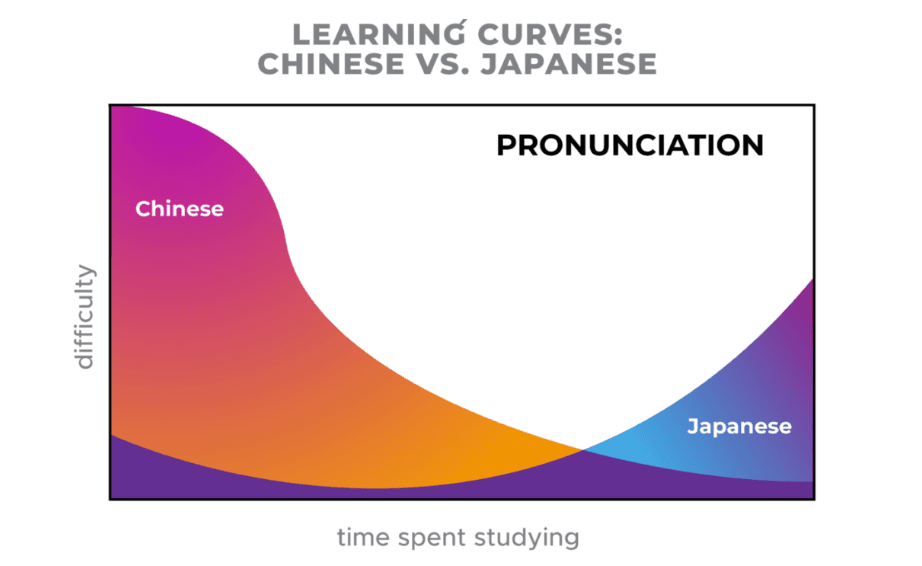
This learning curve comparison between Chinese and Japanese learning demonstrates the efforts that learners make at the early stage of Chinese learning.
 ---
## Chinese grammar is easy, but grammar mistakes happen when you translate word-for-word...
Direct translation is the quickest route to producing sentences that are English in disguise, wearing a cheap Chinese costume. [The syntax](https://migaku.com/blog/chinese/chinese-word-order) seems deceptively simple: Subject + Verb + Object, just like English! The bigger minefield is thinking English grammar concepts map directly. The placement of time, location, and some other particles is quite different. Chinese doesn’t conjugate verbs (no eat, ate, eaten), has no articles (a, an, the), and uses a small arsenal of particles to express tense, mood, and aspect.
For example, beginners often make mistakes with measure words. In English, you have “a dog,” “a paper,” “a song.” In Chinese, you must choose the correct classifier: (A dog), (A piece of paper), (A song). Using the generic 个 for everything marks you as a beginner instantly. The mental shift required is from translation to transposition. Instead of converting words, you must learn to rearrange ideas into a Chinese framework. To speak like a native speaker, you must try to build an independent Chinese mindset from the start, and fortify it with a large amount of input and practice!
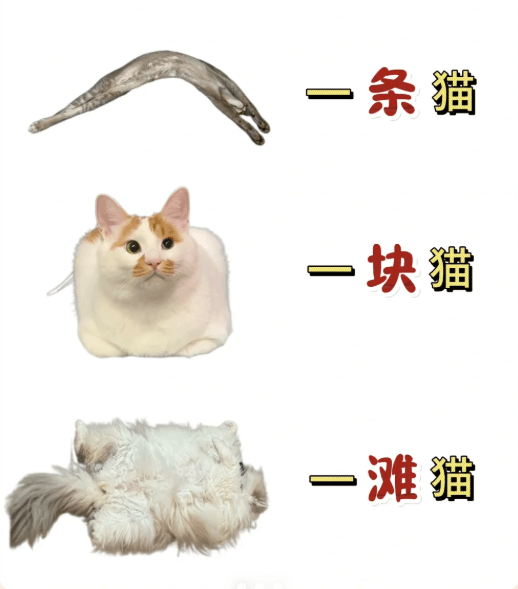
This is a common measure word joke. Measure words describe the form of the items essentially. In this joke, because cats "change shapes", it is funny to assign each shape a different measure word...
---
## Chinese grammar is easy, but grammar mistakes happen when you translate word-for-word...
Direct translation is the quickest route to producing sentences that are English in disguise, wearing a cheap Chinese costume. [The syntax](https://migaku.com/blog/chinese/chinese-word-order) seems deceptively simple: Subject + Verb + Object, just like English! The bigger minefield is thinking English grammar concepts map directly. The placement of time, location, and some other particles is quite different. Chinese doesn’t conjugate verbs (no eat, ate, eaten), has no articles (a, an, the), and uses a small arsenal of particles to express tense, mood, and aspect.
For example, beginners often make mistakes with measure words. In English, you have “a dog,” “a paper,” “a song.” In Chinese, you must choose the correct classifier: (A dog), (A piece of paper), (A song). Using the generic 个 for everything marks you as a beginner instantly. The mental shift required is from translation to transposition. Instead of converting words, you must learn to rearrange ideas into a Chinese framework. To speak like a native speaker, you must try to build an independent Chinese mindset from the start, and fortify it with a large amount of input and practice!
This is a common measure word joke. Measure words describe the form of the items essentially. In this joke, because cats "change shapes", it is funny to assign each shape a different measure word...
 ---
## Common mistakes in Chinese learning when it comes to appropriateness
Language is a cultural operating system. To only learn the vocabulary without the cultural software is to risk constant, subtle crashes. If you have progressed to a more advanced learning stage, it is high time for you to pick up cultural awareness. One common example is the way Chinese speakers address people using family titles or roles, like (Teacher Li) and (Manager Wang).
Another example is, in Western cultures, “thank you” is used liberally, even for small services. In Chinese, over-thanking, especially between close friends or family, can create distance, implying the relationship is a bit distanced.
Additionally, there are many expressions conveying the same meanings but with different subtle tones. Using the correct subtleness and tones can leave people with a good impression of your politeness and appropriateness. For example:
1. (Your idea is wrong.): This sentence is grammatically correct, but using it bluntly would be disastrously rude.
2. (This idea seems to be a bit off.): This sentence tones down the denial by using 好像 (Seem to be) and 不太 (Not very).
---
## Learning Mandarin becomes more stressful after knowing how learners make mistakes in Chinese
It is true that learning a foreign language is challenging, and avoiding mistakes takes time. But this painful internalization process can also be fun and enjoyable. Migaku app can help you make full use of media resources and generate Chinese subtitles for your immersion learning. This tool can greatly expand your pool for any kind of practice. For example, Migaku app can generate subtitles for this cut from *Nothing but Thirty* with the English translation. You can also click the words or sentences to add them to your flashcard collections and review them later. It is your best assistant for managing your daily language input.
1. Switch on YouTube and search for Chinese videos with the app
2. Click "Watch with Migaku", and the magic wand at the lower right corner to generate Chinese subtitles
3. Click on the new words or sentences in each subtitle and generate flashcards!
---
## Common mistakes in Chinese learning when it comes to appropriateness
Language is a cultural operating system. To only learn the vocabulary without the cultural software is to risk constant, subtle crashes. If you have progressed to a more advanced learning stage, it is high time for you to pick up cultural awareness. One common example is the way Chinese speakers address people using family titles or roles, like (Teacher Li) and (Manager Wang).
Another example is, in Western cultures, “thank you” is used liberally, even for small services. In Chinese, over-thanking, especially between close friends or family, can create distance, implying the relationship is a bit distanced.
Additionally, there are many expressions conveying the same meanings but with different subtle tones. Using the correct subtleness and tones can leave people with a good impression of your politeness and appropriateness. For example:
1. (Your idea is wrong.): This sentence is grammatically correct, but using it bluntly would be disastrously rude.
2. (This idea seems to be a bit off.): This sentence tones down the denial by using 好像 (Seem to be) and 不太 (Not very).
---
## Learning Mandarin becomes more stressful after knowing how learners make mistakes in Chinese
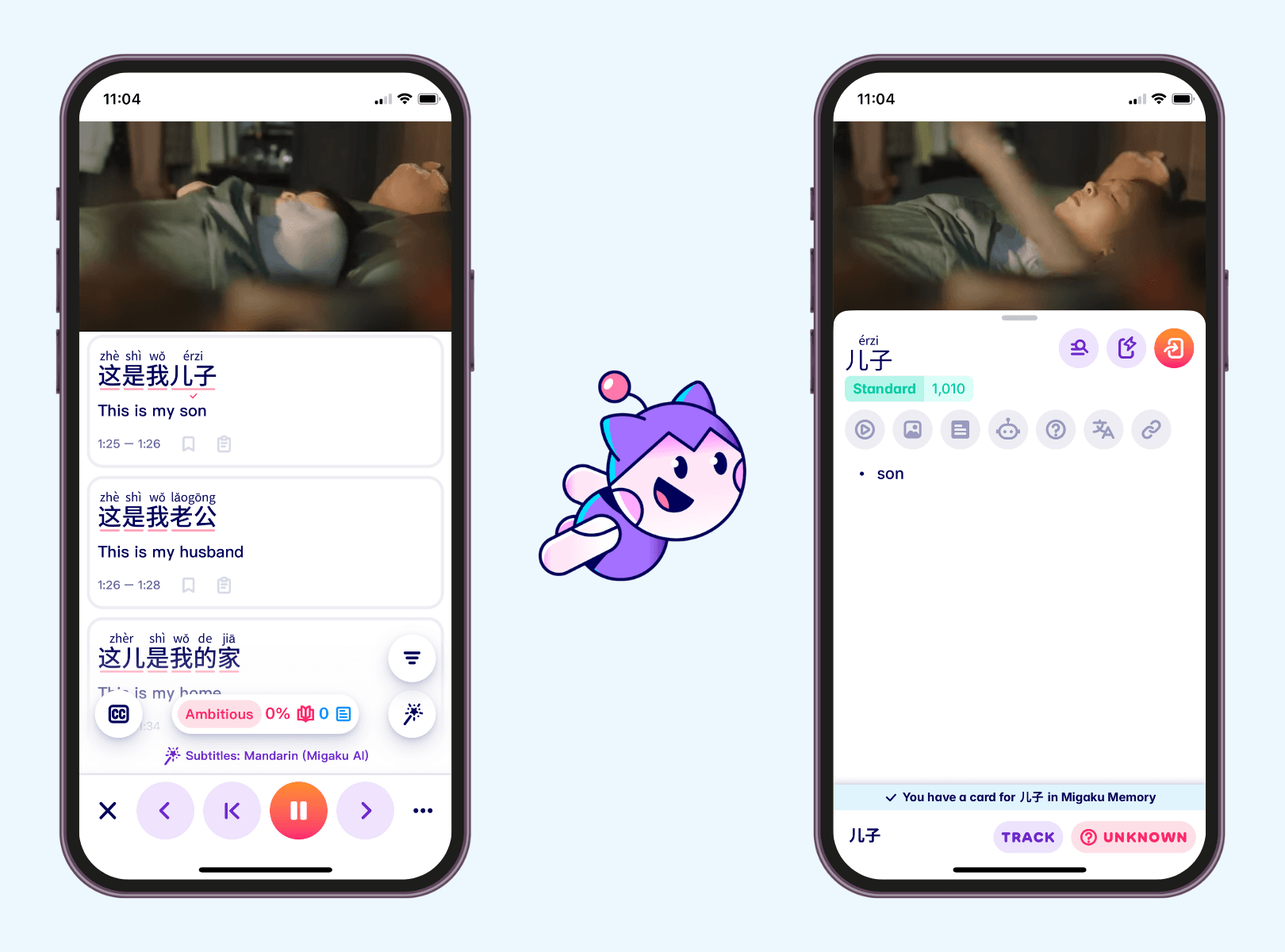
It is true that learning a foreign language is challenging, and avoiding mistakes takes time. But this painful internalization process can also be fun and enjoyable. Migaku app can help you make full use of media resources and generate Chinese subtitles for your immersion learning. This tool can greatly expand your pool for any kind of practice. For example, Migaku app can generate subtitles for this cut from *Nothing but Thirty* with the English translation. You can also click the words or sentences to add them to your flashcard collections and review them later. It is your best assistant for managing your daily language input.
1. Switch on YouTube and search for Chinese videos with the app
2. Click "Watch with Migaku", and the magic wand at the lower right corner to generate Chinese subtitles
3. Click on the new words or sentences in each subtitle and generate flashcards!
 ---
## FAQs
The simple answer is "Please don't". Saying to any strangers or acquaintances is utterly strange in Chinese culture. Use it only when you are very very close to someone, like at a touching moment with your close friends or family, or when you are with your partner. Additionally, you can say that to your friend to be humorous or grateful: (Thank you so much, I love you!😘)
You can call your lover by their nicknames. Some common ways to call lovers include (Bae), (My love), (My doggie), (Cutie).
---
## "That's how Chinese people talk, just memorize it"
It is not uncommon to get this answer from your Chinese teacher when you ask them why Chinese people talk like that... Truly that there are explanations for some usages, but for others, it is simply hard to explain, or the reasons for the usage are long forgotten in history. When you can't logically explain it, use media consumption to form muscle memory!
> If you consume media in Chinese, and you understand at least some of the messages and sentences within that media, you will make progress. _Period_.
Don't be afraid of making mistakes! (Failure breeds success!)
---
## FAQs
The simple answer is "Please don't". Saying to any strangers or acquaintances is utterly strange in Chinese culture. Use it only when you are very very close to someone, like at a touching moment with your close friends or family, or when you are with your partner. Additionally, you can say that to your friend to be humorous or grateful: (Thank you so much, I love you!😘)
You can call your lover by their nicknames. Some common ways to call lovers include (Bae), (My love), (My doggie), (Cutie).
---
## "That's how Chinese people talk, just memorize it"
It is not uncommon to get this answer from your Chinese teacher when you ask them why Chinese people talk like that... Truly that there are explanations for some usages, but for others, it is simply hard to explain, or the reasons for the usage are long forgotten in history. When you can't logically explain it, use media consumption to form muscle memory!
> If you consume media in Chinese, and you understand at least some of the messages and sentences within that media, you will make progress. _Period_.
Don't be afraid of making mistakes! (Failure breeds success!)