How to Say Good Night in Cantonese: Useful Words Beyond 晚安
Last updated: April 2, 2026

Learning how to say good night in Cantonese opens up a whole new layer of connection when you're chatting with friends from Hong Kong, Guangdong, or other Cantonese-speaking communities. The most common phrase you'll hear is 晚安 (maan5 on1), but there's actually more to it than just one expression. Depending on who you're talking to and the vibe of the conversation, you might use different phrases. Let's break down everything you need to learn about Cantonese good night, from pronunciation tips to cultural context that'll help you sound natural.
The standard way to say good night in Cantonese
The phrase 晚安 (maan5 on1) is your go-to expression for saying good night in Cantonese. It literally translates to "evening peace" and works in pretty much any situation. You'll see this written in Chinese characters as 晚安, where 晚 means "evening" or "night" and 安 means "peaceful" or "safe."
The romanization system you'll encounter most often for Cantonese is called Jyutping. In this system, 晚安 is written as "maan5 on1" where the numbers represent tones. Cantonese has six main tones (some linguists argue for more), and getting these right makes a huge difference in how natural you sound.
For 晚安, the first character 晚 (maan5) uses tone 5, which is a low rising tone. The second character 安 (on1) uses tone 1, which is a high level tone. If you're just starting out, don't stress too much about perfect tones right away. Native speakers will usually understand you from context, but it's worth practicing.
This phrase works in both formal and informal settings. You can say it to your boss, your friends, your family, or someone you just met. It's the safe, universally accepted way to wish someone good night.
Casual ways to say good night
While 晚安 works everywhere, Cantonese speakers often use more casual expressions with friends and family. The phrase 早唞 (zou2 tau2) is super common in informal settings. It literally means "rest early" or "get some rest soon."
This phrase has a caring, friendly vibe to it. You're basically telling someone to take care of themselves and get good sleep. It's what you'd say to close friends, family members, or people you have a comfortable relationship with.
Another variation you might hear is 早啲瞓 (zou2 di1 fan3), which means "go to sleep early." This one's even more casual and direct. Parents often say this to their kids, or you might say it to a friend who's been staying up too late studying or working.
These casual phrases show you actually care about the person's wellbeing. They're more personal than just saying 晚安, which can sometimes feel a bit formal or distant in very close relationships.
Cantonese vs Mandarin: The differences
If you already speak Mandarin, you'll notice some interesting similarities and differences. In Mandarin, good night is also 晚安 (wǎn ān), using the exact same characters. Pretty convenient, right?
The pronunciation is where things diverge. Mandarin uses four tones instead of Cantonese's six (or more), and the actual sounds are quite different. Mandarin "wǎn ān" has a falling-rising tone followed by a high level tone, while Cantonese "maan5 on1" uses different tonal contours altogether.
Interestingly, 晚安 in both languages is somewhat formal. Native Mandarin speakers also have casual alternatives like 晚了 (wǎn le) or just 睡吧 (shuì ba), meaning "it's late" or "go to sleep." The cultural function is similar across both languages: you have formal phrases for general use and casual phrases for close relationships.
One thing to note is that Cantonese speakers in Hong Kong and Guangdong have been using 晚安 for a long time, but some older speakers might prefer the more traditional Cantonese expressions like 早唞. The influence of written Chinese and media has made 晚安 extremely common across all age groups now.
Other useful evening expressions
Beyond just saying good night, there are other evening-related phrases worth knowing.
- If you want to say "good evening" as a greeting (not a farewell), you can use 晚上好 (maan5 soeng6 hou2). This works when you're meeting someone in the evening, similar to how you'd say "good evening" in English when arriving somewhere.
- For "see you later" in Cantonese, you'd say 遲啲見 (ci4 di1 gin3) or 等陣見 (dang2 zan6 gin3) if you mean "see you in a bit." These aren't specifically evening phrases, but they're super useful for everyday conversation.
- If someone's working late or studying, you might say 辛苦晒 (san1 fu2 saai3), which means "you've worked hard" or "thanks for your hard work." Following this up with 早啲休息 (zou2 di1 jau1 sik1, "rest early") shows you care about their wellbeing.
- The phrase 好夢 (hou2 mung6) means "sweet dreams" and can be added after 晚安 for a warmer touch: 晚安,好夢. It's a nice way to end a conversation with someone you care about.
Practice makes natural
The best way to get comfortable with saying good night in Cantonese is to actually use it.
- If you have Cantonese-speaking friends, start incorporating these phrases into your conversations. Most people appreciate the effort, even if your tones aren't perfect yet.
- Language exchange apps and online communities can give you opportunities to practice. Try ending your chat sessions with 晚安 or 早唞 depending on the relationship you've built with your conversation partner.
- Pay attention to how native speakers respond. If they reply with the same phrase, you're good. If they switch to something more casual, that might be a hint that you can relax your language, too.
- Recording yourself and comparing to native speakers helps a lot with pronunciation. The tones in Cantonese really do matter, and training your ear takes time. Don't get discouraged if it feels awkward at first. Everyone goes through that phase.
- Immersion works incredibly well for Cantonese. Watching Hong Kong dramas, listening to Cantopop, or following Cantonese YouTubers helps you pick up natural speech patterns. You'll notice how people actually use these good night phrases in context, along with all the other casual expressions that make conversations flow.
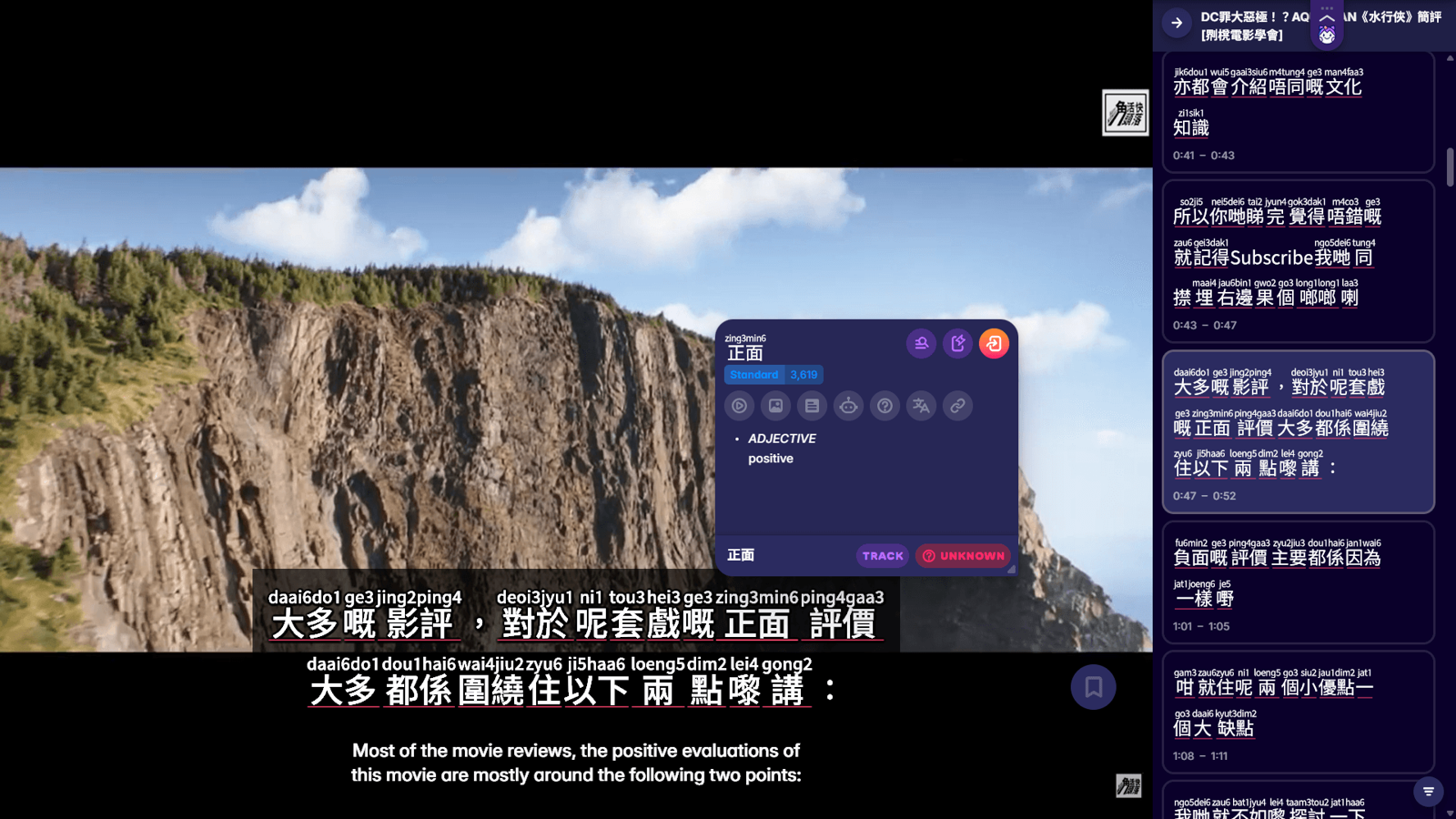
Speaking of immersion, if you're serious about learning Cantonese (or any language), Migaku's browser extension and app are pretty awesome for learning from actual content. You can watch Hong Kong dramas or browse Cantonese websites and look up words instantly, save them to flashcards, and build your vocabulary from stuff you actually care about. There's a 10-day free trial if you want to check it out.
Cantonese culture values these small gestures of care and respect
Taking the time to learn how to say good night properly shows you're invested in understanding the language beyond just tourist phrases. Plus, it's a practical expression you'll actually use if you're engaging with Cantonese speakers regularly. The more you immerse yourself in Cantonese content, whether that's TV shows, music, or conversations, the more natural these phrases will become. You'll start to hear the subtle differences in how people say good night to different people in different situations.
If you consume media in Cantonese, and you understand at least some of the messages and sentences within that media, you will make progress. Period.
When the day is over, let sleep heal what tiredness cannot.😴🌙