# How to Speak Chinese: Four Sections to Strategize Your Practices
> How to speak Chinese Mandarin like a native? You must start your journey with pinyin, grammar, and active output! Learn Mandarin speaking tips here!
**URL:** https://migaku.com/blog/chinese/how-to-speak-chinese
**Last Updated:** 2025-12-05
**Tags:** resources, discussion, listicle
---
[Learning to speak Chinese](https://migaku.com/learn-chinese) requires you to think of Chinese and only Chinese. Here's an example of what this means. You might say (I'm tired) if you're thinking of translating English directly into Chinese, but the correct expression is (I'm tired). This journey is about training your ear and tongue to dance to Mandarin’s unique rhythm and to develop a Mandarin-speaking mindset.
By breaking down the path into mastering sounds, melodies, words, and structures, you’ll find yourself moving from hesitant mimicry to confident expression. At the end of this journey, when you try to say something in the Chinese language, the sound of the Chinese words should pop up in your mind directly!
---
## Section 1: learn Chinese pinyin chart and hunt for Mandarin words
Before you can run, you must learn the terrain. Even for the native speakers, that terrain is [pinyin](https://migaku.com/blog/chinese/pinyin-chart). This Romanization system is your indispensable map, transcribing Chinese sounds using the familiar Latin alphabet. Your first and most crucial mission is to internalize the chart of pinyin consonants, vowels, and whole syllables. Practice pronouncing every combination aloud, focusing on sounds that don’t exist in English, like the subtle difference between q and x , or the retroflex zh , ch , sh .
As you start to learn to speak Mandarin, when you hear or encounter a new word in a conversation, TV show, song, or anything, you should immediately look it up. When you don't know how to pronounce a word, you can use strokes and stroke count to look it up in any dictionary. After this, note down the pinyin for this new word.
This active “treasure hunt” bridges the gap between abstract words and concrete sounds and meanings. Build a personal vocabulary list from day one — from both textbooks, and words you encounter and find useful. This makes learning immediate, relevant, and powerfully motivating.
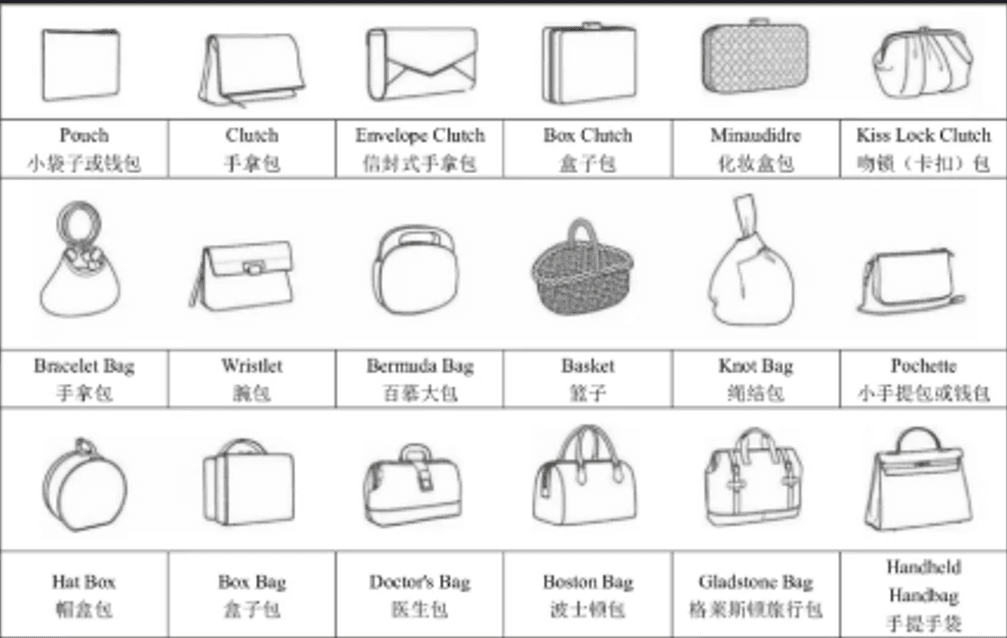
For example, you can learn to speak Chinese by noting down the pinyin of this group of contextual words:
 ---
## Section 2: navigate tones and the flow of dialogue for accurate pronunciation
Mandarin [Chinese is a tonal language](https://migaku.com/blog/chinese/chinese-tone-practice), where the pitch contour of a syllable changes its meaning. For Chinese learners, the first barrier is to memorize the tone for each character; the second one is to master the tone sandhi for specific tonal combinations; the third one is to combine the tone of the speakers with the tone of the characters.
While you are marking the tone for each new character you are collecting, you need to accumulate the examples of tone sandhi as well. The much-mentioned third-tone sandhi is only the appetizer. In Mandarin Chinese, there are many Chinese characters that have multiple tones, reflecting different usages and meanings. For example:
---
## Section 2: navigate tones and the flow of dialogue for accurate pronunciation
Mandarin [Chinese is a tonal language](https://migaku.com/blog/chinese/chinese-tone-practice), where the pitch contour of a syllable changes its meaning. For Chinese learners, the first barrier is to memorize the tone for each character; the second one is to master the tone sandhi for specific tonal combinations; the third one is to combine the tone of the speakers with the tone of the characters.
While you are marking the tone for each new character you are collecting, you need to accumulate the examples of tone sandhi as well. The much-mentioned third-tone sandhi is only the appetizer. In Mandarin Chinese, there are many Chinese characters that have multiple tones, reflecting different usages and meanings. For example:
*I'm carrying my backpack.*
*They hung out without letting me know.*
More vital than perfecting each isolated tone is grasping the tone flow of a full sentence. Mandarin speech isn’t a robotic series of distinct pitches; it’s a flowing melody. The tones create a natural rhythm, with some syllables stressed and others softened. The best way to learn this is to shadow dialogues like this:
1. Listen to a short, natural conversation repeatedly. Don’t just understand it—mimic it exactly.
2. Copy the speaker’s pitch, their rhythm, even their pauses and emotional inflection.
3. You can pick a cut from a drama, a movie, or a documentary for this practice.
---
## Section 3: learning to speak sentences and simple Chinese conversations
Sentence drilling is the engine that transforms passive knowledge into active speech. Take the vocabulary from your personal treasure hunt and place each new word into several simple, high-frequency sentences. In this practice, you should try to make sentences and draft simple conversational scripts on your own. As in the previous sections, we are relying on passive input. But to transform passive input into knowledge acquisition, we need to practice simple output as well! For example, to learn how to speak Chinese (To study), don’t just repeat the word. Drill:
1.
*I am studying Chinese.*
2.
*He studies very well.*
3.
*Studying is very interesting!*
Read these sentences out loud, repeatedly. Start slow, ensuring tone flow, then gradually increase speed. This process does three essential things: it solidifies the word’s pronunciation in context, demonstrates its grammatical function, and stores a ready-made, useful chunk of language that you can use fluently. Therefore, to fully acquire something, you should actively put it into use!
---
## Section 4: learn to speak Chinese with accurate grammar
Finally, to move beyond rehearsed sentences and to master conversational Chinese, you need the blueprint: [grammar](https://migaku.com/blog/chinese/chinese-word-order). Fortunately, there are no verb conjugations, no grammatical gender, and no plural forms, and Chinese speakers only need to know how to combine words and particles properly to convey clear meanings.
Focus on mastering the fundamental sentence structures:
1. Subject + Verb + Object: (I'll have tea./I drink tea.)
2. The placement of time and place phrases: (I'm studying tomorrow at the library.)
3. Picking up [time words and particles for expressing tense](https://migaku.com/blog/chinese/chinese-verb-tenses).
This structural knowledge empowers you to take the vocabulary and chunks you’ve drilled and recombine them into new, original expressions.
---
## Let media be your tutor on your way to learn to speak Chinese fluently!
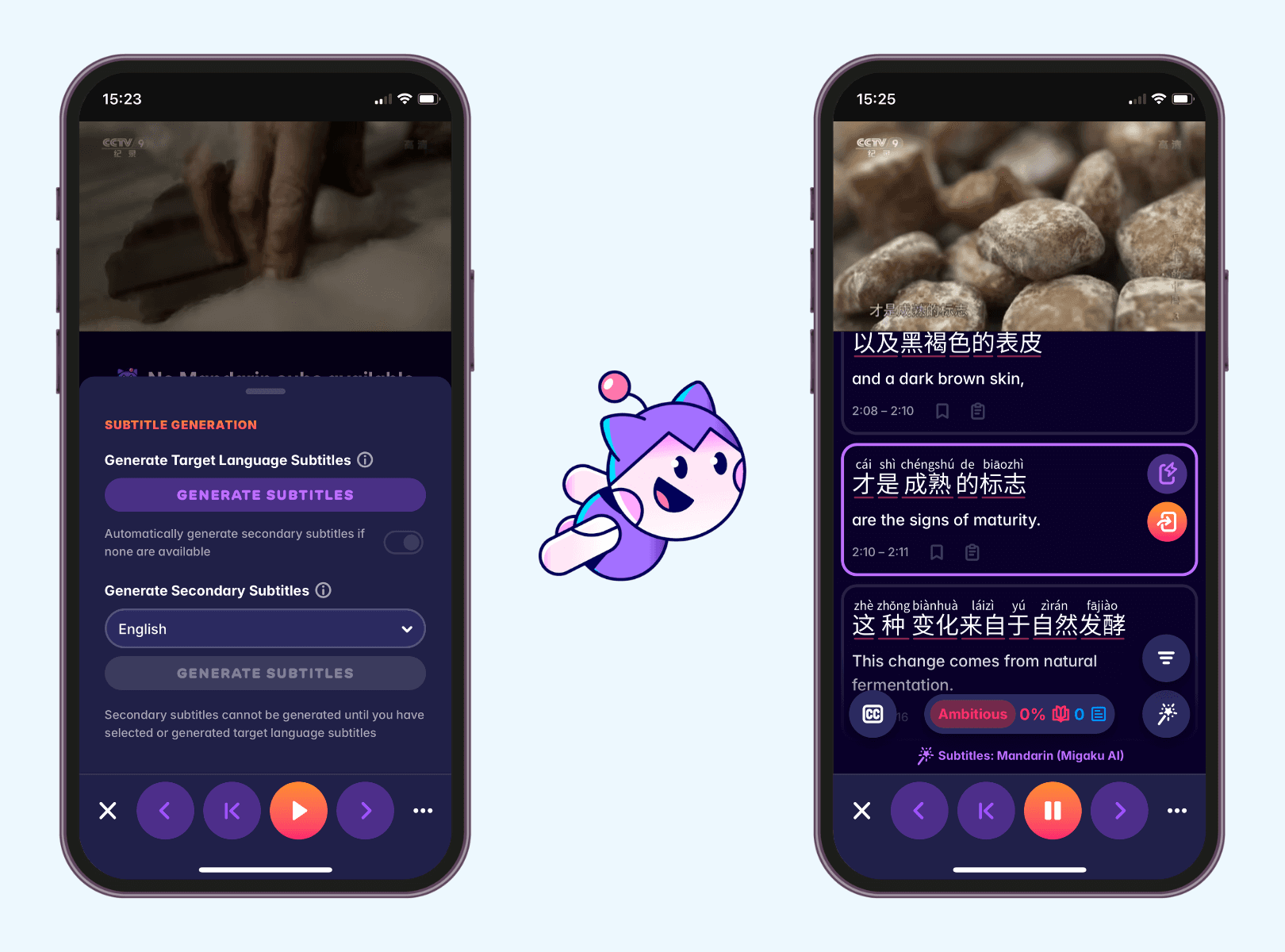
Migaku app can generate Chinese subtitles even when the video does not feature any. This tool can greatly expand your pool for shadowing practice. For example, Migaku app can generate subtitles for this cut from *A Bite of China* with the English translation. You can also click the words or sentences to add them to your flashcard collections and review them later. It is your best assistant for intensive Chinese speaking practice and vocabulary collection.
1. Switch on YouTube and search for Chinese videos with the app
2. Click "Watch with Migaku", and the magic wand at the lower right corner to generate Chinese subtitles
3. Click on the new words or sentences in each subtitle and generate flashcards!
 ---
## FAQs
Start with pinyin (sound system) and basic vocabulary building. Learn Mandarin four tones and tone sandhi. Listen and repeat daily: use apps, songs, or simple videos to train your ear and get used to the Chinese grammar. Practice speaking short Chinese Mandarin sentences, not just words, and draft these sentences on your own. Consistency is key: even 15 minutes daily builds fluency fast.
Chinese people do say (Hello), directly translated from English, especially for young people. Sometimes, people also use the more casual greeting, (Hi). You can also greet according to the time of the day, such as saying (Morning) or (Good morning). On the phone, answer with (Hi). To address a group, use (Hi everyone).
Simply reply by repeating , or say instead. Then, you or the other speaker can continue the conversation based on the context. There are many [different ways to greet and say how are you](https://migaku.com/blog/chinese/how-are-you-in-chinese) in Chinese.
---
## It's impossible to learn Mandarin speaking with your mouth closed...
Open your mouth and start to speak! You can start practicing your Mandarin speaking by reading out loud everything. When you are noting the pinyin, read it out; when you are making up sentences, read them out; and when you are consuming videos, read along with the speakers!
> If you consume media in Chinese, and you understand at least some of the messages and sentences within that media, you will make progress. _Period_.
Don't underestimate the power of muscle memory!
---
## FAQs
Start with pinyin (sound system) and basic vocabulary building. Learn Mandarin four tones and tone sandhi. Listen and repeat daily: use apps, songs, or simple videos to train your ear and get used to the Chinese grammar. Practice speaking short Chinese Mandarin sentences, not just words, and draft these sentences on your own. Consistency is key: even 15 minutes daily builds fluency fast.
Chinese people do say (Hello), directly translated from English, especially for young people. Sometimes, people also use the more casual greeting, (Hi). You can also greet according to the time of the day, such as saying (Morning) or (Good morning). On the phone, answer with (Hi). To address a group, use (Hi everyone).
Simply reply by repeating , or say instead. Then, you or the other speaker can continue the conversation based on the context. There are many [different ways to greet and say how are you](https://migaku.com/blog/chinese/how-are-you-in-chinese) in Chinese.
---
## It's impossible to learn Mandarin speaking with your mouth closed...
Open your mouth and start to speak! You can start practicing your Mandarin speaking by reading out loud everything. When you are noting the pinyin, read it out; when you are making up sentences, read them out; and when you are consuming videos, read along with the speakers!
> If you consume media in Chinese, and you understand at least some of the messages and sentences within that media, you will make progress. _Period_.
Don't underestimate the power of muscle memory!