# HSK 2 Guide: Challenge Your Chinese Proficiency With the HSK 2 Vocabulary and Grammar
> If you want to pass the HSK 2 test, don't hesitate to check this complete guide on the HSK level 2 exam with vocabulary, grammar, and strategy explained!
**URL:** https://migaku.com/blog/chinese/hsk-2-guide
**Last Updated:** 2025-12-10
**Tags:** resources, discussion
---
As mentioned in [the HSK 1 guide](https://migaku.com/blog/chinese/hsk-1-guide), the HSK 1 test is the basics of the basics! For beginners who have invested more than two months in [Chinese Mandarin learning](https://migaku.com/learn-chinese), you can challenge HSK 2 directly! This comprehensive guide is your friendly roadmap, breaking down the journey into four manageable sections. We’ll navigate the new vocabulary, master the essential grammar, craft a winning study strategy, and get you test-day ready. Let's end your beginner-level learning with this guide!
---
## What do you need to prepare to pass the HSK 2 exam: HSK 2 test structure
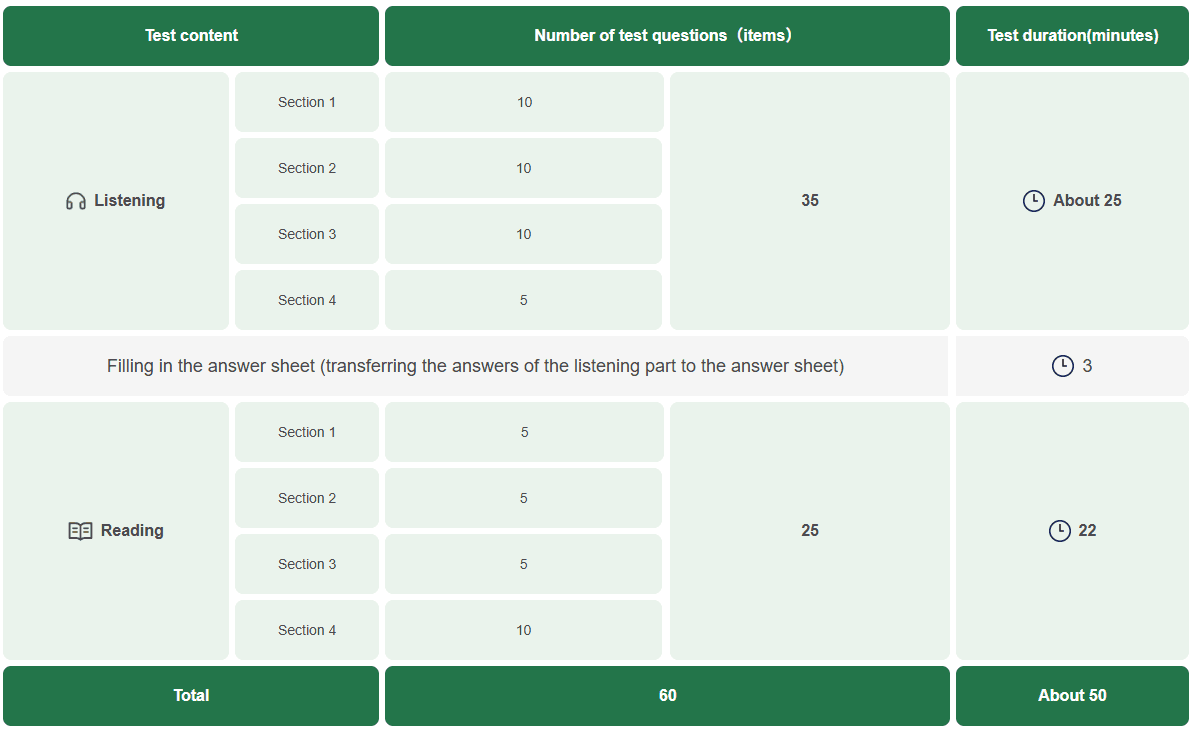
The exam structure perfectly mirrors HSK 1. The test consists of two sections: Listening and Reading, with 60 questions total to be completed in about 55 minutes. You’ll face a listening section with short, clear dialogues about common scenarios—like discussing the weather, making weekend plans, or buying fruit—followed by a reading section that tests your comprehension of simple sentences and mini-conversations.
There’s no writing at this level; all answers are multiple-choice. The goal is to confirm you can understand and use Mandarin in straightforward, predictable situations encountered in daily life. Essentially, HSK 2 asks: "Can you navigate the basics of daily life independently?" Passing it is a concrete signal that you've moved from a tourist's phrasebook to a resident's basic toolkit.
All in all, it is fair to say that the difference between HSK 1 and HSK 2 lies in the number of vocabulary and grammar points that learners need to know. In terms of skill training, they both focus on recognition and understanding, rather than more complex outputs like writing or speaking.
 ---
## What is the HSK 2 vocabulary list: master the 300 words
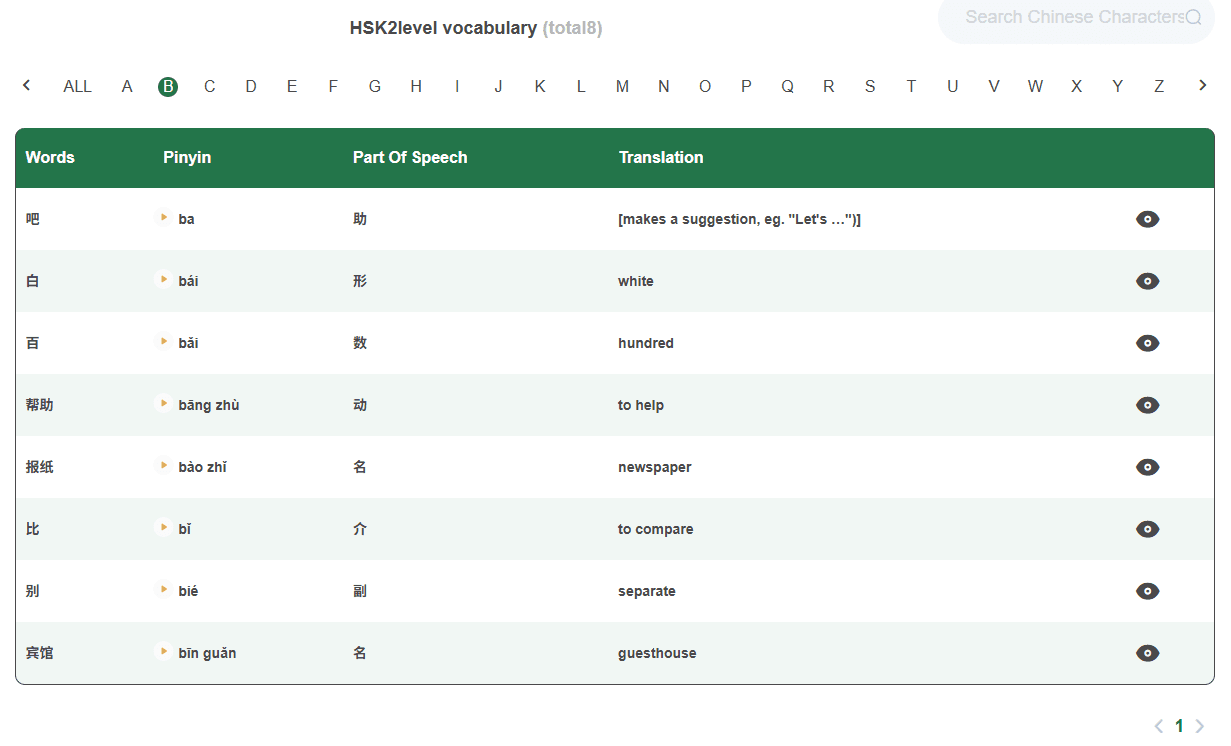
Before diving in, it’s crucial to understand the lay of the land. HSK 2 builds directly upon the 150 words from HSK 1, introducing an additional 150 new words and phrases. These new words are as basic and high-frequency as the HSK 1 words. The vocabulary strategically expands your scope to talk about work, city landscape, and basic descriptions of people and objects. It's the linguistic foundation for navigating a wider world.
To access the HSK 2 vocabulary list, you can check the Chinese proficiency test official website [here](https://www.chinesetest.cn/HSK/2). Remember that to pass HSK level 2, learners need to learn the vocabulary of both HSK 1 and HSK 2, 300 words in total.
---
## What is the HSK 2 vocabulary list: master the 300 words
Before diving in, it’s crucial to understand the lay of the land. HSK 2 builds directly upon the 150 words from HSK 1, introducing an additional 150 new words and phrases. These new words are as basic and high-frequency as the HSK 1 words. The vocabulary strategically expands your scope to talk about work, city landscape, and basic descriptions of people and objects. It's the linguistic foundation for navigating a wider world.
To access the HSK 2 vocabulary list, you can check the Chinese proficiency test official website [here](https://www.chinesetest.cn/HSK/2). Remember that to pass HSK level 2, learners need to learn the vocabulary of both HSK 1 and HSK 2, 300 words in total.
 ---
## How to study the HSK level 2 grammar: HSK 2 grammar points
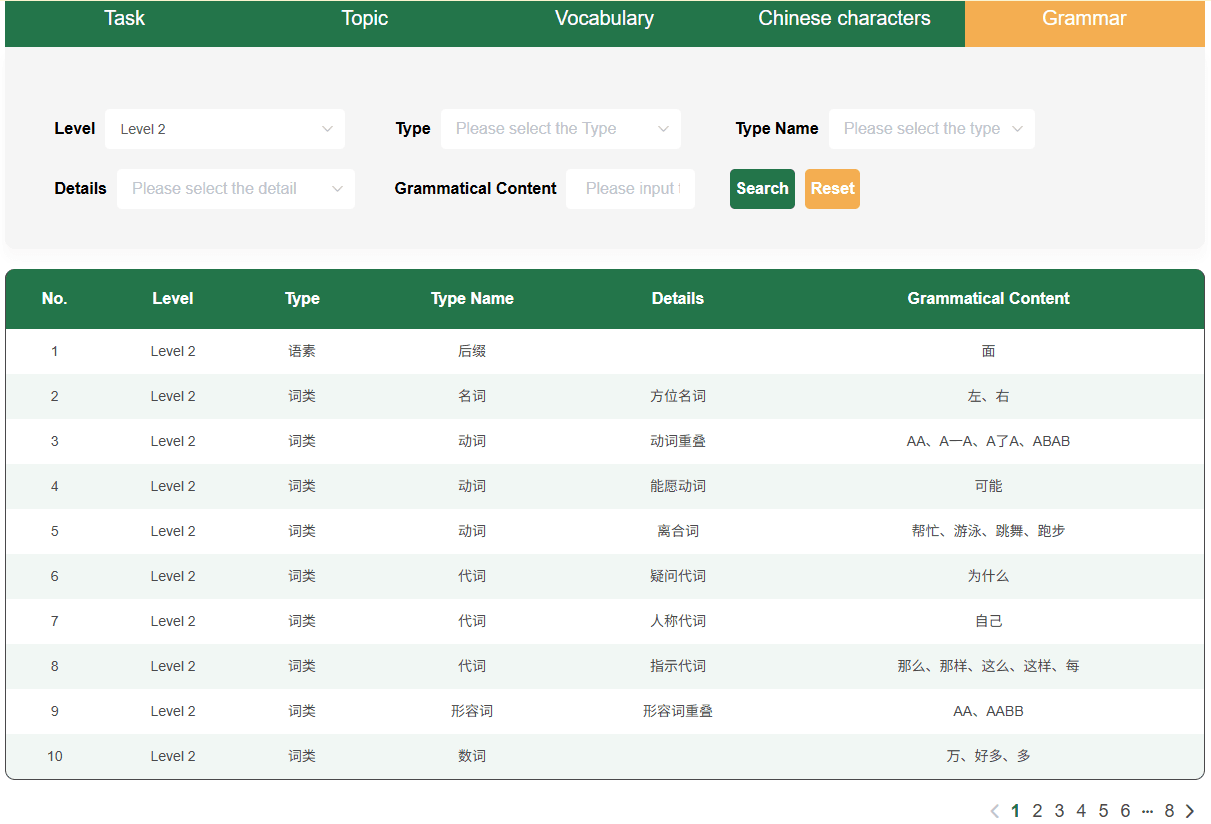
HSK 2 grammar is where your sentences start to come alive, and you learn to express more complex ideas. To get a brief idea of what HSK 2 grammar points include, you can either go through [the syllabus on the official HSK website](https://www.chinesetest.cn/syllabus) or the table of contents of the HSK 2 textbook. The best way is to combine these two resources and add the grammar points that are on the website but not in the textbook to your textbook!
The syllabus of grammar from the official site can give you a rough idea of all the 8 pages of grammar points you need to learn to take the HSK 2 exam.
---
## How to study the HSK level 2 grammar: HSK 2 grammar points
HSK 2 grammar is where your sentences start to come alive, and you learn to express more complex ideas. To get a brief idea of what HSK 2 grammar points include, you can either go through [the syllabus on the official HSK website](https://www.chinesetest.cn/syllabus) or the table of contents of the HSK 2 textbook. The best way is to combine these two resources and add the grammar points that are on the website but not in the textbook to your textbook!
The syllabus of grammar from the official site can give you a rough idea of all the 8 pages of grammar points you need to learn to take the HSK 2 exam.
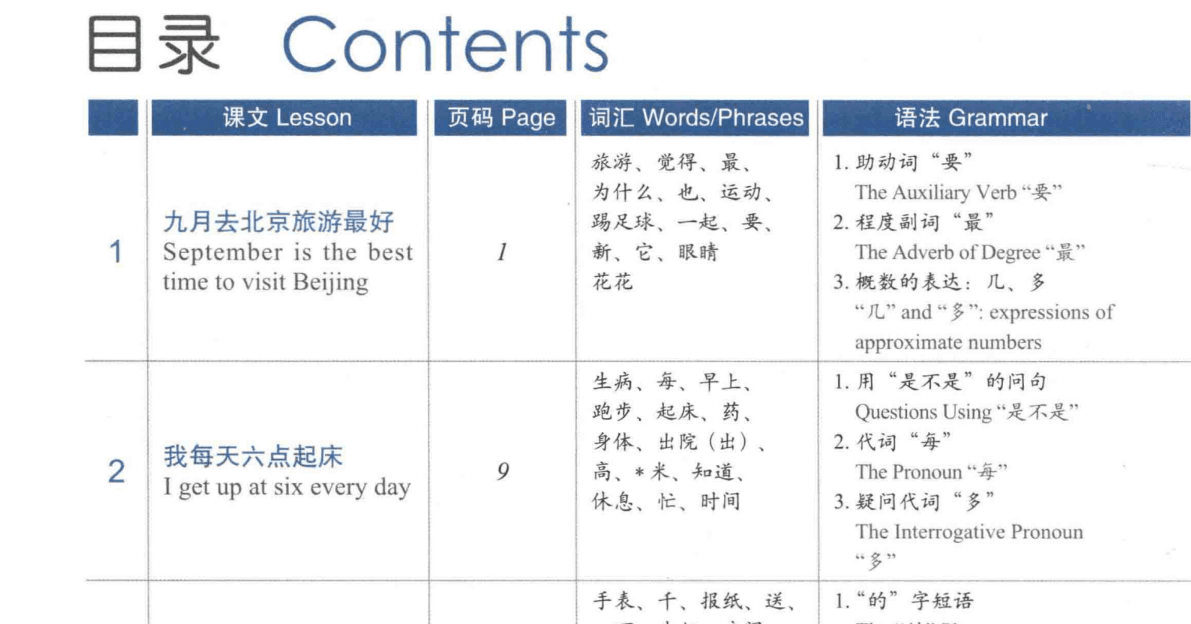
 The HSK 2 textbook features 15 units, and each unit has 2 - 4 grammar points, which is about 30 to 60 grammar points in total. Here is a picture of where you can find the grammar points in the table of contents. They are in the right column of the table of contents.
 In conclusion, it is not necessarily difficult to learn the grammar points for the HSK test. But learners need to remember that to take the HSK 2 test, they need to learn the grammar points from HSK 1 as well. It'd be best to start with the HSK 1 textbook and finish with the HSK 2 textbook.
At the same time, if you are very confused by the messiness of these grammar points, you can consider purchasing a Chinese learning grammar book. HSK textbooks organize the grammar points based on topics, while grammar books group the same type of grammar points together, providing clearer and more comprehensive guidance.
---
## A complete guide on your strategy to get the best HSK 2 results
Cramming won't work for language acquisition. Consistency is your greatest ally.
For reading:
1. Focus on mastering the vocabulary listed for HSK 1 and HSK 2 in both the textbooks and the official website. Use your textbook vocabulary appendix as your base and add the ones from the website to the list.
2. Embrace digital tools and active recall. Some language learning apps or dictionary apps feature a flashcard system using spaced repetition algorithms to ensure words move from short-term to long-term memory. You don't need to learn new words by using them, but search up the words from the textbook and save them to your collection on these apps.
3. Focus on recognizing characters, their associated pinyin, and most importantly, their tones. Don't just memorize in isolation; [learn each new word within a simple phrase](https://migaku.com/blog/chinese/chinese-immersion-learning) or sentence from contextual groups (food, family, actions) and practice them together.
4. Read the words out loud when you are learning them. Although HSK 2 does not include a speaking test, learners can still prepare for the future HSK tests from Day 1!
5. Try the immersion techniques. [Here is the post](https://migaku.com/blog/chinese/chinese-immersion-learning) that explains language immersion further.
For listening:
1. Immerse yourself in the sound of the language daily. Even 15-20 minutes of passive listening to the HSK 2 textbook audio during your commute works wonders.
2. Actively practice by listening to a sentence and trying to repeat it aloud immediately, mimicking the tones and rhythm.
3. Watch a large number of Chinese videos. This is a long-term strategy that can endow you with a Chinese-speaking mindset and train your sensitivity towards recognizing key words and meanings.
For test-taking techniques:
1. In the final 3-4 weeks, shift your primary focus to exam simulation and strategy. Take at least 2-3 full, timed practice tests (click [here](https://snmandarin.org/hsk-test-past-papers/) to get sample papers) under realistic conditions (quiet room, no phone, strict timing). It helps with building stamina, managing pacing, and reducing test-day anxiety.
2. For the listening section, practice skimming the multiple-choice answers before the audio plays. This primes your brain to listen for specific information like time, location, or an action.
3. During the reading section, look for contextual clues and keywords. You don't need to know every character. Often, recognizing one or two key nouns or verbs is enough to select the correct answer by process of elimination.
4. In the final two weeks, maintain a dedicated error log — note the questions you consistently get wrong and the vocabulary or grammar points you keep forgetting. Was it a tone confusion? A misunderstood grammar pattern? A character you keep forgetting? Systematically target those weaknesses.
5. Finally, ensure you know the test procedures. The official website offers a general guideline on what to expect on the day of the exam [here](https://www.chinesetest.cn/HSK/2).
---
## Make active use of your leisure time to prepare for the HSK exam immersively
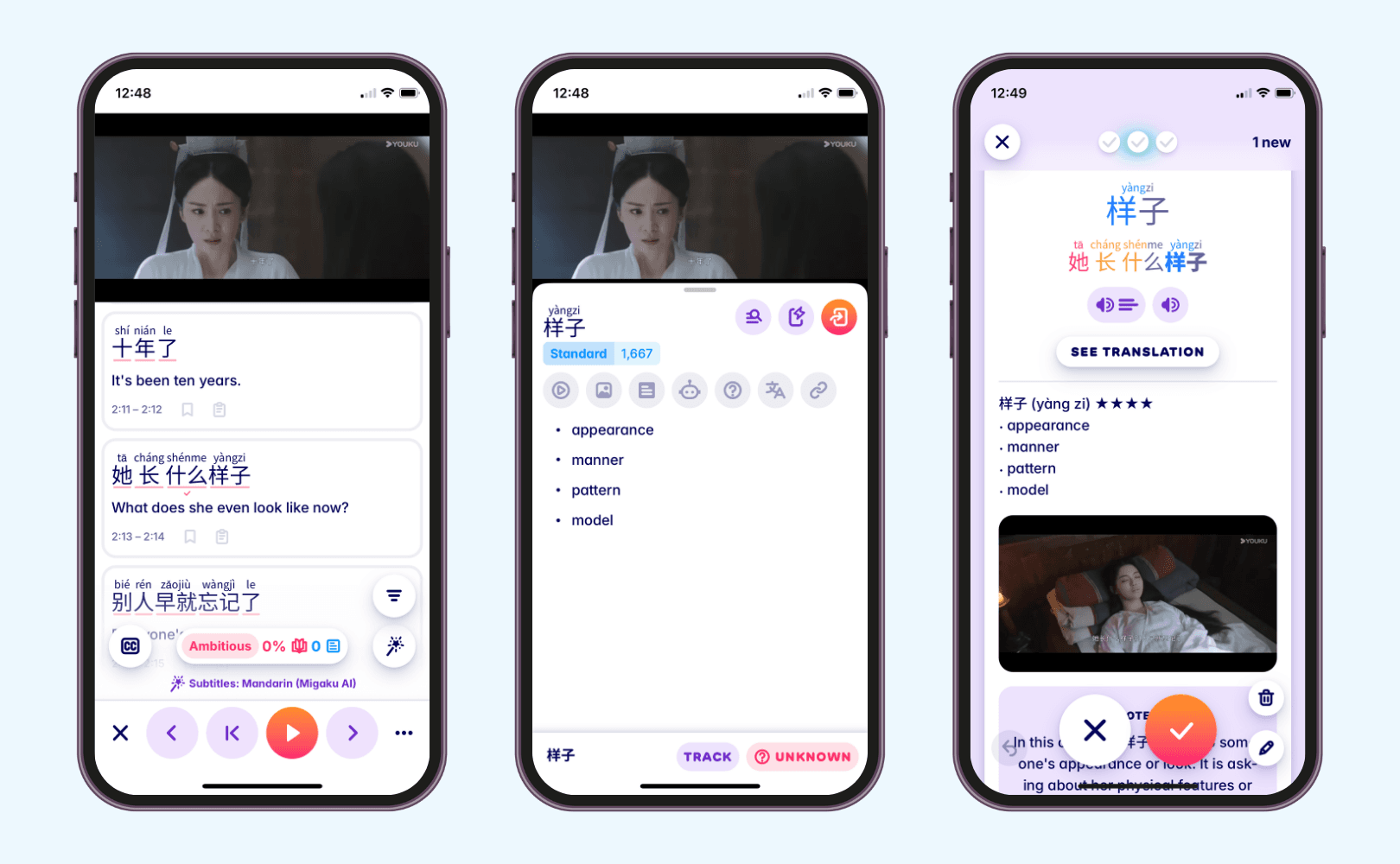
Sole reliance on textbooks is possible for HSK 2, but not for more advanced levels. Be it for reading, listening, or speaking, Migaku app can help you make full use of media resources to learn Chinese and generate Chinese subtitles even when the video does not feature any. This tool can greatly expand your pool for any kind of practice. For example, Migaku app can generate subtitles for this cut from *The Double* with the English translation. You can also click the words or sentences to add them to your flashcard collections and review them later. It is your best assistant for engaging with the media content.
1. Switch on YouTube and search for Chinese videos with the app
2. Click "Watch with Migaku", and the magic wand at the lower right corner to generate Chinese subtitles
3. Click on the new words or sentences in each subtitle and generate flashcards!
In conclusion, it is not necessarily difficult to learn the grammar points for the HSK test. But learners need to remember that to take the HSK 2 test, they need to learn the grammar points from HSK 1 as well. It'd be best to start with the HSK 1 textbook and finish with the HSK 2 textbook.
At the same time, if you are very confused by the messiness of these grammar points, you can consider purchasing a Chinese learning grammar book. HSK textbooks organize the grammar points based on topics, while grammar books group the same type of grammar points together, providing clearer and more comprehensive guidance.
---
## A complete guide on your strategy to get the best HSK 2 results
Cramming won't work for language acquisition. Consistency is your greatest ally.
For reading:
1. Focus on mastering the vocabulary listed for HSK 1 and HSK 2 in both the textbooks and the official website. Use your textbook vocabulary appendix as your base and add the ones from the website to the list.
2. Embrace digital tools and active recall. Some language learning apps or dictionary apps feature a flashcard system using spaced repetition algorithms to ensure words move from short-term to long-term memory. You don't need to learn new words by using them, but search up the words from the textbook and save them to your collection on these apps.
3. Focus on recognizing characters, their associated pinyin, and most importantly, their tones. Don't just memorize in isolation; [learn each new word within a simple phrase](https://migaku.com/blog/chinese/chinese-immersion-learning) or sentence from contextual groups (food, family, actions) and practice them together.
4. Read the words out loud when you are learning them. Although HSK 2 does not include a speaking test, learners can still prepare for the future HSK tests from Day 1!
5. Try the immersion techniques. [Here is the post](https://migaku.com/blog/chinese/chinese-immersion-learning) that explains language immersion further.
For listening:
1. Immerse yourself in the sound of the language daily. Even 15-20 minutes of passive listening to the HSK 2 textbook audio during your commute works wonders.
2. Actively practice by listening to a sentence and trying to repeat it aloud immediately, mimicking the tones and rhythm.
3. Watch a large number of Chinese videos. This is a long-term strategy that can endow you with a Chinese-speaking mindset and train your sensitivity towards recognizing key words and meanings.
For test-taking techniques:
1. In the final 3-4 weeks, shift your primary focus to exam simulation and strategy. Take at least 2-3 full, timed practice tests (click [here](https://snmandarin.org/hsk-test-past-papers/) to get sample papers) under realistic conditions (quiet room, no phone, strict timing). It helps with building stamina, managing pacing, and reducing test-day anxiety.
2. For the listening section, practice skimming the multiple-choice answers before the audio plays. This primes your brain to listen for specific information like time, location, or an action.
3. During the reading section, look for contextual clues and keywords. You don't need to know every character. Often, recognizing one or two key nouns or verbs is enough to select the correct answer by process of elimination.
4. In the final two weeks, maintain a dedicated error log — note the questions you consistently get wrong and the vocabulary or grammar points you keep forgetting. Was it a tone confusion? A misunderstood grammar pattern? A character you keep forgetting? Systematically target those weaknesses.
5. Finally, ensure you know the test procedures. The official website offers a general guideline on what to expect on the day of the exam [here](https://www.chinesetest.cn/HSK/2).
---
## Make active use of your leisure time to prepare for the HSK exam immersively
Sole reliance on textbooks is possible for HSK 2, but not for more advanced levels. Be it for reading, listening, or speaking, Migaku app can help you make full use of media resources to learn Chinese and generate Chinese subtitles even when the video does not feature any. This tool can greatly expand your pool for any kind of practice. For example, Migaku app can generate subtitles for this cut from *The Double* with the English translation. You can also click the words or sentences to add them to your flashcard collections and review them later. It is your best assistant for engaging with the media content.
1. Switch on YouTube and search for Chinese videos with the app
2. Click "Watch with Migaku", and the magic wand at the lower right corner to generate Chinese subtitles
3. Click on the new words or sentences in each subtitle and generate flashcards!
 ---
## FAQs
Focus on the 300 core words from the HSK 1 and HSK 2 syllabi. Master key grammar like for “want” from the HSK textbooks. Practice daily with listening exercises and mock tests. Before the exam, review mistakes and stay calm. You've got this!
There are 200 points in total. Test takers need to score more than 120 points to pass the exam, according to the HSK official website.
A total of 300 words is needed to pass the vocabulary bar of the HSK 2 exam. 150 words are from HSK 1, and another 150 new words from the HSK 2 syllabus.
---
## Take the HSK 2 test with confidence!
Truth be told, taking the HSK test is much easier compared to understanding the real-world Chinese conversation and Chinese texts. For most Chinese learners, no matter what their goal for taking the HSK exams is, the final target is to get used to the Chinese living environment or become capable of knowing Chinese culture firsthand. The only way to get there is by consuming media:
> If you consume media in Chinese, and you understand at least some of the messages and sentences within that media, you will make progress. _Period_.
Nothing in the world is difficult for one who sets their mind to it.
---
## FAQs
Focus on the 300 core words from the HSK 1 and HSK 2 syllabi. Master key grammar like for “want” from the HSK textbooks. Practice daily with listening exercises and mock tests. Before the exam, review mistakes and stay calm. You've got this!
There are 200 points in total. Test takers need to score more than 120 points to pass the exam, according to the HSK official website.
A total of 300 words is needed to pass the vocabulary bar of the HSK 2 exam. 150 words are from HSK 1, and another 150 new words from the HSK 2 syllabus.
---
## Take the HSK 2 test with confidence!
Truth be told, taking the HSK test is much easier compared to understanding the real-world Chinese conversation and Chinese texts. For most Chinese learners, no matter what their goal for taking the HSK exams is, the final target is to get used to the Chinese living environment or become capable of knowing Chinese culture firsthand. The only way to get there is by consuming media:
> If you consume media in Chinese, and you understand at least some of the messages and sentences within that media, you will make progress. _Period_.
Nothing in the world is difficult for one who sets their mind to it.