# How to Say Nice to Meet You in Cantonese (with Audio Tips)
> Learn how to say "nice to meet you" in Cantonese with pronunciation, Jyutping, formal vs casual usage, and self-introduction phrases for conversations.
**URL:** https://migaku.com/blog/chinese/nice-to-meet-you-in-cantonese
**Last Updated:** 2026-03-31
**Tags:** vocabulary, phrases
---
Meeting new people in Hong Kong or Guangdong? You'll want to [learn Cantonese](https://migaku.com/learn-cantonese) "nice to meet you". The most common phrase is 好高興認識你 (hou2 gou1 hing3 jing6 sik1 nei5), which literally translates to "very happy to know you." There's also a more casual version and some formal alternatives depending on the situation. I'll walk you through all the variations, pronunciation tips, and when to use each one so you can make a great first impression.
----
## How to say "nice to meet you" in Cantonese
The standard way to say "nice to meet you" in Cantonese is **好高興認識你 ** (hou2 gou1 hing3 jing6 sik1 nei5). Let me break down what each part means:
- 好 (hou2) = very/really
- 高興 (gou1 hing3) = happy
- 認識 (jing6 sik1) = to know/to meet
- 你 (nei5) = you
So you're literally saying "very happy to know you," which carries the same sentiment as the English "nice to meet you." Pretty straightforward once you see the components.
The pronunciation might look intimidating with all those numbers, but those are just Jyutping tones. [Cantonese has six main tones](https://migaku.com/blog/language-fun/cantonese-tones) (some linguists argue for nine), and the numbers indicate which tone to use. The number 2 is a mid-rising tone, 1 is high and flat, 3 is mid-level, 6 is low-level, and 5 is low-rising. If you're just starting out, don't stress too much about getting every tone perfect. Context usually helps native speakers understand what you mean.
Here's the thing though: you'll also hear a shorter, more casual version that drops the 好 (hou2) at the beginning. People will just say **高興認識你 ** (gou1 hing3 jing6 sik1 nei5), which is totally fine in most everyday situations. I'd actually recommend starting with this shorter version because it's easier to remember and sounds less formal.
----
## Formal versus casual greetings
When you're meeting someone in a business setting or showing respect to someone older, you might want to use **很高興認識你 ** (han2 gou1 hing3 jing6 sik1 nei5) instead. The 很 (han2) is a bit more formal than 好 (hou2), even though both mean "very." It's a subtle difference, but native speakers notice these things.
For super formal situations like meeting your partner's parents for the first time or networking at a professional conference, you can add 真係 (jan1 hai6) which means "really/truly." So that becomes **真係好高興認識你 ** (jan1 hai6 hou2 gou1 hing3 jing6 sik1 nei5). This emphasizes your sincerity and shows you're putting in extra effort to be polite.
On the flip side, with friends or people your age in casual settings, you might hear **認識你好開心 ** (jing6 sik1 nei5 hou2 hoi1 sam1). This swaps out 高興 (gou1 hing3) for 開心 (hoi1 sam1), which both mean "happy" but 開心 feels more colloquial and relaxed. The word order changes too, putting "to know you" first.
----
## Saying "pleased to meet you" in Cantonese
If you want to sound a bit more refined, you can use **幸會 ** (hang6 wui6), which translates to "fortunate meeting" or "pleased to meet you." This is definitely on the formal side and works great in professional contexts.
You'd typically say **幸會幸會 ** (hang6 wui6 hang6 wui6), repeating it twice. Repeating phrases is pretty common in Cantonese for emphasis and politeness. When someone says 幸會 to you first, responding with the same phrase shows mutual respect.
Another option is **好榮幸認識你 ** (hou2 wing4 hang6 jing6 sik1 nei5), which means "very honored to meet you." Use this when you're genuinely impressed by the person you're meeting, like a mentor, industry leader, or someone you really admire. Don't throw this around casually because it might come across as over the top.
----
## Meeting multiple people at once
When you're meeting a group instead of just one person, you need to switch 你 (nei5) to 你哋 (nei5 dei6). The 哋 (dei6) particle makes it plural, so **好高興認識你哋 ** (hou2 gou1 hing3 jing6 sik1 nei5 dei6) means "nice to meet you all."
This is super useful at parties, team meetings, or any group introduction. Cantonese speakers appreciate it when foreigners get the singular versus plural distinction right because it shows you're paying attention to the language details.
If you're addressing a more formal group, like at a conference or official event, you can say **好高興認識各位 ** (hou2 gou1 hing3 jing6 sik1 gok3 wai2). The 各位 (gok3 wai2) is a respectful way to say "everyone" and sounds more polished than just adding the plural marker.
----
## Combining with other greeting words
In real conversations, you'll usually pair "nice to meet you" with other greetings. The most common opener is 你好 (nei5 hou2), which means "hello" or literally "you good." So a natural introduction might go:
> 你好,我叫 (your name),好高興認識你。
*Hello, I'm called (your name), nice to meet you.*
You can also use 早晨 (zou2 san4) for "good morning" or 你好嗎 (nei5 hou2 maa3) for "how are you," though the second one is less common in Cantonese than you might expect. People don't really ask "how are you" as a greeting the way English speakers do.
After someone introduces themselves to you, responding with **我都係 ** (ngo5 dou1 hai6) before saying "nice to meet you" adds a nice touch. It means "me too" or "same here," acknowledging their greeting before giving your own.
----
## Practice strategies for getting it right
1. The best way to nail these greetings is to practice out loud, not just read them silently. Cantonese pronunciation requires muscle memory for those tones, and you won't develop that without speaking.
2. Recording yourself and comparing it to a native speaker's audio helps identify where your pronunciation is off. There are tons of YouTube videos with native speakers saying these phrases. Listen on repeat and mimic the exact rhythm and tone.
3. If you have Cantonese-speaking friends, ask them to correct you directly. Most people appreciate when learners ask for honest feedback rather than just nodding along to incorrect pronunciation.
4. Watching Hong Kong movies and TV shows gives you context for how these greetings work in real situations. Pay attention to who uses formal versus casual versions and when. You'll pick up the social cues naturally through exposure.
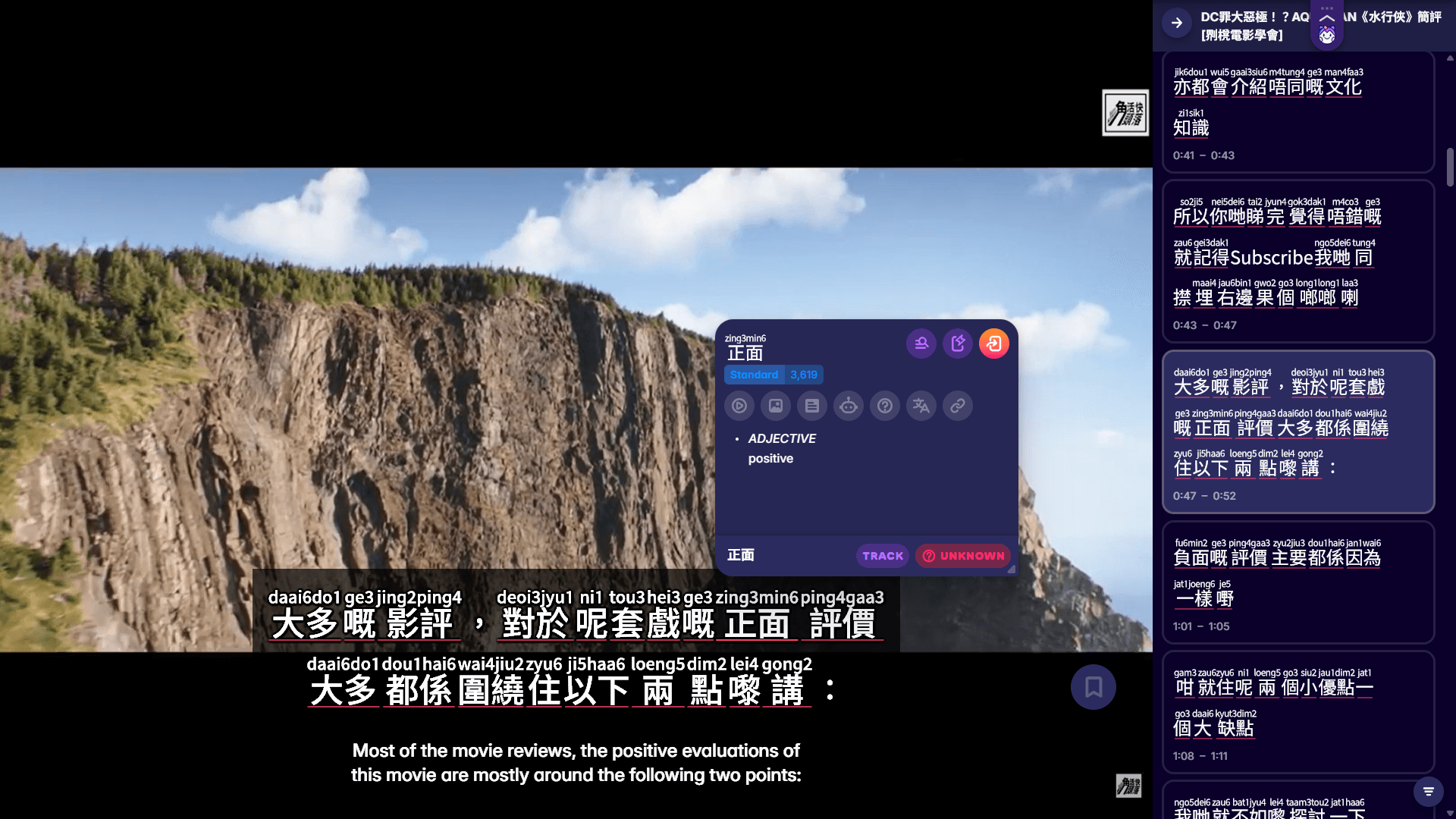
If you want to pick up more Cantonese phrases from actual Hong Kong shows and movies, Migaku's browser extension and app let you look up words instantly while watching. Makes learning from real content way more practical. There's a 10-day free trial if you want to check it out.
 ----
## FAQs
You might come across 久仰 (gau2 joeng5), sometimes romanized as "gau Meng" in older systems, which means "I've long admired you" or "I've heard so much about you." This is a pretty formal expression you'd use when meeting someone famous or well-known in their field. The phrase literally breaks down to 久 (gau2) meaning "long time" and 仰 (joeng5) meaning "to look up to" or "admire." So you're saying you've been looking up to them for a long time. It's flattering but can sound awkward if the person isn't actually well-known, so use it carefully.
----
## Learning "nice to meet you" in Cantonese language opens doors to genuine connections
Whether you go with the standard 好高興認識你, the formal 幸會, or a casual variation, you're showing respect for the language and culture. The greetings are very common in Cantonese movies and dramas as well. As long as you consume Cantonese media, you will definitely see them in context again and again.
> If you consume media in Cantonese, and you understand at least some of the messages and sentences within that media, you will make progress. *Period*.
A sincere greeting is the first step toward real connection.🤝
----
## FAQs
You might come across 久仰 (gau2 joeng5), sometimes romanized as "gau Meng" in older systems, which means "I've long admired you" or "I've heard so much about you." This is a pretty formal expression you'd use when meeting someone famous or well-known in their field. The phrase literally breaks down to 久 (gau2) meaning "long time" and 仰 (joeng5) meaning "to look up to" or "admire." So you're saying you've been looking up to them for a long time. It's flattering but can sound awkward if the person isn't actually well-known, so use it carefully.
----
## Learning "nice to meet you" in Cantonese language opens doors to genuine connections
Whether you go with the standard 好高興認識你, the formal 幸會, or a casual variation, you're showing respect for the language and culture. The greetings are very common in Cantonese movies and dramas as well. As long as you consume Cantonese media, you will definitely see them in context again and again.
> If you consume media in Cantonese, and you understand at least some of the messages and sentences within that media, you will make progress. *Period*.
A sincere greeting is the first step toward real connection.🤝