China X1 Student Visa Requirements and Application Process
Last updated: May 13, 2026
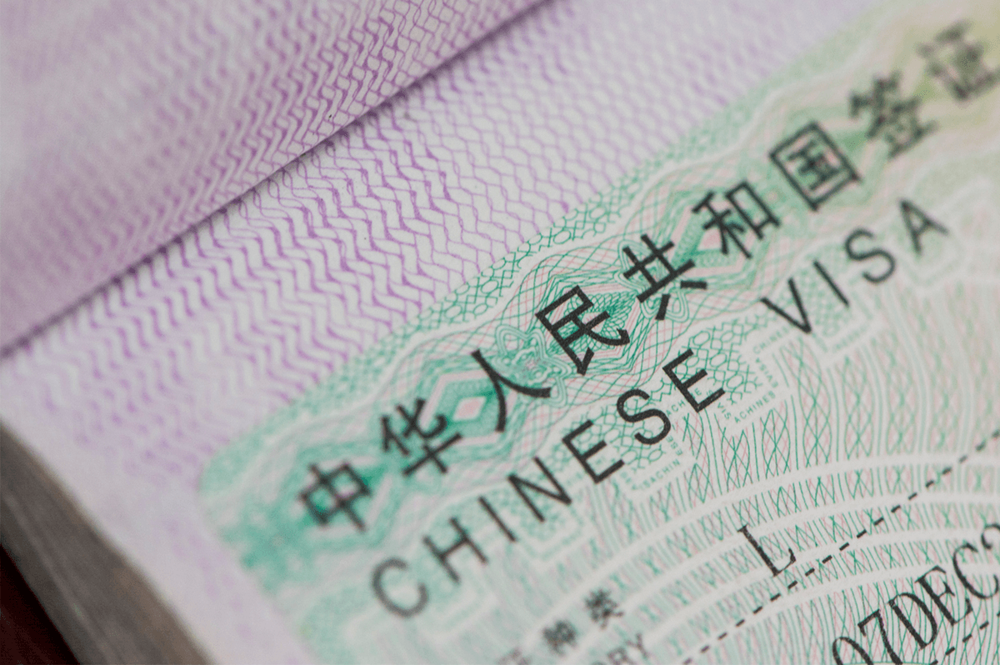
The China X1 visa is the long-term study visa issued to foreign nationals admitted to a Chinese school or university for a course of study lasting more than 180 days. To get one, you need an admission letter from a recognized Chinese institution, an official JW201 or JW202 form, a valid passport, supporting personal documents, and an in-person appointment at a Chinese embassy, consulate, or Chinese Visa Application Service Center.
Last updated: May 13, 2026
X1 vs. X2: Which Study Visa Do You Actually Need?
Before you start gathering documents, confirm you are applying for the right category. China issues two student visas, and the line between them is the length of your program.
Visa | Length of study | Entries | Convertible to residence permit? |
|---|---|---|---|
X1 | More than 180 days | Issued as a single-entry visa for initial entry, then converted | Yes, must convert within 30 days of arrival |
X2 | 180 days or less | Single entry, max stay 180 days | No |
If your program, exchange semester, or language course runs longer than 180 days, you must apply for the X1. The X1 itself only lets you enter China once. After arrival, you exchange it for a Residence Permit for Foreigners (Study), which becomes your actual long-term status and lets you exit and re-enter China.
The X2 is a short, non-convertible visa for summer schools, short language programs, or research stays of six months or less. If a program later extends past 180 days, you generally cannot upgrade an X2 in country and may need to leave China and reapply for an X1.
One important rule from the Shanghai Exit-Entry Administration (2025 guidance): students who enter China under any visa-exemption or visa-free transit policy are not eligible to apply for a study visa or residence permit from inside China. They must exit China and re-enter on a properly issued X1 or X2.
Eligibility and Core Requirements
To qualify for the X1 visa, you must:
- Hold a valid passport with at least 6 months of remaining validity from the date of application.
- Have at least one blank visa page (some missions, including Beijing's guidance, recommend at least two blank pages).
- Have received a formal Admission Letter from a Chinese school, college, or university authorized to enroll international students.
- Have an original JW201 or JW202 form ("Visa Application for Study in China") issued by Chinese authorities or by your host institution.
- Be applying for a program longer than 180 days.
- If applying outside your country of citizenship, hold proof of legal residency, work, or study status in your country of current stay.
The JW201 form is issued for students on Chinese government scholarships. The JW202 form is issued for self-funded students or those on institutional or third-party scholarships. Your university's international office decides which one applies and mails or couriers it to you, often together with the Admission Letter.
Applicants under the age of 18 must additionally provide an original and photocopy of their birth certificate, and in many cases a notarized parental consent letter (check the specific consulate's requirements).
Document Checklist for the X1 Application
Bring the following to your appointment. Missing or expired items are the most common reason for rejection.
- Passport with at least 6 months validity and blank visa pages, plus a photocopy of the bio-data page.
- Printed Confirmation of Online Visa Application (COVA) and the Visa Application Form, both signed.
- Printed Voucher for Appointment for Visa Application Submission.
- One recent passport-size color photo: 48 mm x 33 mm, frontal, bare-headed, white background, taken within the last 6 months. The photo is also uploaded to COVA.
- Original and photocopy of the Admission Letter from your Chinese school.
- Original and photocopy of the JW201 or JW202 form.
- For applicants under 18: original and photocopy of birth certificate.
- For applicants outside their country of citizenship: proof of legal residence, work, or study in the current country (residence permit, long-term visa, work permit, or student card).
- Photocopy of any previous Chinese passports or previous Chinese visas, if applicable.
Some missions also ask for a photocopy of your itinerary or proof of accommodation in China. Universities frequently provide a dormitory letter that satisfies this if requested.
Step-by-Step Application Process
The procedure is standardized through China's online visa system, but the in-person submission is handled by the Chinese embassy, consulate, or the Chinese Visa Application Service Center (CVASC) that serves your jurisdiction.
- Receive your Admission Letter and JW201/JW202 form. Universities typically issue these 1 to 3 months before the program start date. Both must be originals at the time you apply.
- Complete the COVA form online at https://cova.cs.mfa.gov.cn. Fill in personal details, study plans, and travel dates, then upload your photo. Print the resulting Confirmation page and the Visa Application Form, and sign both.
- Book an appointment at https://avas.cs.mfa.gov.cn for the embassy, consulate, or CVASC center that covers your area of residence. Print the Voucher for Appointment.
- Attend the in-person appointment. Since April 3, 2023, almost all Chinese visa applicants must appear in person for fingerprint collection and facial scans. Bring all originals and photocopies. Submit your passport, sit for biometrics, and pay the fee.
- Collect the visa. You can usually pick up your passport in person or have it returned by courier. The X1 sticker will be inside.
- Travel to China within the visa's validity window (typically issued for entry within 3 months of issuance, but check the sticker).
- Apply for the Residence Permit for Foreigners (Study) at the local Public Security Bureau Exit and Entry Administration within 30 days of arrival. This is mandatory.
It is recommended to begin the visa application at least one month before your intended travel date. Programs that start in early September often see consulate backlogs in July and August.
Fees and Processing Time
X1 visa fees vary significantly by nationality and by the country where you apply, because of bilateral reciprocity arrangements. Standard, express, and rush processing tiers exist at most missions, but the exact day counts and surcharges differ.
For accurate current figures, check directly:
- The Chinese Embassy or Consulate website for your jurisdiction.
- The Chinese Visa Application Service Center: https://www.visaforchina.cn
- China Consular Affairs: http://cs.mfa.gov.cn
When budgeting, plan for:
- The visa fee itself (set by your nationality and consulate).
- A CVASC service fee if you apply through a service center rather than directly at the embassy.
- Optional courier or rush fees.
- The cost of passport photos and document photocopies.
- Later, in China: the residence permit fee (paid to the Public Security Bureau) and a health certificate if your permit will be valid more than one year.
After You Arrive: The Residence Permit
The X1 sticker only authorizes a single entry. Your real long-term status begins when you convert it to a Residence Permit for Foreigners (Study) within 30 days of arrival.
What to prepare:
- Your passport with the X1 entry stamp.
- The Admission Letter and JW201/JW202 (some bureaus ask to see them again).
- A registration form of temporary residence, issued by your dormitory or by the local police station within 24 hours of arrival.
- Proof of student status from your university (often called a "Student Status Certificate").
- A health certificate from a Chinese county-level or higher medical institution, or from a designated quarantine authority, if your residence permit will be valid more than one year.
- Passport-size photos and the application form provided by the Exit and Entry Administration.
The permit's validity will generally match the term of study indicated by your school, up to the legal maximum. While the bureau holds your passport during processing, the acceptance receipt they issue is your legal proof of stay in China.
When the permit is close to expiring (for example, if you progress from a language year into a degree program), apply for an extension at least 30 days before expiration at the same Exit and Entry Administration. Extension fees match first-time application fees. For the short-stay X2, any extension must be filed at least 7 days before the stay period ends.
Common Pitfalls
- Applying with the wrong form. A JW201 issued for one institution cannot be used for another. If you change schools after receiving the form, ask the new institution to issue a fresh one.
- Passport too close to expiry. Renew it before applying if you are inside the 6-month buffer. Replacing it after the visa is issued forces you to transfer the visa.
- Skipping the 30-day residence permit deadline. This results in fines and complicates future visa applications.
- Entering on visa-free transit "to save time." You cannot convert visa-free entry to an X1 inside China. You must leave and re-enter on a proper study visa.
- Booking flights before the visa is in hand. Processing times shift, and embassy holidays can extend them. Buy refundable tickets or wait until your passport is back.
- Forgetting temporary residence registration. Whether you live in a dorm or off-campus, registration with the local police within 24 hours of arrival is required. Hotels do this automatically; landlords often do not.
- Mismatched personal data. Names on the COVA form must match your passport exactly, including middle names and the order of family/given names.
Frequently Asked Questions
Can I work part-time on an X1 visa? Only with prior approval from both your university and the Exit and Entry Administration, noted on your residence permit. Unauthorized work carries fines and possible deportation.
Can my spouse or children join me? Family members typically apply for an S1 or S2 visa as dependents of an X1 holder, with documentation showing the relationship and your study status in China.
Do I need to take a Chinese language test before applying? The X1 visa itself does not require a HSK score. Individual programs (especially Chinese-taught degrees) may require HSK 4 or above for admission, but that is between you and the university.
Can I apply in a country other than my home country? Yes, but you must show proof of legal long-term residence, work, or study in that country. Tourists generally cannot apply for an X1 from a third country.
Does the X1 allow multiple entries? No. The X1 sticker is for one entry. Multiple-entry travel is granted through the residence permit you obtain after arrival.
What if my program is exactly 180 days? Apply for the X2. The X1 threshold is "more than 180 days."
Are biometrics required every time? Once your fingerprints are on file at a Chinese mission and your data is current, some renewals can skip the in-person step, but policies vary by post. Assume in-person attendance is required unless told otherwise.
If you are heading to China for a degree or a long language program, building real Mandarin ability before and during your stay will make housing, banking, and daily life far easier. Migaku turns Chinese videos, shows, and articles into study material so you arrive ready to use the language in context.