Classic 2 Week Italy Itinerary: Rome to the Amalfi Coast
Last updated: May 25, 2026
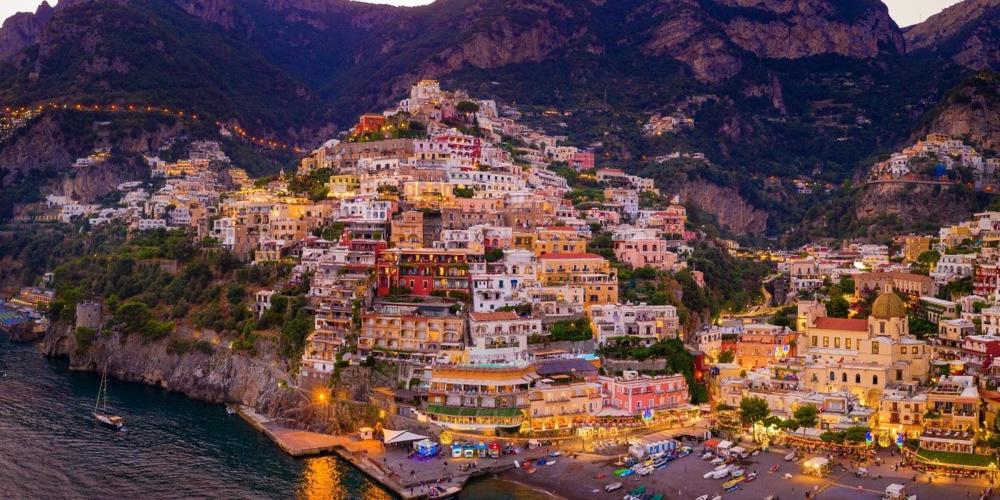
Two weeks is the sweet spot for a first proper trip through Italy: enough time to hit Rome, Florence, Venice, and the Amalfi Coast without spending every other morning packing a suitcase. This guide lays out the classic south-to-north (or north-to-south) route with real travel times, current 2026 ticket prices, and the booking traps that catch first-timers.
Last updated: May 25, 2026
The Route at a Glance
The classic Italian arc usually runs Rome → Florence → Venice → Amalfi Coast, or the reverse. Flying into Rome (FCO) and out of Naples (NAP), or vice versa, saves you from doubling back. If both ends of your trip must be Rome, swap Amalfi to the start and Venice to the end.
A workable 14-night split:
Stop | Nights | Why this long |
|---|---|---|
Rome | 4 | Vatican, Colosseum, neighborhoods, a day trip option |
Florence | 3 | Uffizi, Accademia, a Tuscany day trip |
Venice | 2 | Manageable in 2 full days if you stay on the islands |
Amalfi Coast (Sorrento base) | 4 | Positano, Amalfi, Capri, Pompeii |
Travel/buffer | 1 | Absorbs delays and one slow morning |
If you only have one week, see our 1 week Italy itinerary for first-timers instead, and pick three cities.
Days 1–4: Rome
Fly into Fiumicino (FCO). The Leonardo Express runs nonstop to Roma Termini in 32 minutes. From Termini you can walk or metro to most central neighborhoods (Monti, Trastevere, Centro Storico).
What to prioritize:
- Colosseum + Roman Forum + Palatine Hill. The standard combined ticket is €18 adult and is valid for 24 hours across all three sites. The Full Experience ticket (€24) adds the Arena floor, Underground, or Attic. Tickets release on ticketing.colosseo.it exactly 30 days before the visit date and sell out fast in shoulder and peak season. Under-18s enter free but still need a €2 reservation fee if booking online. EU citizens aged 18–24 pay a reduced €2. Free entry on the first Sunday of each month, plus April 25, June 2, and November 4.
- Vatican Museums and Sistine Chapel. Base ticket is €20, plus a €5 online booking fee (€25 total online). Reduced ticket for ages 6–18 and students is €10 (€15 online). Free entry on the last Sunday of each month from 9 am to 2 pm (last entry 12:30 pm), but expect very long queues. St. Peter's Basilica itself is free; the dome climb is €8 by stairs (551 steps) or €10 with the elevator.
- Trevi Fountain, Pantheon, Piazza Navona, Spanish Steps. Walkable as a single afternoon loop. As of 2026, Rome introduced a €2 entry fee with pre-booking for the Trevi Fountain viewing platform. Confirm the current arrangement on comune.roma.it close to your travel date, as the rollout has been phased.
- Trastevere and Testaccio for evening food walks.
Day-trip option (Day 4): Tivoli (Villa d'Este, Hadrian's Villa) by regional train, or Ostia Antica for archaeology without the Pompeii crowds.
Rome tourist tax: up to €10 per person per night at 5-star hotels, €7.50 at 4-star, €6 at 3-star, capped at 10 nights. Pay at checkout, usually in cash.
Days 5–7: Florence
Travel: Rome Termini → Firenze Santa Maria Novella on Frecciarossa or Italo. Fastest services run 1h 16m to 1h 23m, with around 109 trains per day across operators. Base fare is roughly €55; advance Economy tickets start at €19.90 if you book 1–3 months out. Children 4–14 get 50% off the Base fare; under-4s ride free.
What to prioritize:
- Uffizi Gallery. €25 same-day, or €29 online with the €4 booking fee. A new afternoon ticket launched January 1, 2026 covers entry from 4 pm onward at €16 on-site or €20 online, which is a real saving if you're flexible. EU citizens aged 18–25 pay €2 reduced; under-18s free. The Passepartout 5-day combined pass (Uffizi + Pitti Palace + Boboli Gardens) is €40.
- Accademia Gallery for Michelangelo's David. €16 admission plus the €4 booking fee, so €20 online. Since March 15, 2026, there's a combined Accademia + Bargello 48-hour pass at €26 + €4 booking, and a 6-museum 72-hour pass (Accademia, Bargello, Medici Chapels, Palazzo Davanzati, Orsanmichele, Casa Martelli) at €38 + €4 booking. If you're staying three full days, the 6-museum pass is the best-value art ticket in the city.
- Duomo complex (Cathedral, Baptistery, Bell Tower, Dome climb, Crypt). Single combined ticket; book the dome climb time slot well in advance.
- Oltrarno for artisan workshops and a sunset at Piazzale Michelangelo.
Day-trip option (Day 7): Siena and San Gimignano by bus, or a Chianti wine-region tour. Pisa + Lucca is also doable in a long day by regional train. If food is your thing, build the day around regional producers; the slow food movement in Italy regions guide has specific Tuscan stops worth pairing with this leg.
Florence tourist tax: 5-star around €8, mid-range and B&Bs around €6, 1-star and campsites around €3.50 per person per night, capped at 7 nights. Under-12s free.
Days 8–9: Venice
Travel: Florence SMN → Venezia Santa Lucia on Frecciarossa or Italo. Fastest service is 2h 1m, with around 23 direct services daily. Get off at Santa Lucia (the island station), not Venezia Mestre on the mainland.
What you need to know about the access fee: Venice's day-tripper access fee returns in 2026 covering 60 days between April 3 and July 26 (up from 54 days in 2025). The fee is €5 per person if you book at least 4 days in advance and €10 if you book closer to the visit. It only applies between 08:30 and 16:00 on listed "red" days, and outside those hours access is free. Overnight guests are exempt but must still register on cda.ve.it for a QR exemption voucher. Carry the QR on your phone. Fines for non-compliance run up to €300. Children under 14 are exempt. The fee does not apply to the minor islands (Lido, Murano, Burano, Torcello).
Two-day plan:
- Day 1: San Marco, Doge's Palace, Basilica di San Marco, get lost on purpose in Cannaregio, aperitivo in a bacaro.
- Day 2: Vaporetto out to Murano and Burano (half day), then Dorsoduro for the Accademia, Peggy Guggenheim, and Zattere.
Venice tourist tax: €1–€5 per person per night depending on accommodation type and season.
Onward connection: From Venice, the fastest path to the Amalfi Coast is a single long train day: Venezia Santa Lucia → Napoli Centrale on Frecciarossa (around 5h 15m direct on the fastest services). Book in advance for sub-€60 fares; Base fare can exceed €130.
Days 10–13: The Amalfi Coast
Travel from Naples: From Napoli Centrale, the Circumvesuviana regional line connects to Sorrento in about 70 minutes. Sorrento is the most practical base for first-timers: it has hotels at every price point, ferry connections to Capri and Positano, and bus connections to Amalfi and Ravello. Positano and Amalfi towns themselves are smaller, more scenic, more expensive, and harder to reach with luggage.
Four-day plan from Sorrento:
- Day 10: Pompeii or Herculaneum. Direct on the Circumvesuviana. Pompeii is bigger and more crowded; Herculaneum is smaller and better preserved. Start at opening to avoid the worst midday heat from June onward.
- Day 11: Positano and Amalfi by ferry. Ferries from Sorrento Marina Piccola run roughly April–October. The coastal bus (SITA Sud) is cheaper but slower and prone to traffic; the ferry is the better choice when running.
- Day 12: Capri. Fast ferry from Sorrento, about 25 minutes. Funicular up to Capri town, chairlift up Monte Solaro for the view, and a boat tour around the island if conditions allow the Blue Grotto.
- Day 13: Ravello and a slow afternoon. Bus from Amalfi up to Ravello for Villa Cimbrone and Villa Rufolo gardens. Or take a full slow day in Sorrento itself: limoncello tastings, Marina Grande for seafood, the Vallone dei Mulini viewpoint.
Naples tourist tax: €5 per person at short-term rentals; €3–€5.50 at other hotels (effective March 1, 2025 onward).
Day 14: Departure
Back to Napoli Centrale on the Circumvesuviana, then a short taxi or Alibus to Naples International (NAP). If you're flying out of Rome instead, Naples to Roma Termini on Frecciarossa is about 1h 10m.
Fees and Budget Snapshot (2026)
Item | Cost |
|---|---|
Colosseum + Forum + Palatine | €18 adult |
Vatican Museums (online) | €25 |
Uffizi (advance online) | €29 |
Uffizi afternoon (from 4 pm, online) | €20 |
Accademia (David) online | €20 |
Florence 6-museum 72-hour pass | €42 (incl. booking fee) |
St. Peter's Dome (elevator) | €10 |
Venice day access fee (advance) | €5 (€10 last minute) |
Trevi Fountain (2026 entry, verify) | €2 |
Juliet's House, Verona (if diverting) | €12 |
For train travel, book Frecciarossa and Italo Economy tickets 1–3 months ahead. Rome–Florence advance fares start at €19.90, Rome–Venice from €29.90. Walk-up Base fares can be 3–5x higher.
Entry Requirements (2026)
- The EU Entry/Exit System (EES) completed full rollout on April 10, 2026. Non-EU travelers now have fingerprints and a facial image registered on first entry; subsequent entries are faster.
- ETIAS launches in Q4 2026 (October–December) for visa-exempt nationals (US, UK, Canada, Australia, and others). The fee is €20 per application, valid for 3 years or until your passport expires, whichever comes first. Applicants under 18 or over 70 are exempt from the fee. If you're traveling before launch, you don't need ETIAS yet; check travel-europe.europa.eu for the live date.
- Schengen short-stay rule: up to 90 days within any 180-day period.
Common Pitfalls
- Not booking the Colosseum 30 days out. Tickets go on sale exactly 30 days before. Set a reminder; the timed slots disappear within hours in peak season.
- Showing up in Venice on a "red" day without a QR code. Overnight guests are exempt but still need to register on cda.ve.it to get the exemption voucher. The fine is up to €300.
- Underestimating Amalfi Coast transit time. The coastal road is one lane in each direction with switchbacks. A "30 km drive" can take 2 hours in August. Ferries are usually faster but seasonal.
- Renting a car for the cities. ZTL (limited traffic zones) in Rome, Florence, and most historic centers carry automatic camera fines. Don't rent a car until you're heading to Tuscany or the coast, and even then it's often unnecessary.
- Assuming all museums are open Mondays. The Uffizi, Accademia, and Vatican Museums are closed on different days; check before locking in your dates.
- Buying refundable hotel rates with city tax included. Italian tourist tax is almost always paid separately at checkout, often only in cash. Budget for it.
FAQs
Is two weeks enough for Italy? It's enough for the classic four-stop route at a sensible pace. It is not enough to add Sicily, Puglia, or the Dolomites in a meaningful way.
Should I go north-to-south or south-to-north? Either works. South-to-north (Amalfi → Rome → Florence → Venice) ends on a quieter, walking-paced city, which many travelers prefer for jet-lag-free departures. North-to-south ends on the coast, which is the more relaxing finale.
Is the rail pass worth it? For this exact itinerary (3 long-distance hops), individual advance tickets are almost always cheaper than a Eurail pass. Buy directly from trenitalia.com or italotreno.com.
When is the best time to go? Late April to mid-June and September to mid-October. July and August are hot, expensive, and crowded; Amalfi ferries do run, but the heat in Rome and Florence is punishing.
Can I do this with kids? Yes. Trenitalia gives 50% off Base fares for ages 4–14 and free travel under 4. Most museums are free for under-18s. Plan shorter sightseeing blocks and build in pool or beach time on the Amalfi leg.
What if I want to add another country? Two weeks doesn't really leave room. If you want a France-and-Italy combo, give each country its own trip. Our two weeks in France grand tour is the equivalent route for the next visit.
If you're heading to Italy and want to actually understand menu boards, train announcements, and the conversation at the next table, Migaku turns Italian shows, YouTube, and articles into your study material. Try Migaku before you fly.