# French Internet Slang: Popular Online Abbreviations and Texting Slang in 2026
> From MDR to verlan terms. Learn the most popular French internet slang, texting abbreviations, and Gen Z expressions used on social media in 2026.
**URL:** https://migaku.com/blog/language-fun/french-internet-slang
**Last Updated:** 2026-04-07
**Tags:** vocabulary, culture, phrases
---
If you've ever scrolled through French social media or tried texting with a French friend when [learning French](https://migaku.com/learn-french), you've probably noticed their messages look nothing like the [textbook](https://migaku.com/blog/language-fun/best-french-textbooks) French you learned in class. French internet slang is a whole different beast, packed with abbreviations, verlan inversions, and Gen Z expressions that change faster than you can say "MDR." This guide breaks down the most popular French internet slang and online expressions you'll see on TikTok, Instagram, and in text messages right now in 2026.
----
## Common French texting abbreviations every French learner needs
Let's start with the basics. These abbreviations show up in pretty much every casual French text conversation.
### MDR and other laughter expressions in text messages
**MDR** stands for "mort de rire," which literally translates to "dead from laughing." This is your standard "lol" equivalent in French. You'll see it everywhere.
**PTDR** takes it up a notch. It means "pété de rire," roughly translating to "bursting with laughter" or the English equivalent of ROFL. When something is genuinely hilarious, French people will spam PTDR in the comments.
Here are other common texting abbreviations you'll encounter:
- Slt: Salut (hi/bye)
- Cv: Ça va (how's it going)
- Bjr: Bonjour (hello)
- Bsr: Bonsoir (good evening)
- Stp: S'il te plaît (please, informal)
- Svp: S'il vous plaît (please, formal)
- Mrc: Merci (thanks)
- Dsl: Désolé (sorry)
- Tkt: T'inquiète (don't worry)
- Jsp: Je sais pas (I don't know)
- Jpp: J'en peux plus (I can't take it anymore)
- Jte: Je te (I you, as in "I'm telling you")
- Pq: Pourquoi (why)
The abbreviation pattern is pretty straightforward. French speakers drop vowels and keep consonants, or they use the first letters of each word in a phrase. Once you recognize the pattern, decoding these becomes second nature.
----
## Verlan slang terms that dominates french social media
Verlan is where French slang gets really creative. The word "verlan" itself comes from inverting "l'envers" (reverse). Basically, you flip syllables around to create new words.
### Popular verlan terms you'll see constantly
- **Meuf** comes from "femme" (woman). Split it into syllables (fe-mme), reverse them, and you get meuf. This term is everywhere in casual French conversation, both online and offline.
- **Ouf** derives from "fou" (crazy). This word has become so mainstream that even French news outlets use it sometimes. When something is "ouf," it's wild, crazy, or unbelievable.
- **Chelou** comes from "louche" (sketchy/weird). If someone or something seems off, you'd call it chelou. "Ce mec est chelou" means "That guy is sketchy."
- **Relou** inverts "lourd" (heavy/annoying). This describes someone or something that's annoying or tiresome. "Il est relou" means "He's annoying."
- **Reuf** and **reus** both come from "frère" (brother) and mean bro or dude. You'll hear these in casual [greetings](https://migaku.com/blog/language-fun/french-greetings) between friends.
- **Teuf** comes from "fête" (party). Going to a teuf means you're heading to a party.
The beauty of verlan is that it keeps evolving. New inversions pop up regularly, especially among younger speakers who use it to create in-group language that older generations might not immediately understand.
----
## Gen Z French slang words taking over in 2026
Gen Z has brought a fresh wave of slang terms to French internet culture, many influenced by TikTok, rap music, and multicultural urban communities.
### Current trending expressions
- **Wesh** functions as a greeting similar to "yo" or "hey." It comes from Arabic influence in French urban culture and has become completely mainstream among young French speakers.
- **BG** is an abbreviation for "beau gosse," meaning good-looking guy or hottie. You'll see this in Instagram comments and TikTok videos constantly.
- **Cheum** comes from "moche" (ugly) in verlan. When something is cheum, it's ugly, uncool, or lame. "Cette veste est cheum" means "That jacket is ugly."
- **Stylé** means cool or stylish. Unlike its English cognate, it works as a general positive descriptor. "C'est stylé" is like saying "That's dope."
- **Mortel** literally means deadly, but in slang it means awesome or killer. "Cette soirée était mortelle" translates to "That party was killer."
- **Grave** works as an intensifier meaning "seriously" or "for real." If someone says "C'est grave bien," they mean "It's seriously good."
- **Dar** or **daronne** means mom, while **daron** means dad. These terms show up frequently in casual conversation about family.
### Common French internet phrases
- **"Je te kiffe"** means "I really like you" or "I dig you." Kiffer comes from Arabic and means to like or love something. It's become standard vocabulary for expressing enthusiasm.
- **"C'est une dinguerie"** translates to "That's crazy" or "That's insane." Dinguerie comes from "dingue" (crazy) and expresses amazement at something wild or impressive.
- **"Ça me saoule"** means "That annoys me" or "That's getting on my nerves." Saouler originally meant to get drunk, but in slang it means to annoy or bore someone.
----
## Texting slang for compliments and positive reactions
When French speakers want to hype something up online, they have plenty of options beyond just "bien" or "bon."
- **Trop** is the go-to intensifier, meaning "too" or "so." "C'est trop cool" means "That's so cool." You'll see "trop" attached to pretty much any positive adjective.
- **Énorme** literally means enormous but works like "epic" or "huge" in English slang. A great achievement or funny moment gets called "énorme."
- **De ouf** combines "de" (of) with the verlan for crazy. It means "insanely" or "crazy good." "C'est beau de ouf" translates to "That's insanely beautiful."
- **Lourd** can mean heavy, but in positive contexts it means impressive or intense. When a rapper drops a sick verse, that's "lourd."
- **Frais** means fresh, both literally and in the slang sense. Cool clothes or a nice haircut would be "frais."
----
## Insults and negative expressions to recognize
French text slang and chats have plenty of ways to express disapproval or insult someone. Understanding these helps you navigate online arguments and know when someone's being rude.
- **Nul** means lame or useless. "C'est nul" is a mild way to say something sucks.
- **Débile** means stupid or idiotic. It's harsher than nul and definitely an insult.
- **Bouffon** means clown or fool. Calling someone a bouffon is pretty disrespectful.
- **Boloss** refers to a loser or someone uncool. This term gets thrown around a lot in online roasts.
- **Casse-toi** literally means "break yourself" but functions like "get lost" or "screw off." It's the phrase President Sarkozy famously used at a public event, which became a huge scandal.
- **Ta gueule** is a rude way to say "shut up." The literal translation is "your face/mouth," but it's definitely offensive. A softer version would be "tais-toi."
----
## How French internet slang started and evolved
French internet slang terms didn't just appear overnight. It evolved from several cultural influences that merged in urban communities and spread through music, movies, and eventually social media.
Verlan has roots going back to the 19th century, but it exploded in popularity during the 1950s and 1960s in the banlieues (suburbs) around Paris. Young people from immigrant communities used it as a form of coded language.
The rise of French rap in the 1990s and 2000s brought verlan and street slang into mainstream consciousness. Rappers like MC Solaar and later Booba popularized these terms through their lyrics.
When texting became common in the early 2000s, French speakers developed their own system of abbreviations to save time and characters. The abbreviation style mirrors English texting shortcuts but follows French phonetics and [grammar](https://migaku.com/blog/language-fun/french-grammar-guide) patterns.
Social media platforms, especially Snapchat, Instagram, and TikTok, accelerated the spread of slang terms. A word that might have stayed regional can now go viral across the entire French-speaking world in days. In 2026, TikTok trends have probably the biggest influence on which slang terms gain traction among younger speakers.
----
## How to learn French slang naturally
Reading about slang terms is one thing, but actually using them naturally takes practice and exposure.
1. **Consume French social media content regularly.** Follow French TikTokers, YouTubers, and Instagram accounts that post in casual French. Pay attention to comment sections where people use slang freely.
2. **Watch French reality TV shows or YouTube vlogs where people speak casually.** Scripted shows sometimes use slang, but reality content gives you more authentic examples of how people actually talk.
3. **Join French Discord servers or online gaming communities.** Gaming culture has its own slang vocabulary, and chatting with French gamers will expose you to current expressions.
4. **Start using slang in your own French writing**, but begin with the most common terms like MDR, slt, and ouf. As you get more comfortable, branch out into more specific expressions.
5. **Don't force it.** Using slang incorrectly or in the wrong context sounds awkward. If you're unsure whether a term fits, stick with standard French until you've seen enough examples to understand the nuances.
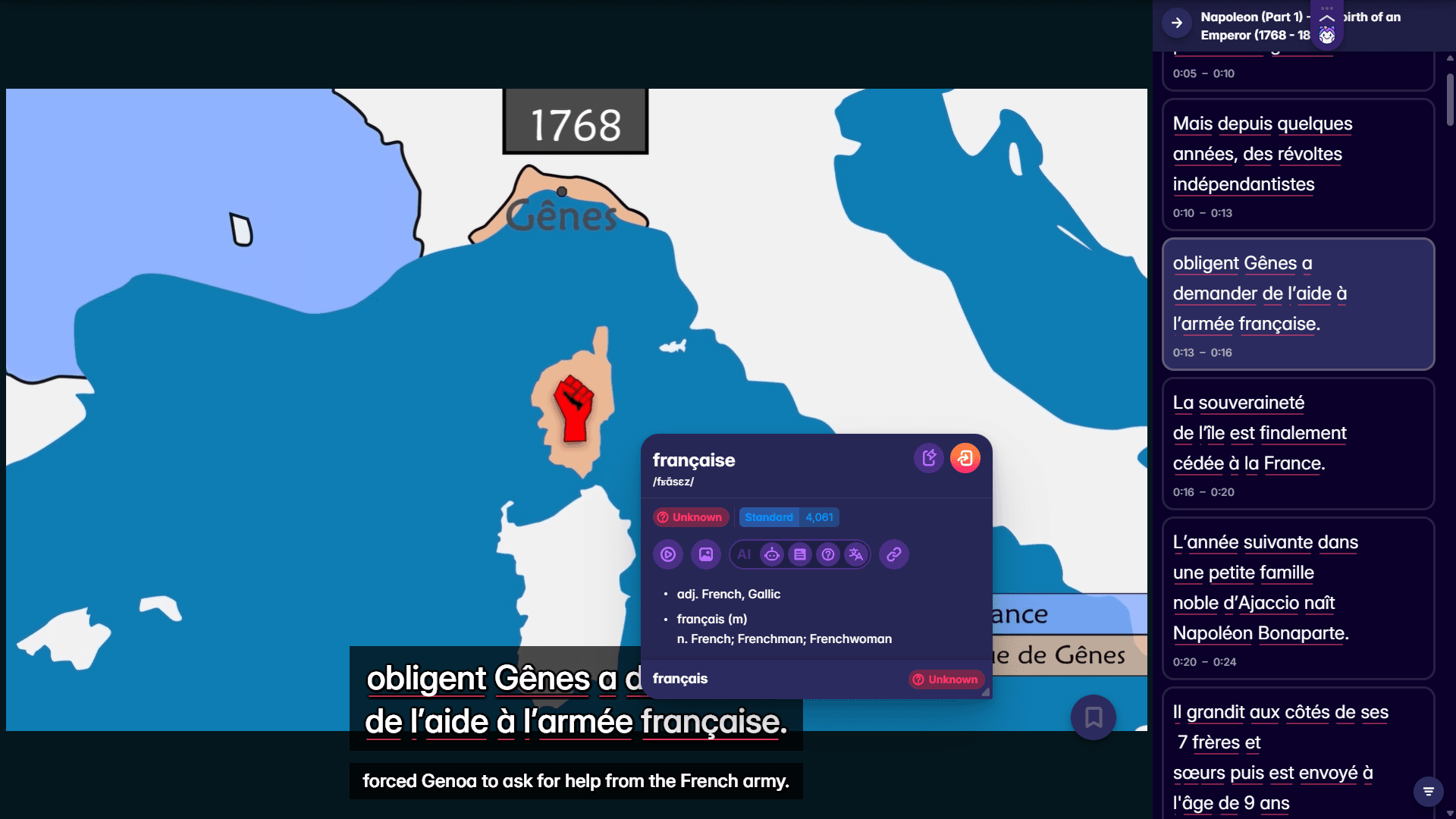
Want to pick up slang naturally while watching French content? Migaku's browser extension and app let you look up unfamiliar words and save them to flashcards instantly while you're browsing social media or watching videos. Pretty useful for catching all those slang terms before they fly past you. There's a 10-day free trial if you want to test it out.
 ----
## French internet slang changes constantly
New terms emerge, and old ones fade out. What's popular in 2026 might be outdated by 2027. The slang words covered here represent the current landscape, but staying updated requires ongoing exposure to French online culture. The abbreviation shortcuts, verlan inversions, and Gen Z expressions you've learned here will help you understand the majority of casual French you encounter in chats, social media, daily conversations, reality shows, and so on.
> If you consume media in French, and you understand at least some of the messages and sentences within that media, you will make progress. *Period*.
Staying current is part of real fluency!
----
## French internet slang changes constantly
New terms emerge, and old ones fade out. What's popular in 2026 might be outdated by 2027. The slang words covered here represent the current landscape, but staying updated requires ongoing exposure to French online culture. The abbreviation shortcuts, verlan inversions, and Gen Z expressions you've learned here will help you understand the majority of casual French you encounter in chats, social media, daily conversations, reality shows, and so on.
> If you consume media in French, and you understand at least some of the messages and sentences within that media, you will make progress. *Period*.
Staying current is part of real fluency!