German Internet Slang: Popular Abbreviations and Phrases
Last updated: April 8, 2026

If you've spent any time chatting with Germans online or scrolling through German TikTok when learning German, you've probably noticed a wild mix of English borrowings, weird abbreviations, and phrases that don't show up in any textbook. German internet slang in 2026 is shaped by social media trends, gaming culture, and the constant back-and-forth between English and German. Let's break down the most popular terms you'll actually encounter in chats, comments, and DMs.
Common German texting abbreviations you'll see everywhere
German texting relies heavily on shortening phrases to save time and characters. These abbreviations show up constantly in casual chat environments.
Basic abbreviations
- "Ka" appears in almost every conversation where someone doesn't know something. It stands for "keine ahnung," which literally means "no idea." You'll see this dozens of times daily if you're active in German online spaces.
- "Bis" works as shorthand for "bis später" (see you later) or "bis morgen" (see you tomorrow). Germans drop this casually when ending conversations without the formality of a full goodbye.
- "Hdl" means "hab dich lieb," expressing affection that's warmer than friendship but less intense than "ich liebe dich." Think of it as the German equivalent of "love ya" rather than "I love you." The stronger version "ild" (ich liebe dich) exists but gets used more sparingly, usually in romantic contexts.
- "Mfg" stands for "mit freundlichen Grüßen" (with friendly regards), though younger people use it ironically now since it sounds super formal and outdated. You'll see it in memes more than serious messages.
Gaming and reaction abbreviations
- "Gg" (good game) transfers directly from English gaming culture and needs no translation. Germans use it exactly like English speakers do.
- "Wtf" also crosses over without change, though you might occasionally see "wtz" (was zum Teufel) as a German alternative. The English version dominates though.
- "Lol" appears constantly, sometimes written as "lal" to reflect German pronunciation. "Laughing out loud" doesn't get translated, Germans just adopted the English abbreviation wholesale.
Popular Gen Z German slang taking over social media
The youth slang scene in Germany changes rapidly, driven by TikTok trends, hip-hop culture, and viral moments. These terms define how young Germans communicate in 2026.
Digga and its variations
"Digga" ranks as probably the most recognizable piece of German slang right now. It originated in Hamburg's hip-hop scene and roughly translates to "dude" or "bro." The word evolved from "Dicker" (fat one), which was already slang for friend.
You'll hear this everywhere in casual conversation. "Digga, was geht?" means "Dude, what's up?" The term works as a greeting, an interjection, or just filler when you're thinking. It's become so mainstream that even people outside Hamburg use it constantly.
Isso and agreement slang
"Isso" combines "ist so" (it is so) into one punchy word meaning "exactly" or "that's just how it is." When someone makes a statement and you completely agree, you drop an "isso" to show solidarity.
This term captures a very German tendency toward resigned acceptance. It's not quite pessimistic, more like acknowledging reality without fighting it.
Sheesh and English borrowings
- "Sheesh" exploded across German social media in 2025 and hasn't slowed down. Germans pronounce it exactly like English speakers, using it to express amazement, disbelief, or hype. You'll see it in comments under impressive videos or when someone shares surprising news.
- "Wyld" (wild) gets spelled the English way but pronounced with a German accent. It means something is crazy, unexpected, or over the top. "Das ist so wyld" appears constantly in reaction comments.
- "Cringe" needs no translation and Germans use it identically to English speakers. Something awkward or secondhand embarrassing? That's cringe. The word filled a gap in German vocabulary so perfectly that everyone just adopted it.
Gönnen and self-care slang
"Gönnen" technically means "to grant" or "to allow," but in slang it means treating yourself to something you deserve. "Ich gönn mir das" translates roughly to "I'm treating myself to this" or "I deserve this."
The phrase captures the whole self-care movement in one verb. Getting expensive coffee? Gönn dir (treat yourself). Taking a day off? Gönn dir. It's become the go-to justification for any indulgence.
Ehrenmann and Ehrenfrau
"Ehrenmann" (man of honor) and "Ehrenfrau" (woman of honor) describe someone who did something genuinely good or helpful. If your friend covers your coffee when you forgot your wallet, they're an Ehrenmann.
The terms get shortened to "Ehre" (honor) in quick exchanges. Someone does you a solid, you reply "Ehre," and everyone understands the appreciation.
Regional slang variations across Germany
German internet slang doesn't exist in a vacuum. Regional differences still matter, even online.
Berlin slang influence
Berlin's urban culture pumps out slang that spreads nationally through music and social media.
- "Alter" (literally "old one") works like "dude" but with more edge. "Alter, krass!" means something like "Dude, that's intense!"
- "Läuft" (running/going) became Berlin code for "things are good" or "it's working out." When someone asks how you're doing, "läuft bei dir?" is asking if everything's going smoothly.
Northern German expressions
- "Moin" started as a Northern German greeting but spread online as a casual, any-time hello. It's shorter than "Guten Morgen" and works morning, noon, or night.
- "Schnacken" means chatting or talking in Northern dialects, and you'll see it online when people discuss having conversations. "Lass mal schnacken" suggests having a proper talk about something.
How German internet slang handles emotions and reactions
Germans adapted their online emotional vocabulary heavily from English because internet culture developed those terms first.
Hype and excitement
- "Hype" transfers directly from English. Germans say something is "gehyped" when there's lots of buzz around it. The word works as both noun and verb without translation.
- "Bock haben" means being in the mood for something or having motivation. "Ich hab Bock" expresses enthusiasm for a plan or idea. The negative "kein Bock" (no motivation) appears even more frequently when people want to express disinterest.
Disappointment and frustration
- "Bruh" crossed over from English as the perfect expression of exasperation or disbelief. Germans type it exactly the same way, usually when someone says something ridiculous or disappointing.
- "F" appears in German chats just like English ones, paying respects when something goes wrong. The meme culture around this transcends language completely.
Awkwardness and secondhand embarrassment
- "Fremdschämen" is actually a German original that describes feeling embarrassed for someone else. It's the perfect word for cringe culture, and Germans use it constantly when discussing awkward situations.
- "Unangenehm" (uncomfortable/awkward) gets shortened in speech but appears fully written online when describing uncomfortable situations.
Dating and flirting slang online
German dating culture has its own vocabulary that blends traditional romance with modern casualness.
- "Simpen" (from English "simp") describes going overboard trying to impress someone who isn't interested. It's mostly used jokingly among friends rather than as a serious insult.
- "Crush" doesn't get translated. Germans just say "mein Crush" when talking about someone they're interested in. The English word captured something more casual than "Schwarm" (traditional German for crush), which sounds a bit old-fashioned now.
- "Ghosten" (ghosting) describes cutting off communication without explanation, borrowed directly from English dating culture. The phenomenon needed a name, so Germans just adopted the English term.
Tips for learning German slang for texting
Reading lists helps, but you need exposure to real usage for this stuff to stick. Context matters hugely because slang terms shift meaning based on tone, platform, and who's using them.
- Watch German YouTube channels aimed at younger audiences. Gaming streamers, comedy creators, and lifestyle vloggers use current slang naturally. Pay attention to comment sections too, that's where you'll see abbreviation and casual chat language in action.
- Join German Discord servers or subreddits related to your interests. Gaming communities especially use tons of slang mixed with English. Don't worry about using terms perfectly at first, just observe how native speakers deploy them.
- German TikTok provides constant exposure to trending expressions. The algorithm will show you what's current, and you'll see the same terms repeated across different creators, which helps reinforce meaning.
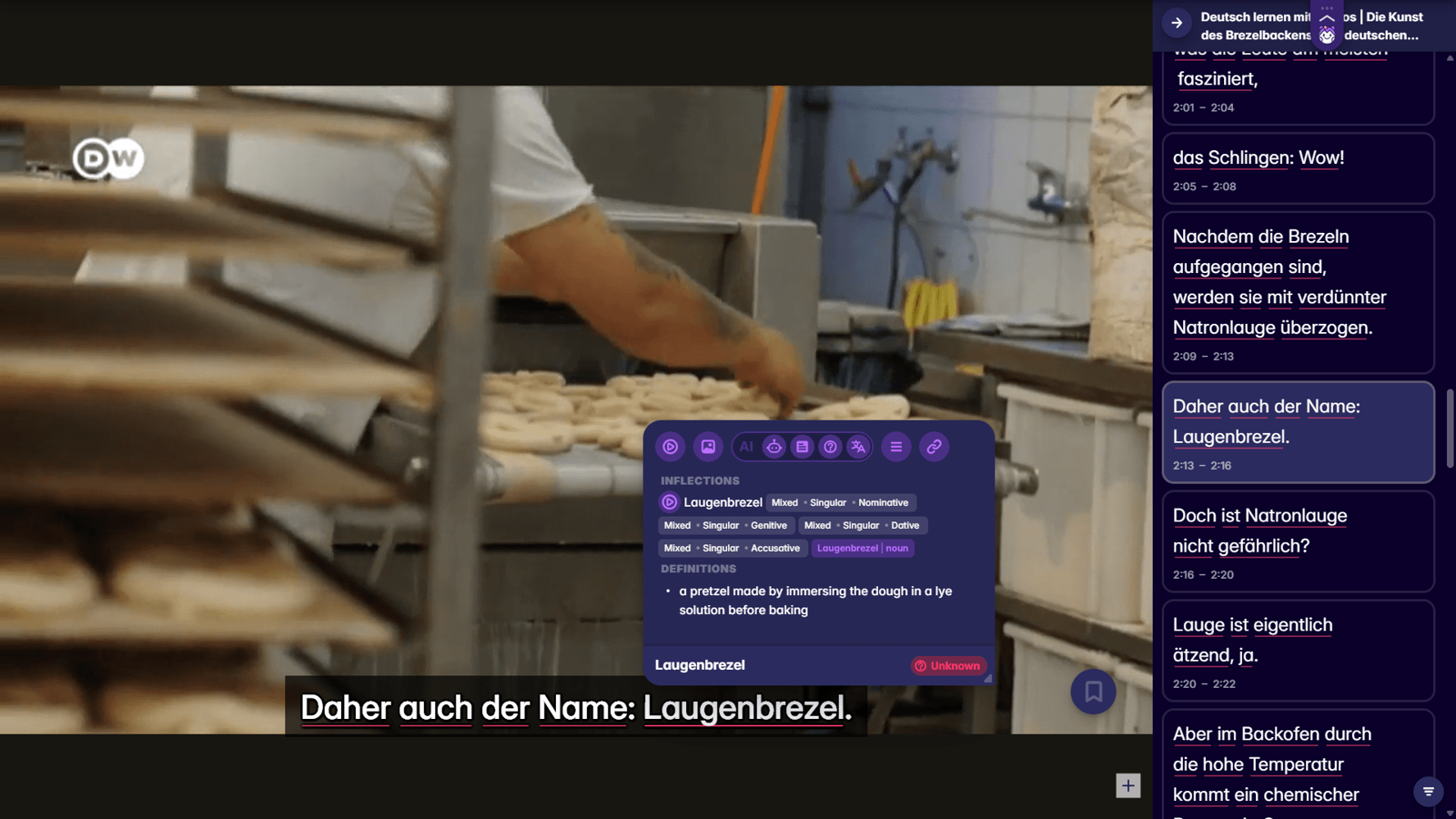
Speaking of consuming German media, Migaku's browser extension and app let you look up slang terms and expressions instantly while watching YouTube videos or scrolling through German websites. Makes learning from authentic content way more practical. There's a 10-day free trial if you want to check it out.
FAQs
Stay up to date with the modern German vocabulary
German internet slang in 2026 reflects a language constantly evolving through global influences, regional culture, and generational shifts. From "digga" to "cringe," these terms show how Germans adapt their language to express modern experiences. You don't need to memorize every abbreviation or trend. Focus on understanding the most common terms, expose yourself to authentic usage through social media and online communities, and you'll naturally develop an ear for what sounds current versus outdated.
If you consume media in German, and you understand at least some of the messages and sentences within that media, you will make progress. Period.
Media catches language as it changes. Textbooks don't.