# Italian Internet Slang: Gen Z Phrases & Online Expressions
> From "shippare" to "tvb," master the phrases young Italians use on social media and in chat. Learn common slang, abbreviations, and Italian culture.
**URL:** https://migaku.com/blog/language-fun/italian-internet-slang
**Last Updated:** 2026-03-31
**Tags:** vocabulary, culture, phrases
---
If you've ever scrolled through Italian TikTok or tried chatting with young Italians online, you probably noticed they're not exactly speaking the textbook Italian you learned in class. The internet has completely transformed how Italians communicate, blending traditional Italian phrases with English borrowings and creative abbreviations. This guide breaks down the slang that Gen Z Italians use when they're texting, posting, and commenting across social media in 2026. If you're [learning Italian](https://migaku.com/learn-italian), knowing how to use slang will make your language much more natural!
----
## How did Italian internet slang evolve
Italian internet slang didn't just appear overnight. The evolution started in the early 2000s with SMS text messaging, when Italians needed to squeeze messages into 160-character limits. People started abbreviating common phrases like "ti voglio bene" (I love you) into "tvb" and "ti amo" into "ta." Pretty standard stuff for anyone who remembers early texting culture.
Around 2010-2015, as social media platforms like Facebook and Instagram took over Italy, young Italians started mixing English internet culture with Italian [grammar](https://migaku.com/blog/language-fun/italian-grammar-guide). They weren't just translating English slang anymore. They were literally taking English verbs and conjugating them like Italian verbs. This created a whole new hybrid language that older Italians sometimes struggle to understand.
By 2020, TikTok and Instagram Reels accelerated everything. Gen Z Italians now switch between Italian, English, and this blended internet language without even thinking about it. The slang evolves so fast that expressions popular in 2024 might already feel outdated by 2026.
----
## Italian text slang and abbreviations
Let's start with the basics. These are the abbreviations Italians use constantly in chat messages and comments.
- **"Tvb"** remains the classic. It stands for "ti voglio bene," which translates to "I love you" but in a platonic, affectionate way. You'd use this with friends and family, not romantic partners. For romantic love, Italians might use "ta" (ti amo), though honestly, most young people just type out the full phrase or use emojis instead.
- **"Cmq"** means "comunque" (anyway or however). You'll see this everywhere in Italian texts.
- **"Nn"** or **"nn"** replaces "non" (not), saving a whole letter. Revolutionary, right?
- **"Xke"** or **"xk"** stands for "perché" (why or because). The "x" replaces "per" since it sounds similar. Same logic applies to "xo" for "però" (but/however), though this one is less common now.
- **"Risp"** means "rispondi" (answer/reply). Someone might comment "risp" on your Instagram story when they want you to respond to their DM.
- **"Msg"** works the same as English, short for "messaggio" (message).
- **"Dp"** means "dopo" (after/later), as in "ci vediamo dp" (see you later).
----
## Popular Italian internet slang phrases from Gen Z
This is where Italian internet slang gets really fun. These expressions define how young Italians communicate online in 2026.
- **"Che figata"** is essential vocabulary. This phrase means something is really cool, awesome, or amazing. You'll hear this constantly from Italians under 30. "Figo" is the adjective (cool), and "figata" turns it into a noun referring to the cool thing itself. Someone posts a photo from their vacation? "Che figata!" appears in the comments.
- **"Shippare"** comes from the English word "ship" (as in relationship). Italians conjugate it like a regular Italian verb: io shippo, tu shippi, lui shippa. If you support two people getting together romantically, you "shippi" them. This works for real couples, fictional characters, or celebrities. "Io shippo quella coppia" means "I ship that couple."
- **"Flexare"** or **"flessare"** means to show off or flex. Again, they took the English word and made it Italian. "Sta flessando con la sua macchina nuova" translates to "He's flexing with his new car." The noun form "flex" also works on its own.
- **"Cringe"** actually stays in English, but Italians use it constantly. Sometimes you'll see "cringioso" or "cringiata" as Italianized versions, but the original English word dominates. "Che cringe" means "how cringe" or "that's so cringe."
- **"Spoilerare"** follows the same pattern. To spoil something is "spoilerare." "Non spoilerarmi il film!" means "Don't spoil the film for me!"
- **"Triggerare"** means to trigger someone or get triggered. "Mi triggera quando fa così" translates to "It triggers me when he does that."
- **"Crushare"** refers to having a crush on someone. "Ho crushato per lui" means "I had a crush on him." Some Italians also use "crush" as a noun directly from English.
- **"Chillare"** means to chill or relax. "Voglio solo chillare oggi" means "I just want to chill today." You might also see "chill" used as an adjective: "È molto chill" (He's very chill).
----
## Social media specific Italian words and expressions
These terms pop up specifically in social media contexts, comments, and online interactions.
- **"Boh"** isn't new, but it dominates Italian internet culture. This expression basically means "I don't know" with a shrug. It's super informal and appears in probably half of all Italian comment sections. "Boh, non lo so" emphasizes the "I have no idea" feeling.
- **"Tipo"** literally means "type" or "like," but Italians use it as a filler word constantly, similar to how English speakers say "like" every other word. "Era tipo bellissimo" means "It was, like, so beautiful."
- **"Fra"** is short for "fratello" (brother) but works like "bro" or "dude" in English. "Fra, che dici?" translates to "Bro, what are you saying?" You'll see this in comments and casual chats everywhere.
- **"Zi"** or **"zio"** (uncle) works similarly to "fra." Young Italians use it to address friends. "Zi, tutto bene?" means "Dude, everything good?"
- **"Bella"** as a greeting comes from "bella zio" or just "bella" on its own. It's a casual "hey" or "what's up" used mostly by guys. You might see "bella fra" in comments.
- **"Gg"** means "già" (already) in text slang, but Italians also use "gg" from English gaming culture (good game). Context tells you which one they mean.
- **"Scialla"** means chill, relaxed, or calm. "Stai scialla" translates to "stay calm" or "chill out." This one has been around for years but remains popular.
- **"Sgravato"** or **"sgrava"** describes someone who's tacky, cringe, or embarrassing. It's pretty harsh. "Che sgravato" means "What a loser" or "How embarrassing."
----
## English borrowings that Italians use online
Italian internet slang pulls heavily from English, especially for concepts that don't have neat Italian equivalents.
- **"FOMO"** (fear of missing out) gets used directly in English. Italians might say "Ho FOMO" (I have FOMO) without translating it.
- **"Mood"** appears constantly in Italian social media. Someone posts a relatable meme? "Mood" in the comments. Sometimes you'll see "grande mood" (big mood).
- **"Random"** stays in English. "Che random" means "how random." Occasionally you'll see "randomico" as an Italianized adjective.
- **"Stalkerare"** means to stalk someone's social media profiles. "Ho stalkerato il suo profilo" translates to "I stalked his profile." The noun "stalker" also works.
- **"Taggare"** means to tag someone. "Tagga i tuoi amici" means "Tag your friends."
- **"Postare"** means to post. "Ho postato una foto" is "I posted a photo."
- **"Smashare"** can mean to smash (succeed at something) or refer to the dating app concept of "smash or pass." Context matters here.
- **"Ghostare"** means to ghost someone. "Mi ha ghostato" translates to "He ghosted me."
----
## Tips for learning and using Italian slang vocabulary naturally
If you want to actually understand and use Italian internet slang, immersion is everything.
1. Follow young Italian creators on TikTok and Instagram. Read the comments sections. Watch [Italian YouTube videos](https://migaku.com/blog/language-fun/best-italian-shows-language-learners) aimed at Gen Z audiences.
2. Pay attention to context. Notice when people use certain expressions and with whom. Internet slang between close friends differs from what people post publicly.
3. Don't force it. Using slang incorrectly or in the wrong context makes you sound more foreign, not less. Better to use standard Italian correctly than slang awkwardly.
4. Start with understanding before producing. You should recognize and comprehend these expressions when you see them before trying to use them yourself. Read Italian social media comments for weeks before attempting to write like that yourself.
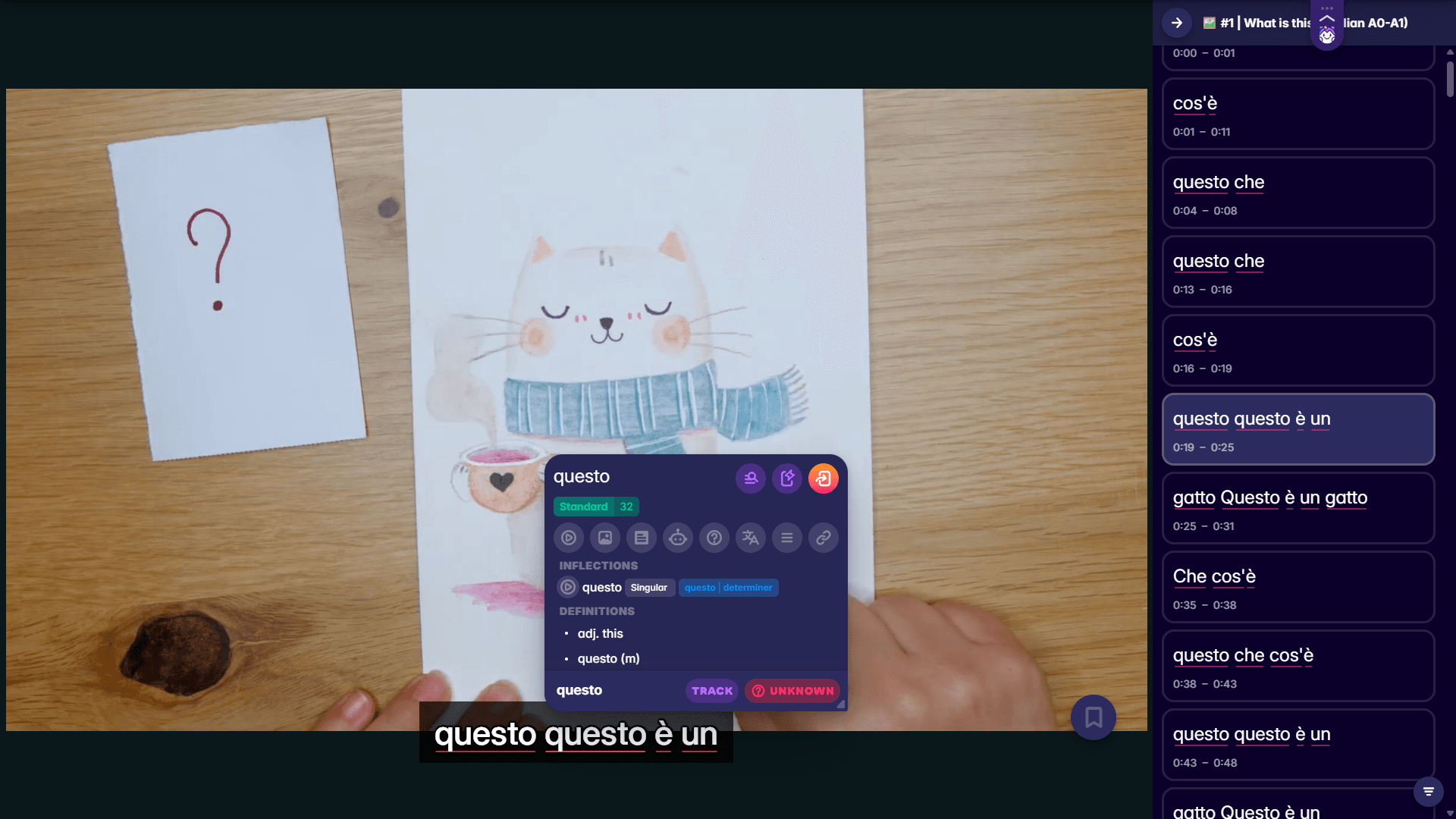
If you're serious about understanding real Italian as it's actually used online, Migaku's browser extension and app let you look up words and save expressions instantly while browsing Italian social media or watching Italian content. Makes learning from authentic sources way more practical. There's a 10-day free trial if you want to check it out.
 ----
## Want to learn faster and easier?
Learning Italian internet slang is not like learning textbook grammar or vocab. The process is much simpler and more straightforward. But you actually need to spend your leisure time going through social media and reading what young Italians are saying in comments, following Italian influencers, and participating in Italian online communities.
> If you consume media in Italian, and you understand at least some of the messages and sentences within that media, you will make progress. *Period*.
To learn a modern language is to understand its online voice as well.
----
## Want to learn faster and easier?
Learning Italian internet slang is not like learning textbook grammar or vocab. The process is much simpler and more straightforward. But you actually need to spend your leisure time going through social media and reading what young Italians are saying in comments, following Italian influencers, and participating in Italian online communities.
> If you consume media in Italian, and you understand at least some of the messages and sentences within that media, you will make progress. *Period*.
To learn a modern language is to understand its online voice as well.