# Italian Medical Vocabulary: Common Italian Medical Terms for Tourists
> Learn practical Italian medical vocabulary for doctor visits, symptoms, and healthcare. Essential terms and phrases to navigate Italian medical settings.
**URL:** https://migaku.com/blog/language-fun/italian-medical-vocabulary-guide
**Last Updated:** 2026-03-24
**Tags:** vocabulary, phrases
---
[Learning Italian](https://migaku.com/learn-italian) medical vocabulary might sound like something only healthcare professionals need, but here's the thing: if you're planning to spend any serious time in Italy, you'll probably need to describe symptoms or navigate a pharmacy at some point. Whether you're studying abroad in Rome, working in Milan, or just traveling through Tuscany for a few months, knowing how to say "I have a fever" or "Where's the nearest pharmacy?" can save you a lot of stress. Plus, medical vocabulary gives you a solid foundation in practical Italian that goes way beyond ordering coffee.
----
## Basic health terms in Italian vocabulary
Let's start with the absolute essentials. These are the words that come up constantly in health-related situations.
| Italian | English |
| - | - |
| medico | Doctor (male) |
| dottore/dottoressa | Doctor (more formal, used when addressing them directly) |
| farmacia | Pharmacy |
| pronto soccorso | Emergency room (literally "ready help") |
| ambulanza | Ambulance |
| ricetta | Prescription |
| medicina / farmaco | Medicine |
| assicurazione sanitaria | Health insurance |
The phrase **"ho bisogno di un medico"** means "I need a doctor," and trust me, it's worth memorizing.
----
## Key terms for body parts and anatomy
You can't describe what hurts if you don't know body part names. Italian anatomy vocabulary follows some patterns that make it easier to remember than you'd think.
| Italian | English |
| - | - |
| testa | Head |
| occhio / occhi | Eye / Eyes |
| orecchio / orecchie | Ear / Ears |
| naso | Nose |
| bocca | Mouth |
| dente / denti | Tooth / Teeth |
| gola | Throat |
| collo | Neck |
| spalla | Shoulder |
| braccio / braccia | Arm / Arms (plural changes completely) |
| mano / mani | Hand / Hands |
| dito / dita | Finger / Fingers |
| petto / torace | Chest |
| schiena | Back |
| stomaco / pancia | Stomach / Belly |
| gamba | Leg |
| ginocchio | Knee |
| caviglia | Ankle |
| piede / piedi | Foot / Feet |
Italian words for internal organs you might need:
| Italian | English |
| - | - |
| cuore | Heart |
| polmone / polmoni | Lung / Lungs |
| fegato | Liver |
| rene / reni | Kidney / Kidneys |
| intestino | Intestine |
| cervello | Brain |
----
## Italian medical terms for symptoms and common conditions
This section is where Italian medical vocabulary gets super practical. Describing symptoms accurately can make the difference between getting the right treatment or not.
- **"La febbre"** means fever, and you'll hear it all the time. The phrase "ho la febbre" means "I have a fever." You might also say "ho la febbre alta" for a high fever.
- Pain is **"dolore,"** and you describe where it hurts with **"mi fa male" plus the body part**. So "mi fa male la testa" means "my head hurts" or "I have a headache." For multiple things, use "mi fanno male": "mi fanno male le gambe" (my legs hurt).
Common symptoms include:
| Italian | English |
| - | - |
| tosse | Cough |
| raffreddore | Cold |
| influenza / influenza stagionale | Flu |
| mal di gola | Sore throat |
| mal di stomaco | Stomachache |
| nausea | Nausea |
| vomito | Vomiting |
| diarrea | Diarrhea |
| vertigini / capogiri | Dizziness |
| stanchezza | Fatigue |
| debolezza | Weakness |
| eruzione cutanea / sfogo | Rash |
| prurito | Itching |
| gonfiore | Swelling |
| livido | Bruise |
| taglio | Cut |
| ustione | Burn |
Allergies are **"allergie,"** and "sono allergico a..." means "I'm allergic to..." (use "allergica" if you're female). Common allergens:
| Italian | English |
| - | - |
| polline | Pollen |
| polvere | Dust |
| arachidi | Peanuts |
| penicillina | Penicillin |
----
## Italian medical terminology for procedures and treatments
When you visit a doctor or hospital, you'll encounter specific terminology for what they're doing to diagnose or treat you.
Diagnostic procedures include:
| Italian | English |
| - | - |
| visita medica | Medical examination |
| analisi del sangue | Blood test |
| radiografia / raggi X | X-ray |
| ecografia | Ultrasound |
| risonanza magnetica | MRI |
| TAC / tomografia | CT scan |
| elettrocardiogramma | EKG |
Treatment vocabulary:
| Italian | English |
| - | - |
| cura / trattamento | Treatment |
| terapia | Therapy |
| operazione / intervento chirurgico | Surgery |
| iniezione / puntura | Injection / Shot |
| bendaggio | Bandage / Dressing |
| punti di sutura | Stitches |
| gesso | Cast (for broken bones) |
Medicine types words and phrases:
| Italian | English |
| - | - |
| antibiotico | Antibiotic |
| antidolorifico / analgesico | Painkiller |
| antinfiammatorio | Anti-inflammatory |
| antipiretico | Fever reducer |
| sciroppo | Syrup |
| compressa / pastiglia | Tablet / Pill |
| capsula | Capsule |
| pomata / crema | Ointment / Cream |
| gocce | Drops |
----
## Key phrases for doctor visits and prescriptions
Memorizing vocabulary lists helps, but you need phrases to communicate in medical situations. These sentence patterns will get you through most basic interactions.
**Starting the conversation:**
- Non mi sento bene.
*I don't feel well.*
- Mi sento male.
*I feel sick.*
- Ho bisogno di aiuto.
*I need help.*
- È urgente.
*It's urgent.*
**Describing duration:**
- Da quanto tempo?
*Since when? / For how long?*
- Da ieri.
*Since yesterday.*
- Da tre giorni.
*For three days.*
- Da una settimana.
*For a week.*
**Describing intensity:**
- Un po'.
*A little.*
- Molto.
*A lot / Very much.*
- Abbastanza.
*Quite / fairly.*
- Insopportabile.
*Unbearable.*
**Asking questions:**
- Che cos'è?
*What is it?*
- È grave?
*Is it serious?*
- Quanto dura?
*How long does it last?*
- Cosa devo prendere?
*What should I take?*
- Quante volte al giorno?
*How many times per day?*
**At the pharmacy:**
- Ha qualcosa per...?
*Do you have something for...?*
- Serve la ricetta?
*Do I need a prescription?*
- Come si prende?
*How do I take it?*
- Ci sono effetti collaterali?
*Are there side effects?*
----
## Common Italian medical terms for specialists and health conditions
The professional medical terminology in Italian often derives from Latin and Greek, just like in English. This actually makes some advanced terms easier to recognize than you'd expect.
Medical specialties follow predictable patterns, which hold in most cases: just swap the English ending for "logo" or "logia" for the field itself.
| Italian | English |
| - | - |
| cardiologo | Cardiologist |
| dermatologo | Dermatologist |
| neurologo | Neurologist |
Clinical conditions often sound similar to English:
| Italian | English |
| - | - |
| diabete | Diabetes |
| ipertensione | Hypertension |
| ipotensione | Hypotension |
| asma | Asthma |
| bronchite | Bronchitis |
| polmonite | Pneumonia |
| gastrite | Gastritis |
| artrite | Arthritis |
| malattia cronica | Chronic illness |
| malattia cardiovascolare | Cardiovascular disease |
| cancro / tumore | Cancer |
| ictus | Stroke |
| infarto | Heart attack |
----
## Making medical vocabulary stick
The challenge with Italian medical vocabulary is that you probably won't use it regularly. You might learn "polmonite" (pneumonia) and then not encounter it again for months or years. This is where [active learning strategies](https://migaku.com/blog/language-fun/active-vs-passive-listening-language-learning) become crucial.
1. Create scenarios in your mind. Imagine you wake up with flu symptoms, what would you say to a pharmacist? Walk through the conversation mentally: "Buongiorno, non mi sento bene. Ho la febbre, la tosse, e mi fa male tutto il corpo." This mental rehearsal builds neural pathways.
2. Use the vocabulary in your language journal. Write about your health, even when you're fine. "Oggi mi sento bene, non ho nessun dolore." This keeps the terms active in your productive vocabulary.
3. [Watch Italian medical dramas](https://migaku.com/blog/language-fun/best-italian-shows-language-learners) or health segments on Italian news. Hearing vocabulary in context, especially with the emotional weight of medical situations, helps cement the words in memory. Shows like "Doc - Nelle tue mani" use authentic medical Italian.
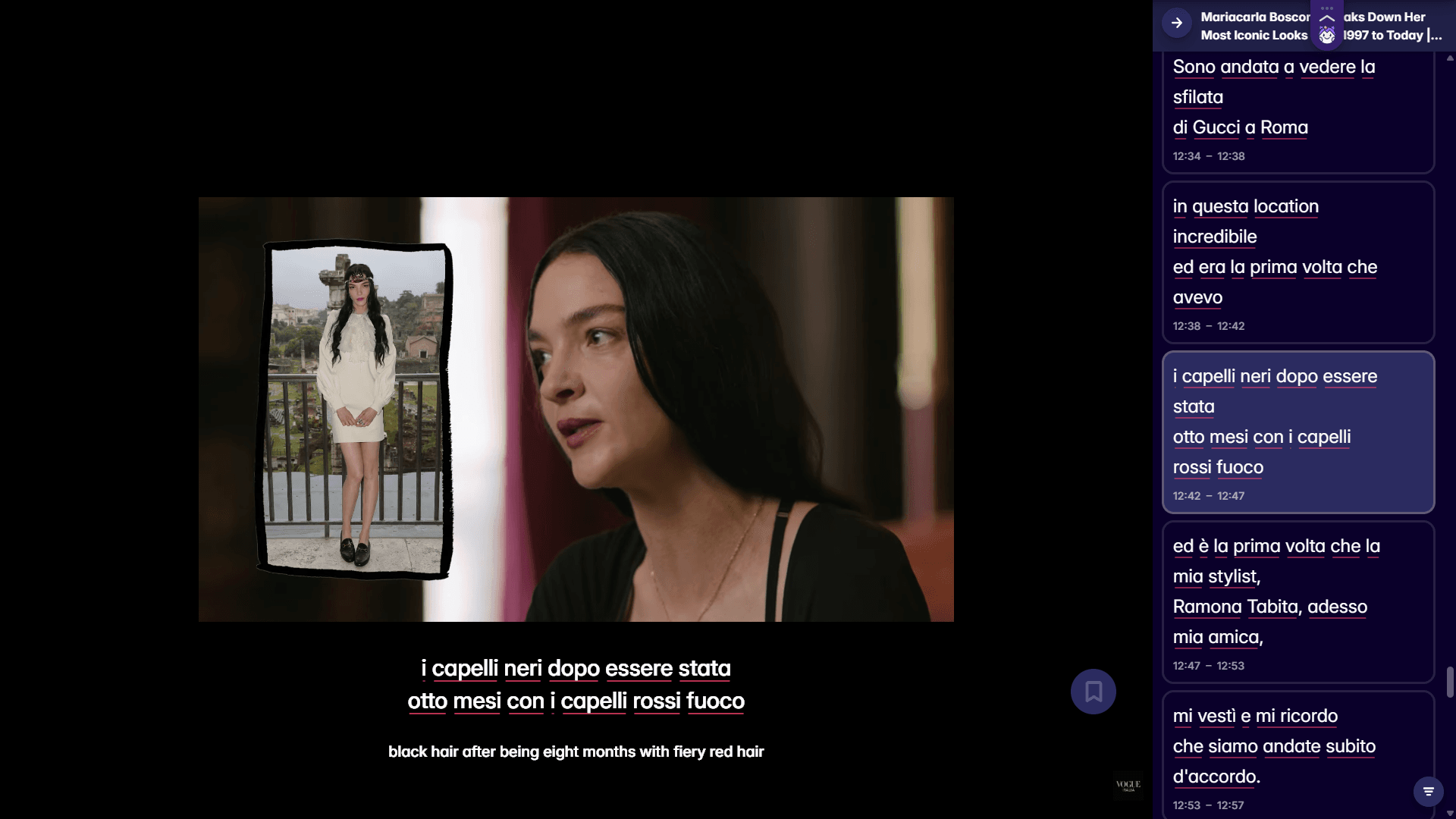
If you're serious about mastering this vocabulary, Migaku's browser extension and app let you look up medical terms while reading Italian health articles or watching Italian content about wellness. You can build your own custom decks from real medical contexts you encounter. There's a 10-day free trial if you want to see how it works for your learning style.
 ----
## Look for the best resources for mastering Italian medical terms
Lists and flashcards give you the raw material, but you need resources that show you how Italians talk about health. Italian health forums and websites like "[MioDottore](https://www.miodottore.it/)" or "[Medicitalia](https://www.medicitalia.it/)" show real questions from Italian speakers about symptoms and conditions. YouTube channels by Italian doctors explaining health topics give you pronunciation and context. Search for "salute" or "medicina" plus whatever topic interests you.
> If you consume media in Italian, and you understand at least some of the messages and sentences within that media, you will make progress. _Period_.
Every word you learn is a step closer to fluency!
----
## Look for the best resources for mastering Italian medical terms
Lists and flashcards give you the raw material, but you need resources that show you how Italians talk about health. Italian health forums and websites like "[MioDottore](https://www.miodottore.it/)" or "[Medicitalia](https://www.medicitalia.it/)" show real questions from Italian speakers about symptoms and conditions. YouTube channels by Italian doctors explaining health topics give you pronunciation and context. Search for "salute" or "medicina" plus whatever topic interests you.
> If you consume media in Italian, and you understand at least some of the messages and sentences within that media, you will make progress. _Period_.
Every word you learn is a step closer to fluency!