Italian School Vocabulary: Lists of Useful School Words for Students
Last updated: March 28, 2026

If you're planning to study in Italy, preparing for a language test, or just want to understand Italian school life better, learning Italian school vocabulary is essential. The Italian education system has its own unique terms, expressions, and structure that differ from what you might know. This guide covers everything from basic school supplies to university terms, plus some useful phrases you'll actually hear Italian students using every day.
- Understanding the Italian school system structure
- Essential school supplies vocabulary
- People in the school environment
- Italian words for school subjects
- Classroom objects and spaces
- Daily school routines and activities
- Tests, exams, and grading
- Useful expressions and phrases
- Italian school vocabulary in practice
Understanding the Italian school system structure
Before diving into vocabulary lists, it helps to understand how Italian schools are organized. The system is divided into several levels, each with specific names you should know.
- The journey starts with "scuola dell'infanzia" (kindergarten) for children aged 3-6, though this isn't mandatory.
- Then comes "scuola primaria" or "scuola elementare" (elementary school) for ages 6-11. This is where kids learn basic subjects and get their foundation in reading, writing, and math.
- After elementary school, students attend "scuola secondaria di primo grado" or "scuola media" (middle school) for three years.
Here's where things get interesting. At age 14, Italian students choose their path by selecting a type of high school called "scuola secondaria di secondo grado." The most common options are "liceo" (academic high school focused on preparing for university), "istituto tecnico" (technical institute), or "istituto professionale" (vocational school).
Finally, there's "università" (university), where students pursue their "laurea" (bachelor's degree) and potentially "laurea magistrale" (master's degree).
Essential school supplies vocabulary
Let's start with the basics. Every student needs supplies, and you'll hear these words constantly in any classroom setting.
Italian | English |
|---|---|
penna | Pen |
matita | Pencil |
gomma | Eraser |
temperino | Pencil sharpener |
quaderno | Notebook |
libro | Book |
zaino | Backpack |
righello | Ruler |
forbici | Scissors |
colla | Glue |
evidenziatore | Highlighter |
astuccio | Pencil case |
calcolatrice | Calculator |
compasso | Compass (for drawing circles) |
colori | Colors |
pennello | Paintbrush |
acquerelli | Watercolors |
The general term "materiale scolastico" covers all school supplies collectively. When shopping before the school year starts, you'd look for this phrase.
People in the school environment
Knowing who's who in an Italian school makes conversations much easier. The vocabulary here changes depending on the school level and formality.
- In elementary school, teachers are typically called "maestro" (male teacher) or "maestra" (female teacher).
- Once students reach middle school and high school, the term shifts to "professore" (male) or "professoressa" (female).
- At university, you'll use "professore" or the more formal "docente" for instructors.
Italian | English |
|---|---|
studente / studentessa | Student (male/female) |
compagno di classe / compagna di classe | Classmate |
alunno / alunna | Pupil (more common in elementary contexts) |
preside | School principal (middle/high school) |
direttore / direttrice | School principal (elementary school) |
bidello / bidella | Janitor / School attendant (also helps with administrative tasks and supervises breaks) |
Italian words for school subjects
Italian students study a wide range of subjects, and the names are pretty straightforward once you learn them.
Italian | English |
|---|---|
matematica | Mathematics |
italiano | Italian language and literature |
storia | History |
geografia | Geography |
scienze | Science |
inglese | English |
francese | French |
spagnolo | Spanish |
tedesco | German |
fisica | Physics |
chimica | Chemistry |
biologia | Biology |
filosofia | Philosophy |
arte | Art |
musica | Music |
educazione fisica / ginnastica | Physical education |
informatica / tecnologia | Computer science / Technology |
In liceo, students might specialize. A "liceo classico" focuses on classical studies with lots of Latin and Greek. A "liceo scientifico" emphasizes science and math. There's also "liceo linguistico" for languages and "liceo artistico" for arts.
The term "materia" is the general word for subject or course. When asking what subjects someone studies, you'd say "Quali materie studi?" Pretty simple.
Classroom objects and spaces
Beyond personal supplies, classrooms have their own vocabulary worth knowing.
Italian | English |
|---|---|
cattedra | Teacher's desk |
banco / banchi | Student desk (singular/plural) |
lavagna | Blackboard |
lavagna interattiva multimediale / LIM | Interactive whiteboard |
aula / classe | Classroom |
corridoio | Hallway |
bagno | Bathroom |
biblioteca | Library |
palestra | Gymnasium |
cortile | Schoolyard / Courtyard |
mensa | Cafeteria |
aula magna | Large lecture hall (university) |
laboratorio | Laboratory |
Daily school routines and activities
Understanding what happens during a typical school day requires some specific vocabulary and expressions.
Italian | English |
|---|---|
lezioni | Lessons / Classes |
ore | Hours / Class periods |
intervallo / ricreazione | Break / Recess |
bar | School café |
fare i compiti | To do homework |
studiare | To study |
imparare | To learn |
frequentare / andare a scuola | To attend school / classes |
prendere appunti | To take notes |
spiegazione | Explanation (what a teacher does) |
fare una domanda | To ask a question |
essere assente | To be absent |
giustificazione | Excuse note |
essere in ritardo | To be late |
Tests, exams, and grading
Assessment vocabulary is crucial if you're going to study in Italy.
Italian | English |
|---|---|
verifica / test | General test |
esami | Big exams |
esame orale / interrogazione | Oral exam (common in Italy) |
esame scritto / compito in classe | Written exam |
The grading scale in Italian schools typically runs from 1 to 10, with 6 being the passing grade. A "voto" is a grade or mark. Getting a good grade is "prendere un bel voto," while failing is "essere bocciato" or getting "insufficiente" (insufficient).
At the end of the year, students receive a "pagella" (report card).
- To pass to the next year, you need to be "promosso."
- If you fail, you're "bocciato" and might need to repeat the year or take makeup exams in September called "esami di riparazione."
University exams work differently. Students register for "sessioni d'esame" (exam sessions) and can sometimes refuse a grade if they want to retake the exam for a better score. The final university exam is called "esame di laurea" or "tesi" (thesis defense).
Useful expressions and phrases
Beyond individual words, knowing common phrases makes you sound more natural.
- When asking how to say something in Italian, use "Come si dice... in italiano?" This question appears in language learning contexts all the time.
- If you're confused during a lesson, you might say "Non ho capito" (I didn't understand) or "Può ripetere, per favore?" (Can you repeat, please?).
- To ask for permission to go to the bathroom, students say "Posso andare in bagno?"
- When discussing homework, you'll hear "Hai fatto i compiti?" (Did you do your homework?) or "Quali compiti abbiamo?" (What homework do we have?).
- Before a test, students might say "In bocca al lupo!" (Good luck, literally "In the mouth of the wolf") to each other.
Italian school vocabulary in practice
So how do you actually learn and remember all these terms? Lists help, but using the vocabulary in context works better.
- Try watching Italian shows or movies set in schools. There are plenty of Italian teen dramas and coming-of-age films where you'll hear this vocabulary naturally. Pay attention to how students and teachers interact, and what phrases they use repeatedly.
- Reading Italian articles about education or following Italian students on social media gives you exposure to current slang and expressions. The language evolves, and what students say today might differ slightly from formal textbook Italian.
- Creating your own flashcards with example sentences helps more than just memorizing word pairs. Instead of just "libro = book," write "Ho dimenticato il libro a casa" (I forgot the book at home). Context makes words stick.
- If you're preparing to study abroad in Italy, consider reaching out to current international students. They can tell you which terms you'll use daily versus which ones are just good to know. University life has its own subset of vocabulary beyond basic school terms.
If you want to improve your Italian language skills with real content, Migaku's browser extension and app let you look up words instantly while watching shows or reading articles. Makes immersion learning easy and practical. There's a 10-day free trial if you want to check it out.
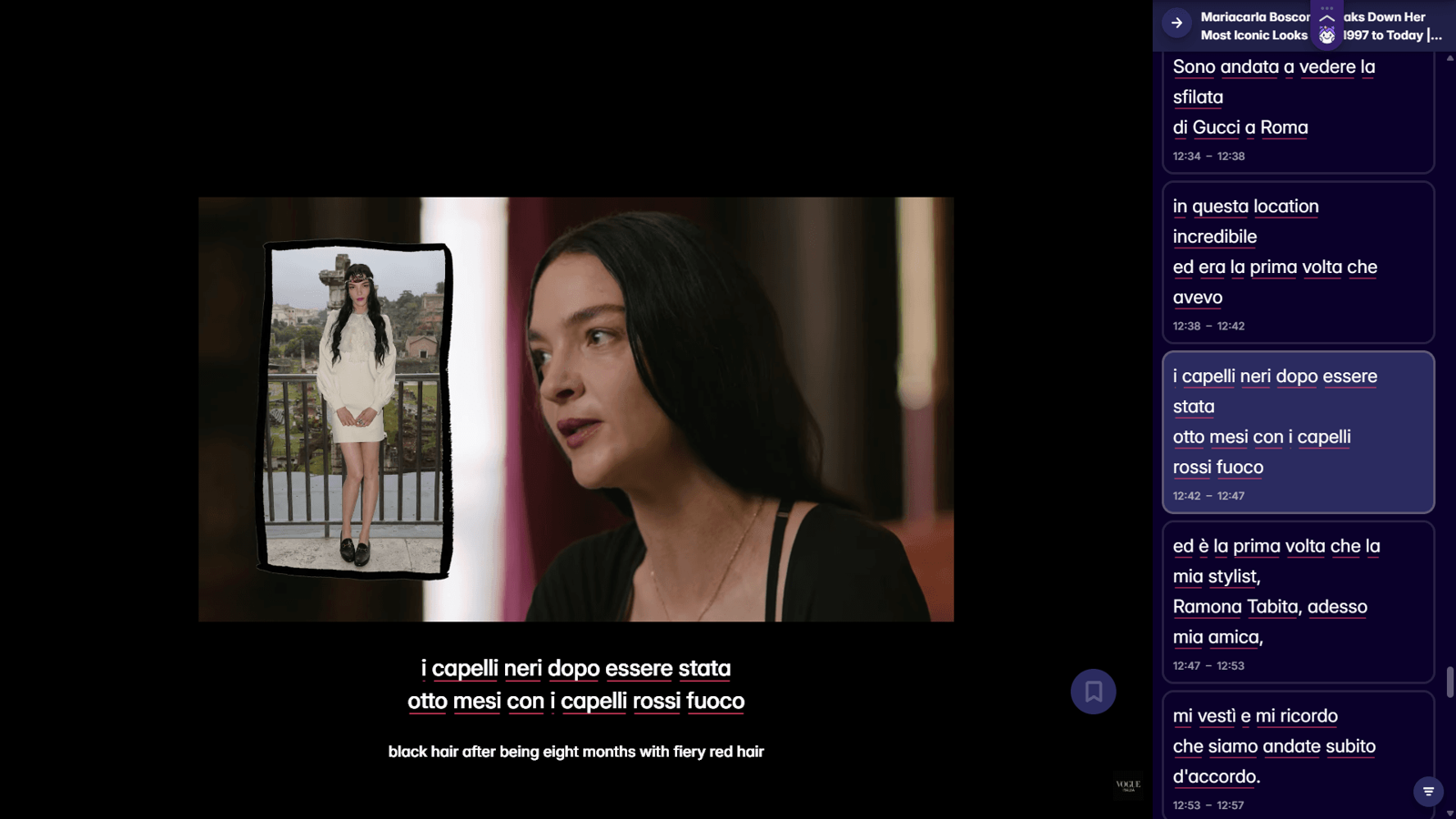
Your Italian learning journey continues here
Whether you're studying for an exam, preparing to attend classes in Italy, or just expanding your Italian vocabulary for fun, these school terms will serve you well. You've got the essential list now, from basic supplies to complex expressions about the education system.
The best way to make this vocabulary stick? Definitely immersion. Watch Italian school dramas, read articles about Italian students, and listen to how native speakers actually use these terms. Context beats memorization every time.
If you consume media in Italian, and you understand at least some of the messages and sentences within that media, you will make progress. Period.
Prioritize the words you can put into practice fast!