Japan Cultural Activities Visa: Who It's For and How to Apply
Last updated: May 27, 2026
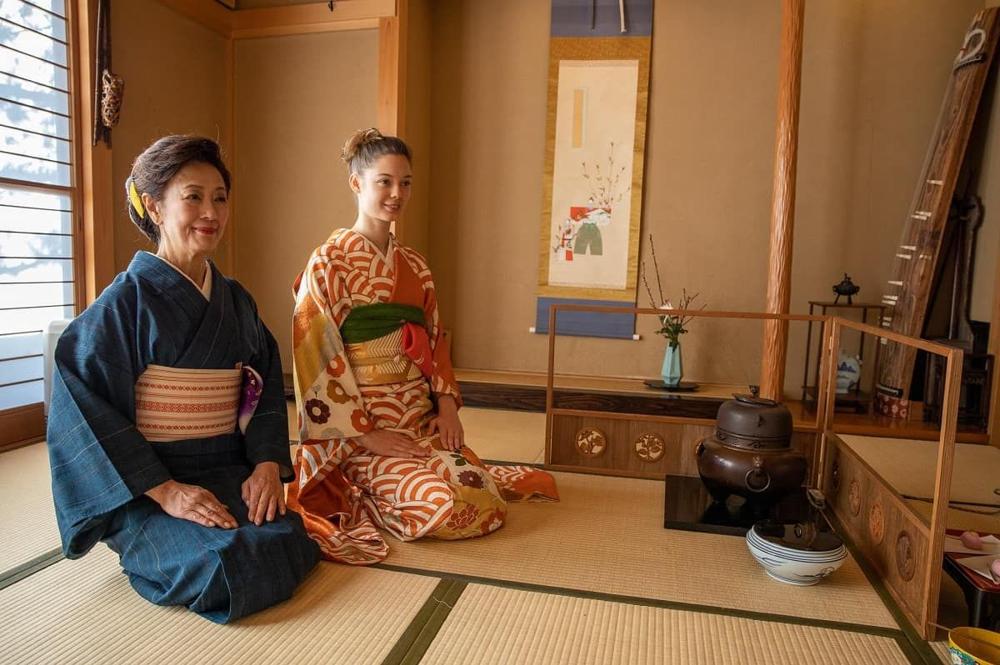
Japan's Cultural Activities Visa (文化活動) is a residence status for foreign nationals who want to live in Japan to pursue unpaid academic research, artistic study, or training in a traditional Japanese discipline under a recognized expert. It is the right route if you are studying tea ceremony, ikebana, judo, Zen, Japanese cuisine, or similar pursuits, or doing an unpaid academic stint, and you do not need to earn income from that work.
Last updated: May 27, 2026
Who the Cultural Activities Visa Is For
The Ministry of Foreign Affairs (MOFA) defines this status of residence narrowly. It covers three groups of people:
- Foreign nationals conducting unpaid academic activities in Japan, such as research that is not funded as employment.
- Foreign nationals studying culture or arts unique to Japan under a qualified instructor. Officially listed disciplines include Ikebana, Sadou (tea ceremony), Judo, Japanese architecture, Nihonga, Nihon-buyou, Japanese cuisine, Japanese music, Zen, and karate.
- Foreign nationals on unpaid internships of 90 days or more, typically when the internship is part of an overseas university's curriculum and the host is a Japanese company.
The defining feature is that the activity is unpaid. If you are being compensated for the work itself, you need a different status (Instructor, Artist, Engineer/Specialist in Humanities/International Services, or one of the Designated Activities categories). For paid or career-track routes that sometimes get confused with this one, see this overview of the Japan Designated Activities Visa overview and the Job Seeker Designated Activities Visa option.
Period of Stay and What You Can Actually Do
The Immigration Services Agency of Japan grants Cultural Activities visas in one of four lengths:
Period of stay | Typical use case |
|---|---|
3 months | Short trial enrollment with an instructor or short research stint |
6 months | Common first-time grant |
1 year | Common first-time grant for serious students |
3 years | Usually only on renewal, for established students with clear continuity |
First-time applicants most often receive 6 months or 1 year. You can renew if the cultural activity continues and you can still demonstrate financial support. Extension applications can be filed at your Regional Immigration Bureau up to three months before your current card expires.
What you cannot do on this visa is earn income from your cultural activity. The whole premise is that it is unpaid. If you want to take an unrelated part-time job to support yourself, you must separately apply for Permission to Engage in Activity Other Than That Permitted (資格外活動許可). It is granted case-by-case at the discretion of immigration, and when granted, it caps you at 28 hours of work per week.
Document Checklist
MOFA does not publish a single universal document list for non-Chinese nationals on its public page, so your jurisdictional Japanese embassy or consulate is the authoritative source. That said, the documents below are required across virtually every Cultural Activities application in 2026:
- Valid passport with at least one blank page and validity covering your intended stay.
- Visa application form (the standard MOFA long-stay form for your consulate).
- One photo, 4 cm × 3 cm, taken within the last 3 months, plain background, no head covering except for religious reasons.
- Certificate of Eligibility (COE) issued by a Regional Immigration Bureau. This is the central document.
- Detailed plan of cultural activities: what you will study, where, with whom, for how long, and what you expect to produce or achieve.
- Letter from your instructor or host institution confirming acceptance, the curriculum or research plan, hours per week, duration, and whether room and board are provided.
- Instructor's credentials: certifications, recognized titles in the discipline, a CV, and proof of teaching activity (a school, dojo, studio, or atelier register).
- Proof of financial self-sufficiency for the entire stay. There is no published official minimum, but practitioners commonly cite roughly ¥1.5–2 million for a one-year stay as a working benchmark. Bank statements, scholarship award letters, or a notarized affidavit of support from a sponsor are typical.
- Accommodation information in Japan: lease, host family letter, or dormitory assignment.
- Curriculum vitae detailing prior study of the discipline (relevant for arts and martial arts applications).
All supporting documents must be issued within three months of application. If they are in a language other than Japanese or English, attach a translation.
How to Apply, Step by Step
The Cultural Activities Visa is administered jointly by two bodies. The Immigration Services Agency of Japan (under the Ministry of Justice) issues the COE and the residence card. MOFA, through its embassies and consulates, issues the visa abroad. You will deal with both, in this order.
- Line up your sponsor in Japan. Confirm in writing with your instructor, host school, research institute, or internship host that they will accept you and act as your reference for the COE.
- File the COE application in Japan. Either you apply by mail to the Regional Immigration Bureau covering the place you will live, or, more commonly, a proxy in Japan (the school, your instructor, or an immigration lawyer) files on your behalf. Proxy filing is explicitly allowed for Cultural Activities.
- Wait for COE issuance. Processing typically takes one to three months depending on the bureau and the completeness of your application. RIKEN's guidance for incoming researchers warns that the full process, COE plus visa, takes three months or more, so build that into your timeline.
- Receive the COE and send it abroad. The COE is mailed in Japan; your sponsor forwards the original to you outside Japan.
- Apply for the visa at a Japanese embassy or consulate in your country of nationality or legal residence. Submit the COE, passport, application form, photo, and any consulate-specific extras. From the time the consulate receives your passport, the visa is typically issued in roughly 10–14 days (the Consulate-General of Japan in Detroit publishes this timeline).
- Enter Japan within the COE's validity (three months from issuance). At your airport of arrival, you will give fingerprints and a facial photo, and you will be handed your Residence Card (在留カード) on the spot at major international airports for Cultural Activities holders.
- Register at your city or ward office within 14 days of moving into your address. This is also where you receive your My Number and enroll in National Health Insurance.
Fees and Processing Time in 2026
Japan revised its visa fee schedule on April 1, 2026, the first change since 1978. The current schedule runs April 1, 2026 through March 31, 2027.
Item | Fee (2026) |
|---|---|
Single-entry visa (standard) | ¥15,000 (about US$100) |
Multiple-entry visa (standard) | ¥30,000 (about US$200) |
Single-entry visa (US applicants, most nationalities) | About US$20 |
Multiple-entry visa (US applicants, most nationalities) | About US$40 |
Single- and multiple-entry visa (Indian nationals) | US$6 |
Certificate of Eligibility | No fee from immigration; only courier/translation costs |
Residence Card issuance at airport | No fee |
Fees at US consulates must be paid in cash (exact bills), money order, cashier's check, or company check. Personal checks and credit cards are not accepted. Always confirm the exact amount with your jurisdictional consulate, because the yen figure converts to your local currency at a rate set by the consulate.
Two other 2026 cost changes are worth knowing:
- International departure tax rises from ¥1,000 to ¥3,000 starting July 2026. Every departing passenger pays it, Cultural Activities holders included.
- A proposed law would significantly raise in-Japan fees charged by the Immigration Services Agency, with status renewal/change-of-status moving from ¥6,000 to potentially as high as ¥100,000, and permanent residency applications from ¥10,000 to potentially ¥300,000, during fiscal 2026–2027. This was not yet enacted as of early 2026. Check the Immigration Services Agency website for the current figure before you file a renewal.
Common Pitfalls
A few patterns sink Cultural Activities applications or trip people up after arrival:
- Vague activity plans. Immigration wants specifics: which sensei, which school, how many hours per week, what techniques or texts, what milestones. "I want to study traditional Japanese culture" is not enough.
- Weak instructor credentials. The reviewer is checking that your teacher is genuinely qualified. Hobby groups, casual workshops, and informal arrangements rarely clear the bar. Recognized titles, certified schools (iemoto-recognized lineage for arts), or affiliation with a university or research institute strengthen the case.
- Treating it as a backdoor work visa. Accepting payment for your cultural activity, or doing significant paid work without resource-outside-status permission, will lead to visa revocation. The 28-hour cap, when permission is granted, is strictly enforced.
- Underestimating savings required. Because there is no income, you must show you can self-fund. Thin bank statements get refused.
- Missing the 14-day residence registration. Skipping the city office registration after move-in causes problems with health insurance, bank accounts, and any future renewal.
- Forgetting that the COE expires. You must enter Japan within three months of COE issuance. If you delay, you will need a new COE.
- Bringing dependents without planning. A spouse and minor children may join you on a Dependent (Family Stay) visa, but only if you can document enough income or savings to support them too. Plan their applications in parallel with yours.
Frequently Asked Questions
Can I switch from a Cultural Activities visa to a work visa later?
Yes, in principle. You apply for a Change of Status of Residence at the Regional Immigration Bureau once you have a job offer that matches a qualifying work category. The change is not automatic and depends on the new role meeting that category's requirements.
Does studying Japanese at a language school qualify?
No. Language school enrollment is the Student visa, not Cultural Activities. The Cultural Activities route is for arts, martial arts, traditional disciplines, Zen practice, Japanese cuisine training, unpaid research, and unpaid academic internships.
Can I apply from inside Japan on a tourist visa waiver?
Generally no. The COE is filed from Japan, but the visa itself is issued by a consulate abroad. You will need to leave Japan to collect the visa unless your situation qualifies for a change of status of residence from within Japan, which is rare for this category.
Is there a minimum age?
No published minimum. Minors apply with parental consent and usually with a guardian arrangement in Japan documented in the application.
Will I get Japanese health insurance?
Yes. Once you complete your residence registration at the city or ward office, you enroll in National Health Insurance (国民健康保険). Premiums are income-based, so they are low for Cultural Activities holders with no Japanese income.
Can I travel in and out of Japan during my stay?
Yes, with the right paperwork. Get a re-entry permit, or use Special Re-entry (available to mid- to long-term residents leaving and returning within one year) at the airport on departure.
Does the visa let me buy a car or sign a phone contract?
Your Residence Card is the key ID for both. Most carriers and dealers will work with you, though some still require a Japanese guarantor for postpaid contracts.
Living in Japan goes more smoothly when you can actually talk to your sensei, your neighbors, and the city office staff. If you are heading over for a cultural activity, learning Japanese with real native content (the kind your teacher and dojo-mates actually use) makes the transition far easier, and try Migaku is built for exactly that. While you are at it, brushing up on cultural etiquette like nomikai practices before you arrive will save you a few awkward evenings.