Permesso di Soggiorno Renewal in Italy: A 2026 Guide
Last updated: May 22, 2026
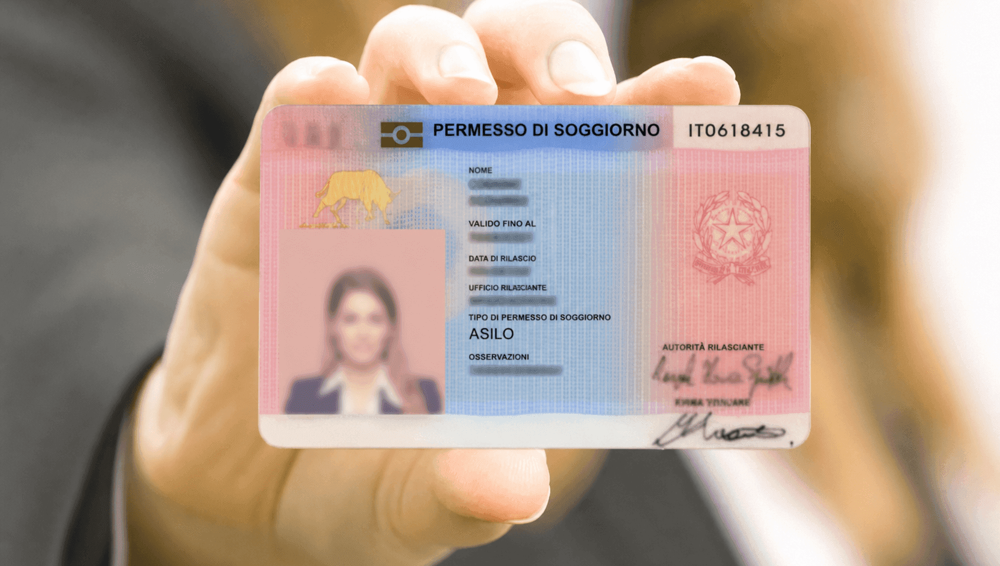
Renewing your permesso di soggiorno in Italy means filing a postal kit through Poste Italiane at least 60 days before your current permit expires, then attending a fingerprinting appointment at your local Questura. The process is slow, paper-heavy, and unforgiving of missed deadlines, but it is predictable once you know the sequence.
Last updated: May 22, 2026
Who Needs to Renew and When
Any non-EU citizen legally resident in Italy on a permesso di soggiorno must renew before the permit's expiration date. The legal framework is Legislative Decree 286/1998 (the Testo Unico sull'Immigrazione), and the application goes to the Questore of the province where you actually live (your dimora, not just your registered address abroad).
Key timing rules from Italy's Ministry of the Interior immigration portal:
- You can file the renewal up to 60 days before the permit expires.
- You should file no later than 60 days after expiration. Past that window, you risk being considered irregularly present, which complicates re-entry, work contracts, and future applications.
- The 60-day pre-expiration submission is the official recommendation. In practice, filing earlier within that window is safer because Questure in Rome, Milan, and Florence carry backlogs.
The maximum duration of the renewed permit depends on the category:
- Study or training: up to 1 year, renewable annually for multi-year programs.
- Self-employment, open-ended subordinate work, or family reunification: up to 2 years under standard rules, and up to 3 years under the Cutro Decree (Law no. 50/2023).
- EU Long-Term Residence Permit: physical card valid 10 years for adults, 5 years for minors (Law 238/2021, in force since February 1, 2022). The status itself is permanent.
Eligibility and Income Requirements
To renew, you generally need to show that the conditions that justified your original permit still exist: enrollment for students, an active contract or VAT number for workers, a valid family tie for family permits, and so on. On top of that, almost all categories require proof of sufficient income.
For 2026, the minimum income threshold is tied to the INPS assegno sociale:
- €546.24 per month × 13 months = €7,101.12 per year (a 1.4% adjustment compared to 2025).
- For family applications, the threshold increases by half the annual assegno sociale for each additional dependent family member.
Income can be demonstrated through a recent CUD or 730 tax declaration, employment contracts, pay slips from the last several months, bank statements, or, for self-employed workers, the dichiarazione dei redditi and VAT records. Students typically demonstrate financial support through scholarship documentation, sponsor declarations, or bank statements.
If you are applying for the EU Long-Term Residence Permit, you also need:
- 5 years of continuous legal residence in Italy.
- An A2-level Italian language certificate (issued by an accredited testing center or following the integration test at the Prefettura).
- Clean criminal record checks.
Long-term permit holders can be absent from Italy for a maximum of 12 consecutive months without losing the permit, per Article 9(7)(d) of the Testo Unico.
Document Checklist
The exact list varies by permit type, but the core renewal kit usually contains:
- The completed Modulo 1 (and Modulo 2 if applicable) from the yellow postal kit.
- A photocopy of your passport (every page, including blank ones) plus the original to show at submission.
- A photocopy of your current permesso di soggiorno (front and back).
- A €16.00 marca da bollo (revenue stamp), purchased at any tabacchi shop.
- Proof of income for the past year (CUD, 730, pay slips, bank statements, or equivalent).
- Proof of accommodation: rental contract registered with the Agenzia delle Entrate, property deed, or a dichiarazione di ospitalità from your host.
- Health insurance: enrollment in the SSN (Servizio Sanitario Nazionale) or a private policy covering the full permit period for categories that require it.
- Four recent passport-style photos.
- A codice fiscale.
Category-specific add-ons:
- Students: enrollment certificate from the university, exam transcript showing academic progress (typically at least one exam in the past year for undergraduate, more for later years).
- Subordinate work: employer's CU, copy of contract, last several buste paga, and UNILAV communication if recently hired.
- Self-employment: Camera di Commercio registration, VAT records, and the most recent tax return.
- Family reunification: updated stato di famiglia, marriage or birth certificates as relevant, and the sponsor's income documentation.
- EU Long-Term Permit: A2 language certificate and criminal background check.
How to Book and Submit the Application
The renewal is not done online from start to finish. It moves through three institutions: Poste Italiane, the Questura, and (for tracking) the Polizia di Stato portal.
Step 1: Get the yellow postal kit
Pick up the kit giallo free of charge at any post office marked with the Sportello Amico logo. The kit contains Modulo 1, Modulo 2, instructions, and the prepaid envelope.
Step 2: Fill out and assemble the file
Complete the modules in black ink. Attach photocopies of every required document (originals stay with you). Affix the €16 marca da bollo to Modulo 1. Mistakes on the form, even small ones, can get the kit rejected at the counter, so it is worth having a patronato (CAF, ACLI, INCA) review it for free before you submit.
Step 3: Pay the postal bulletins
At the Sportello Amico counter you pay:
- €30.00 postal service fee to Poste Italiane.
- €30.46 electronic permit production fee, via postal bulletin to the Ministry of Economy and Finance.
- The government contribution (see fee table below), depending on permit length and type.
Step 4: Submit the kit
The postal operator stamps your forms, gives you a receipt (the ricevuta) with a 12-digit Assicurata number, and forwards the file to the Questura. The ricevuta has full legal value: you can stay in Italy and even travel to your home country and back on direct flights while waiting for the card.
Step 5: Attend the Questura fingerprinting appointment
A convocation letter or SMS arrives, typically 1–3 months after submission, with the date, time, and address. Bring originals of all documents, four photos, and your ricevuta. Where active, you can also book or reschedule appointments on Prenotafacile.it, the Ministry of the Interior's service accessed via SPID.
Step 6: Collect the card
Once the card is printed, you go back to the Questura to pick it up. Track status on the Polizia di Stato Foreigners Portal using the 12-digit Assicurata number (for postal applications) or the 10-digit Numero Pratica (for Questura applications).
Fees and Processing Time
Fees are split between fixed costs (postal and production) and the variable government contribution.
Item | Amount (2026) |
|---|---|
Marca da bollo | €16.00 |
Postal service fee (Sportello Amico) | €30.00 |
Electronic permit production fee | €30.46 |
Contribution: permits >3 months and <1 year | €40.00 |
Contribution: permits 1–2 years | €50.00 |
Contribution: EU Long-Term Permit and highly-qualified managers | €100.00 |
Students and certain categories | Exempt from variable contribution; fixed costs apply |
Example total for a 1-year student renewal: €100.46 in postal bulletins (€30 + €30.46 + €40) plus €16 for the marca da bollo, so roughly €116.46 out of pocket.
For minors under 14, the production fee is €30.46, plus another €30.46 for updating the linked parent's permit (two bulletins, one kit).
Processing times vary widely by Questura:
- Total time from postal submission to card issuance: 4 to 12 months.
- Biometric appointment: 1–3 months after submission.
- From fingerprinting to card collection: 45–90 days in standard cases, 1–4 months in Rome, Milan, Florence, and other high-volume offices.
Common Pitfalls
A few mistakes show up over and over in renewal cases:
- Filing too late. The 60-day grace window after expiration exists, but every day you delay narrows your options. Past 60 days, you may be asked to re-enter the country with a fresh visa.
- Wrong Questura. The application must go to the province where you actually live. If you moved provinces, update your residency at the Comune first.
- Insufficient income documentation. A single CUD is rarely enough on its own. Layer pay slips, bank statements, and tax filings.
- Unregistered rental contracts. A handshake rental will not satisfy the housing requirement. Either register the contract or get a notarized dichiarazione di ospitalità.
- Students with no exam progress. Renewal for student permits looks at academic activity. Stalling for a full year with zero exams is a red flag.
- Travel assumptions. The ricevuta lets you re-enter Italy via direct flights from your country of citizenship, but connections through other Schengen countries can lead to questioning. Carry the expired permit, the ricevuta, and proof of the appointment.
- Missed Questura appointments. Rescheduling is possible but slow. If you cannot attend, contact the Ufficio Immigrazione immediately and document the reason.
- Ignoring the A2 requirement. If you are aiming for the EU Long-Term Permit, book the A2 test well in advance. Slots fill up in popular cities.
What to Do If Your Permit Expires
There are three realistic scenarios:
- Within 60 days after expiration: file the kit immediately. The renewal is still legally accepted, and you keep your continuity of residence.
- More than 60 days late: the Questura may still accept the application if you can document a giustificato motivo (serious illness, family emergency, force majeure). Bring evidence. Outcomes depend heavily on the individual Questura.
- Permit expired, no application filed, no valid justification: you are likely considered irregularly present. Practical options usually involve leaving the Schengen Area and applying for a new visa from your country of origin. Talk to an immigration lawyer or a patronato before making any move, especially if you have a job, a family, or property in Italy.
In all three cases, the worst response is to do nothing. Engaging the system, even late, is almost always better than disappearing.
FAQs
Can I work while waiting for the card?
Yes. The ricevuta plus your expired permesso allow you to continue working under the same conditions as the original permit, including signing new contracts in most categories.
Can I travel outside Italy with only the ricevuta?
You can travel to your country of citizenship and return to Italy on a direct flight. Other Schengen travel is not guaranteed and is generally discouraged until the new card is in hand.
Do I need an Italian language certificate to renew?
For standard renewals, no. For the EU Long-Term Residence Permit, yes, at A2 level.
Can I switch permit category at renewal?
In many cases yes (for example, from study to work after graduation), but you typically file a conversione rather than a straight renewal. The documents and fees differ.
How do I check the status?
Use the Polizia di Stato Foreigners Portal with your 12-digit Assicurata number for postal submissions or the 10-digit Numero Pratica from the Questura.
What if I'm planning to apply for Italian citizenship later?
Keep every ricevuta, every old permit, and every residency certificate. The continuity of legal residence is what citizenship offices look at. For background on dual nationality, see this overview of dual citizenship between Italy and the US.
Are there resources specifically for international students?
Yes. If you are studying in Italy, the DSU and university scholarship systems are worth knowing in detail. See this guide to scholarships for international students in Italy. If you are entering the Italian job market, understanding Italian work culture and the August shutdown will save you a lot of confusion around renewal-season scheduling.
Navigating Questura forms, patronato visits, and rental contracts is far less stressful when you can actually read the paperwork and understand the clerk behind the glass. If you are settling into Italy long term, try Migaku to build practical Italian from real shows, news, and websites you already use.