Shinkansen Tips for First-Time Riders: Seats, Bags, Etiquette
Last updated: May 23, 2026
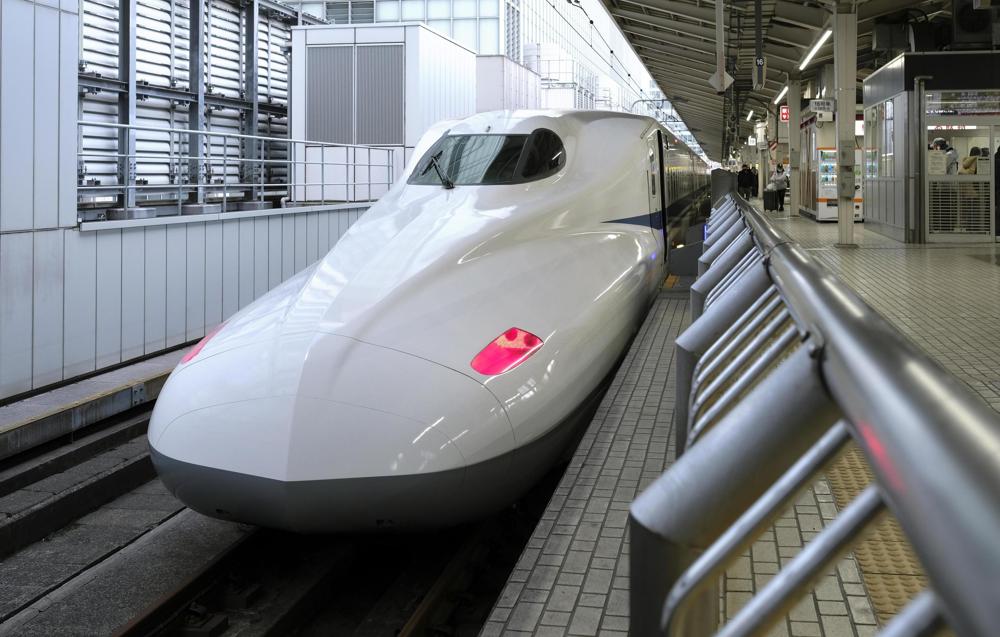
Riding the Shinkansen for the first time is straightforward once you understand three things: how to reserve a seat, what to do with your luggage, and which carriage rules actually get enforced. This guide walks through all of it with current 2026 fares, oversized-baggage rules, and the booking quirks that catch most newcomers off guard.
Last updated: May 23, 2026
- Choose the Right Train: Nozomi, Hikari, or Kodama
- Reserved vs. Non-Reserved Seats
- How to Book: Smart-EX, Counter, or JR Pass
- The Luggage Rules That Actually Matter
- IC Cards: Suica, Welcome Suica, and Mobile Suica
- Etiquette Inside the Carriage
- Picking the Right Seat (Including the Mt. Fuji View)
- Common First-Timer Mistakes
Choose the Right Train: Nozomi, Hikari, or Kodama
The Tokaido Shinkansen (Tokyo to Nagoya, Kyoto, and Shin-Osaka) runs three service types, and picking the wrong one can cost you an hour or a supplement fee.
Service | Tokyo–Kyoto travel time | Stops | JR Pass coverage |
|---|---|---|---|
Nozomi | ~2h 15m | Fewest | Requires paid supplement |
Hikari | ~2h 40m | Some | Included |
Kodama | ~3h 40m–4h | All stations | Included |
Nozomi is the flagship: up to 13 departures per hour at peak, top speed 285 km/h, and average delays of 12 seconds per train according to JR Central's most recent published data. If you hold a Japan Rail Pass and want to ride Nozomi or Mizuho (the Kyushu equivalent), you need to buy a separate NOZOMI MIZUHO Ticket. Tokyo–Kyoto, that supplement runs about ¥4,960 one way.
If you're paying cash, a standard one-way Tokyo–Kyoto reserved Nozomi seat is around ¥14,170 in regular season. Fares shift seasonally: off-peak is roughly ¥400 cheaper, peak adds ¥400, and the busiest high-peak dates add ¥800.
Reserved vs. Non-Reserved Seats
Ordinary cars are split into reserved (指定席, shitei-seki) and non-reserved (自由席, jiyū-seki) sections, plus the Green Car (グリーン車, gurīn-sha), which is Japan's equivalent of first class.
- Reserved: guaranteed seat, slightly higher fare, recommended for any travel during weekends or holidays.
- Non-reserved: cheaper, first-come-first-served, but during peak periods you may stand for two hours.
- Green Car: wider 2+2 seating, more legroom, quieter.
A critical thing to know: during Golden Week (late April to early May), Obon (mid-August), and the New Year holidays, Nozomi trains run as all-reserved. The unreserved cars are eliminated entirely on those dates. If you turn up at the platform expecting to walk on, you won't board.
JR Central has also announced that private rooms will appear on N700S Nozomi trains starting October 2026, with two rooms per selected service priced above Green Car fares. Useful if you're traveling with sensitive work calls or small children.
How to Book: Smart-EX, Counter, or JR Pass
For most short-term visitors, Smart-EX is the simplest option. It's the official online booking platform run by JR Central, JR West, and JR Kyushu for the Tokaido, Sanyo, and Kyushu Shinkansen.
Key Smart-EX facts:
- No annual or sign-up fee.
- Book up to one year in advance from 5:30 a.m., and as late as four minutes before departure.
- Accepts Visa, Mastercard, JCB, American Express, Diners Club, and Discover. The card must be enrolled in 3D Secure 2.0, so set that up with your bank before you arrive.
- If your train is delayed by more than two hours, Smart-EX refunds the specified amount for the affected section.
For JR Pass holders, there's a meaningful 2026 update. Starting April 1, 2026, passes purchased through the official JAPAN RAIL PASS website can be picked up at designated reserved-seat ticket machines with passport readers. Initial machines are at Tokyo, Shinjuku, Shibuya, Ikebukuro, Ueno, Shinagawa, Hamamatsucho, Haneda Terminal 3, Narita Terminals 1 and 2, and Sendai. Physical exchange vouchers issued by overseas travel agencies still have to be redeemed at a manned counter.
A pricing note: from October 1, 2026, JR Pass prices through overseas agents go up (the 7-day Ordinary pass moves from ¥50,000 to ¥53,000). Official online prices remain unchanged for a limited window after that date. Children aged 6 to 11 pay half; anyone 12 or older is treated as an adult.
The Luggage Rules That Actually Matter
This is where first-timers get stung. The Tokaido, Sanyo, and Kyushu Shinkansen lines enforce an oversized-baggage rule with a real fee attached.
- Up to 160 cm total (length + width + height combined): goes in the overhead rack or behind your seat, no reservation needed.
- 160 cm to 250 cm total: requires a free advance reservation of a "Seat with Oversized Baggage Area." Book it together with your ticket on Smart-EX.
- Over 250 cm total: prohibited entirely. Ship it instead.
If you board with a 160–250 cm bag without a reservation, the conductor will charge a ¥1,000 fee (tax included) and reseat you if space allows.
The rule does not apply to the Tohoku, Hokkaido, Hokuriku, Joetsu, Yamagata, or Akita Shinkansen lines. If you're heading north or to the Sea of Japan coast, you can bring a large suitcase without the reservation hassle, though common-sense space limits still apply.
For a typical international suitcase (a 28-inch checked bag is usually around 180 cm combined), you have two clean options:
- Reserve the oversized-baggage seat row when buying your ticket.
- Use takkyubin (宅急便, takkyūbin) luggage forwarding. Roughly ¥2,500 ships a large suitcase Tokyo to Kyoto with next-day delivery. Counters are at Tokyo Station (Marunouchi North exit) and Shin-Osaka Station, plus most hotel front desks.
Most experienced travelers ship the big bag and ride with a small carry-on. It's worth the ¥2,500 to avoid wrestling a suitcase through Tokyo Station at rush hour.
IC Cards: Suica, Welcome Suica, and Mobile Suica
You don't technically need an IC card to ride the Shinkansen if you're using paper tickets or Smart-EX, but you'll want one for local subways, buses, convenience stores, and the in-station shops.
Options for short-term visitors:
- Welcome Suica (physical red card): no deposit, valid 28 days from purchase, remaining balance is non-refundable when it expires. Sold at JR East airport and city stations.
- Welcome Suica Mobile (iOS): JR East's app version, valid 180 days from issuance, no deposit, balance non-refundable. Easiest if you have an iPhone.
- Regular Suica: ¥500 refundable deposit plus a ¥220 handling fee on refund, balance valid 10 years from last use.
Maximum balance on any Suica is ¥20,000. Welcome Suica purchase amounts are fixed at ¥1,000, ¥2,000, ¥3,000, ¥4,000, ¥5,000, or ¥10,000.
One thing IC cards do not do: they don't tap you through Shinkansen turnstiles unless you've linked them to a Smart-EX or EX-IC reservation. For Shinkansen entry, you'll either insert a paper ticket, scan a QR code from your booking, or tap a Smart-EX-linked card.
Etiquette Inside the Carriage
The Shinkansen runs on quiet, predictable behavior. None of this is enforced with fines, but breaking the conventions will get you stares.
- Phone calls: take them in the deck area between cars (デッキ, dekki), not in your seat. Texting is fine.
- Volume: conversations should be quiet enough that the row behind you can't follow them. Headphones at moderate volume only.
- Eating: completely acceptable, even encouraged. Ekiben (駅弁, station bento boxes) are a tradition. Buy one before boarding at Tokyo Station's Ekibenya Matsuri or any major station.
- Drinking: beer and sake are fine. Public intoxication is not.
- Seat reclining: a brief glance back or a quiet "sumimasen" (すみません) before reclining is standard.
- Trash: take it with you or use the bins near the deck. Never leave it on the seat.
- Shoes: keep them on. Don't put feet on the seat in front.
- The cleaning crew: when the train terminates at Tokyo or Shin-Osaka, the famous seven-minute turnaround crew boards. Exit promptly so they can work.
Picking the Right Seat (Including the Mt. Fuji View)
Ordinary cars are arranged in a 3+2 configuration. Seats A, B, and C are on one side, D and E on the other. Green Car is 2+2.
If you're traveling Tokyo to Kyoto or Osaka and want to see Mt. Fuji:
- Book Seat E in an ordinary car (window, right side facing direction of travel).
- Or Seat D in a Green Car (also right side, window).
- The mountain appears roughly 40 to 45 minutes after departing Tokyo, around the Shin-Fuji area, weather permitting.
Going the other direction (Kyoto/Osaka to Tokyo), the same Mt. Fuji view is on the left, so you want Seat A in ordinary class or Seat A in Green Car.
Other seat tips:
- Seats near the doors are best if you have a large bag and didn't reserve the oversized area.
- The end-of-car seats (row 1 or the last row) have extra space behind them and are popular for that reason. Book early.
- Avoid seats directly above the wheels if you're sensitive to noise. Middle of the car is quietest.
Common First-Timer Mistakes
- Boarding Nozomi with a JR Pass without the supplement. The conductor will charge you, and it's more expensive than buying the supplement in advance.
- Showing up during Golden Week expecting an unreserved seat. Those cars don't exist on Nozomi during peak holidays. Reserve weeks ahead.
- Trying to roll a 200 cm suitcase on without reserving the baggage area. ¥1,000 fee plus the awkwardness of nowhere to put it.
- Missing the train by one minute. Shinkansen depart on time, to the second. If your phone clock says 10:00 and the train left at 10:00, the train is right.
- Standing on the wrong side of the platform. Each car number has a precise floor marking. Stand on the marker for your car (車両, sharyō) before the train arrives.
- Forgetting that ticket gates need both tickets at once. If you have a base fare ticket and a Shinkansen ticket, insert them together (stacked) into the gate.
- Eating strong-smelling food. Ekiben is fine. Garlic ramen takeout is not.
FAQs
Do I need to print my Smart-EX ticket?
No. You can tap through with a registered IC card or scan a QR code, depending on your booking type. Paper pickup is also available at any compatible machine.
Can I change my reservation?
Yes, Smart-EX allows free changes before departure, as many times as you need, as long as the new train hasn't departed yet.
Is there Wi-Fi?
Free Wi-Fi (Shinkansen Free Wi-Fi) is available on most Tokaido, Sanyo, and Kyushu services. Connection is fine for messaging, spotty for video.
Are there power outlets?
Window seats on N700 and N700S series have outlets. N700S cars have outlets at every seat. Green Car always has outlets.
What about late-night trains?
Last Tokaido Shinkansen departures from Tokyo are typically around 9:00 to 9:30 p.m. for full Tokyo–Osaka runs. After that, you may only get as far as Nagoya.
Can I bring a bicycle?
Only if it's fully disassembled and packed in a proper bike bag (rinko bag, 輪行袋, rinkō-bukuro) that fits within the 250 cm limit.
Are pets allowed?
Small pets in a fully enclosed carrier under specific dimensions are permitted with a small fee. They cannot be removed from the carrier during the trip.
If you're planning a longer stay in Japan, knowing a bit of the language transforms everything from train announcements to apartment hunting. For more practical guides, see our pieces on Japan rental contract terms, the Seoul subway for first-time visitors, and a two-week China itinerary if your Asia trip is broader than Japan.
If you want to actually understand the announcements, signs, and ekiben labels on your next Shinkansen ride, try Migaku, which is built for learning Japanese from the real shows, news, and content you already watch.