Past Tense Spanish: All 4 Tenses and Conjugation Rules Explained
Last updated: April 26, 2026

Want to learn Spanish and tell stories about what happened yesterday, last week, or years ago? Here's the thing: Spanish has multiple past tenses, and yeah, that can feel overwhelming at first. English mostly gets by with one simple past tense, but Spanish gives you four main options, each with its own job to do. Let me break down all the Spanish past tenses with real examples so you can start using them right away.
- What are the 4 past tenses in Spanish
- The preterite: Completed actions at specific times
- The imperfect: Ongoing past actions and descriptions
- The present perfect: Recent past connected to now
- The past perfect: Actions before other past actions
- The past progressive: What was happening
- Time markers and triggers: Your tense clues
- Tips for mastering Spanish past tenses
What are the 4 past tenses in Spanish
The four main past tenses in Spanish are the preterite (pretérito indefinido), the imperfect (pretérito imperfecto), the present perfect (pretérito perfecto), and the past perfect or pluperfect (pretérito pluscuamperfecto). Each one handles different aspects of past actions and events.
There's also a fifth one worth mentioning: the past progressive (pretérito continuo), which works similarly to "was doing" in English. But let's focus on the big four first since those are what you'll use most often.
The preterite: Completed actions at specific times
The preterite tense is your go-to for talking about actions that happened and finished at a specific time in the past. Think of it as the simple past tense that reports events like a news anchor: clear, complete, done.
When to use the preterite
Use the preterite when you're describing:
- Actions that happened at a specific time: "Ayer comí pizza" (Yesterday I ate pizza)
- Events with a clear beginning and end: "Viví en Madrid durante tres años" (I lived in Madrid for three years)
- A sequence of completed actions: "Me levanté, me duché y salí" (I got up, showered, and left)
- Sudden interruptions or reactions: "El teléfono sonó" (The phone rang)
The preterite answers the question "what happened?" It's all about completed actions, even if they lasted a while. That three-year period in Madrid? It's over now, so you use the preterite.
Preterite conjugation basics
Regular verb conjugation in the preterite follows specific patterns based on the verb ending. For -ar verbs like "hablar" (to speak):
- Yo hablé (I spoke)
- Tú hablaste (You spoke)
- Él/Ella habló (He/She spoke)
- Nosotros hablamos (We spoke)
- Ellos hablaron (They spoke)
For -er and -ir verbs like "comer" (to eat) and "vivir" (to live), the endings are the same:
- Yo comí/viví (I ate/lived)
- Tú comiste/viviste (You ate/lived)
- Él/Ella comió/vivió (He/She ate/lived)
- Nosotros comimos/vivimos (We ate/lived)
- Ellos comieron/vivieron (They ate/lived)
Irregular preterite verbs
Of course, Spanish throws some curveballs. Common verbs like "ser" (to be), "ir" (to go), "tener" (to have), and "hacer" (to do/make) have irregular preterite forms. For example:
- Fui (I was/went)
- Tuve (I had)
- Hice (I did/made)
These irregular forms just need memorization. There's no shortcut, but you'll use them so often they become automatic.
The imperfect: Ongoing past actions and descriptions
The imperfect tense handles a different job. While the preterite tells you what happened, the imperfect describes what things were like, what used to happen regularly, or what was in progress.
When to use the imperfect
Use the imperfect for:
- Habitual or repeated actions: "Todos los días caminaba al trabajo" (Every day I would walk to work)
- Ongoing background actions: "Llovía cuando salí" (It was raining when I left)
- Descriptions of people, places, or conditions: "La casa era grande y vieja" (The house was big and old)
- Time and age in the past: "Eran las tres de la tarde" (It was three in the afternoon)
- Mental or emotional states: "Estaba feliz" (I was happy)
The imperfect gives you the setting, the context, the mood. If you're painting a picture of the past, you're probably using the imperfect.
Imperfect conjugation
Good news: the imperfect has way fewer irregular verbs than the preterite. For -ar verbs like "hablar":
- Yo hablaba (I spoke / I was speaking / I used to speak)
- Tú hablabas (You spoke / You were speaking / You used to speak)
- Él/Ella hablaba (He/She spoke / He/She was speaking / He/She used to speak)
- Nosotros hablábamos (We spoke / We were speaking / We used to speak)
- Ellos hablaban (They spoke / They were speaking / They used to speak)
For -er and -ir verbs like "comer" and "vivir":
Comer (to eat):
- Yo comía (I ate / I was eating / I used to eat)
- Tú comías (You ate / You were eating / You used to eat)
- Él/Ella comía (He/She ate / He/She was eating / He/She used to eat)
- Nosotros comíamos (We ate / We were eating / We used to eat)
- Ellos comían (They ate / They were eating / They used to eat)
Vivir (to live):
- Yo vivía (I lived / I was living / I used to live)
- Tú vivías (You lived / You were living / You used to live)
- Él/Ella vivía (He/She lived / He/She was living / He/She used to live)
- Nosotros vivíamos (We lived / We were living / We used to live)
- Ellos vivían (They lived / They were living / They used to live)
Only three verbs are irregular in the imperfect: "ser" (era, eras, era, éramos, eran), "ir" (iba, ibas, iba, íbamos, iban), and "ver" (veía, veías, veía, veíamos, veían).
Preterite vs imperfect: The classic question
Here's where people get confused. Both tenses talk about the past, so how do you choose?
Think of it this way: the preterite is a photograph capturing a moment, while the imperfect is a video showing the scene. The preterite moves the story forward with completed actions. The imperfect sets the stage and provides background.
Look at these Spanish past tense sentences:
- Cuando era niño, jugaba al fútbol todos los días.
When I was a child, I played soccer every day. (Both imperfect because they describe ongoing conditions) - Ayer jugué al fútbol.
Yesterday I played soccer. (Preterite because it's a completed action at a specific time) - Leía un libro cuando sonó el teléfono.
I was reading a book when the phone rang. (Imperfect for the ongoing action, preterite for the interruption)
The imperfect and preterite often work together in the same sentence. The imperfect describes what was happening, and the preterite tells what happened to interrupt or change things.
The present perfect: Recent past connected to now
The present perfect tense bridges the past and present. You form it with the present tense of "haber" (to have) plus a past participle. In English, this looks like "I have eaten" or "She has gone."
When to use the present perfect
Spanish speakers use the present perfect for:
- Actions that happened in a time period that includes now: "Hoy he comido mucho" (Today I have eaten a lot)
- Recent past events: "He visto esa película" (I have seen that movie)
- Past actions with present relevance: "Han llegado mis amigos" (My friends have arrived)
Here's something interesting: usage varies by region. In Spain, people use the present perfect more often for recent events. In Latin America, many speakers prefer the preterite even for recent actions. You might hear "Hoy comí mucho" instead of "Hoy he comido mucho" in Mexico or Argentina.
Present perfect conjugation
You need the present tense of "haber" plus the past participle:
Hablar (to speak):
- Yo he hablado (I have spoken)
- Tú has hablado (You have spoken)
- Él/Ella ha hablado (He/She has spoken)
- Nosotros hemos hablado (We have spoken)
- Ellos han hablado (They have spoken)
Comer (to eat):
- Yo he comido (I have eaten)
- Tú has comido (You have eaten)
- Él/Ella ha comido (He/She has eaten)
- Nosotros hemos comido (We have eaten)
- Ellos han comido (They have eaten)
Vivir (to live):
- Yo he vivido (I have lived)
- Tú has vivido (You have lived)
- Él/Ella ha vivido (He/She has lived)
- Nosotros hemos vivido (We have lived)
- Ellos han vivido (They have lived)
Past participles are formed by adding -ado to -ar verb stems and -ido to -er and -ir verb stems. So "hablar" becomes "hablado," "comer" becomes "comido," and "vivir" becomes "vivido."
Some common irregular past participles include:
- Hacer → hecho (done/made)
- Ver → visto (seen)
- Escribir → escrito (written)
- Abrir → abierto (opened)
- Morir → muerto (died)
The past perfect: Actions before other past actions
The past perfect or pluperfect tense (pretérito pluscuamperfecto) goes even further back in time. You use it to talk about what had happened before another past event.
When to use the past perfect
Use the past perfect when you need to show that one past action happened before another:
- Cuando llegué, ya habían salido.
When I arrived, they had already left. - Nunca había visto tanta nieve.
I had never seen so much snow. - Ya había comido cuando me invitaron a cenar.
I had already eaten when they invited me to dinner.
This tense establishes a clear sequence: first this happened, then that happened.
Past perfect conjugation
You form the past perfect with the imperfect tense of "haber" plus the past participle:
Hablar (to speak):
- Yo había hablado (I had spoken)
- Tú habías hablado (You had spoken)
- Él/Ella había hablado (He/She had spoken)
- Nosotros habíamos hablado (We had spoken)
- Ellos habían hablado (They had spoken)
Comer (to eat):
- Yo había comido (I had eaten)
- Tú habías comido (You had eaten)
- Él/Ella había comido (He/She had eaten)
- Nosotros habíamos comido (We had eaten)
- Ellos habían comido (They had eaten)
Vivir (to live):
- Yo había vivido (I had lived)
- Tú habías vivido (You had lived)
- Él/Ella había vivido (He/She had lived)
- Nosotros habíamos vivido (We had lived)
- Ellos habían vivido (They had lived)
The past participles are the same ones you use for the present perfect.
The past progressive: What was happening
The past progressive or past continuous describes actions that were in progress at a specific moment in the past. You form it with the imperfect of "estar" plus the present participle (gerund).
- Estaba estudiando cuando llamaste.
I was studying when you called. - Estábamos comiendo a las ocho.
We were eating at eight.
The present participle ending is -ando for -ar verbs and -iendo for -er and -ir verbs: hablando (speaking), comiendo (eating), viviendo (living).
You can often use the imperfect tense alone instead of the past progressive. "Estudiaba cuando llamaste" means basically the same thing as "Estaba estudiando cuando llamaste." The progressive form just emphasizes the ongoing nature of the action a bit more.
Time markers and triggers: Your tense clues
Certain words and phrases signal which tense you should use. These time markers are super helpful when you're deciding between tenses.
Preterite time markers
These words usually trigger the preterite because they indicate a specific time:
- Ayer (yesterday)
- Anoche (last night)
- La semana pasada (last week)
- El año pasado (last year)
- Hace dos días (two days ago)
- En 2020 (in 2020)
- De repente (suddenly)
Imperfect time markers
These phrases suggest habitual or ongoing actions, so they call for the imperfect:
- Siempre (always)
- Todos los días (every day)
- Generalmente (generally)
- A menudo (often)
- Mientras (while)
- Cada año (each year)
- De niño/niña (as a child)
Present perfect time markers
These connect the past to the present:
- Hoy (today)
- Esta semana (this week)
- Este mes (this month)
- Ya (already)
- Todavía no (not yet)
- Alguna vez (ever)
Tips for mastering Spanish past tenses
Here's what actually works for learning these tenses:
- Practice with real content. Watch Spanish shows, read articles, and listen to podcasts. Notice how native speakers use different past tenses naturally. You'll start to develop an intuition for which tense fits which situation.
- Write short journal entries about your day using past tenses. What did you do? What were you doing at certain times? What had you done before something else happened? This active practice beats passive studying every time.
- Focus on high-frequency verbs first. Master the past tense forms of common verbs like "ser," "estar," "ir," "hacer," "tener," "decir," "ver," and "dar." These show up constantly in real conversations.
- Learn verb forms in context, not as isolated conjugation charts. See how "era" appears in actual sentences, not just as a line in a table. Context makes the forms stick in your memory way better.
Anyway, if you want to practice these past tenses with real Spanish content, Migaku's browser extension and app let you look up verb conjugations instantly while watching shows or reading articles. You can see how native speakers actually use these tenses in context, which beats memorizing charts every day. There's a 10-day free trial if you want to check it out.
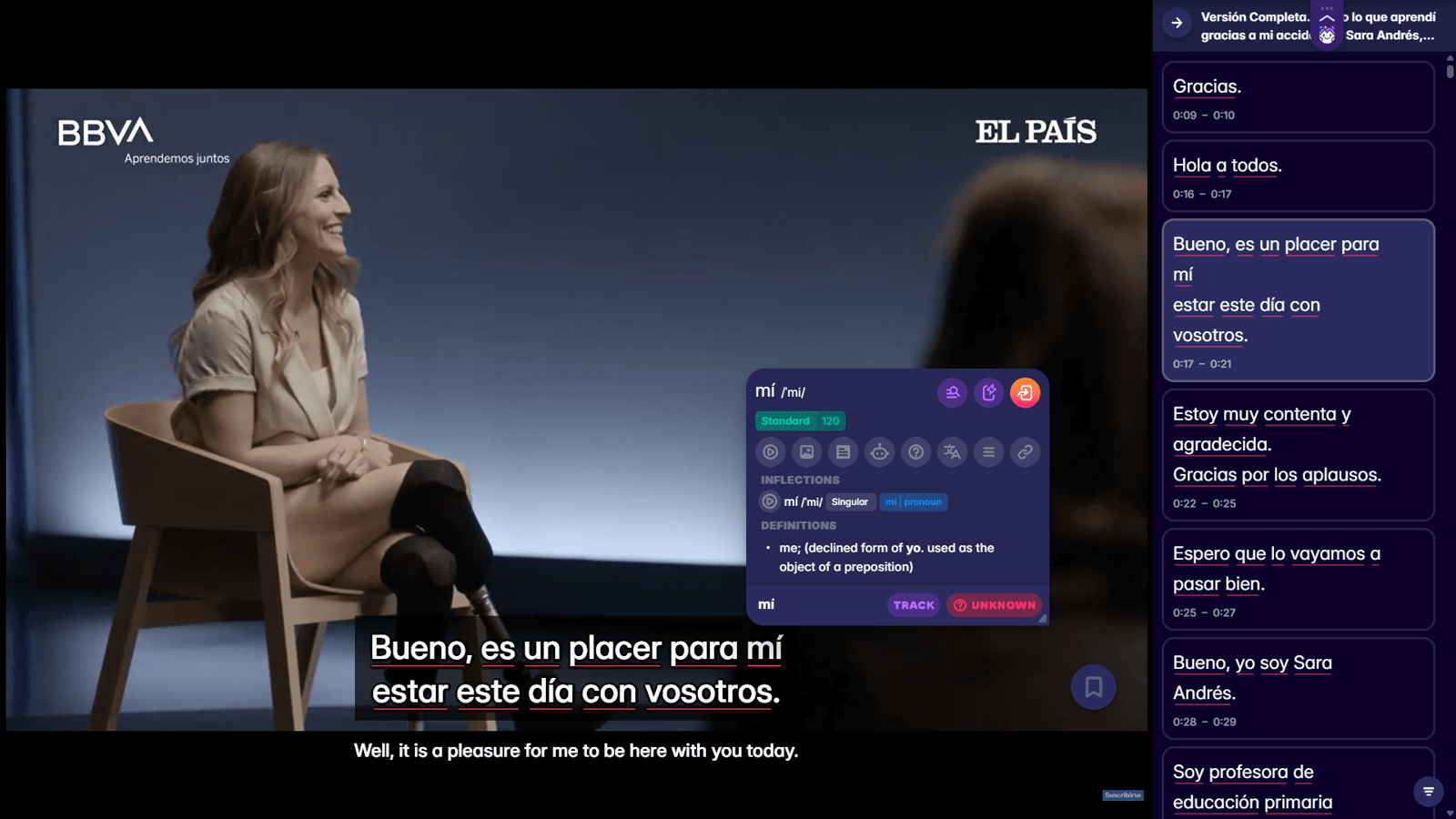
Use immersion to practice the past tense in Spanish in the long run
You've browsed through all the rules, added the verb conjugations to your flashcards, but when you see a sentence, it still takes several minutes for you to understand its meaning. That's totally normal. Your brain needs consistent exposure to form long-term memory on abstract rules like the Spanish past tense forms. Keep going, and one day you will realize you can understand the past tense sentences in the media instantly. That's the magic of time and consistency.
If you consume media in Spanish, and you understand at least some of the messages and sentences within that media, you will make progress. Period.
Frustration is normal. Time is the cure.🕐