See You Later in Spanish: 15+ Ways to Say Goodbye in Spanish Naturally
Last updated: April 2, 2026

You're learning Spanish and want to wrap up a conversation naturally, but you're stuck on how to say goodbye without sounding like a textbook robot. Good news: Spanish has tons of ways to say "see you later" depending on who you're talking to and when you'll see them again. Some are super casual, some are warm and friendly, and a few work great in formal situations. Let's break down the most useful phrases so you can actually sound natural when you're ending a conversation.
How to say see you later in Spanish
The most common way to say "see you later" in Spanish is "hasta luego." You'll hear this phrase everywhere, from Mexico to Spain to Argentina. It literally translates to "until later" and works in pretty much any casual situation.
Here's the thing: "hasta luego" doesn't necessarily mean you're seeing someone later that same day. It's more like the English "see you around" where you're just being friendly about parting ways. You could say it to a coworker on Friday afternoon even though you won't see them until Monday.
Another super popular option is "nos vemos," which literally means "we see each other." This one feels a bit more personal and warm. When you say "nos vemos," you're emphasizing the mutual aspect of seeing each other again. It comes from the verb "ver" (to see), and the "nos" makes it reflexive, so you're both doing the seeing.
If you want to be more specific about timing, you can add words after "hasta":
- Hasta mañana.
See you tomorrow. - Hasta pronto.
See you soon. - Hasta la próxima.
Until next time. - Hasta el lunes.
See you Monday.
These variations let you be clear about when you expect to see someone again.
Different ways to say goodbye in Spanish
Spanish gives you way more options than just "adiós." Each phrase carries a slightly different vibe, so knowing a few alternatives helps you match the situation.
- "Adiós" is the classic goodbye everyone learns first. But here's something interesting: in many Spanish-speaking countries, "adiós" can sound pretty final. It's what you might say when you're leaving for a long time or ending a relationship. For everyday goodbyes, native speakers often reach for something else.
- "Chao" (sometimes spelled "chau") is super casual and commonly used across Latin America. It originally came from Italian "ciao" but has been fully adopted into Spanish. You'll hear this constantly in everyday conversations, especially among friends.
- "Hasta ahora" means "see you in a bit" and works when you're stepping out briefly but coming back soon. If you're leaving a meeting to grab coffee and returning in ten minutes, this fits perfectly.
For more affectionate goodbyes, especially with friends or family, you might hear:
- Cuídate.
Take care of yourself. - Que te vaya bien.
Hope things go well for you. - Besos.
Kisses. - Abrazos.
Hugs. - Cariños.
Affection. / Love.
These warmer phrases show you care about the person. You wouldn't typically use them with your boss or a stranger, but they're perfect for people you're close to.
Formal vs informal farewells
The register you choose matters a lot in Spanish. Using the wrong level of formality can make you sound either too stiff or disrespectful.
For formal situations like business meetings, talking to elderly people you don't know well, or professional settings, stick with:
- Hasta luego (still works formally)
- Que tenga un buen día (have a good day, using the formal "usted" form)
- Nos vemos (generally safe in most contexts)
- Adiós (more formal than casual alternatives)
For informal situations, when you're with friends, family, or peers your age, you can relax and use:
- Nos vemos
- Chao
- Hasta luego
- Te veo (I'll see you, informal "tú" form)
The difference often comes down to verb conjugation. "Que tenga un buen día" uses the formal conjugation, while "que tengas un buen día" uses the informal version. Both mean "have a good day," but one shows respect through formality.
How Mexicans say see you later
In Mexico, you'll hear all the standard phrases we've covered, but there are some preferences worth knowing.
- "Nos vemos" is extremely popular in Mexican Spanish and probably used more frequently than "hasta luego" in casual conversations.
- Mexicans also love "al rato," which means "in a while" or "later." You might hear someone say "te veo al rato" (I'll see you in a bit). This phrase is super casual and implies you'll reconnect relatively soon, maybe later the same day.
- Another Mexican favorite is "ahí nos vemos," which translates to something like "we'll see each other there" or just "see you around." The "ahí" (there) makes it a bit more laid-back and colloquial.
- "Cuídate mucho" (take care of yourself a lot) is also really common in Mexico, especially when saying goodbye to someone you care about. It shows genuine concern and warmth.
- You'll also hear "que estés bien" (hope you're well) as a parting phrase. These expressions go beyond just marking the end of a conversation and actually express care for the other person.
Slang ways to say see you later
If you want to sound more natural and less like a textbook, learning some slang variations helps a lot. These phrases vary by country, so what works in one place might sound weird in another.
- "Nos vidrios" is a playful slang version of "nos vemos" used in some parts of Latin America. It's a made-up word that rhymes and sounds fun. You'd only use this with close friends who appreciate the joke.
- In some countries, people say "lueguito" instead of "luego," adding the diminutive "-ito" to make it sound more casual and friendly. So you might hear "hasta lueguito" instead of "hasta luego."
- "Ahí te ves" is another casual way to say "see you around" that's common in Mexico and other parts of Latin America. It literally means "there you see yourself," which sounds weird in English but makes perfect sense in Spanish.
- Some younger speakers use "nos miramos," which literally means "we look at each other," as a synonym for "nos vemos." It's pretty informal and mostly used among friends.
Learning Spanish farewells through immersion
The best way to really learn how native speakers use these phrases is to hear them in context.
- Watching Spanish-language shows, movies, or video content lets you see the natural flow of conversations and how people actually say goodbye.
- Pay attention to the endings of scenes in Spanish TV shows. You'll notice characters don't always use the same phrase every time. They mix it up based on mood, relationship, and context. One episode might have someone saying "nos vemos" to a friend, then "que tenga buen día" to their boss, then "chao" to their sibling.
- If you're watching content with Spanish subtitles, you can catch these phrases and see exactly how they're spelled and used. Sometimes the subtitles will show slight variations or regional differences you might miss just listening.
- YouTube videos from Spanish speakers are another great resource. Look for vlogs or day-in-the-life content where people are having real conversations. The farewells they use will be completely natural and current.
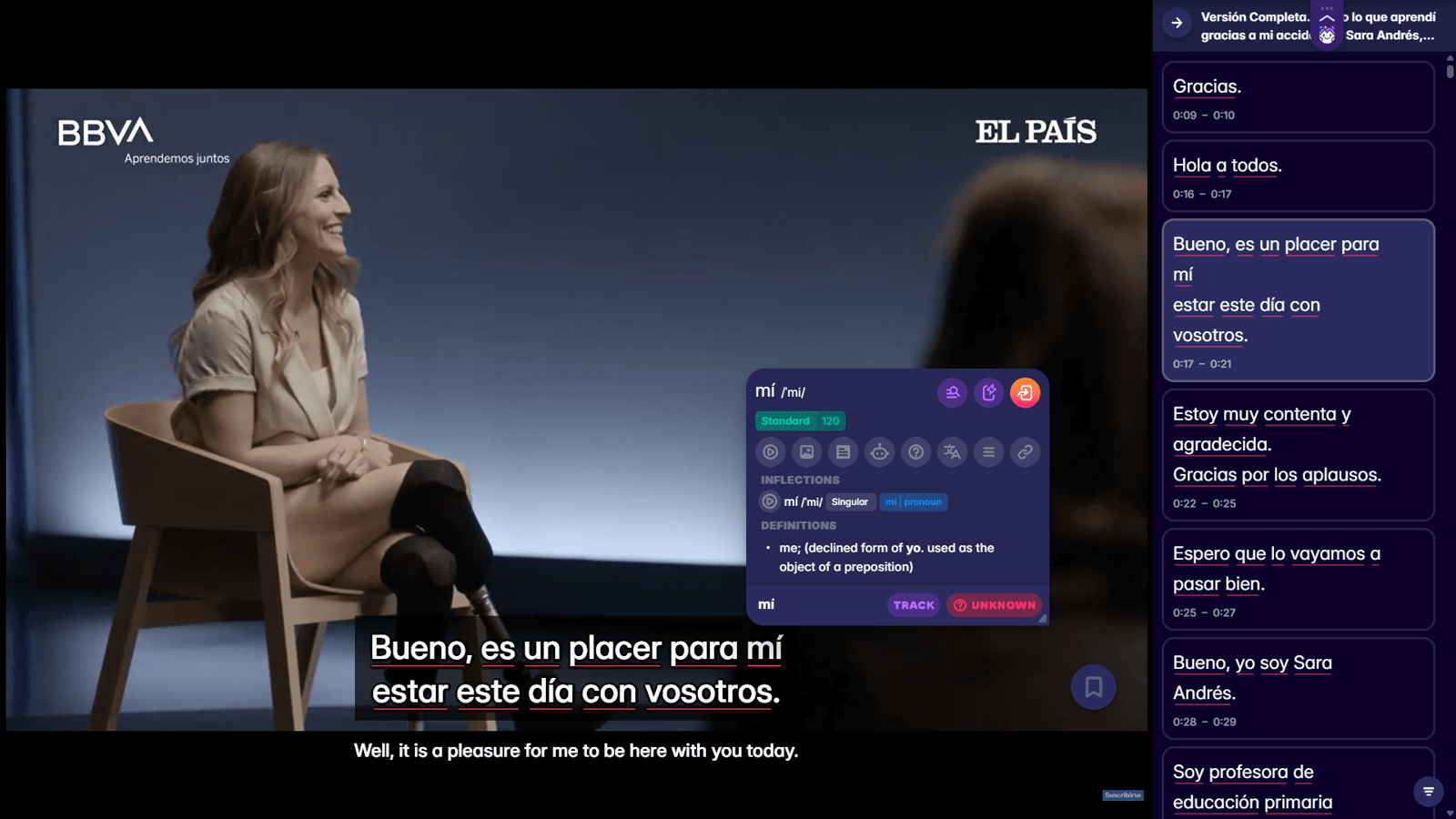
Anyway, if you want to actually use these phrases with real Spanish content, Migaku's browser extension and app let you look up words and save phrases instantly while watching shows or reading articles. Makes learning from actual media way more practical. There's a 10-day free trial if you want to check it out.
Saying goodbye properly takes practice
You've now got way more than just one phrase to end conversations in Spanish. Whether you need something formal for a business meeting, casual for friends, or warm for family, you've got options that'll make you sound natural. The real lesson here is that language learning happens best when you see how words actually get used. Reading a list of phrases helps, but watching real conversations and hearing native speakers choose their words based on context teaches you the subtle stuff no textbook covers.
If you consume media in Spanish, and you understand at least some of the messages and sentences within that media, you will make progress. Period.
A thoughtful goodbye is something people learn over time.👋