Spanish Internet Slang: Learn How to Text Like Native Speakers in 2026
Last updated: April 3, 2026

If you've ever scrolled through Spanish TikTok comments or tried to keep up with a WhatsApp group chat full of native Spanish speakers, you know that you need to learn more than just textbook Spanish. Spanish internet slang mixes regional expressions, English borrowings, creative abbreviations, and Gen Z creativity into something that can feel like a secret code. Whether you're seeing "jjj" in a comment thread or wondering what "tkm" actually means, this guide will help you decode the most popular Spanish online expressions so you can actually understand what's happening in DMs, comments, and group chats.
Common Spanish texting abbreviations you need to know
Abbreviations form the backbone of Spanish text slang. Spanish speakers love shortening phrases to save time while typing, and some of these have become so standard that you'll see them everywhere.
The absolute basics
Let's start with the most common abbreviations you'll encounter in any Spanish-speaking online space:
- "Q" or "k" replaces "que" (that/what). You'll see this constantly. "K pasa?" means "What's up?" and "q tal?" means "How are you?" Pretty much any time you see a standalone "q" or "k" in a message, it's replacing "que."
- "Xq" or "xk" means "porque" (because), while "pq" can mean either "porque" or "por qué" (why), depending on context. Yeah, it's confusing at first, but you pick it up fast.
- "Tb" or "tmb" stands for "también" (also/too). "Yo tb" means "me too."
- "Bn" means "bien" (good/well). Super common in quick responses.
- "D" or "de" both mean "of/from." You might see "d nada" (You're welcome) or "soy d México" (I'm from Mexico).
Expressions of affection and friendship
These abbreviations show up constantly in casual conversations between friends:
- "Tkm" means "te quiero mucho" (I love you a lot). This is probably one of the most popular texting abbreviations across all Spanish-speaking countries.
- "Tqm" is another version of the same thing, just using "q" instead of "k" for "quiero."
- "Tq" is the shortened version: just "te quiero" (I love you).
- "Ntp" stands for "no te preocupes" (don't worry). You'll see this all the time when someone's reassuring a friend.
- "Bss" or "bs" means "besos" (kisses), often used to sign off messages.
Time and planning
When making plans or talking about timing:
- "Ahor" or "ahora" gets shortened to "ahor" sometimes, meaning "now."
- "Dsp" or "dsps" means "después" (later/after).
- "Mñn" stands for "mañana" (tomorrow).
Popular Spanish text slang for online conversations
Beyond abbreviations, there's a whole world of slang terms that Spanish speakers use constantly in online spaces. These range from traditional expressions that moved online to brand new coinages born on social media.
Gen Z favorites that dominate social media
- "Re" works as an intensifier meaning "very" or "really," especially popular in Argentina and surrounding countries. "Estoy re cansado" means "I'm really tired." You'll see this everywhere on Spanish-speaking TikTok and Instagram.
- "Alta" (or "alto" for masculine nouns) means "big" or "great" in standard Spanish, but in slang it emphasizes something impressive. "Alta fiesta" means "what a party" or "amazing party."
- "Piola" is River Plate region slang (Argentina, Uruguay) meaning "cool" or "chill." Someone who's "piola" is laid-back and easygoing. This one has spread online beyond its original region.
- "Cringe" gets borrowed directly from English and used constantly. Sometimes you'll see it spelled "crinch" to match Spanish pronunciation, but "cringe" is more common.
- "Slay" also comes straight from English, used the same way: to describe someone doing something amazingly well.
Borrowed English terms that became Spanish texting slang
Spanish internet culture borrows heavily from English, especially in fandom and social media contexts:
- "Shippear" comes from "ship" (supporting a romantic pairing). "Shippeo mucho esta pareja" means "I ship this couple so hard."
- "Spoiler" needs no translation, it means the same thing. Sometimes spelled "espóiler" but usually just "spoiler."
- "Crush" refers to someone you have a crush on. "Tengo un crush" means "I have a crush."
- "Stalkear" means to stalk someone's social media profiles. "Estuve stalkeando su Instagram" means "I was stalking their Instagram."
- "Literal" or "literalmente" gets used as emphasis, just like in English. "Literal me morí de risa" (I literally died laughing).
Regional slang that appears online
Different Spanish-speaking countries have their own expressions that show up in online spaces:
- "Qué onda" is Mexican slang for "what's up" or "how's it going." You'll see this constantly from Mexican users.
- "Wey" or "güey" (Mexican) means "dude" or "guy." It's everywhere in Mexican online communication.
- "Tío" or "tía" in Spain means "dude" or "guy/girl" (literally uncle/aunt). "Tío, qué fuerte" means "Dude, that's crazy."
- "Chévere" (used in various Latin American countries, especially Caribbean and northern South America) means "cool" or "great."
- "Bacán" or "bacano" (Peru, Colombia, Chile) also means "cool" or "awesome."
Understanding Mexican slang online
Mexican internet slang deserves special attention because Mexico has the largest Spanish-speaking population and huge social media presence.
- "GPI" in Mexican slang means "Gracias por invitar" (thanks for inviting), but here's the catch: it's almost always used sarcastically. If your friends did something without you and post about it, you might comment "GPI" to call them out for not including you.
- "ALV" stands for "a la verga," which is vulgar slang meaning something like "holy shit" or expressing that something went to hell. It's crude but extremely common online.
- "Nmms" means "no mames," a very Mexican expression that roughly translates to "no way" or "you're kidding" (literally "don't suck" but used as an exclamation).
- "Ptm" stands for a vulgar phrase used to express frustration or anger. You'll see it in gaming contexts and heated discussions.
Platform-specific Spanish slang
Different platforms have their own slang ecosystems, though there's plenty of overlap.
WhatsApp and texting slang
WhatsApp is absolutely dominant in Spanish-speaking countries, so WhatsApp culture shapes a lot of Spanish texting norms. Voice messages are huge, which means less pressure for perfect spelling, but when people do text, they use heavy abbreviation.
Common WhatsApp-specific behaviors include using single emojis as complete responses, sending "..." to show you're thinking or annoyed, and the classic "visto" (seen/read) culture where leaving someone on read carries social meaning.
Instagram and TikTok expressions
Instagram and TikTok Spanish tends to be more playful and meme-heavy. You'll see more English borrowings here, and slang spreads faster through comments and captions.
- "Lit" gets used directly from English, meaning something is exciting or great.
- "Mood" also comes straight from English: "eso es mood" means "that's a mood."
- "Random" appears constantly, often spelled the same way or sometimes "randomeo."
Gaming and Discord slang
Spanish gaming communities have their own vocabulary, mixing English gaming terms with Spanish:
- "Gg" (good game) gets used universally.
- "Noob" or "nub" means the same as in English.
- "Farmear" comes from "farming" in games (grinding for resources).
- "Lag" stays as "lag" or sometimes "lageo."
- "Tryhard" gets borrowed directly or sometimes adapted to "esforzado."
How Spanish internet slang has changed over time
Spanish internet slang absolutely changes, and it changes fast. When Spanish speakers first started texting heavily in the early 2000s, abbreviations were mostly about saving characters because SMS messages had strict limits. That's when basic abbreviations like "q," "xq," and "tkm" really took off.
Around 2010-2015, as smartphones became standard and Spanish speakers joined Facebook, Twitter, and Instagram in huge numbers, slang started incorporating more English borrowings. The rise of fandoms, especially K-pop and anime communities, brought terms like "shippear" and "bias" into common usage.
By 2020-2025, TikTok completely transformed Spanish internet slang. Regional expressions that used to stay local (like Argentine "re" or "piola") spread across the entire Spanish-speaking world through viral videos. Gen Z users started mixing English and Spanish more freely, creating true Spanglish expressions.
The pandemic accelerated these changes because everyone spent more time online. Meme culture became even more dominant, and slang terms could go from unknown to everywhere within weeks.
Right now in 2026, we're seeing AI and tech terminology enter Spanish slang. Terms related to content creation, streaming, and digital culture are evolving constantly.
Tips for using Spanish slang naturally
Knowing these terms is one thing, but using them naturally is another. Here's how to actually incorporate Spanish internet slang into your own communication without sounding forced or awkward.
- Start by observing before participating. Follow native Spanish speakers on social media, join Spanish Discord servers or WhatsApp groups, and just watch how people actually communicate. Pay attention to which slang terms appear most frequently and in what contexts.
- Don't try to use every slang term you learn. Pick a few common abbreviations and expressions that fit your personality and the contexts where you communicate. If you're texting Mexican friends, "wey" and "qué onda" make sense. If you're chatting with Argentine gamers, "re" and "piola" fit better.
- Regional awareness matters a lot. Using heavily Mexican slang with Spanish speakers from Spain might sound odd, and vice versa. When you're not sure about regional appropriateness, stick to more universal terms like "tkm," "q," "xq," and basic abbreviations that work everywhere.
- Age appropriateness is real too. Some slang is specifically Gen Z territory, and if you're older, forcing it might come across as trying too hard. On the other hand, if you're young and learning Spanish, using current slang helps you sound natural with peers.
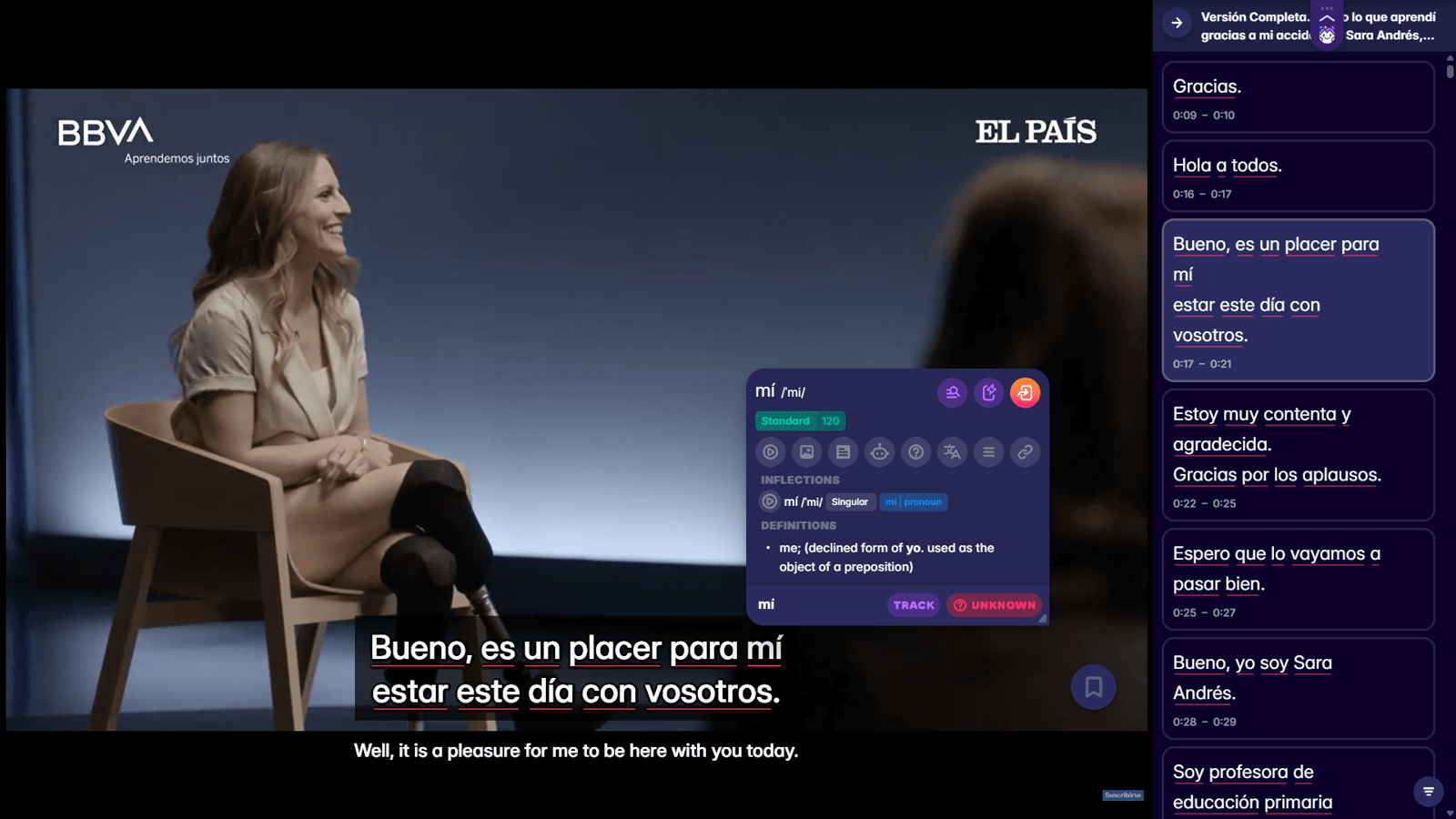
If you want to level up your Spanish by learning from real content where slang actually appears, Migaku's browser extension and app let you look up words and save expressions instantly while watching Spanish videos, reading posts, or scrolling through content. Makes the whole immersion process way more practical. There's a 10-day free trial if you want to check it out.
FAQs
Your shortcut to understanding online Spanish like a native
Spanish internet slang can feel overwhelming at first, but you don't need to memorize every abbreviation and expression before jumping into online conversations. Learning through immersion is how you can pick up slang naturally, the same way native speakers do. You see a term used in context, figure out what it means, see it again, and eventually it becomes part of your own vocabulary without forced memorization.
If you consume media in Spanish, and you understand at least some of the messages and sentences within that media, you will make progress. Period.
Personality, humor, and emotion. That's what slang can bring into your language.🫵