# Spanish Music Vocabulary: Notes, Genres, Musical Instruments and Other Vocabulary in Spanish
> Learn Spanish music vocabulary from musical notes to Latin genres. Complete guide covering instruments, verbs, performers, and practical terms.
**URL:** https://migaku.com/blog/spanish/spanish-music-vocabulary
**Last Updated:** 2026-03-20
**Tags:** vocabulary, culture, phrases
---
If you're [learning Spanish](https://migaku.com/learn-spanish) and love music, you're in luck. Music gives you one of the best ways to pick up new vocabulary because the words stick in your head way better when they're part of a song. Plus, if you want to talk about your favorite artists or genres with Spanish speakers, you need the right words. This guide covers all the essential Spanish music vocabulary you'll use, from basic musical notes to Latin genres like reggaeton and salsa.
----
## Musical notes and basic notation in Spanish
Let's start with the foundation. The seven main musical notes in Spanish use a different system from English. Instead of the letters A through G, Spanish uses do, re, mi, fa, sol, la, si. Yeah, like the song from *The Sound of Music*, except that's actually how Spanish speakers refer to notes all the time.
Here's the complete list:
- Do (C)
- Re (D)
- Mi (E)
- Fa (F)
- Sol (G)
- La (A)
- Si (B)
When you add sharps and flats, you say "sostenido" for sharp and "bemol" for flat. So C sharp becomes "do sostenido" and B flat is "si bemol".
For other notation terms, here are some you'll hear in lessons or when reading music:
| Spanish | English |
| - | - |
| Nota | Note |
| Compás | Measure / Bar |
| Clave | Clef |
| Pentagrama | Staff |
| Partitura | Sheet music |
| Acorde | Chord |
| Escala | Scale |
| Tono | Tone / Pitch |
| Melodía | Melody |
| Armonía | Harmony |
The rhythm vocabulary includes **"ritmo" ** (rhythm), **"tempo" ** (tempo, same as English), and **"pulso" ** (beat/pulse). When musicians talk about keeping time, they might say "mantener el ritmo" or "seguir el compás".
----
## Musical instruments in Spanish vocabulary
Instruments fall into several categories, and knowing these helps you organize the vocabulary in your head. Let's break them down by type.
**String instruments** (instrumentos de cuerda ):
| Spanish | English |
| - | - |
| Guitarra | Guitar |
| Bajo | Bass |
| Violín | Violin |
| Viola | Viola |
| Violonchelo / chelo | Cello |
| Contrabajo | Double bass |
| Arpa | Harp |
| Ukelele | Ukulele |
**Wind instruments** (instrumentos de viento ):
| Spanish | English |
| - | - |
| Flauta | Flute |
| Clarinete | Clarinet |
| Saxofón | Saxophone |
| Trompeta | Trumpet |
| Trombón | Trombone |
| Tuba | Tuba |
| Oboe | Oboe |
| Armónica | Harmonica |
**Percussion instruments** (instrumentos de percusión ):
| Spanish | English |
| - | - |
| Batería | Drum set |
| Tambor | Drum |
| Bongó | Bongo |
| Conga | Conga |
| Maracas | Maracas |
| Platillos | Cymbals |
| Xilófono | Xylophone |
| Timbal | Timpani |
**Keyboard instruments** (instrumentos de teclado ):
| Spanish | English |
| - | - |
| Piano | Piano |
| Teclado | Keyboard |
| Órgano | Organ |
| Sintetizador | Synthesizer |
One thing I noticed when learning Spanish music vocabulary is that many instrument names look similar to English, which makes them easier to remember. The tricky part is [getting the pronunciation right](https://migaku.com/blog/spanish/spanish-alphabet-pronunciation-guide) and remembering which ones change gender. "La guitarra" is feminine, but "el piano" is masculine.
----
## Music genres and styles in Spanish
When someone asks "What are the types of music?" in Spanish, they'll say "¿Qué tipos de música hay?" or "¿Cuáles son los géneros musicales?". The word "género" means genre, and you'll use it constantly when discussing music preferences.
Here are the main genres you should know:
**Popular modern genres:**
| Spanish | English |
| - | - |
| Reggaetón | Reggaeton |
| Salsa | Salsa |
| Bachata | Bachata |
| Merengue | Merengue |
| Cumbia | Cumbia |
| Pop | Pop |
| Rock | Rock |
| Hip hop / rap | Hip hop / Rap |
| Música electrónica | Electronic music |
| Música urbana | Urban music |
**Traditional and classical styles:**
| Spanish | English |
| - | - |
| Música clásica | Classical music |
| Flamenco | Flamenco |
| Tango | Tango |
| Bolero | Bolero |
| Ranchera | Ranchera |
| Mariachi | Mariachi |
| Corrido | Corrido |
| Son | Son |
**Other common genres:**
| Spanish | English |
| - | - |
| Jazz | Jazz |
| Blues | Blues |
| Country | Country |
| Funk | Funk |
| Soul | Soul |
| Metal | Metal |
| Punk | Punk |
Latin music has exploded globally over the past decade, so knowing terms like **"música latina" ** (Latin music) or **"ritmos latinos" ** (Latin rhythms) helps you join conversations about artists like Bad Bunny or Rosalía.
The dance element is huge in Latin genres too. **"Bailar" ** means to dance, and you'll hear people talk about **"música bailable" ** (danceable music) all the time.
----
## Roles, performers, and music professionals
Whether you're talking about your favorite singer or describing what a teacher does, these terms cover the people involved in making music.
**Performers:**
| Spanish | English |
| - | - |
| Cantante | Singer |
| Músico / música | Musician |
| Artista | Artist |
| Banda | Band |
| Grupo | Group |
| Solista | Soloist |
| Vocalista | Vocalist |
| Coro | Choir / Chorus |
| Rapero / rapera | Rapper |
| DJ | DJ |
**Behind the scenes:**
| Spanish | English |
| - | - |
| Compositor / compositora | Composer / Songwriter |
| Productor / productora | Producer |
| Maestro / maestra | Teacher / Conductor |
| Director / directora | Conductor / Director |
| Ingeniero de sonido | Sound engineer |
| Letrista | Lyricist |
When talking about famous musicians, you might say "mi cantante favorito" (my favorite singer) or "la banda que más me gusta" (the band I like most). The phrase "tocar un instrumento" means to play an instrument, so you'd say "Ella toca la guitarra" (She plays guitar).
----
## Verbs related to music and performance
Verbs bring your Spanish music vocabulary to life. You can't really talk about music without action words, so here's what you need.
**Essential music verbs:**
| Spanish | English |
| - | - |
| Tocar | To play (an instrument) |
| Cantar | To sing |
| Bailar | To dance |
| Escuchar | To listen |
| Oír | To hear |
| Componer | To compose |
| Escribir | To write |
| Grabar | To record |
| Practicar | To practice |
| Ensayar | To rehearse |
| Interpretar | To perform / To interpret |
| Improvisar | To improvise |
| Afinar | To tune |
| Mezclar | To mix |
**Performance verbs:**
| Spanish | English |
| - | - |
| Actuar | To perform / To act |
| Presentarse | To perform / To present |
| Dar un concierto | To give a concert |
| Hacer una gira | To go on tour |
| Subir al escenario | To go on stage |
----
## General music terms for everyday conversations
These are the words that come up when you're talking about listening to music, going to concerts, or just discussing songs with friends.
**Core vocabulary:**
| Spanish | English |
| - | - |
| Canción | Song |
| Álbum | Album |
| Disco | Record / Album |
| Sencillo | Single |
| Concierto | Concert |
| Espectáculo | Show / Performance |
| Gira | Tour |
| Festival | Festival |
| Escenario | Stage |
| Público | Audience |
| Entrada / boleto | Ticket |
| Letra | Lyrics |
| Estribillo | Chorus / Refrain |
| Verso | Verse |
| Estrofa | Stanza / Verse |
**Listening and media:**
| Spanish | English |
| - | - |
| Música en vivo | Live music |
| Grabación | Recording |
| Pista | Track |
| Lista de reproducción | Playlist |
| Auriculares | Headphones |
| Altavoz / bocina | Speaker |
| Volumen | Volume |
| Sonido | Sound |
| Audio | Audio |
When you want to say you like a song, you'd say "Me gusta esta canción" or "Esta canción me encanta" (I love this song). To ask someone what music they listen to, try "¿Qué tipo de música escuchas?" or "¿Qué música te gusta?"
----
## The history of Spanish music vocabulary
The history of Spanish music vocabulary is actually pretty interesting.
A lot of the basic terms come from Latin, which makes sense since Spanish evolved from Latin. Words like "música" (from Latin "musica") and "melodía" (from Latin "melodia") have ancient roots.
When Spanish music vocabulary starts really developing its own character is during the medieval period and Renaissance, when Spain had a rich musical tradition. Terms for instruments and musical forms developed alongside the music itself. Then, as Spanish spread to Latin America, indigenous languages and African influences added new words, especially for rhythms and instruments unique to those regions.
The modern Spanish music vocabulary you hear today mixes classical European terms with Latin American innovations. Genres like salsa, reggaetón, and cumbia brought their own language into the mix. Some words are borrowed directly from English, especially in contemporary genres. You'll hear "playlist" used in Spanish conversations, though "lista de reproducción" is the proper translation.
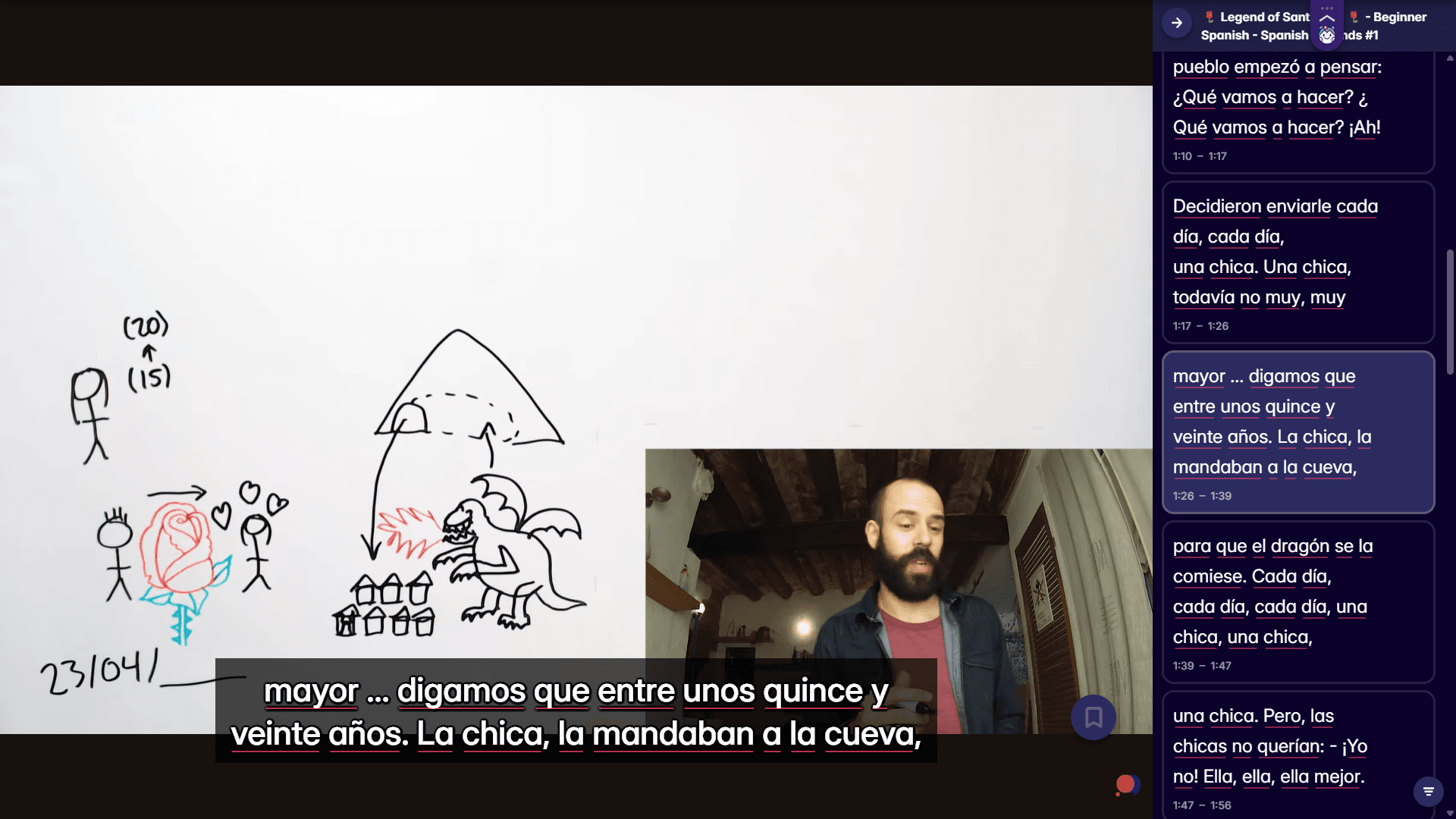
Anyway, if you want to practice this Spanish music vocabulary with real content, Migaku's browser extension and app let you look up words instantly while watching music videos or reading Spanish articles about your favorite artists. Makes the whole immersion learning process way more practical. There's a 10-day free trial if you want to check it out.
 ----
## Making Spanish music vocabulary stick through immersion
Reading vocabulary lists helps, but the real learning happens when you use these words in context. [Listening to Spanish music](https://migaku.com/blog/language-fun/language-learning-with-music) is obviously the best way to absorb this language naturally. When you hear "cantar" in a song lyric or someone mentions "el ritmo" in a music video, it sticks way better than memorizing from a list.
> If you consume media in Spanish, and you understand at least some of the messages and sentences within that media, you will make progress. _Period_.
The language feels more real when you hear it in songs.🎼🪇
----
## Making Spanish music vocabulary stick through immersion
Reading vocabulary lists helps, but the real learning happens when you use these words in context. [Listening to Spanish music](https://migaku.com/blog/language-fun/language-learning-with-music) is obviously the best way to absorb this language naturally. When you hear "cantar" in a song lyric or someone mentions "el ritmo" in a music video, it sticks way better than memorizing from a list.
> If you consume media in Spanish, and you understand at least some of the messages and sentences within that media, you will make progress. _Period_.
The language feels more real when you hear it in songs.🎼🪇