# Spanish Preterite vs Imperfect: When to Use Each Spanish Past Tense
> Learn exactly when to use preterite vs imperfect in Spanish. Clear examples, mental shortcuts, and practical tips to master both past tenses.
**URL:** https://migaku.com/blog/spanish/spanish-preterite-vs-imperfect
**Last Updated:** 2026-02-10
**Tags:** fundamentals, grammar
---
All progress well in your day of [learning Spanish](https://migaku.com/learn-spanish), but the preterite vs imperfect has officially entered the chat to ruin your day. Yeah, this is where a lot of learners get stuck. Both tenses talk about the past, but they do completely different jobs. But once you understand the basic logic behind when to use each one, it becomes way more intuitive. Let me break down how these tenses actually work and give you some practical ways to know which one to use.
---
## What makes the preterite and imperfect different
> Here's the fundamental difference:
> - The preterite describes **completed** actions that happened at specific moments in the past.
> - The imperfect describes **ongoing** situations, repeated habits, or background information in the past.
Think of it like this. When you're telling a story, the preterite moves the plot forward. Those are the things that happened, one after another. The imperfect sets the scene and describes what was already going on.
Let's look at a real example:
- "Yo leía un libro cuando sonó el teléfono."
*I was reading a book when the phone rang.*
"Leía" is imperfect because reading was the ongoing action, the background activity. "Sonó" is preterite because the phone ringing was a specific completed event that interrupted what was happening.
Pretty much every Spanish learner has to wrap their head around this distinction. The tricky part is that English doesn't always make this difference super clear, so you have to train yourself to think about whether an action was completed or ongoing.
---
## When to use the preterite
> Use the preterite for actions that **started and finished** at a specific time.
These are events with clear boundaries. Some situations where you'd use the preterite:
Actions that happened once at a specific moment:
- Ayer comí pizza.
*Yesterday I ate pizza.*
- El año pasado visité México.
*Last year I visited Mexico.*
A series of completed actions:
- Me levanté, me duché y desayuné.
*I got up, showered, and had breakfast.*
Actions that lasted for a specific, completed period:
- Viví en Madrid durante tres años.
*I lived in Madrid for three years.*
- Estudié español por dos horas.
*I studied Spanish for two hours.*
Notice how all these examples have definite endpoints. The actions are done, finished, completed. That's your signal to use the preterite.
Time expressions that typically go with the preterite include: ayer (Yesterday), anteayer (The day before yesterday), la semana pasada (Last week), el año pasado (Last year), hace dos días (Two days ago), and any specific date or time.
---
## When to use the imperfect tense
> The imperfect handles a different set of past situations. You'll use it for things that were **ongoing, habitual, or descriptive**.
Ongoing actions in the past:
- Mientras caminaba, pensaba en ti.
*While I was walking, I was thinking about you.*
Habitual actions (Things you used to do regularly):
- De niño, jugaba al fútbol todos los días.
*As a child, I played soccer every day.*
- Siempre desayunábamos juntos.
*We always used to have breakfast together.*
Descriptions of people, places, or situations:
- La casa era grande y tenía un jardín bonito.
*The house was big and had a nice garden.*
- Mi abuela era muy amable.
*My grandmother was very kind.*
Time and age in the past:
- Eran las tres de la tarde.
*It was three in the afternoon.*
- Tenía veinte años cuando me gradué.
*I was twenty years old when I graduated.*
The imperfect gives you the context, the setting, the background. These actions don't have clear start and end points that matter to the story.
---
## Common time markers in Spanish grammar for each tense
Certain words and phrases are strong hints about which tense to use.
Preterite markers:
| Spanish | English |
| - | - |
| Ayer | Yesterday |
| Anoche | Last night |
| El otro día | The other day |
| Una vez | Once |
| De repente | Suddenly |
| Por fin | Finally |
Imperfect markers:
| Spanish | English |
| - | - |
| Siempre | Always |
| Nunca | Never |
| Todos los días | Every day |
| A menudo | Often |
| Generalmente | Generally |
| Mientras | While |
| De vez en cuando | From time to time |
Speaking of which, "de vez en cuando" triggers the imperfect because it describes habitual or repeated actions. If you did something "de vez en cuando," you're talking about a pattern of behavior, not a single completed event.
---
## Using preterite vs imperfect in the same sentence
Absolutely, you can use both tenses in the same sentence. In fact, this is super common and really useful for storytelling.
> 🗒️The typical pattern: imperfect for the background action, preterite for the interrupting action.
Examples:
- Dormía cuando llamaste.
*I was sleeping when you called.*
- Llovía cuando salimos.
*It was raining when we left.*
- Estudiaba en la biblioteca cuando vi a María.
*I was studying in the library when I saw María.*
You can also use both to show contrast between ongoing situations and specific events:
- Antes era tímido, pero un día decidí cambiar.
*I used to be shy, but one day I decided to change.*
The imperfect ("era") describes the ongoing state of being shy. The preterite ("decidí") marks the specific moment of decision.
---
## The verb ["ser"](https://migaku.com/blog/spanish/spanish-ser-vs-estar) in both tenses
This verb trips people up because it changes meaning depending on the tense.
> Preterite "ser" (fui, fuiste, fue, etc.): Describes a temporary state or role that's now over.
- Fui estudiante durante cuatro años.
*I was a student for four years.*
- La fiesta fue divertida.
*The party was fun.*
> Imperfect "ser" (era, eras, era, etc.): Describes ongoing characteristics or states.
- Era estudiante cuando nos conocimos.
*I was a student when we met.*
- De niño era muy tímido.
*As a child I was very shy.*
Same deal with "estar." The tense you choose changes whether you're talking about a temporary completed state or an ongoing one.
---
## Irregular verbs in preterite and imperfect
The imperfect is actually pretty generous. Only three irregular verbs exist:
1. ser (era, eras, era, éramos, erais, eran),
2. ir (iba, ibas, iba, íbamos, ibais, iban),
3. and ver (veía, veías, veía, veíamos, veíais, veían).
The preterite? That's where Spanish throws a bunch of irregular forms at you. Verbs like hacer (hice), tener (tuve), estar (estuve), poder (pude), poner (puse), saber (supe), venir (vine), querer (quise), and decir (dije) all have stem changes.
You just have to memorize these. There's no shortcut, unfortunately. The good news is that once you know the stem, the endings follow a pattern.
---
## Which tense is more common, preterite or imperfect in Spanish
Honestly, both tenses in Spanish show up constantly in everyday conversation. The preterite might edge ahead slightly because people talk about specific things that happened a lot: "I went to the store," "I saw that movie," "I ate lunch."
But the imperfect is right there too, especially when people describe how things used to be or set up stories. You can't really avoid either one.
In written Spanish, especially literature, you'll see both used heavily for narrative purposes. The interplay between the two tenses is what makes storytelling work in Spanish.
---
## Tricky situations and mental shortcuts for describing the past actions
Some verbs shift meaning depending on which past tense you use. This is where things get interesting.
| Verb | Preterite | English | Imperfect | English |
|------|-----------|---------|-----------|---------|
| **Conocer** | Conocí a Juan ayer. | I met Juan yesterday (The first time) | Conocía a Juan. | I knew Juan (We were already acquainted) |
| **Saber** | Supe la verdad. | I found out the truth (The moment of learning) | Sabía la verdad. | I knew the truth (Ongoing knowledge) |
| **Querer** | Quise llamarte. | I tried to call you (A specific attempt) | Quería llamarte. | I wanted to call you (Ongoing desire) |
| **Poder** | Pude terminar. | I managed to finish (I actually did it) | Podía terminar. | I was able to finish (I had the capability) |
Here's a mental shortcut that helps a lot: ask yourself "was this action completed or was it ongoing?" If you can pinpoint when it started and ended, go with preterite. If it's describing a state, habit, or background situation, use imperfect.
Another trick: if you're answering "what happened?" use the preterite. If you're answering "what was happening?" or "what was it like?" use the imperfect.
---
## Tips on practicing these two Spanish past tenses
Here's something that helped me: take a simple story in English and translate it to Spanish, paying close attention to which tense each verb needs.
"When I was ten years old (Imperfect, ongoing state), I lived (Imperfect, ongoing situation) in a small town. One day (Preterite signal), I decided (Preterite, specific decision) to explore the woods behind my house. It was (Imperfect, description) a sunny afternoon. While I walked (Imperfect, ongoing), I heard (Preterite, specific event) a strange noise."
See how the tenses paint the full picture? The imperfect sets the scene, the preterite tells you what actually happened.
You can do this with any story, any memory, any anecdote. It's basically free practice that builds the right instincts.
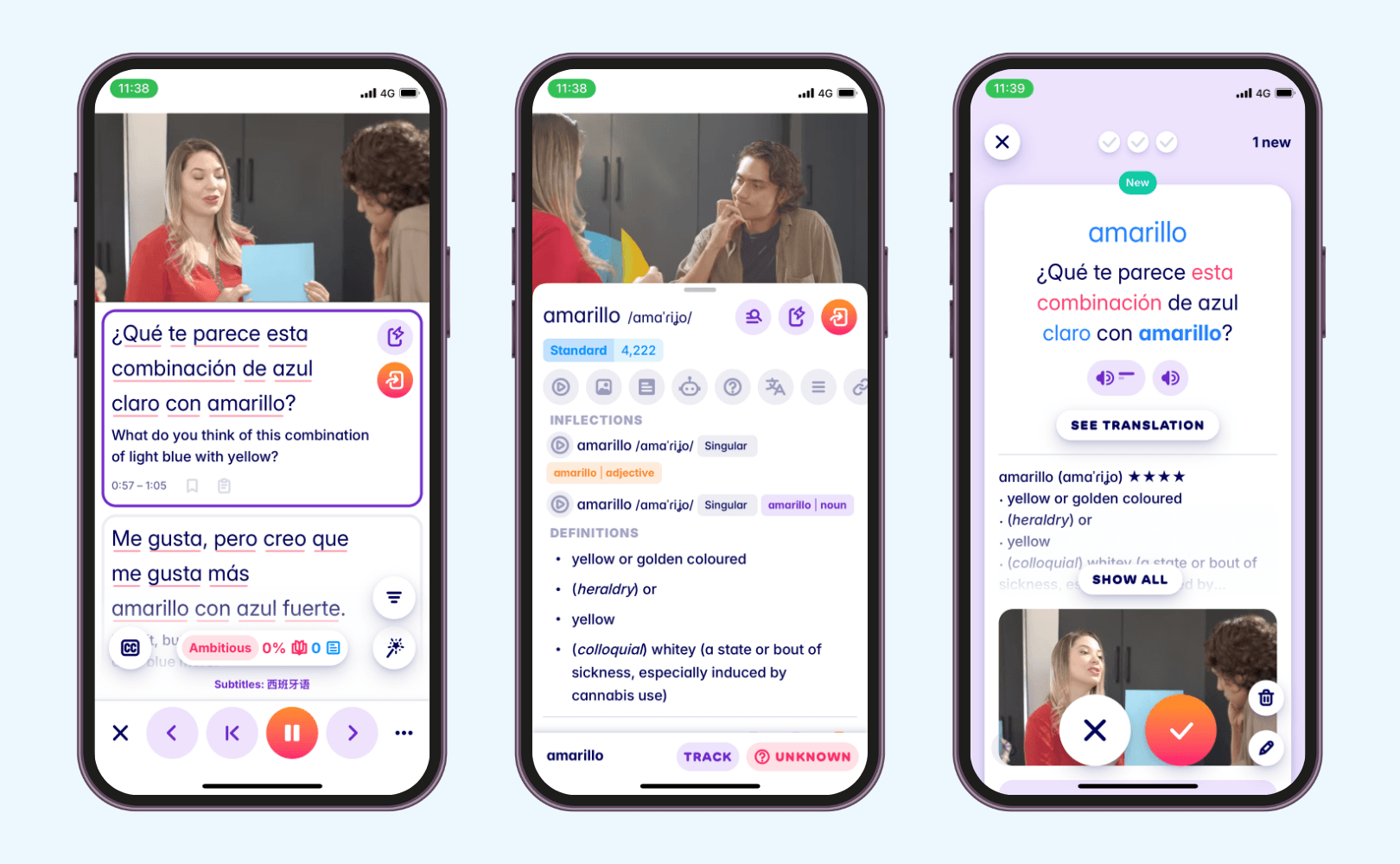
Anyway, if you're serious about getting fluent in Spanish, [immersion](https://migaku.com/blog/japanese/the-problem-with-textbooks) with real content is where the magic happens. Migaku's browser extension and app let you look up words and phrases instantly while watching Spanish shows or reading articles, so you can see these tenses used naturally in context. Way more effective than just doing [grammar](https://migaku.com/blog/spanish/spanish-grammar-guide) drills. There's a 10-day free trial if you want to give it a shot.
 ---
## Getting comfortable with conjugating is a long process
The only real way to internalize the preterite vs imperfect distinction is through exposure and practice. Reading Spanish stories helps a ton because you see how native speakers naturally switch between tenses. Watching shows and dramas assisted with subtitles can achieve similar effects as well.
> If you consume media in Spanish, and you understand at least some of the messages and sentences within that media, you will make progress. _Period_.
Energy and persistence conquer all things!
---
## Getting comfortable with conjugating is a long process
The only real way to internalize the preterite vs imperfect distinction is through exposure and practice. Reading Spanish stories helps a ton because you see how native speakers naturally switch between tenses. Watching shows and dramas assisted with subtitles can achieve similar effects as well.
> If you consume media in Spanish, and you understand at least some of the messages and sentences within that media, you will make progress. _Period_.
Energy and persistence conquer all things!