H-1 Working Holiday Visa Korea: Requirements & How to Apply
最終更新日: 2026年5月15日
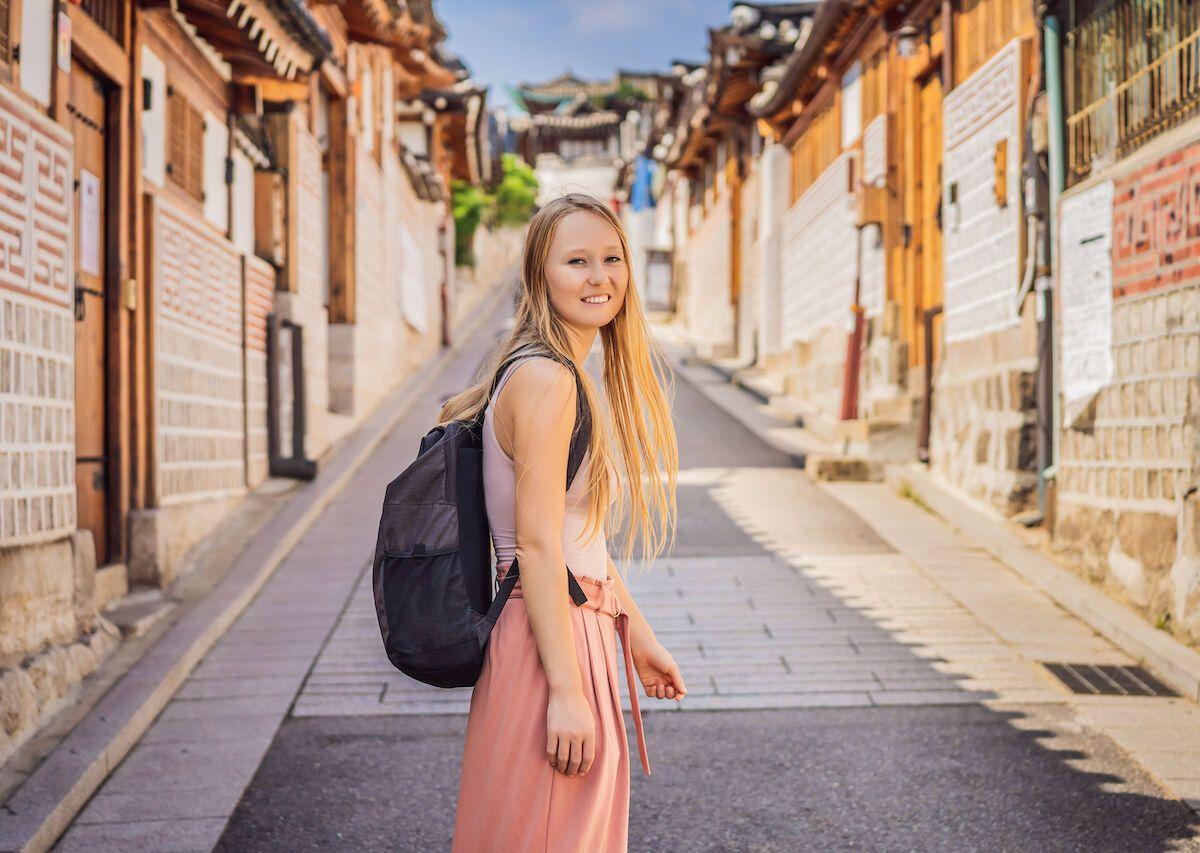
South Korea's H-1 Working Holiday Visa lets young travelers from 29 partner countries live in Korea for up to two years, take short-term work to fund their stay, and travel the country. This guide covers who qualifies, what paperwork you need, how the process actually works in 2026, and the rules most applicants get wrong.
Last updated: May 15, 2026
What the H-1 Visa Is and Who It's For
The H-1 is Korea's working holiday visa, administered by the Ministry of Foreign Affairs (MOFA) through the Korea Working Holiday Info Center under the Overseas Koreans Agency. It exists under bilateral Memoranda of Understanding (MOUs) between Korea and partner countries, so the precise rules, length of stay, and quotas depend on your nationality.
The program's purpose is cultural exchange first, employment second. You can work, but only on a part-time, incidental basis to help cover living costs. The visa is generally one-time-only. Three countries are exceptions: American, Irish, and Swedish nationals are permitted to reapply. U.S. nationals can also extend by up to 6 months, and U.K. nationals can extend by up to 1 year, under their respective bilateral agreements.
Korea has working holiday MOUs with 29 countries and regions. The KOWORK Visa Center lists the following as eligible: Australia, Canada, New Zealand, Japan, United States, France, Germany, Ireland, Sweden, Denmark, Hong Kong, Taiwan, Czech Republic, Italy, United Kingdom, Austria, Hungary, Israel, Netherlands, Portugal, Belgium, Chile, Poland, Spain, and Argentina, among others.
Eligibility Requirements
The baseline criteria across most partner countries are:
- Age: 18 to 30 inclusive at the time of application. The United States is the major exception: U.S. nationals are not bound by the age cap but must be bona fide post-secondary students or have graduated within the past year.
- Nationality and residence: You must hold the passport of a partner country and apply from inside that country. Korea does not grant H-1 visas to applicants already in Korea on another status.
- Primary purpose: Travel and cultural experience. Work is incidental.
- No dependents: You cannot bring a spouse or children on this visa at any point during the stay.
- First-time applicant: Unless you are American, Irish, or Swedish, you can only hold this visa once in your lifetime.
- Clean record: A criminal background check is required (UK applicants need it apostilled).
- Health: A medical certificate issued within the last 3 months.
- Passport validity: At least 12 months remaining at the time of application is the MOFA standard. Some consulates accept 6 months, but aim for a year to avoid problems.
Austrian applicants face a logistical wrinkle: there is no Korean embassy in Austria processing H-1 visas, so they must apply at Korean diplomatic missions in Tokyo, Beijing, Shanghai, Hong Kong, or Taiwan.
Financial Requirements by Nationality
Korea requires proof that you can support yourself on arrival. The base minimum set by MOFA is KRW 3,000,000 (roughly the cost of a few weeks of rent, food, and transit while you find your feet). Several countries layer their own bilateral minimums on top:
Nationality | Financial proof | Stay & entry |
|---|---|---|
Canada | Approx. CAD $3,400 (3 months of expenses) | Multiple entry, 2 years |
United Kingdom | £1,500 in last 3 months of statements + return flight itinerary | Multiple entry, 2 years |
United States | Standard KRW 3,000,000 equivalent | Multiple entry, 18 months |
Japan | Standard KRW 3,000,000 equivalent | Single entry, 1 year |
Hong Kong | Standard KRW 3,000,000 equivalent | Multiple entry, 3 months |
For other partner countries, check the specific embassy page, since some require 3 months of recent bank statements regardless of the headline number.
Mandatory health insurance must remain valid for the full stay, with minimum coverage of KRW 40,000,000. Korean consulates will reject applications that show short or partial coverage, so buy a policy that lasts the entire visa period rather than just the first few months.
Document Checklist
Document requirements are broadly consistent across consulates, but always cross-reference your local Korean mission's checklist before submitting. The standard pack includes:
- Completed visa application form (H-1 category)
- Passport with at least 12 months validity
- One passport-size color photo (35 mm x 45 mm)
- Proof of financial support: last 3 months of bank statements
- Proof of student status or your highest academic qualifications (transcript, diploma, or enrollment letter; required for U.S. applicants)
- Criminal background check from your country of nationality (apostilled for UK applicants)
- Medical certificate issued within the last 3 months
- Health insurance certificate showing minimum KRW 40,000,000 coverage for the full stay
- Activity plan: a written outline of your intended itinerary, where you plan to live, the kind of part-time work you might do, and any cultural activities (language classes, volunteering). Consulates take this document seriously.
- Round-trip flight itinerary or proof of funds to purchase a return ticket
Keep two copies of everything. Some consulates ask for translations of bank statements or background checks into Korean or English if your originals are in another language.
Fees and Processing Time
The Korean visa fee schedule effective January 1, 2026 includes a notable exemption: nationals of Japan, Hong Kong, and France pay no fee when applying for the H-1 Working Holiday visa. KVAC Europe confirms this exemption applies through the current fee schedule (valid until June 30, 2026). Other nationalities pay the standard single- or multiple-entry visa fee, which varies by consulate; budget the equivalent of roughly USD $45 to $90 and confirm the exact amount with the mission where you'll apply.
Processing times vary by mission. As of January 2, 2026, the Korean Consulate General in Seattle quotes 3 to 4 weeks with no expedited option available. Other consulates may be faster or slower depending on volume. Plan to submit at least 8 weeks before your intended departure.
Quotas exist but are not consistently published. Historically, the U.S. allocation has been around 2,000 per year, Austria's quota was 300, and Sweden's is unlimited. Current 2026 country quotas are not consolidated on official MOFA pages, so check with your nearest Korean consulate or KVAC office directly.
Step-by-Step Application Process
- Confirm your country's bilateral terms. Visit the Korea Working Holiday Info Center page run by MOFA and read the section for your nationality. Stay length, entry type, and quota all vary.
- Gather your documents. Start with the criminal background check and medical certificate, since these take the longest to obtain. UK applicants in particular should request apostille service early.
- Buy qualifying health insurance. Confirm the policy meets the KRW 40,000,000 minimum and covers your entire stay.
- Draft your activity plan. Keep it concrete: which region you plan to live in, what kind of work (cafe, hostel, ski resort) you'd consider, language study plans, travel routes.
- Book an appointment at your local Korean embassy, consulate, or visa application center (KVAC). Some missions only accept H-1 applications during specific quota windows; check before you book.
- Submit in person. Most consulates require in-person submission for working holiday visas. Pay the fee unless you're exempt.
- Wait 3 to 6 weeks. Track your application via the consulate portal if available.
- Collect your passport with the visa sticker. Verify the validity dates and number of entries before leaving the counter.
- Travel to Korea. On arrival, you'll receive an entry stamp. If you used the K-ETA system previously, note that visa holders generally don't need K-ETA, but immigration rules shift, so check the current guidance.
- Register for your Alien Registration Card (ARC) at the local immigration office within 90 days of arrival if you'll stay longer than 90 days. The ARC is what lets you open bank accounts, sign rental contracts, and access most services.
If you also want context on standard short-stay entry, see our guides to Korea Tourist Visa Requirements and the K-ETA Application for Korea.
Working Rules and Prohibited Jobs
The H-1 lets you work, but with hard limits. Per the Korea Immigration Service, you may work no more than 25 hours per week. At Korea's 2026 minimum wage of KRW 10,030 per hour, 25 hours a week comes to roughly KRW 1,083,000 per month before tax, enough to cover modest living costs in a smaller city but tight in central Seoul.
Several job categories are off-limits on an H-1 visa. The following require a different visa or are entirely prohibited:
- Foreign language instruction (you must switch to an E-2 visa to teach English or other languages)
- Journalism
- Religious work
- Academic research
- Engineering-related technical instruction
- Regulated professions that require licenses: medical, legal, professorial, and pilot work
Typical permitted jobs include hospitality (cafes, restaurants, hotels), retail, farm work, ski and beach resort positions, and event staffing. Some H-1 holders also do remote freelance work for clients abroad, which sits in a gray area, technically the visa governs Korea-based work, but Korean tax residency may apply if you stay long enough.
Common Pitfalls
- Applying after age 30. The cap is at the time of application, not departure. If you turn 31 between application and the planned trip, you're usually still fine, but if you apply on your 31st birthday, you're not eligible.
- Short health insurance policies. Buying a 3-month policy and planning to extend later often fails consular review. Get the full-term policy upfront.
- Weak activity plans. A two-sentence plan saying "travel and find work" routinely triggers refusals. Show that you've thought about logistics.
- Trying to convert from a tourist visa inside Korea. You cannot apply for an H-1 from within Korea. Apply at home before you fly.
- Missing the 90-day ARC deadline. Late registration carries fines and complicates future visa applications.
- Teaching English informally. Even casual tutoring on the side falls under E-2 territory and can void your H-1.
- Assuming you can renew. For most nationals it's a one-time visa. Plan accordingly.
FAQs
Can I bring my partner or child?
No. The H-1 visa does not allow accompanying dependents at any point during the stay. Your partner would need to apply for their own visa independently.
Can I switch to a different visa from H-1?
Yes, in some cases. Holders who find sponsored employment in eligible fields can apply to change to an E-2 (language teaching), E-7 (skilled worker), or D-10 (job seeker) visa from inside Korea, subject to immigration approval.
Do I need to speak Korean?
No, there's no language requirement to receive the visa. In practice, Korean ability dramatically changes the kind of work and housing you can access outside of Seoul and Busan.
Is there a quota I can run into?
Yes, several countries (notably Austria and historically the U.S.) have annual caps. Apply early in the calendar year if your country has a quota.
Can I leave and re-enter Korea during the visa?
Depends on entry type. Canadian, UK, and U.S. visas are multiple-entry. Japanese H-1 visas are typically single-entry, so departing Korea would end the visa.
What if my passport expires during the visa?
Renew it before the expiry, then carry both old and new passports until you update your ARC at the immigration office.
How does the H-1 compare to Japan's working holiday?
The structures are similar but the partner-country lists, age caps, and work-hour rules differ. See our guide to Japan Working Holiday Visa Rules for a side-by-side picture.
Who do I contact in Korea for visa questions?
The Korea Immigration Contact Center is reachable at 1345 from within Korea, with multilingual support.
If you're heading to Korea on an H-1, the difference between scraping by and actually building a life there often comes down to how comfortable you are with Korean. Migaku helps you learn from real Korean shows, YouTube, and books, the same content you'll be surrounded by on the ground.