Vegetarian Food in Japan: How to Order Without Surprises
最終更新日: 2026年5月26日
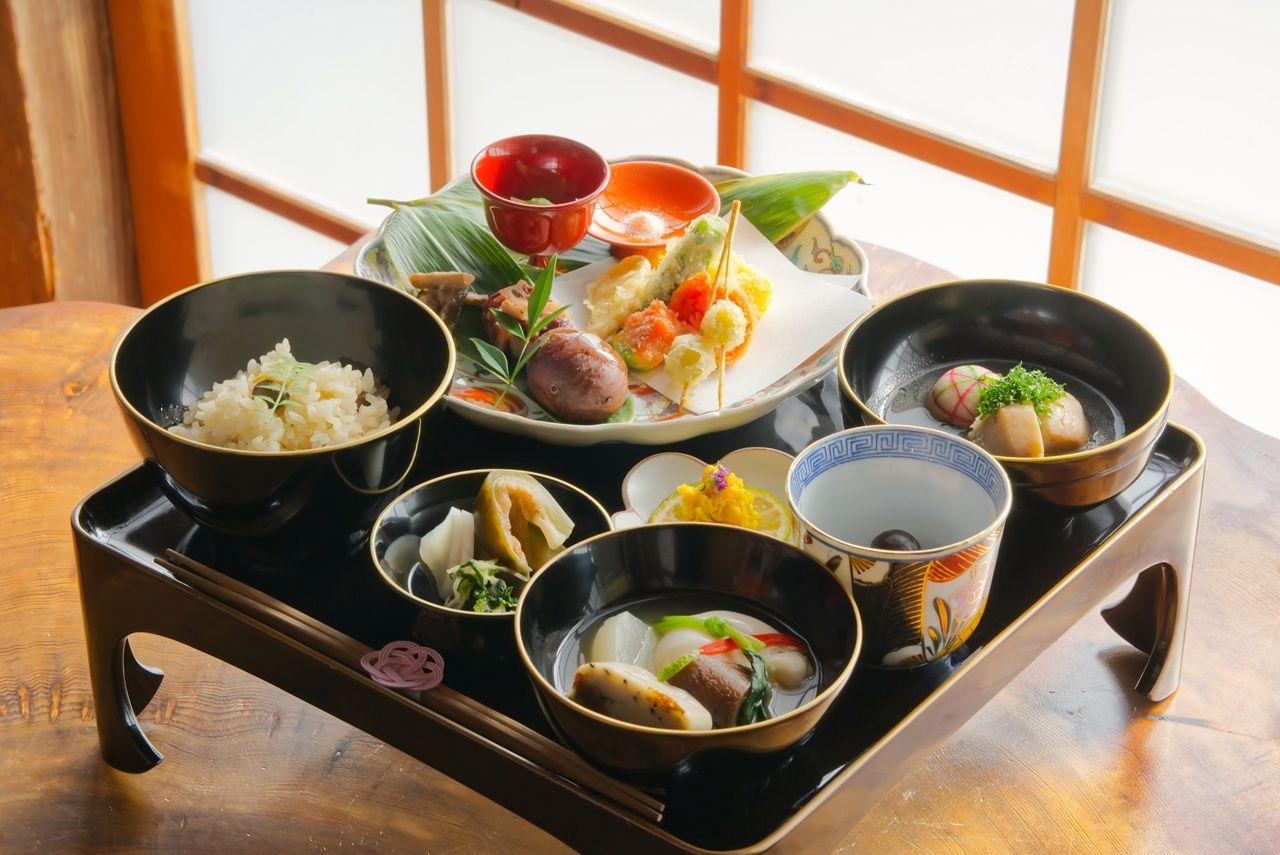
Ordering vegetarian food in Japan is doable, but the rules are not what most newcomers expect: fish stock hides in almost every "vegetable" dish, soy isn't a mandatory allergen, and "vegetarian" on a menu rarely means what it means at home. This guide walks you through exactly how to order, what to say, and how to avoid the surprises that ruin meals.
Last updated: May 26, 2026
What "vegetarian" actually means in Japan
Japan has no government-mandated definition of "vegetarian" or "vegan" as of 2026. Certification is run by private and NPO bodies, the largest being VegeProject Japan, which operates a three-mark program covering vegan products, vegetarian products, and vegan restaurants. The Japan Vegetarian Society also issues a "Vegetarian Sticker" guide that JNTO recognizes as an official resource.
In everyday restaurants, the practical problem is dashi. Dashi is a stock made from katsuobushi (dried bonito flakes) and/or niboshi (dried sardines), and it shows up in miso soup, simmered vegetables, tamagoyaki, tempura dipping sauce, noodle broths, salad dressings, and even rice dishes. A bowl of "vegetable miso soup" is almost never vegetarian by Western standards. Likewise, many tofu and vegetable simmered dishes (nimono) are cooked in dashi.
Other hidden animal ingredients to watch for:
- Gelatin in desserts, panna cotta, mousses, and some marshmallows
- Lard or chicken fat in ramen broth, even "shoyu" or "shio" ramen that looks clear
- Anchovy or shrimp powder in okonomiyaki sauce and savory snacks
- Bonito flakes sprinkled on top of cold tofu, okonomiyaki, takoyaki, and oshitashi
- Oyster sauce or fish sauce in Chinese-influenced dishes
- Egg in ramen noodles, some udon, and most fresh pasta
Soy is on Japan's recommended (not mandatory) allergen list, so manufacturers are not legally required to declare it. Alcoholic beverages are exempt from mandatory allergen labeling entirely. If you avoid soy, dairy, or eggs in addition to meat, you cannot rely on labels alone.
The core phrases to memorize
Write these down or save them on your phone. Speaking them yourself is far more effective than handing over a card, because staff can ask follow-up questions.
- 私はベジタリアンです。肉と魚は食べません。 Watashi wa bejitarian desu. Niku to sakana wa tabemasen. ("I am vegetarian. I don't eat meat or fish.") This is the phrase JNTO and most embassy guides recommend.
- だしもだめです。 Dashi mo dame desu. ("Fish stock is also not okay.") Critical add-on, since staff often consider dashi a seasoning rather than "fish."
- かつおぶしを抜いてください。 Katsuobushi o nuite kudasai. ("Please leave out the bonito flakes.")
- 卵と乳製品は食べられますか? Tamago to nyūseihin wa taberaremasu ka? (Asking yourself if egg and dairy are in something: "Does it contain egg or dairy?")
- ヴィーガンです。動物性のものは食べません。 Vīgan desu. Dōbutsusei no mono wa tabemasen. ("I'm vegan. I don't eat anything from animals.")
- これに肉、魚、だしは入っていますか? Kore ni niku, sakana, dashi wa haitte imasu ka? ("Does this contain meat, fish, or dashi?")
A softer, more polite opener that gets better results in traditional restaurants:
- すみません、お願いがあります。 Sumimasen, onegai ga arimasu. ("Excuse me, I have a request.")
If you're heading to a casual drinking spot, the ordering pattern is a little different. Read up on izakaya etiquette for foreigners before you go, because the small-plate format actually makes vegetarian ordering easier: you can pick edamame, hiyayakko (cold tofu, ask them to hold the bonito), pickles, agedashi tofu (ask if the sauce uses dashi), and grilled vegetables individually.
Using allergy and certification tools
Three resources do most of the heavy lifting:
- JNTO's Vegetarian and Vegan Guide to Japan at japan.travel. The official portal lists certification bodies, regional restaurant tips, and the recommended search platforms.
- Restaurant-search portals. JNTO points travelers to three: Happy Cow, Vegewel, and Japan VegeMap. Vegewel and VegeMap are run inside Japan and tend to be more accurate for smaller cities.
- Food Allergy Communication Sheets. The Consumer Affairs Agency offers a downloadable PDF, and the Tokyo Metropolitan Government publishes a multilingual sheet in Japanese, English, simplified and traditional Chinese, and Korean. You tick the items you can't eat and hand it to staff. These sheets were designed for medical allergies, so staff take them seriously.
Look for these certification marks on menus, windows, and packaged products:
- VegeProject Japan marks (green leaf design): vegan product, vegetarian product, and vegan restaurant. The vegetarian mark requires that frying oil be vegetable oil not previously used to fry meat, fish, shellfish, or insects, and that any sugar used isn't filtered through bone char.
- Japan Vegetarian Society sticker.
- Halal Japan Business Association or Japan Muslim Association marks. JNTO notes that halal-certified restaurants are often safe bets for lacto-vegetarian travelers, and Japan has 2,900+ Indian restaurants nationwide (400+ in Tokyo alone) where vegetarian menus are standard.
What to order (and what to skip) at common restaurants
Restaurant type | Generally safe to order | Usually contains hidden animal products |
|---|---|---|
Ramen shop | Few options; ask for vegan ramen specifically | Standard broth, gyoza, chashu rice, even "vegetable" ramen |
Sushi / kaiten-zushi | Inari, kappa-maki (cucumber), umeshiso-maki, natto-maki, tamago (if egg is OK) | Most rolls touch dashi-cooked rice vinegar; miso soup |
Soba / udon | Zaru soba with no tsuyu, or ask for shōjin tsuyu | Tsuyu dipping sauce (dashi), tempura batter (sometimes egg) |
Izakaya | Edamame, hiyayakko (no bonito), pickles, grilled shishito, yaki-onigiri (no soy-glaze with dashi) | Most dressings, simmered dishes, fried items |
Tempura | Vegetable tempura without the tsuyu dip | Tsuyu (dashi-based), shared frying oil |
Curry house | Vegetable curry at chains that label it vegan (CoCo Ichibanya has a vegetarian curry) | Standard roux contains beef or chicken stock |
Convenience store | Onigiri labeled umeboshi, kombu, or sea-salt; edamame; cut fruit; some salads | Most onigiri (tuna, salmon, mentaiko), most bento, egg sandwiches with mayo |
Indian restaurant | Most dishes; ask about ghee if vegan | Some naan brushed with butter |
A few specifics worth memorizing:
- Plain onigiri flavors that are typically safe: 梅 (umeboshi, pickled plum), 昆布 (kombu, kelp), 焼きおにぎり (yaki-onigiri, but check the soy glaze).
- Inari sushi (sweet tofu pouches) is almost always vegetarian, though strictly vegan diners should ask whether the simmering liquid included dashi.
- Vegan ramen has expanded sharply since 2024. T's Tantan (in Tokyo Station and other locations) and Kyushu Jangara's vegan menu are reliable starting points.
Shōjin ryōri: the temple cuisine option
Shōjin ryōri is Buddhist temple cuisine, codified at Kōyasan over 1,200 years ago by Kōbō-Daishi. It follows a "five tastes, five colors, five methods" framework and excludes meat, fish, onions, and garlic. It is the most reliably vegetarian meal you can eat in Japan, and at a temple lodging (shukubo) on Mount Kōya in Wakayama, it's served as part of an overnight stay.
Key practical facts:
- Kōyasan temple stays (shukubo) including shōjin ryōri dinner and breakfast typically cost 10,000 to 40,000 yen per person per night. Most temples accept cash only.
- Ekoin Temple requires dietary restrictions and food allergies to be notified at least one week in advance.
- Ekoin's "Premium special vegetarian meal plan" is bookable through the official Shukubo Association site at koyasan-shukubo.net and requires reservations at least 7 days in advance.
- Muryōkōin Temple notes that soy sauce and miso (both containing soy and wheat) are main condiments, and that nuts, soba/buckwheat, and eggs may appear in their shōjin ryōri. They state they cannot accommodate special meal requests, so confirm directly if you have additional restrictions.
If temple lodging isn't feasible, several Kyoto and Kamakura restaurants serve shōjin ryōri lunches by reservation. Prices vary widely; check operator listings before booking.
Fees, labels, and what's changing in 2026
Japan's Food Labeling Act designates 28 allergen items: 8 mandatory (shrimp, crab, walnuts, wheat, soba/buckwheat, eggs, milk, peanuts) and 20 recommended. Walnuts became mandatory in March 2023, with the transitional grace period ending March 31, 2025. Macadamia nuts were added to the recommended list and matsutake mushrooms removed via amendments announced March 28, 2024. A Cabinet Office Ordinance amending Food Labelling Standards came into effect March 28, 2025, with provisions for prepared frozen foods taking effect April 1, 2026. Cashew nuts are under consideration for mandatory listing.
What this means for vegetarians in practice:
- All product labels in Japan must be in Japanese, per the Consumer Affairs Agency. Learn the kanji for meat (肉), fish (魚), chicken (鶏), pork (豚), beef (牛), and dashi (出汁 or だし).
- Soy is not mandatory, so processed foods may contain soy-derived ingredients without explicit labeling.
- Public comments on a new draft Cabinet Office Ordinance ran from December 26, 2025 to January 30, 2026, with transitional periods extending until March 31, 2028, so the labeling landscape will keep evolving.
Common pitfalls
- Assuming "vegetable" means vegetarian. Yasai (野菜) dishes are usually cooked in dashi.
- Trusting a yes too quickly. Staff sometimes confirm "vegetarian OK" because they want to be helpful, without checking the kitchen. Always specify dashi separately.
- Skipping the reservation call. For traditional restaurants, kaiseki, and temple stays, calling 24 to 48 hours ahead with your restrictions in Japanese is the difference between a fitted menu and a plate of pickles.
- Forgetting that alcohol is exempt from allergen labels. Some sake, mirin, and flavored liqueurs use animal-derived clarifiers or honey.
- Visiting in-person tourist offices that have closed. The in-person counter at the JNTO Tourist Information Center in Marunouchi, Chiyoda-ku, Tokyo ended on March 31, 2026. Use the JNTO TIC Certification Program network instead, more than 1,500 certified Tourist Information Centers nationwide, with certification valid for 3 years.
FAQs
Is dashi really in everything?
Nearly. If a dish is savory, simmered, or has a sauce, assume dashi unless told otherwise. The exception is restaurants explicitly serving shōjin ryōri or certified vegan menus.
Can I survive on convenience store food?
For a few days, yes. Onigiri with umeboshi or kombu, edamame, plain salads, fruit, and certain breads work. For longer stays, plan one cooked meal per day at a vegetarian-certified restaurant.
Is sushi vegetarian?
Most rolled sushi options like kappa-maki, oshinko-maki, and natto-maki are vegetarian. Strict vegans should ask whether the sushi rice's seasoning contains dashi (some restaurants use it, most don't).
Do I need to tip?
No. Japan does not have a tipping culture, including at vegetarian restaurants. For broader rules about ordering in social settings, the guide on nomikai etiquette in Japan covers what to do at work dinners and group meals.
What if I'm traveling outside Tokyo and Kyoto?
Use Vegewel and Japan VegeMap rather than Happy Cow, which is sparser outside major cities. Indian restaurants are widespread (2,900+ across Japan per JNTO) and almost always have vegetarian sections. Asking at a certified Tourist Information Center, of which there are more than 1,500 nationwide, also works well.
Are restaurant phrases transferable to other countries?
The structure (greeting, restriction, confirmation) is similar elsewhere. If you're traveling onward to Spain or Latin America, this guide on restaurant phrases to order food covers the equivalent vocabulary.
Ordering vegetarian food in Japan gets dramatically easier once you can read the menu and ask follow-up questions yourself. If you're planning a longer stay, try Migaku to pick up Japanese from the shows, manga, and YouTube channels you already watch.