Izakaya Etiquette for Foreigners: Ordering, Tipping, Manners
Last updated: May 25, 2026
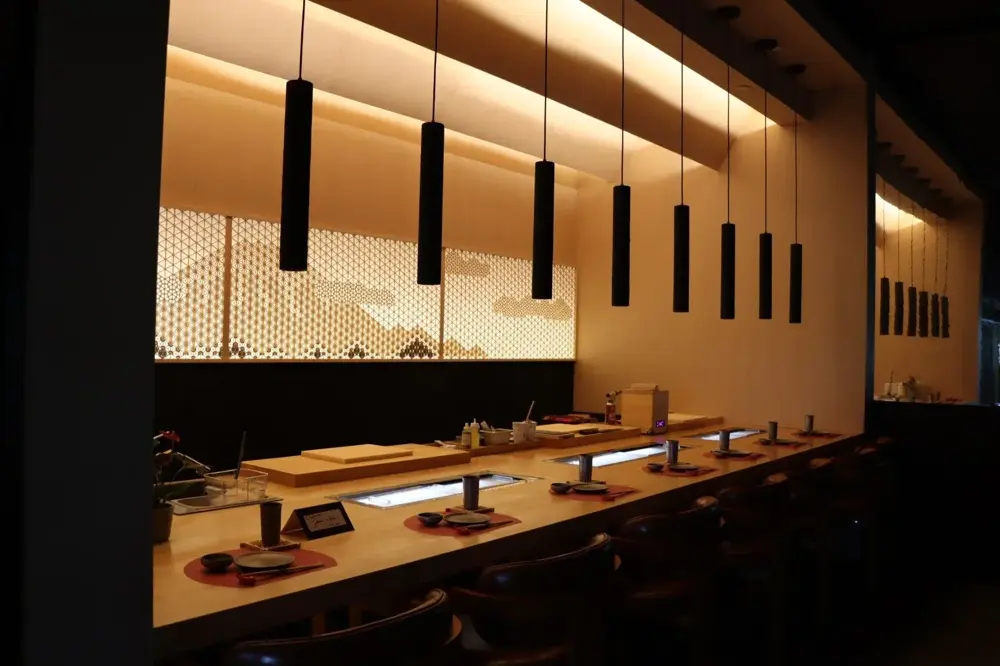
An izakaya is a Japanese pub where small dishes are shared and drinks flow for hours, and the etiquette is looser than at a kaiseki restaurant but stricter than most Western bars. If you know how to handle the otoshi charge, order in rounds, pour for others, and pay at the register without tipping, you will fit in fine.
Last updated: May 25, 2026
What an izakaya actually is
Izakaya (居酒屋) translates roughly as "stay-drink-place." These are sit-down establishments where the social contract is: you drink, you keep ordering food, you stay a while, and you split the bill at the end. They range from chain operations like Torikizoku and Watami to standing bars (立ち飲み, tachinomi), neighborhood spots run by a single owner, and high-end versions in Ginza.
Understanding the format matters because etiquette differs from a regular restaurant in three concrete ways:
- You will almost always be charged a seat fee (otoshi) whether you ordered the small dish that triggers it or not.
- Drinks come first, food follows, and ordering is done in waves rather than all at once.
- Tipping is not done. Ever. At any price point.
If you are joining Japanese coworkers rather than going on your own, the rules tighten considerably. A separate guide on nomikai etiquette and group drinking culture covers the work-drinking situation in detail.
Getting in: age, ID, and entry rules
The legal drinking and smoking age in Japan is 20. This did not change when the general age of majority dropped to 18 in April 2022. Staff at an izakaya can legally refuse service if they suspect a customer is underage, and businesses caught serving anyone under 20 face fines of up to ¥500,000 per violation and risk losing their license.
What to carry:
- Tourists: your passport. A driver's license from your home country is not always accepted as proof of age.
- Residents: your Residence Card (在留カード). A Japanese driver's license also works.
Some izakaya post a "no foreigners" sign or a "members only" sign at the door. This is not illegal under current Japanese law and is more common in Shinjuku's Kabukichō and parts of Roppongi. Walk on. Plenty of other places will be happy to seat you, including most chain izakaya which actively cater to tourists with English or photo menus.
At the entrance, you will usually be asked 何名様ですか? (nanmei-sama desu ka?, "how many people?"). Hold up fingers. You may also be asked whether you want smoking (喫煙, kitsuen) or non-smoking (禁煙, kin'en) seating.
The otoshi charge, explained
The single biggest source of foreigner complaints about izakaya is the otoshi (お通し), sometimes called tsukidashi in western Japan. Shortly after you sit down, a small dish appears that you did not order: maybe pickled vegetables, a bit of simmered fish, edamame, or a small salad. This is a seat charge dressed up as food.
Key facts as of 2026:
- Otoshi typically runs ¥300 to ¥800 per person per visit, with most places in the ¥300 to ¥600 range. Upmarket bars can charge up to around ¥1,000.
- It is charged per person, not per table.
- A widely reported Tokyo incident saw six tourists billed ¥3,600 in otoshi (¥300 per person, doubled because they ordered a second round of drinks after staff considered the first session closed). Otoshi can in some places be billed per order cycle, not strictly per visit.
- In theory, you can refuse otoshi only at the moment it is brought to the table, before you accept it. After it sits on your table or appears on the bill, you owe it. In practice, refusing is socially awkward and many staff will not understand the request.
The pragmatic move: accept the otoshi, eat it or don't, and treat the ¥300 to ¥800 as a cover charge for the privilege of sitting down and being served. If you object to cover charges on principle, look for chains like Torikizoku, Kin no Kura, or some Watami branches that advertise お通しなし (otoshi nashi, "no otoshi").
How to order: drinks first, then food in rounds
The rhythm at an izakaya is consistent across most of Japan.
Step 1: Order drinks immediately. When the server comes by with menus and an oshibori (hot towel), the expected first words are a drink order. The default opener is とりあえずビール (toriaezu bīru, "beer for now"). Even if you are not drinking alcohol, order something: oolong tea (ウーロン茶, ūron-cha), a soft drink, or a non-alcoholic highball.
Step 2: Order food in waves of three to five small dishes. Do not try to order an entire meal at once. Order a few items, see how fast they come, drink, then order more. Most izakaya food is meant to be shared, so dishes arrive in the order the kitchen finishes them, not in courses.
Step 3: Use the call button or call the server. Many izakaya have a button at the table (look for 呼び出し, yobidashi). If not, raise a hand and say すみません! (sumimasen!, "excuse me!"). It is normal and not rude to call loudly.
Typical prices in central Tokyo as of 2026:
Item | Standing bar | Mid-range izakaya | Upmarket (Ginza, Roppongi) |
|---|---|---|---|
Draft beer (生ビール) | ¥400–¥600 | ¥500–¥800 | ¥900+ |
Chu-hi / highball | ¥400–¥600 | ¥500–¥800 | ¥900+ |
Cocktail | ¥600–¥900 | ¥800–¥1,500 | ¥2,000+ |
Small food plate | ¥300–¥600 | ¥500–¥900 | ¥1,200+ |
A typical night with three to four drinks, two or three small plates, and otoshi runs ¥4,000 to ¥8,000 per person in central Tokyo. Food CPI in Japan was up 7.2% year-on-year as of June 2025, so menus have crept up noticeably compared to figures from a few years ago.
Nomihoudai (all-you-can-drink)
Many izakaya offer 飲み放題 (nomihōdai), a flat-rate drink plan, usually 90 or 120 minutes, often bundled with a food set (コース, kōsu). Read the fine print:
- Last order is usually 15 to 30 minutes before the end of the slot.
- Premium drinks (single-malt whisky, certain sakes) are often excluded.
- You typically must order one drink at a time and finish it before ordering the next.
- Some plans require everyone at the table to join.
Pouring, toasting, and table manners
Izakaya are casual, but a few habits separate the visitor who looks comfortable from one who looks lost.
Pour for others, not yourself. If you are with companions, fill their glass when it gets low, and they will fill yours. Hold the bottle with both hands when pouring for someone senior. The receiver should lift their glass slightly to meet the bottle.
Wait for the toast. Do not drink until someone says 乾杯! (kanpai!, "cheers!"). Tap glasses, then drink. With a senior person, hold your glass slightly lower than theirs when clinking.
Chopstick rules. Do not stick chopsticks upright in rice (funeral imagery), do not pass food chopstick-to-chopstick (also funeral imagery), and do not point or wave them. To take food from a shared plate, flip your chopsticks and use the clean ends, or use the serving chopsticks if provided.
Use the oshibori for your hands only. The hot towel is for hands, not face or neck, despite what you may see some Japanese men do (it is considered slightly uncouth even when locals do it).
Slurp noodles, do not blow your nose. Slurping ramen or udon is fine and even expected. Blowing your nose at the table is not. Step away to the bathroom.
For a broader primer that crosses cultures, see this overview of table manners and dining etiquette basics, which contrasts useful baseline manners.
Smoking rules inside izakaya
Japan's revised Health Promotion Act took full effect on April 1, 2020 and bans indoor smoking in public facilities as a general rule. But izakaya are the single biggest exception. Small pre-existing eateries can still allow indoor smoking provided no one under 20 is admitted or exposed, and many izakaya qualify.
University of Tsukuba research published in 2026 found that as of December 2022, only 32.8% of izakaya in Japan were smoke-free, compared with 68.3% of regular restaurants and 25.0% of bars. In Tokyo, the Metropolitan Ordinance to Prevent Exposure to Second-Hand Smoke (also effective April 1, 2020) is stricter than national law and carries administrative fines, so Tokyo izakaya are more likely to be non-smoking or to have a separated smoking room.
If smoke bothers you, ask 禁煙席ありますか? (kin'en-seki arimasu ka?, "do you have non-smoking seats?") before sitting down. Many izakaya have a sign at the entrance showing whether the venue is 全席禁煙 (fully non-smoking), 全席喫煙可 (smoking allowed), or 分煙 (separated).
The bill, tax, and tipping
At the end of the night, ask for the bill with お会計お願いします (o-kaikei onegai shimasu) or by making a small X gesture with your index fingers.
How payment works:
- Most izakaya have you pay at a register near the door, not at the table. Take your bill slip with you to the counter.
- All prices in Japan have been required to be displayed tax-inclusive since April 1, 2021. The menu price is the final price.
- Eat-in food and all alcoholic drinks are taxed at 10% consumption tax. The 8% reduced rate only applies to non-alcoholic food and drink taken out, not to anything consumed at the izakaya.
- Cash is still common at smaller izakaya. Larger chains take credit cards and IC cards (Suica, PASMO).
- Splitting the bill (割り勘, warikan) is normal. Many registers can split evenly across the group. Itemized splitting is uncommon at casual venues.
Tipping is not done. Do not leave coins on the table, do not round up, do not hand cash to the server. It will cause confusion and the staff may chase you down the street to return it. This is the firm rule across Japan, as covered in this overview of tipping customs in Japan and Asia. The closest thing to a tip is a sincere ごちそうさまでした (gochisōsama deshita, "thank you for the meal") on your way out.
Some upmarket bars do charge a service fee of 10% to 15% that appears automatically on the bill. That is not a tip in the Western sense and you do not add to it.
After the izakaya: street drinking rules
Japan has no national open-container law, and you can in principle drink in public. Local ordinances, however, have tightened.
- Shibuya Ward (Tokyo): Since October 1, 2024, drinking on streets around Shibuya Station, Center-gai, Miyashita Park, and the Shibuya Scramble is prohibited year-round, daily from 6 p.m. to 5 a.m. There are no fines, but patrols will warn you and ask you to stop or move on.
- Shinjuku Ward (Tokyo): A parallel ordinance bans street drinking around Kabukichō from 5 p.m. on October 31 to 5 a.m. on November 1 (Halloween).
- Drunk cycling: Penalties increased significantly in 2024 and now reach up to 5 years' imprisonment or a fine of up to ¥1,000,000. If you rented a bicycle, do not ride after drinking.
Train stations, parks during hanami, and rooftops at apartments are still fine for an after-izakaya drink in most of the country.
Common pitfalls foreigners hit
- Arguing about the otoshi at the register. Staff will not waive it. If you have an issue, raise it the moment the dish arrives, not at the end.
- Ordering only one drink and staying three hours. Izakaya rely on turnover. Order something every 30 to 45 minutes or you will be politely pushed out.
- Trying to pay at the table. Most izakaya require payment at the register near the exit. Bring the printed bill slip with you.
- Splitting itemized bills. Asking the staff to calculate exactly what each person ate is considered tedious. Use a calculator among yourselves or split evenly.
- Assuming credit cards work. At small neighborhood izakaya, cash only is still common. Carry at least ¥5,000 to ¥10,000 in cash per person.
- Wearing strong cologne or perfume. Counter seats are close. Heavy fragrance is noticed and disliked.
- Speaking loudly in English. Volume rises naturally as the night goes on, but starting loud reads as disrespectful, especially in small venues.
FAQ
Do I need a reservation?
For groups of four or more, yes, especially on Friday and Saturday nights. For two people, you can usually walk in before 7 p.m. or after 9 p.m. Many izakaya now take reservations through TableCheck or their own websites.
Can I go to an izakaya alone?
Yes. Counter seats are designed for solo customers. Standing bars (tachinomi) are particularly solo-friendly.
What if I do not drink alcohol?
Order soft drinks, oolong tea, or non-alcoholic beer and chu-hi. Most izakaya have a full non-alcoholic section. You will still be charged otoshi.
Can I bring children?
Izakaya that qualify for the smoking exemption legally cannot admit anyone under 20. Family-friendly chains like Watami and some Yayoiken locations do welcome children during early hours. Check the sign at the door.
Is the departure tax going up?
Yes. Japan's International Tourist Tax rises from ¥1,000 to ¥3,000 per departing passenger on July 1, 2026. Tickets issued on or before June 30, 2026 retain the ¥1,000 rate. Not directly an izakaya issue, but worth knowing when budgeting a trip.
Will tax-free shopping help with izakaya bills?
No. Tax-free applies to take-out goods carried home, not to eat-in food and drink. From November 1, 2026, the tax-free system shifts to a refund-based model where tourists pay full tax at the register and claim a refund at customs on departure.
If you are moving to Japan or visiting often, picking up conversational Japanese from real shows, manga, and YouTube makes nights out far smoother. Migaku is built for learning from native content like that, so try Migaku if that fits how you want to learn.