# Cantonese Months: Learn All 12 Months of the Year in Cantonese Fast
> Learn the months in Cantonese with this complete guide. Includes characters, Jyutping, pronunciation tips, and example sentences for all 12 months.
**URL:** https://migaku.com/blog/chinese/cantonese-months
**Last Updated:** 2026-03-20
**Tags:** vocabulary, phrases
---
The months in Cantonese are surprisingly straightforward compared to a lot of other vocabulary when you [learn Cantonese](https://migaku.com/learn-cantonese). The system uses a simple number plus the word for "month," which makes memorization way easier than you'd expect. If you're planning to travel to Hong Kong, communicate with Cantonese speakers, or just expand your language skills, getting these down is a solid first step. Plus, once you understand how the pattern works, you'll be able to recall any month without much effort.
----
## How the Cantonese month system works
Here's the thing about months in Cantonese: they follow a logical numbering pattern that's actually pretty refreshing if you've struggled with irregular month names in other languages.
> 💡Each month is simply **the number (1-12) followed by 月 (jyut6)**, which means "month."
So January is literally "first month," February is "second month," and so on. The word 月 appears after every number, making the pattern super consistent. Once you learn your [Cantonese numbers](https://migaku.com/blog/language-fun/cantonese-numbers) from one to twelve, you've basically learned the months too.
This system comes from Chinese calendar traditions that have been around for thousands of years. Both Mandarin and Cantonese use this same numbering approach, though the pronunciation differs between the two languages. The simplicity reflects a practical approach to timekeeping that prioritizes clarity over poetic month names.
----
## Complete list of months in Cantonese
Let me break down all twelve months with their Chinese characters, Jyutping romanization, and literal meanings. This is the core vocabulary you'll need.
| Cantonese | Jyutping | English | Literal Meaning |
| - | - | - | - |
| 一月 | jat1 jyut6 | January | First month (一 = one) |
| 二月 | ji6 jyut6 | February | Second month (二 = two) |
| 三月 | saam1 jyut6 | March | Third month (三 = three) |
| 四月 | sei3 jyut6 | April | Fourth month (四 = four) |
| 五月 | ng5 jyut6 | May | Fifth month (五 = five) |
| 六月 | luk6 jyut6 | June | Sixth month (六 = six) |
| 七月 | cat1 jyut6 | July | Seventh month (七 = seven) |
| 八月 | baat3 jyut6 | August | Eighth month (八 = eight) |
| 九月 | gau2 jyut6 | September | Ninth month (九 = nine) |
| 十月 | sap6 jyut6 | October | Tenth month (十 = ten) |
| 十一月 | sap6 jat1 jyut6 | November | Eleventh month (十一 = eleven) |
| 十二月 | sap6 ji6 jyut6 | December | Twelfth month (十二 = twelve) |
----
## Common phrases using months
Knowing the months is useful, but you'll want to learn relevant expressions as well. Here are some practical examples you'll hear in everyday conversation.
| Cantonese | Jyutping | English | Literal Meaning |
| - | - | - | - |
| 今個月 | gam1 go3 jyut6 | This month | This (classifier) month |
| 下個月 | haa6 go3 jyut6 | Next month | Next (classifier) month |
| 上個月 | soeng6 go3 jyut6 | Last month | Previous (classifier) month |
| 幾月? | gei2 jyut6? | Which month? | Which month? |
----
## Days and dates in Cantonese
Once you've got months down, learning how to express complete dates makes sense. The word for day is 日 (jat6), and it follows the same number pattern as months. Days are expressed as number plus 日. So the 1st is 一日 (jat1 jat6), the 2nd is 二日 (ji6 jat6), and so on up to 三十一日 (saam1 sap6 jat1 jat6) for the 31st.
> 💡When you want to say a full date in Cantonese, the order goes: **year, month, day.**
This is the opposite of how Americans typically write dates but similar to the international standard format.
For example, March 15, 2026 would be: 二零二六年三月十五日 (ji6 ling4 ji6 luk6 nin4 saam1 jyut6 sap6 ng5 jat6)
----
## Cultural context for Cantonese months
The solar calendar months I've covered are what you'll use for everyday life in Hong Kong and other Cantonese-speaking regions. Banks, schools, businesses, and official documents all use this system based on the Gregorian calendar.
However, traditional Chinese festivals follow the lunar calendar, which has different month lengths and doesn't align with the solar calendar. The Lunar New Year, for instance, falls on different dates each year when you look at the solar calendar.
When people talk about lunar months, they still use the same numbering system (number plus 月), but they might specify 農曆 (nung4 lik6), meaning "agricultural calendar" or lunar calendar. So 農曆一月 would be the first lunar month.
For practical language learning purposes, focus on the solar calendar months first. These are what you'll encounter in daily situations like making appointments, booking travel, or discussing schedules.
----
## Learning strategies for month vocabulary
Getting these months to stick in your memory doesn't require fancy techniques. The systematic pattern does most of the work for you.
1. Start by making sure you're solid on Cantonese numbers one through twelve. If you can count confidently, adding 月 to each number becomes automatic. Practice counting out loud: jat1, ji6, saam1, sei3, ng5, luk6, cat1, baat3, gau2, sap6, sap6 jat1, sap6 ji6.
2. Then practice the full months in order several times. The repetition helps, and because there's a logical sequence, your brain picks up the pattern quickly.
3. Try creating sentences about real events in your life. When's your birthday? When are you planning a trip? When did something memorable happen? Putting the months into personal context makes them more memorable than just drilling lists.
4. If you're using [spaced repetition software](https://migaku.com/blog/chinese/best-chinese-anki-decks), add example sentences rather than just isolated month names. Seeing 三月 in the context of "I'm traveling in March" gives you more to work with than the word alone.
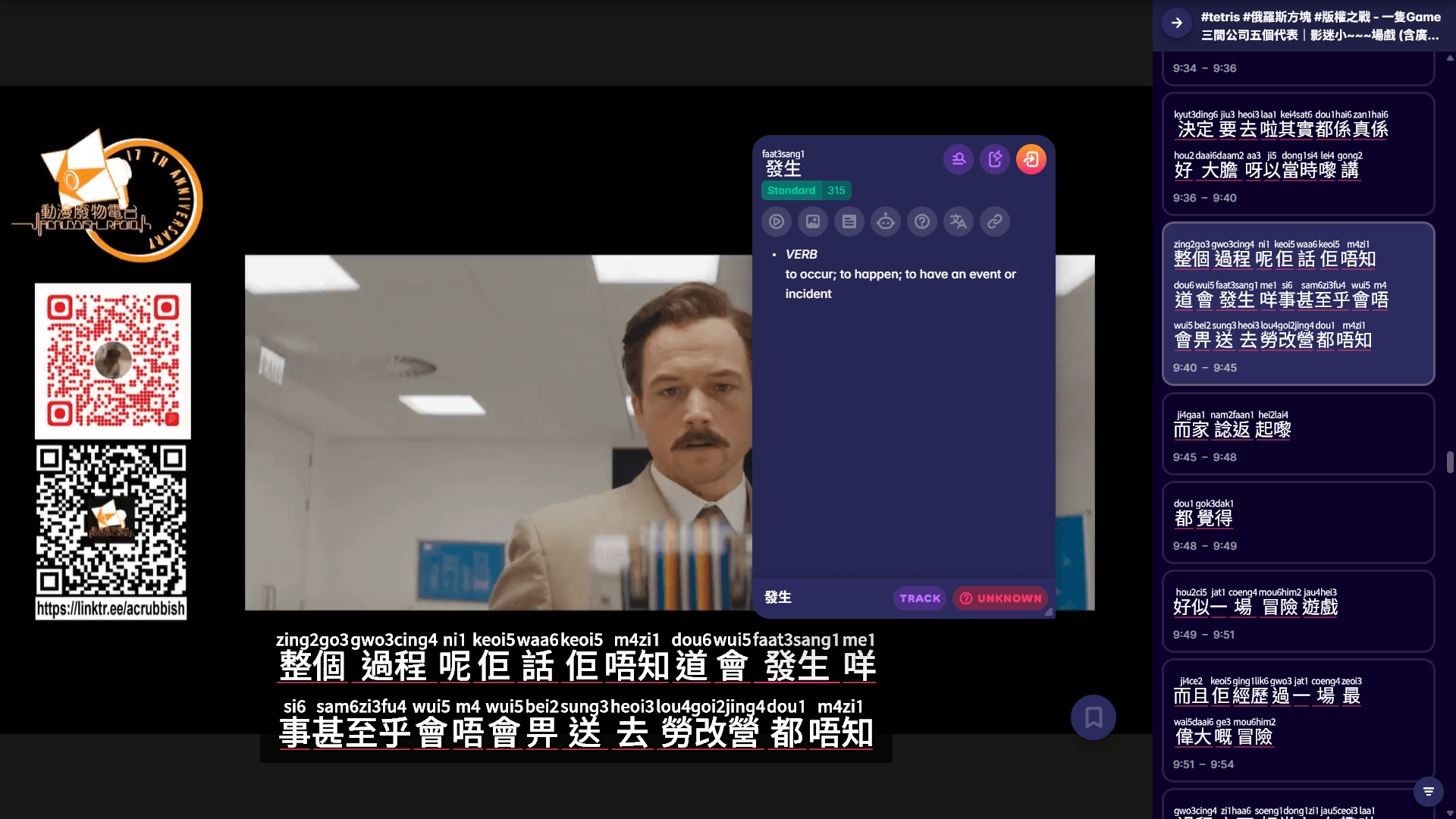
If you're serious about learning Cantonese beyond just basic vocabulary, immersion makes a huge difference. Migaku's browser extension and app let you look up Cantonese words instantly while [watching Hong Kong dramas](https://migaku.com/blog/chinese/best-cantonese-shows-for-language-learners) or reading articles, which beats drilling flashcards any day. There's a 10-day free trial if you want to see how much faster you pick things up with real content.
 ----
## Can videos help you learn Cantonese months of the year?
Finding good Cantonese learning materials can be trickier than resources for Mandarin, but there are solid options out there. YouTube has quite a few Cantonese teachers who post free lessons covering basic vocabulary like months, days, and numbers. Watching videos gives you the advantage of hearing proper pronunciation and tones from native speakers. Consuming Cantonese dramas and movies extensively also exposes you to more contexts and situations.
> If you consume media in Cantonese, and you understand at least some of the messages and sentences within that media, you will make progress. _Period_.
Immersion helps reinforce what you're learning.🎧📚
----
## Can videos help you learn Cantonese months of the year?
Finding good Cantonese learning materials can be trickier than resources for Mandarin, but there are solid options out there. YouTube has quite a few Cantonese teachers who post free lessons covering basic vocabulary like months, days, and numbers. Watching videos gives you the advantage of hearing proper pronunciation and tones from native speakers. Consuming Cantonese dramas and movies extensively also exposes you to more contexts and situations.
> If you consume media in Cantonese, and you understand at least some of the messages and sentences within that media, you will make progress. _Period_.
Immersion helps reinforce what you're learning.🎧📚