# Cantonese Weather Vocabulary: Words and Phrases for Your Daily Life in Hong Kong
> Master rain, temperature, typhoons, and daily phrases for real conversations. Learn practical Cantonese weather vocabulary with audio and examples.
**URL:** https://migaku.com/blog/chinese/cantonese-weather-vocabulary
**Last Updated:** 2026-03-21
**Tags:** vocabulary, phrases
---
Weather talk is one of those universal conversation starters that works in pretty much any language, and Cantonese is no exception. Whether you're planning a trip to Hong Kong, [studying Cantonese for fun](https://migaku.com/learn-cantonese), or just want to chat with native speakers about the day's forecast, knowing how to discuss the weather makes your conversations feel way more natural. Plus, Hong Kong's weather can get pretty intense with typhoon season and humidity levels, so you'll use this vocabulary all the time.
----
## Basic weather conditions in Cantonese
Let's start with the fundamentals. These are the weather words you'll hear and use most often.
### Sunny and clear weather
When the weather's nice, you'll say 天晴 (tin1 cing4), which means "clear sky" or "sunny." The word 晴 (cing4) specifically refers to clear, sunny conditions.
Another common word is 陽光 (joeng4 gwong1), which literally means "sunlight" or "sunshine."
If you want to say "It's sunny today," you'd say: 今日天晴 (gam1 jat6 tin1 cing4). Pretty straightforward.
The sun itself is 太陽 (taai3 joeng4). You might hear people say 出太陽 (ceot1 taai3 joeng4), which means "the sun is out."
### Rain and wet conditions
Rain is 雨 (jyu5), one of the most essential weather words you'll learn. When it's raining, you say 落雨 (lok6 jyu5), which literally means "rain is falling." This is way more common than just saying 雨 by itself.
For "It's raining," you'd say: 落緊雨 (lok6 gan2 jyu5). The 緊 (gan2) indicates the action is currently happening.
Heavy rain is 大雨 (daai6 jyu5), while light rain is 細雨 (sai3 jyu5). If there's a rainstorm, that's 暴雨 (bou6 jyu5).
Water in general is 水 (seoi2), and you'll see this character pop up in various weather-related terms. For example, rainwater is 雨水 (jyu5 seoi2).
### Cloudy and overcast
Cloudy weather is 多雲 (do1 wan4), literally "many clouds." If it's completely overcast, you might say 陰天 (jam1 tin1), which means "gloomy weather" or "overcast day."
Clouds themselves are 雲 (wan4). When the sky is getting cloudy, you can say 天陰 (tin1 jam1).
### Wind conditions
Wind is 風 (fung1). When it's windy, you say 大風 (daai6 fung1), which means "big wind" or "strong wind." Light wind would be 微風 (mei4 fung1).
A breeze is 涼風 (loeng4 fung1), literally "cool wind." This is what you hope for on a hot summer day in Hong Kong.
----
## Common words for temperature and seasons
### Talking about temperature
| Cantonese | Jyutping | English |
| - | - | - |
| 溫度 / 氣溫 | wan1 dou6 / hei3 wan1 | Temperature |
| 熱 | jit6 | Hot weather |
| 好熱 | hou2 jit6 | It's hot |
| 凍 | dung3 | Cold |
| 好凍 | hou2 dung3 | It's cold |
| 暖 | nyun5 | Warm |
| 涼 | loeng4 | Cool |
When you want to ask "What is the temperature today?" you'd say: 今日幾多度? (gam1 jat6 gei2 do1 dou6?)
### Seasons vocabulary
| Cantonese | Jyutping | English |
| - | - | - |
| 春天 | ceon1 tin1 | Spring |
| 夏天 | haa6 tin1 | Summer |
| 秋天 | cau1 tin1 | Fall |
| 冬天 | dung1 tin1 | Winter |
The word 天 (tin1) means "sky" or "heaven" but also gets used in these season names.
Hong Kong basically has two main seasons: hot and humid summer, and slightly less hot winter. But knowing all four season names helps when you're talking about weather patterns or planning trips.
----
## Advanced weather vocabulary
### Typhoons and severe weather
This is crucial vocabulary if you're spending any time in Hong Kong during typhoon season, which runs from May to November. A typhoon is 颱風 (toi4 fung1).
Hong Kong has a specific typhoon signal system that everyone pays attention to. The signals go from T1 to T10, with T8 being when most businesses close and T10 being a direct hit. You'll hear people say things like 掛八號風球 (gwaa3 baat3 hou6 fung1 kau4), meaning "hoisting the number 8 typhoon signal."
| Cantonese | Jyutping | English |
| - | - | - |
| 風暴 | fung1 bou6 | Storm |
| 雷 | leoi4 | Thunder |
| 閃電 | sim2 din6 | Lightning |
| 霧 | mou6 | Fog |
| 有霧 | jau5 mou6 | Foggy |
| 大霧 | daai6 mou6 | Heavy fog |
| 雪 | syut3 | Snow |
| 落雪 | lok6 syut3 | It's snowing |
| 冰雹 | bing1 baau6 | Hail |
| 雨夾雪 | jyu5 gaap3 syut3 | Sleet (literally "rain mixed with snow") |
### Humidity and other conditions
Humidity is 濕度 (sap1 dou6). Hong Kong's humidity can reach 90% or higher in summer, making it feel way hotter than the actual temperature suggests. When it's humid, people say 好濕 (hou2 sap1) or 好侷促 (hou2 guk1 cuk1), the latter meaning "stuffy" or "oppressive."
----
## Useful weather phrases and sentences
### Asking about the weather
- 天氣點呀?
*How's the weather?*
- 天氣點樣?
*How's the weather?*
- 今日天氣點?
*What's the weather like today?*
- 聽日會唔會落雨?
*Will it rain tomorrow?*
### Describing weather conditions
- 今日天氣好好。
*The weather is nice today.* (The double 好 emphasizes how good it is)
- 今日真係好熱。
*It's really hot today.* (真係 means "really" or "truly")
- 好似要落雨。
*It looks like it's going to rain.*
- 颱風嚟緊。
*The typhoon is coming.*
### Talking about forecasts
- 睇天氣預報。
*Check the weather forecast.* (預報 means "forecast")
- 根據天氣預報……
*According to the weather forecast...*
----
## How to learn Cantonese vocabulary for weather
The key is to start using these words in context rather than just memorizing lists.
1. Try describing the weather each morning in Cantonese, even if you're just talking to yourself.
2. Check Hong Kong weather forecasts and see how many words you recognize.
3. Start with the basics like 落雨, 天晴, and 好熱. Once those feel natural, add in temperature phrases and more specific conditions. Before long, you'll be discussing humidity levels and typhoon signals like a local.
[The language learning process](https://migaku.com/blog/chinese/chinese-conversation-practice) works best when you're dealing with vocabulary you'll actually use. Weather terms check that box perfectly because you'll encounter them daily, whether through conversations, news, or just looking out the window.
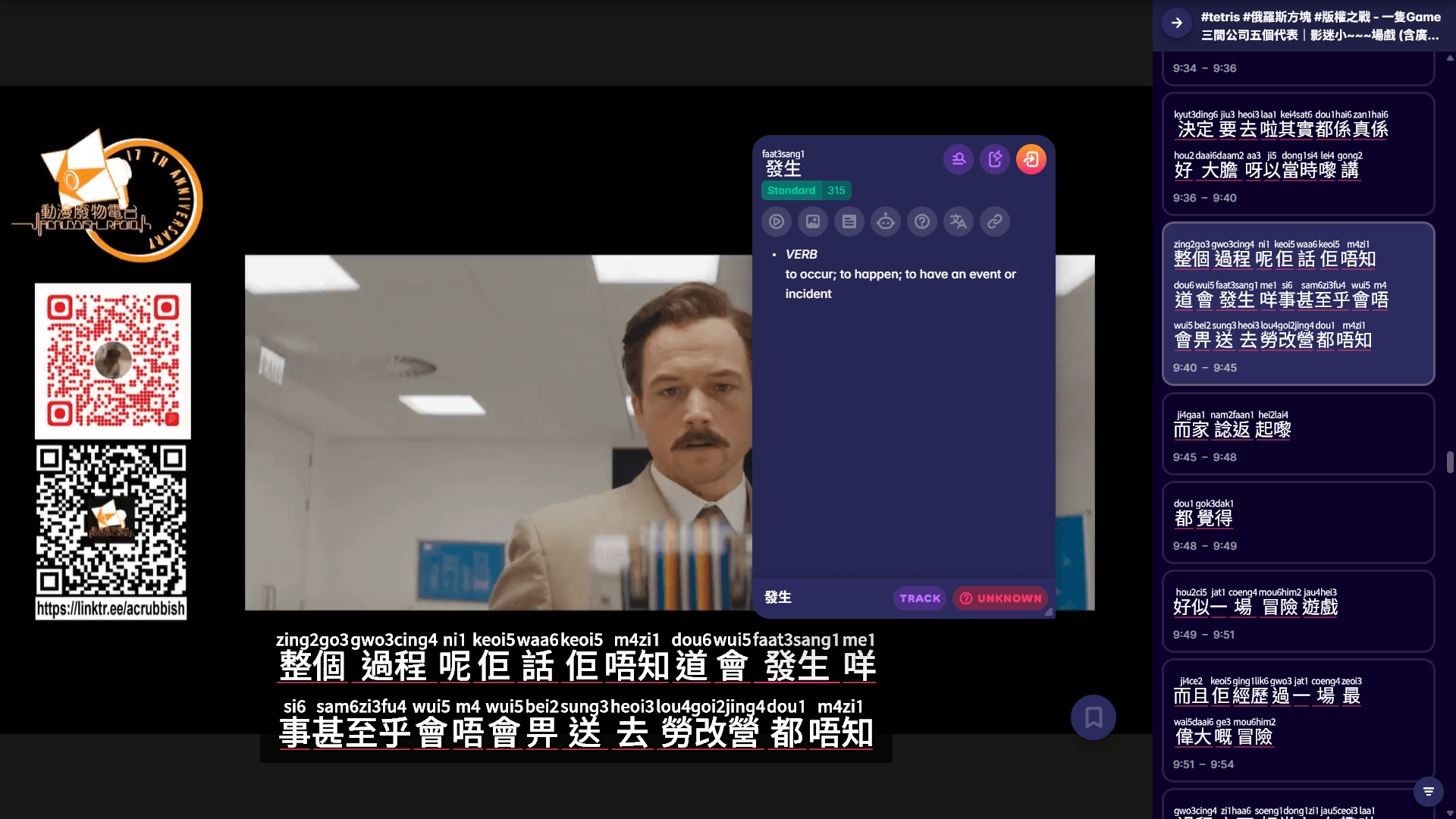
Anyway, if you want to practice this vocabulary with real Cantonese content, Migaku's browser extension and app let you look up words instantly while watching Hong Kong dramas or reading local news sites. Makes learning from actual usage way more practical. There's a 10-day free trial if you want to check it out.
 ----
## FAQs
Absolutely. This vocabulary shows up constantly in everyday life. You'll use it when making plans, explaining why you're late, deciding what to wear, or just making small talk with neighbors or coworkers.
Honestly, it's one of the easier vocabulary sets to learn. The words are practical, you'll encounter them frequently, and many follow logical patterns. The character 雨 shows up in rain-related terms, 風 appears in wind-related words, and temperature words use 度 for degrees. The pronunciation can take some practice, especially tones like the difference between 天 (tin1) and 填 (tin4), but weather vocabulary doesn't have unusually difficult sounds compared to other Cantonese words.
----
## Learning basic words for weather in Cantonese affects daily life in real ways
Typhoons can shut down the entire city, summer humidity makes you want to stay indoors, and sudden rainstorms can catch you off guard if you're not prepared. Learning these words and phrases helps you understand weather forecasts, follow typhoon warnings, have genuine conversations with locals, and understand weather-related traditions and culture when you're watching Cantonese documentaries and movies.
> If you consume media in Cantonese, and you understand at least some of the messages and sentences within that media, you will make progress. _Period_.
Knowing weather words helps you plan your day better!🌤️
----
## FAQs
Absolutely. This vocabulary shows up constantly in everyday life. You'll use it when making plans, explaining why you're late, deciding what to wear, or just making small talk with neighbors or coworkers.
Honestly, it's one of the easier vocabulary sets to learn. The words are practical, you'll encounter them frequently, and many follow logical patterns. The character 雨 shows up in rain-related terms, 風 appears in wind-related words, and temperature words use 度 for degrees. The pronunciation can take some practice, especially tones like the difference between 天 (tin1) and 填 (tin4), but weather vocabulary doesn't have unusually difficult sounds compared to other Cantonese words.
----
## Learning basic words for weather in Cantonese affects daily life in real ways
Typhoons can shut down the entire city, summer humidity makes you want to stay indoors, and sudden rainstorms can catch you off guard if you're not prepared. Learning these words and phrases helps you understand weather forecasts, follow typhoon warnings, have genuine conversations with locals, and understand weather-related traditions and culture when you're watching Cantonese documentaries and movies.
> If you consume media in Cantonese, and you understand at least some of the messages and sentences within that media, you will make progress. _Period_.
Knowing weather words helps you plan your day better!🌤️