# Chinese Character Mnemonics: Use Mnemonics to Create Narratives for Mandarin Hanzi
> Chinese character mnemonics create stories for Chinese characters, making them vivid and meaningful in your memories. Learn the tricks here!
**URL:** https://migaku.com/blog/chinese/chinese-character-mnemonics
**Last Updated:** 2025-12-16
**Tags:** vocabulary, discussion
---
The idea of memorizing thousands of intricate characters and conquering HSK vocabulary feels impossible. What if I told you there's a way to hack your memory and make characters not only stick but tell a story? That's the superpower of mnemonics. The truth is, our brains are wired for narrative, not for abstract strokes. So far as difficult characters are concerned, a well-built mnemonic is the difference between forever guessing and instantly knowing. You'll love the moment a complex character becomes obvious when [learning Chinese](https://migaku.com/learn-chinese)!
----
## Most Chinese characters are built for the mnemonic narrative
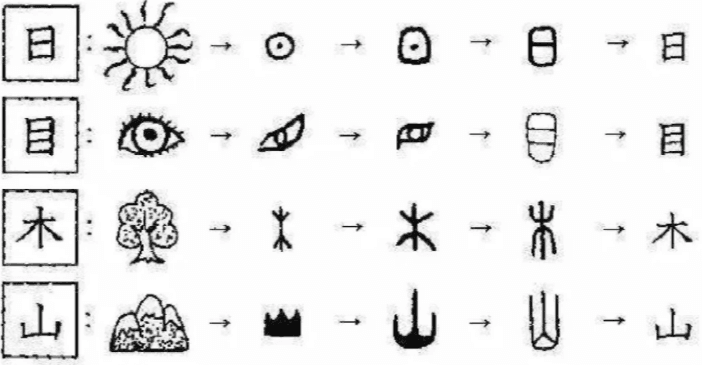
Compared to English spelling, [Chinese characters](https://migaku.com/blog/chinese/chinese-characters) are logograms. The language was invented and evolving throughout history based on the Chinese people's observation of the world. Therefore, some Chinese characters capture the look of the things they try to describe, like (Water), (Moon), (Sun); some characters carry meanings or phonetic components. This is the foundation of why it is plausible to use mnemonic methods to learn Chinese characters!
For example, trying to remember (To take) as 10 strokes is hard. Remembering it as (Hands) lining up together as (To close up) to take something out is easy and unforgettable. You're connecting the new (the character) to things you already know through a vivid scene.
 The upside to mnemonics is engagement and durability, and it works perfectly with [the flashcard system](https://migaku.com/blog/chinese/chinese-character-flashcards). If you're a visual or creative thinker, you'll thrive on this. More or less, you're giving the character meaning and logic before you even try to memorize it. This initial encoding is so much stronger, making the character pop into your mind the next time you need "to take."
----
## How to make use of Chinese mnemonics: Radicals and components
The most powerful technique starts with the [components](https://migaku.com/blog/chinese/chinese-character-components). Don't see a character as a whole — see it as a combination of meaningful parts, and create a story that links them.
As explained before, most Chinese characters feature radicals and components. Some of them are the combination of meaningful radicals and phonetic components; some of them are two meaningful components combined; and some are meaningful radicals with structural components.
> But the key point is, make your own story, even the story doesn't make sense to other people!
Let's take (To fear). It's made of (Heart) and (White). Your mnemonic? "My heart turns white with fear."
For (To rest), it's (Person) + (Tree). "A person leans against a tree to rest."
Or, if you encounter a simple character like (Moon). It does not have any radicals or components. Just make up a story for yourself. The character looks curved like the crescent moon, and the two horizontal strokes in the middle are your ladders to reach the moon!
Own the story. This method turns components from abstract shapes into active characters in your mental play.
The upside to mnemonics is engagement and durability, and it works perfectly with [the flashcard system](https://migaku.com/blog/chinese/chinese-character-flashcards). If you're a visual or creative thinker, you'll thrive on this. More or less, you're giving the character meaning and logic before you even try to memorize it. This initial encoding is so much stronger, making the character pop into your mind the next time you need "to take."
----
## How to make use of Chinese mnemonics: Radicals and components
The most powerful technique starts with the [components](https://migaku.com/blog/chinese/chinese-character-components). Don't see a character as a whole — see it as a combination of meaningful parts, and create a story that links them.
As explained before, most Chinese characters feature radicals and components. Some of them are the combination of meaningful radicals and phonetic components; some of them are two meaningful components combined; and some are meaningful radicals with structural components.
> But the key point is, make your own story, even the story doesn't make sense to other people!
Let's take (To fear). It's made of (Heart) and (White). Your mnemonic? "My heart turns white with fear."
For (To rest), it's (Person) + (Tree). "A person leans against a tree to rest."
Or, if you encounter a simple character like (Moon). It does not have any radicals or components. Just make up a story for yourself. The character looks curved like the crescent moon, and the two horizontal strokes in the middle are your ladders to reach the moon!
Own the story. This method turns components from abstract shapes into active characters in your mental play.
 ----
## How to memorize complicated hanzi
The good news is, many complicated hanzi, despite having many strokes, are structured from the commonly seen components. For example, (To burn), (To give birth to), (To punish), and so on. You can still dissect them into radicals like and for .
When you graduate to really complex characters, simple component links might not cut it. You need a richer narrative.
Take (To win). Its components are (Death), (Mouth), (Month/Moon), (Shell), and (Ordinary). A winning mnemonic could be: "To win, you must work until death, shouting (mouth) every month for that treasure (shell money), even if you start as ordinary."
----
## You can memorize Chinese characters using this strategy
> Here's my straightforward advice: spend 30 seconds building your story.
When you are spending your daily 10 minutes to learn new vocabulary, and there are new characters you have never seen before:
1. Visualize it intensely.
2. Then, write the character 3-5 times while repeating your story in your mind.
3. Add the character to your flashcards.
4. Finally, and this is crucial, find the character in the wild through extensive reading — in a book, drama, or news. That contextual encounter solidifies it.
Eventually, the mnemonic will fade, and you'll simply know (Love) without recalling the story about a friend () under a roof (冖) with a heart (). The story does its work and quietly retires.
----
## Learn intensively with the mnemonic system, but read extensively
Let's face the truth: memorizing Chinese characters, even with the help of mnemonics, can be dreary and boring. That's where extensive reading can come into play! The ideal situation is, you have just analyzed some new characters, and you see them again not long after in the news, magazines, or dramas. You can use mnemonics to build up your initial understanding of many characters, but media gives you many flash-back moments to remind you of the characters again and again!
One good resource is videos and subtitles. Migaku features both a Chrome extension and an app for subtitles and flashcard generation. It can assist in generating both Chinese and English subtitles when the video does not feature any. As of now, Migaku only supports the videos from YouTube, Netflix, Disney+, and Rakuten VIKI.
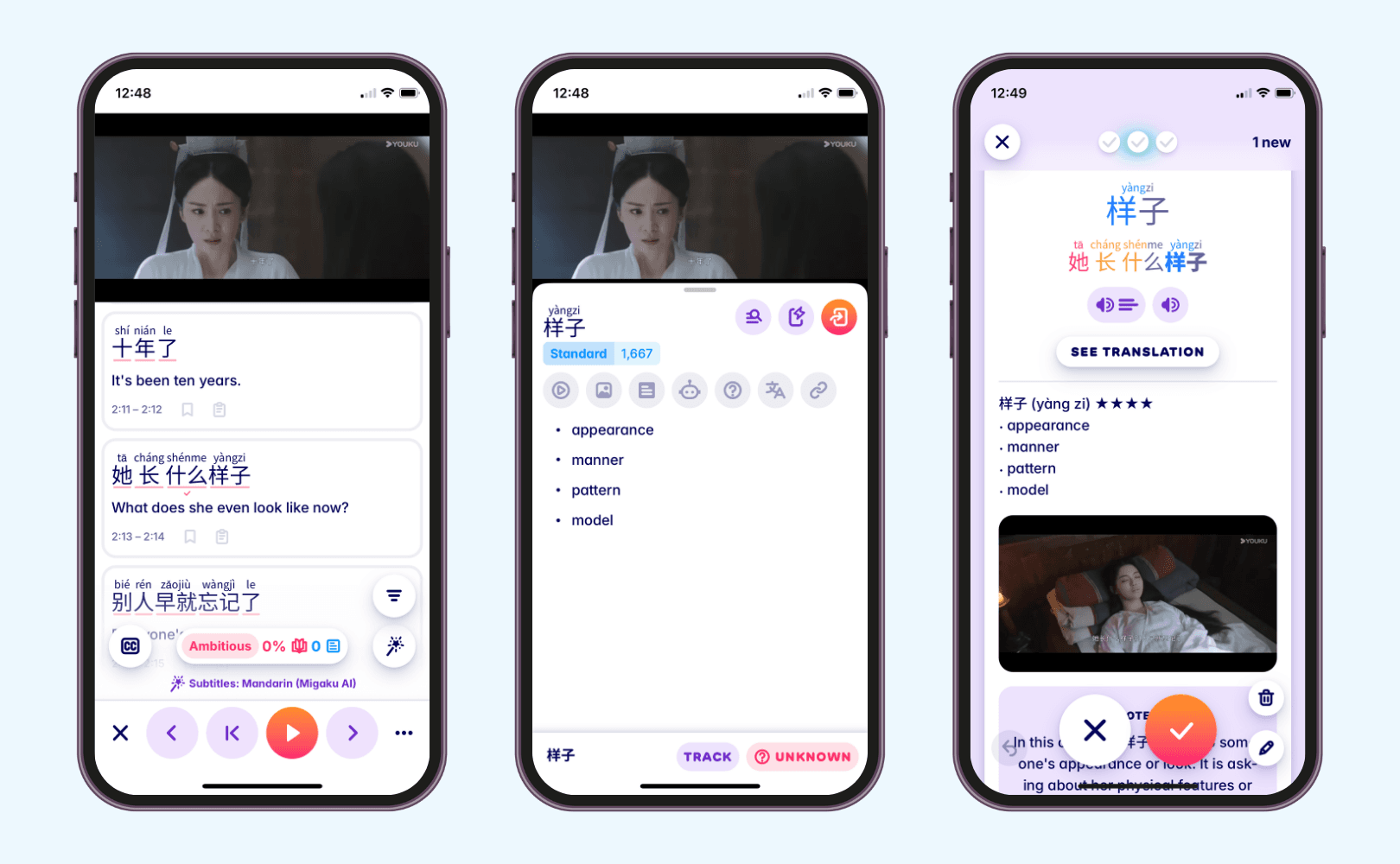
For example, Migaku app can generate subtitles for this cut from *The Double* with pinyin. You can also click the words or sentences to add them to your flashcard collections.
1. Switch on YouTube and search for Chinese videos with the app
2. Click "Watch with Migaku", and the magic wand at the lower right corner to generate Chinese subtitles
3. Click on the new words or sentences in each subtitle and generate flashcards!
----
## How to memorize complicated hanzi
The good news is, many complicated hanzi, despite having many strokes, are structured from the commonly seen components. For example, (To burn), (To give birth to), (To punish), and so on. You can still dissect them into radicals like and for .
When you graduate to really complex characters, simple component links might not cut it. You need a richer narrative.
Take (To win). Its components are (Death), (Mouth), (Month/Moon), (Shell), and (Ordinary). A winning mnemonic could be: "To win, you must work until death, shouting (mouth) every month for that treasure (shell money), even if you start as ordinary."
----
## You can memorize Chinese characters using this strategy
> Here's my straightforward advice: spend 30 seconds building your story.
When you are spending your daily 10 minutes to learn new vocabulary, and there are new characters you have never seen before:
1. Visualize it intensely.
2. Then, write the character 3-5 times while repeating your story in your mind.
3. Add the character to your flashcards.
4. Finally, and this is crucial, find the character in the wild through extensive reading — in a book, drama, or news. That contextual encounter solidifies it.
Eventually, the mnemonic will fade, and you'll simply know (Love) without recalling the story about a friend () under a roof (冖) with a heart (). The story does its work and quietly retires.
----
## Learn intensively with the mnemonic system, but read extensively
Let's face the truth: memorizing Chinese characters, even with the help of mnemonics, can be dreary and boring. That's where extensive reading can come into play! The ideal situation is, you have just analyzed some new characters, and you see them again not long after in the news, magazines, or dramas. You can use mnemonics to build up your initial understanding of many characters, but media gives you many flash-back moments to remind you of the characters again and again!
One good resource is videos and subtitles. Migaku features both a Chrome extension and an app for subtitles and flashcard generation. It can assist in generating both Chinese and English subtitles when the video does not feature any. As of now, Migaku only supports the videos from YouTube, Netflix, Disney+, and Rakuten VIKI.
For example, Migaku app can generate subtitles for this cut from *The Double* with pinyin. You can also click the words or sentences to add them to your flashcard collections.
1. Switch on YouTube and search for Chinese videos with the app
2. Click "Watch with Migaku", and the magic wand at the lower right corner to generate Chinese subtitles
3. Click on the new words or sentences in each subtitle and generate flashcards!
 ----
## FAQs
Use component mnemonics. Don't memorize strokes — break the character into meaningful parts and invent a vivid, silly story linking them. (To piece together, to spell) is a perfect example. Break it down: 扌(Hand) + 并(To combine). Create a vivid mnemonic: "Use your hand to combine the pieces — you piece it together or spell it out."
Through a lifelong process of literacy immersion, not special memory tricks. They learn systematically in school, starting with core components and simple characters, building complexity over the years. Daily reading and writing from childhood provides massive, repeated exposure, making recognition automatic — just as English speakers intuitively know thousands of spellings. Constant use makes them second nature.
Focus on high-frequency, practical phrases you'll use immediately. [Learn them in context](https://migaku.com/blog/chinese/chinese-immersion-learning) — from a dialogue, scene, or situation, not an isolated list. Use [spaced repetition flashcards](https://migaku.com/blog/chinese/chinese-character-flashcards) for the core phrase. Most importantly, actively use them: say them aloud, write them in a message, or apply them in your next conversation. Usage cements memory.
----
## Finally, bridge your memorization to extensive input
We should address a critical point: mnemonics are a bridge, not the destination. The most common mistake is creating a brilliant story... and then never moving past it. The mnemonic's job is to give you a strong initial hook and clarify distinctions (like vs. ). But you must then burn the character into memory through reading.
> If you consume media in Chinese, and you understand at least some of the messages and sentences within that media, you will make progress. _Period_.
Give your new characters their unique stories!
----
## FAQs
Use component mnemonics. Don't memorize strokes — break the character into meaningful parts and invent a vivid, silly story linking them. (To piece together, to spell) is a perfect example. Break it down: 扌(Hand) + 并(To combine). Create a vivid mnemonic: "Use your hand to combine the pieces — you piece it together or spell it out."
Through a lifelong process of literacy immersion, not special memory tricks. They learn systematically in school, starting with core components and simple characters, building complexity over the years. Daily reading and writing from childhood provides massive, repeated exposure, making recognition automatic — just as English speakers intuitively know thousands of spellings. Constant use makes them second nature.
Focus on high-frequency, practical phrases you'll use immediately. [Learn them in context](https://migaku.com/blog/chinese/chinese-immersion-learning) — from a dialogue, scene, or situation, not an isolated list. Use [spaced repetition flashcards](https://migaku.com/blog/chinese/chinese-character-flashcards) for the core phrase. Most importantly, actively use them: say them aloud, write them in a message, or apply them in your next conversation. Usage cements memory.
----
## Finally, bridge your memorization to extensive input
We should address a critical point: mnemonics are a bridge, not the destination. The most common mistake is creating a brilliant story... and then never moving past it. The mnemonic's job is to give you a strong initial hook and clarify distinctions (like vs. ). But you must then burn the character into memory through reading.
> If you consume media in Chinese, and you understand at least some of the messages and sentences within that media, you will make progress. _Period_.
Give your new characters their unique stories!