Learn Cantonese Excuse Me & Sorry With Pronunciation Audio
Last updated: April 6, 2026

If you're heading to Hong Kong or planning to interact with Cantonese speakers, knowing how to say "excuse me" is basically essential. The thing is, Cantonese doesn't have just one translation for "excuse me." You'll use different phrases depending on whether you're squeezing past someone on the MTR, getting a waiter's attention, or apologizing for bumping into someone. Let's break down the phrases and context you need to know when you learn Cantonese.
- The main phrase: 唔該 (m goi)
- When you need to apologize: 不好意思 (bat hou yi si)
- Vocabulary for quick passages: 借借 (ze ze) or 借過 (ze gwo)
- Related words you should know
- What to say when someone says excuse me to you
- The overlap between sorry and thank you
- Video resources for learning pronunciation
- Common mistakes learners make
The main phrase: 唔該 (m goi)
This is your go-to phrase for most "excuse me" situations in Cantonese. 唔該 (m goi) is incredibly versatile and you'll hear it constantly in Hong Kong.
- The pronunciation is "m goi" where the "m" is a humming sound with your lips closed, kind of like you're saying "mmm" but shorter.
- The "goi" rhymes with "boy" but with a hard "g" sound. The tone goes from mid to high on "m" and rises on "goi."
Here's where you'd use 唔該:
- When you need to get past someone in a crowded space. You're on a packed MTR train and need to squeeze through to the exit? Just say "唔該" and people will move aside.
- Getting someone's attention for service. At a restaurant when you want to call the waiter over, you'd say "唔該" to get their attention.
- Asking someone to pass you something. If you need someone to hand you the soy sauce at a dim sum table, "唔該" works perfectly.
- Saying thank you for a service. Yep, 唔該 also means "thank you" when someone does something for you, like holding a door or handing you change. The context makes it clear whether you're saying "excuse me" or "thank you."
When you need to apologize: 不好意思 (bat hou yi si)
Sometimes "excuse me" carries more of an apologetic tone, like when you've actually inconvenienced someone or need to interrupt. That's when 不好意思 (bat hou yi si) comes in handy.
The pronunciation breaks down as "bat hou yi si."
- The "bat" is "buh" with stressing.
- The "hou" sounds like "hoe."
- The "yi" like "yee."
- The "si" like "see."
It literally translates to "not good meaning" or "embarrassed."
You'd use this phrase when:
- You bump into someone accidentally. If you knock into someone on the street, 不好意思 shows you're genuinely apologetic.
- You need to interrupt a conversation. When you have to cut into what someone's saying, this phrase is more polite than just 唔該.
- You're asking for a favor that might inconvenience someone. Like if you need to ask a stranger for directions when they look busy.
不好意思 works in both Cantonese and Chinese
The cool thing about 不好意思 is that it works in both Cantonese and Mandarin Chinese with the same characters, though the pronunciation differs. In Mandarin, it's .
Vocabulary for quick passages: 借借 (ze ze) or 借過 (ze gwo)
When you're in a real hurry and need to get through a crowd fast, Cantonese speakers often use 借借 (ze ze) or 借過 (ze gwo).
借借 literally means "borrow borrow" and it's super casual. The pronunciation is "ze ze" where "ze" rhymes with "yeah" but with a "z" sound. You'd use this when you're rushing through a tight space and need people to move quickly.
借過 means "borrow passage" and is slightly more complete. "Ze gwo" where "gwo" sounds like "gwor." This one's a bit more polite than just 借借 but still casual enough for everyday use.
Both phrases work great on public transport, in markets, or anywhere crowded where you need to navigate through people efficiently.
Related words you should know
Once you've got "excuse me" down, there are some related phrases that often come up in similar situations.
- 對唔住 (deoi m jyu) means "sorry" and is used for more serious apologies. If you accidentally step on someone's foot or spill something, this is more appropriate than 不好意思. The Jyutping is "deoi3 m4 jyu6."
- 唔好意思 (m hou yi si) is actually the more common Cantonese way to say what I mentioned earlier as 不好意思. Both are used, but 唔好意思 is more colloquial. Same meaning, just a different first character.
- 多謝 (do ze) means "thank you" for gifts or compliments, while 唔該 is for services. Knowing the difference prevents awkward moments. "Do ze" is pronounced like "daw zeh."
What to say when someone says excuse me to you
When someone says 唔該 to you, the typical responses are:
- 冇問題 (mou man tai) which means "no problem." Pronounced "moh muhn tai."
- 冇事 (mou si) meaning "it's nothing" or "no worries." Pronounced "moh see."
Often, people just nod or move aside without saying anything, which is totally normal. In crowded situations, verbal responses aren't always expected.
The overlap between sorry and thank you
Here's something interesting about Cantonese: the word 唔該 can mean both "excuse me" and "thank you," which confuses learners at first. The key is understanding that it's specifically for thanking someone for a service or action.
- If someone holds the elevator for you, you'd say 唔該.
- If someone gives you a birthday gift, you'd say 多謝 instead.
The distinction is about whether someone did something (service) versus gave you something (gift).
This overlap actually makes sense when you think about it. When you say "excuse me" to get past someone, you're essentially thanking them in advance for moving. The phrase acknowledges their cooperation.
Video resources for learning pronunciation
Since Cantonese is all about those tones, watching video tutorials helps way more than just reading romanization. YouTube has tons of channels dedicated to Cantonese learning where you can hear native speakers pronounce these phrases in different contexts.
Look for videos that show the phrase being used in real situations, like street interviews or restaurant scenarios. Seeing the context while hearing the pronunciation helps your brain connect the dots faster.
Some video courses also break down the mouth position and tone contours, which is super helpful for getting that "m" sound right in 唔該. That initial consonant trips up a lot of learners because it's not common in English.
Common mistakes learners make
- The biggest mistake is using 唔該 when you should use 對唔住. If you genuinely did something wrong or caused a real inconvenience, 對唔住 is more appropriate. 唔該 is too casual for serious apologies.
- Another issue is not adjusting your tone for the situation. You can say 唔該 softly when asking for a small favor, but you might need to say it louder and more clearly when trying to get through a crowd.
- Some learners also forget that 唔該 doubles as "thank you" for services, so they end up saying both 唔該 and 多謝 in situations where just 唔該 would be natural. It's not wrong, just a bit redundant.
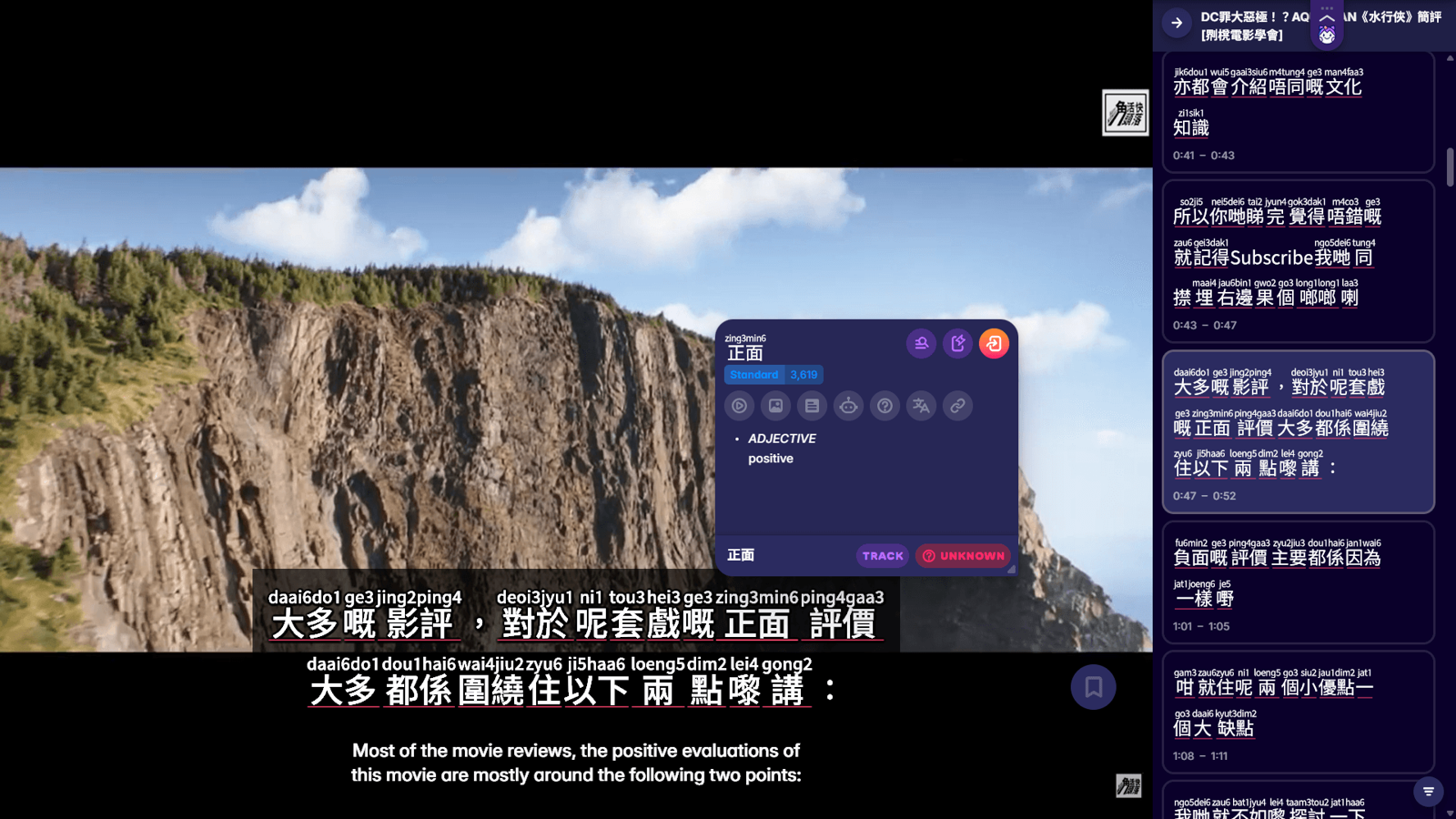
Anyway, if you want to actually use these strategies with real Cantonese content, Migaku's browser extension and app let you look up words instantly while watching Hong Kong shows or reading articles. Makes immersion learning way more practical. There's a 10-day free trial if you want to check it out.
Excuse me is just the start
Learning 唔該, 不好意思, and 借過 gives you the foundation for polite interactions in Cantonese. These aren't just tourist phrases you memorize and forget. They're the building blocks of daily communication in Hong Kong and Guangdong. If you really want to level up your Cantonese, immersion is the key. Watch Hong Kong dramas, listen to Cantonese podcasts, and save useful phrases you encounter to review later.
If you consume media in Cantonese, and you understand at least some of the messages and sentences within that media, you will make progress. Period.
Respectful interactions create better connections!