# How Many Kanji to Learn for Fluency, JLPT (N5 - N1), or Daily Use
> Learn exactly how many kanji you need for different goals: 100 for N5, 1,000 for daily life, or 2,000+ for fluency. Real numbers, no fluff.
**URL:** https://migaku.com/blog/japanese/how-many-kanji-to-learn
**Last Updated:** 2025-12-28
**Tags:** fundamentals, vocabulary, phrases, grammar
---
You've started to [learn Japanese](https://migaku.com/learn-japanese), and you've hit the kanji wall. You know, that moment when you realize there are thousands of these characters and you're wondering if you'll spend the rest of your life memorizing them. I get it. The question "how many kanji do I actually need to learn?" is probably one of the most common things Japanese learners ask. Here's the thing: the answer depends entirely on what you want to do with Japanese. Reading manga? Passing the JLPT? Living in Japan? Each goal needs a different number of kanji under your belt. Let me break down the actual numbers you need to know!
---
## Understanding the jōyō kanji list
The Japanese government maintains an official list called the **jōyō kanji** (常用漢字), which literally means "regular-use Chinese characters." This list contains **2,136 kanji** that Japanese natives are expected to know by the time they finish high school. These are the kanji you'll see in newspapers, official documents, and pretty much all standard written Japanese.
Now, before you freak out about memorizing over 2,000 kanji character symbols, let me give you some perspective. Japanese students don't learn all these at once. They spread them out over 12 years of education. The first 1,006 kanji are called **kyōiku kanji** (教育漢字), or "education kanji," and these are taught during elementary school from grades 1 through 6.
The remaining 1,130 kanji are introduced during middle school and high school. This progression matters because it shows you that even native speakers take years to build up their kanji knowledge. You're not supposed to learn them all in a few months.
---
## How many kanji do you need to memorize for the JLPT?
If you're studying for the Japanese Language Proficiency Test, you've got clear benchmarks to aim for. The JLPT levels give you concrete targets for how many kanji you should know.
### N5 level: The starting point
For N5, the beginner level, you need around **80 to 100 kanji**. These are the most basic kanji character symbols like for "sun/day," for "person," and for "book." Is 100 kanji enough for N5? Yeah, absolutely. In fact, 100 kanji is more than enough to pass N5 comfortably.
At this level, you'll be able to read simple sentences and basic signs. You won't be reading novels or anything, but you can handle restaurant menus and simple instructions.
### N4 level: Building up
**N4** requires about **170 kanji** total. You're adding another 70 kanji to your N5 foundation. At this stage, you can start reading simple manga aimed at kids and very basic articles with furigana (those little pronunciation guides above kanji).
### N3 level: The big jump
Here's where things get real. **N3** expects you to know around **650 kanji**. This is a significant jump from N4, and honestly, N3 is where many learners start feeling like they can actually use Japanese in daily life. With 650 kanji, you can read a decent chunk of everyday Japanese, follow along with TV shows (with some dictionary help), and handle most practical situations.
### N2 level: Advanced territory
**N2** requires roughly **1,000 kanji**. At this point, you're approaching the number of kanji that elementary school students learn. You can read most general interest articles, follow the news with some effort, and handle business situations. Many companies in Japan require N2 for hiring foreign workers.
### N1 level: Near-native reading
**N1**, the highest level, expects you to know about **2,000 to 2,136 kanji**, basically covering the entire jōyō kanji list. With this many kanji, you can read newspapers, academic papers, literature, and pretty much anything a native Japanese person would read.
---
## How many kanji do you need to learn for living in Japan?
Let's say you're moving to Japan or you just want to be able to read and write in everyday situations. How many kanji do you actually need?
### How many kanji do you need for basic survival and daily life?
For basic survival, **300 to 500 kanji** will get you surprisingly far. You'll be able to read signs, menus, simple instructions, and navigate daily life without constantly pulling out your phone to look things up. You won't understand everything, but you'll manage.
For a comfortable daily life where you can read most things you encounter, you're looking at **1,000 to 1,500 kanji**. This range lets you read manga, follow social media, understand product labels, and handle paperwork (though you might still need help with legal documents).
If you want to read Japanese literature, news articles, or work in a Japanese office, you'll want to push toward those **2,000+ kanji**. This is where you reach what I'd call functional literacy and become able to handle specialized terms.
### How many kanji do you need for fluency?
Okay, so what about actual fluency? How many kanji do I need to be fluent in Japanese?
Fluency is tricky to define, but if we're talking about being able to read and write at a level similar to educated native speakers, you're looking at the full **2,136 jōyō kanji** as a baseline. But here's the reality: you'll probably want to know a few hundred more beyond that.
Newspapers occasionally use kanji outside the jōyō list, especially for names, places, and specialized terms. Literature definitely does. If you read older texts or classical literature, you'll encounter even more kanji that aren't on the standard list.
Most learners who reach genuine fluency end up knowing somewhere between **2,500 to 3,000 kanji** through natural exposure. You don't sit down and memorize these extra kanji; you just pick them up from reading over the years.
---
## The diminishing returns problem when learning Japanese joyo kanji
Here's something nobody talks about enough: after you learn about 1,500 to 2,000 kanji, you hit serious diminishing returns. The most common kanji appear constantly, while rare kanji might show up once in a blue moon.
Research on kanji frequency shows that knowing the top 1,000 kanji covers about 90% of kanji usage in typical Japanese texts. The next 1,000 kanji only add maybe another 8-9%. After that, you're learning kanji that you might see once a year.
This doesn't mean you should stop at 1,000 kanji. But it does mean your learning strategy should shift. After you've got the common kanji down, you'll pick up new kanji naturally through reading and exposure rather than dedicated memorization sessions.
---
## Reading vs. writing: Do you need both?
One thing many learners don't realize early on: you can prioritize reading kanji over writing them. Most Japanese people today type on computers and phones, which means they select kanji from suggestions rather than writing them from memory. It's totally normal for native speakers to forget how to write some kanji by hand.
If your goal is to be able to read Japanese content like manga, websites, or books, you can focus on **recognition** rather than **production**. This cuts your workload significantly. You need to recognize what a kanji character means and how it's pronounced, but you don't necessarily need to memorize every stroke order.
However, if you're a student learning for exams or you want to write by hand, you'll need to put in the extra work to memorize the stroke orders and be able to write kanji from memory.
---
## How many kanji should you learn per day?
This is super individual, but here's what actually works for most learners. When you're starting out and learning your first few hundred kanji, you can handle **10 to 15 new kanji per day** pretty comfortably. At this pace, you'd learn about 300 kanji in a month.
As you get into the thousands, most learners drop down to **5 to 10 new kanji per day**. The reason is simple: you're not just learning new kanji, you're also reviewing all the ones you've already learned. Your review pile gets bigger and bigger.
Some intense learners push 20 or even 30 new kanji per day, but honestly, that's not sustainable for most people. You'll burn out, and your retention will suffer. Better to learn 5 kanji per day consistently for a year than to cram 30 per day for a month and then quit.
---
## Students learn differently from natives
One important thing to remember: Japanese students learn kanji while already speaking Japanese fluently. They know thousands of words before they ever learn to read them. When a first-grader learns the kanji , they already know what "inu" means because they've been saying that word since they were toddlers.
As a learner of the Japanese language, you're often learning the kanji, the pronunciation, and the meaning all at the same time. This is actually harder in some ways, but it can also be more efficient. You're building multiple skills simultaneously.
The point is, don't compare your timeline to how long it takes Japanese kids to learn kanji. They're doing something fundamentally different. A motivated adult learner can actually learn to read kanji faster than a native child does, even though the child is growing up in Japan.
---
## Practical kanji learning strategies
So, how do you actually tackle learning this many kanji? Here are some approaches that work:
1. Start with the most common kanji first: Don't learn them in the order Japanese schools teach them. Learn them by frequency of use. The kanji meaning "I/me" is way more useful early on than some random kanji you won't see for months.
2. Learn kanji in context, not isolation: Memorizing that means "eat" is fine, but learning it in the word meaning "to eat" or meaning "meal" makes it stick better. You're learning vocabulary and kanji together.
3. [Use spaced repetition.](https://migaku.com/blog/language-fun/spaced-repetition-language-learning): This is huge. Apps and systems that show you kanji right before you're about to forget them are incredibly effective. You'll retain way more with less total study time.
4. Read actual Japanese content as soon as possible: Even if you only know 100 kanji, start trying to read simple things. You'll see your kanji in real contexts, which reinforces them way better than flashcards alone. Manga is great for this because you get visual context clues.
5. Don't stress about writing every kanji: Unless you specifically need handwriting skills, focus on reading first. You can always add writing practice later if you want.
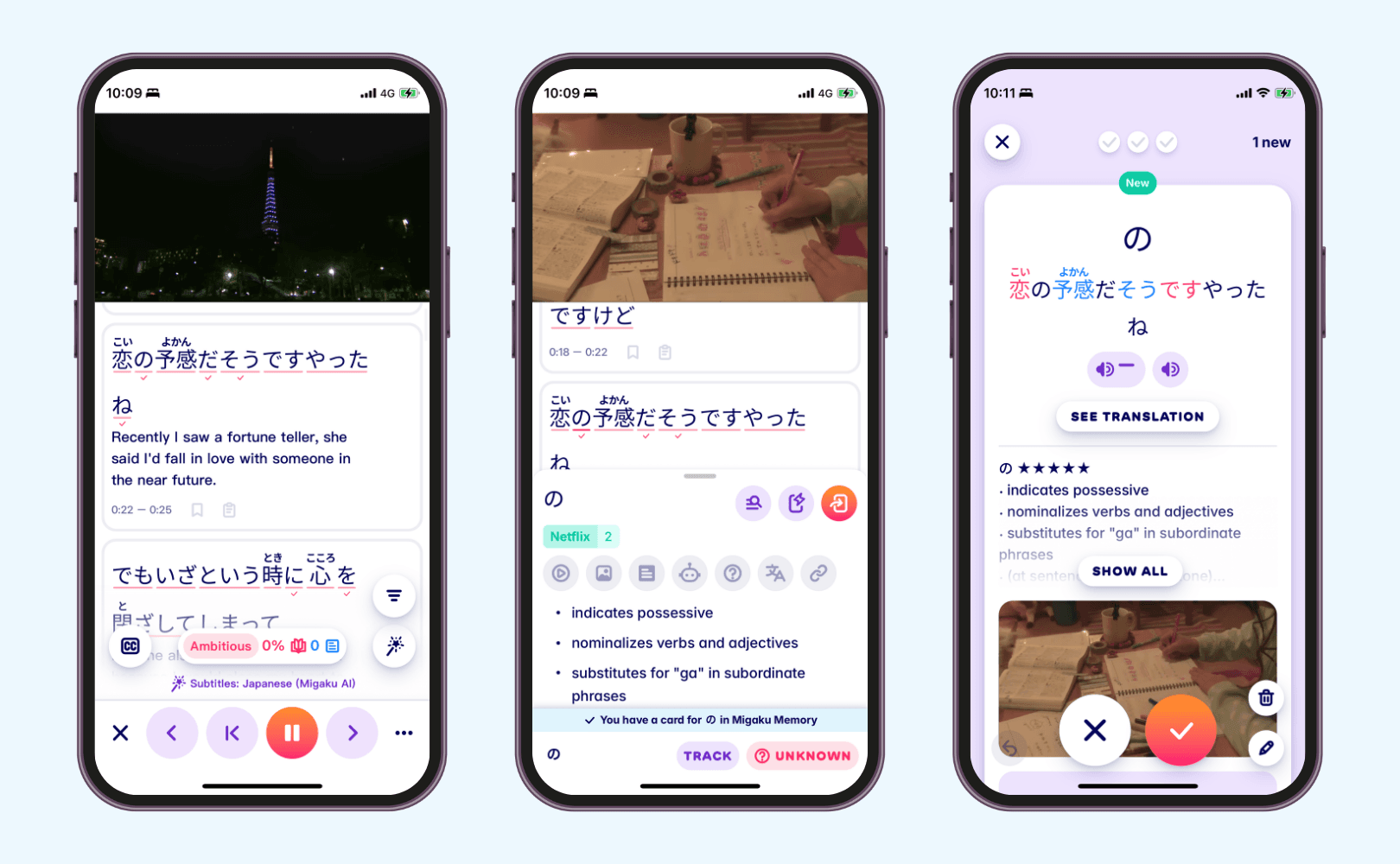
6. Try multiple media, such as dramas, movies, etc.: If you want to learn kanji while actually reading and watching real Japanese content, Migaku's browser extension and app let you look up kanji instantly while immersing yourself in native materials. You can build your vocabulary naturally instead of just grinding flashcards. There's a 10-day free trial if you want to check it out.
 ---
## Explore and find out the real number you need!
After all this, here's my honest take on how many kanji you need to learn: **it depends on your goals, but 1,500 to 2,000 kanji will get you to a genuinely useful level.** Want to read manga? Aim for 1,000. Want to read literature and news? Push for 2,000. Want to read everything, including specialized academic texts? You'll eventually pick up 3,000+ over time.
Yeah, it takes time to learn and consume media content. But it's totally doable, and way less scary than it seems when you're just starting out.
> If you consume media in Japanese, and you understand at least some of the messages and sentences within that media, you will make progress. _Period_.
Persistence is the most traveled path to success!
---
## Explore and find out the real number you need!
After all this, here's my honest take on how many kanji you need to learn: **it depends on your goals, but 1,500 to 2,000 kanji will get you to a genuinely useful level.** Want to read manga? Aim for 1,000. Want to read literature and news? Push for 2,000. Want to read everything, including specialized academic texts? You'll eventually pick up 3,000+ over time.
Yeah, it takes time to learn and consume media content. But it's totally doable, and way less scary than it seems when you're just starting out.
> If you consume media in Japanese, and you understand at least some of the messages and sentences within that media, you will make progress. _Period_.
Persistence is the most traveled path to success!