Grammar Points and Useful Strategies You Need for JLPT N2
Last updated: March 2, 2026
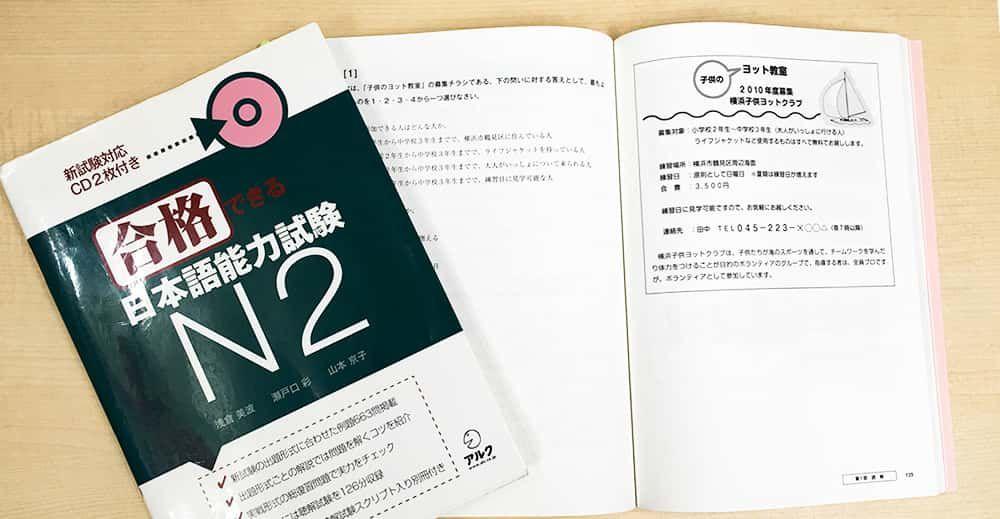
So you're gearing up for the JLPT N2 exam and wondering what grammar you need to know? Here's the thing: N2 sits right in that sweet spot where you're moving beyond basic conversational Japanese into more formal, nuanced territory. You'll need to master around 200 grammar points that cover everything from business contexts to literary expressions. This guide breaks down exactly what you're facing and how to tackle it without losing your mind in the process.
- What makes N2 grammar different
- Breaking down the N2 test format
- The complete scope of N2 grammar points
- How grammar connects to vocabulary and kanji
- List of common Japanese grammar patterns you'll definitely see
- How to handle similar grammar patterns
- Master formal versus casual grammar at N2
- Study strategies that actually work
- Finding quality practice resources for JLPT N2 grammar
- Tracking your progress through 200 grammar points
- Common mistakes to avoid while studying JLPT N2 grammar list
- Making a realistic study timeline
- Real-world application beyond the grammar books
What makes N2 grammar different
The jump from N3 grammar to N2 ones feels pretty significant. You're dealing with grammar patterns that show up in newspapers, formal writing, and business situations. The test expects you to understand subtle differences in meaning between similar expressions and recognize context-appropriate language.
N2 grammar points tend to be longer and more complex than what you saw at N3. Instead of simple particles and basic verb forms, you're looking at multi-part constructions like (cannot help but) or (nothing but, none other than). These aren't casual conversation patterns. They show up in formal speeches, written reports, and academic contexts.
The JLPT level N2 grammar section tests whether you can identify correct usage in various situations. You'll see questions where multiple answers might seem plausible, but only one fits the specific context and formality level required.
Breaking down the N2 test format
📖The Language Knowledge section combines grammar, vocabulary, and reading comprehension.
Grammar specifically appears in two question types:
- sentence grammar (choosing the right particle or expression)
- and text grammar (understanding how sentences connect in longer passages).
You get 105 minutes total for the entire Language Knowledge and Reading section. That includes vocabulary questions, grammar questions, and reading passages. The test doesn't give you separate time blocks, so you need to pace yourself.
Scoring works on a scaled system where you need roughly 90 out of 180 points total across all sections to pass. Grammar alone won't save you if your vocabulary and kanji are weak, which is why integrated study matters.
The complete scope of N2 grammar points
There are approximately 200 distinct grammar rules you need to recognize and understand for N2. That sounds like a lot, but many of them are variations on similar themes or related expressions.
These grammar points fall into several major categories. You've got expressions for making assumptions and conjectures, patterns for showing cause and effect, ways to express obligation or prohibition, and constructions for formal or written language.
Some examples of common N2 grammar patterns include:
- (on the occasion of) shows up in formal announcements and written notices. You'd see this in a sentence like (I would like to say a few words on the occasion of this opening).
- indicates a gradual change in progress. This pattern appears in news reports and formal writing when describing ongoing trends.
- expresses regret about a reason for something bad happening. The meaning carries emotional weight, showing that one small thing caused a negative outcome.
Each grammar point has specific usage rules about what parts of speech can precede it. Some attach to verb stems, others need the dictionary form, and some only work with nouns. Getting these connections right matters for the test.
How grammar connects to vocabulary and kanji
Can you rely only on grammar study to pass JLPT N2? Absolutely not. The test integrates all three areas constantly.
N2 expects you to know around 6,000 vocabulary words and roughly 1,000 kanji characters. These aren't separate skills you can study in isolation. Grammar patterns often include specific vocabulary that you need to recognize instantly.
Take the pattern (based on). You need to know the kanji and understand how it functions in this construction. Without that vocabulary knowledge, you can't apply the grammar correctly.
Many N2 grammar points use formal or literary kanji compounds that don't appear in everyday conversation. Expressions like (in accordance with) require kanji recognition to understand the nuance.
The reading section throws grammar, vocabulary, and kanji at you simultaneously in complex sentences. You might encounter a sentence using multiple N2 grammar patterns with advanced vocabulary, and you need to parse it all quickly.
List of common Japanese grammar patterns you'll definitely see
Some N2 grammar points appear constantly on the test and in real-world Japanese. Prioritizing these high-frequency patterns gives you the most return on study time.
Expressions of obligation and necessity like (have no choice but to) show up regularly. These convey stronger necessity than basic .
Conditional patterns beyond basic and include constructions like (unless) which add specific nuances about conditions.
Formal expressions for making statements appear throughout the test. Patterns like (it is said that) or (it is considered that) show up in reading passages about facts and information.
Expressions showing speaker's perspective or judgment include (there's no way that) and (it cannot be that). These convey strong certainty or disbelief.
How to handle similar grammar patterns
The trickiest part of N2 is distinguishing between different grammar points that look or sound similar but have different meanings or usage contexts.
- Take versus . Both indicate a reason or cause, but is for positive outcomes while is for negative ones. The test loves questions that require you to pick the right one based on context.
- Another confusing pair is versus when expressing purpose. The subtle differences in usage (controllable versus uncontrollable actions) trip people up constantly.
Make comparison charts for similar patterns. Write out the grammar point, its meaning, what parts of speech it takes, and example sentences side by side. Visual comparison helps your brain categorize them correctly.
Master formal versus casual grammar at N2
Japanese language proficiency test N2 heavily emphasizes formal and written language. You need to recognize business Japanese expressions and literary constructions that never appear in casual conversation.
Patterns like (in, at, regarding) and (regarding, concerning) are standard in formal writing but sound stiff in everyday speech. The test expects you to understand when these formal alternatives are appropriate.
Written language uses specific grammar that spoken Japanese doesn't. Expressions like (while, though) appear in essays and reports but rarely in conversation.
Understanding formality levels helps you eliminate wrong answers on the test. If a question presents a business situation, you can rule out casual expressions immediately.
Study strategies that actually work
Memorizing a list of 200 grammar points without context is pretty miserable and doesn't stick well. You need to see these patterns in actual use through example sentences and real content.
- Start by getting a comprehensive grammar resource that covers all N2 points systematically. Popular options include "Shin Kanzen Master" or "Try! JLPT N2" textbooks. These break down each pattern with clear explanations and practice exercises.
- Create your own example sentences for each grammar point. Copying examples from a book helps, but making your own forces you to understand the construction deeply. Use vocabulary you already know so you're only focusing on the new grammar.
- Group related grammar patterns together. When you learn (not only), also study and . Understanding how similar expressions differ in formality and usage saves time.
- Practice with timed exercises regularly. The test moves fast, so you need to recognize patterns instantly without lengthy analysis. Doing practice questions under time pressure builds that speed.
Finding quality practice resources for JLPT N2 grammar
Do you need textbooks? They definitely help for systematic coverage, but you can supplement with free resources too.
- Online grammar databases like Bunpro or JTest4You provide searchable lists of all N2 grammar points with example sentences. These let you review specific patterns quickly and test yourself.
- YouTube channels offer video lessons explaining N2 grammar in detail. Watching someone break down a tricky pattern can clarify things that the textbook doesn’t explain in details.
- Past JLPT practice tests give you the most accurate sense of question format and difficulty. The official sample questions from JLPT show exactly how grammar appears on the real exam.
- Reading actual Japanese content at the N2 level matters more than any textbook. News articles, blog posts, and light novels expose you to grammar in natural contexts. You start recognizing patterns automatically instead of consciously analyzing each sentence.
Tracking your progress through 200 grammar points
Studying 200 grammar points feels overwhelming without a tracking system. Break it into manageable chunks and monitor what you've actually mastered versus just reviewed.
- Aim to learn around 10 new grammar points per week. That gives you roughly 20 weeks to cover everything with time for review. Trying to cram faster usually means nothing sticks.
- Use a spreadsheet or app to mark each grammar point as "not studied," "familiar," or "mastered." Be honest about which category each pattern falls into. Seeing one example doesn't mean you've mastered it.
- Review previously studied points regularly. Spacing out reviews over days and weeks helps transfer grammar from short-term to long-term memory. A grammar point you studied once and never saw again won't be there on test day.
- Test yourself with practice questions focusing on specific grammar areas. If you keep missing questions about causation expressions, you know that's a weak spot needing more attention.
Common mistakes to avoid while studying JLPT N2 grammar list
Passive recognition isn't enough for some question types. You need to actively produce correct grammar in context, which requires deeper understanding than just recognizing a pattern when you see it.
- Don't skip the example sentences. Reading through examples quickly without really processing them means you miss the nuances of how each pattern actually works in practice.
- Ignoring formality distinctions will cost you points. The test specifically asks about appropriate usage in different situations, so understanding when to use formal versus casual expressions matters.
- Studying grammar in isolation from vocabulary and kanji creates artificial separation. On the actual test, everything appears together in complex sentences. Your study should reflect that integration.
Making a realistic study timeline
Are you preparing for the JLPT and learning the N2 grammar now? Your timeline depends on your current level and available study time.
If you're starting from N3 level, give yourself at least six months of consistent study. That allows time to learn all the grammar points, build necessary vocabulary, and do plenty of practice questions.
Studying an hour daily gets you further than cramming on weekends. Regular exposure helps patterns sink in naturally. Your brain needs time to process and consolidate new grammar.
Plan to finish learning new grammar points at least two months before the test. That final period should focus on practice tests, review, and identifying weak areas rather than introducing new material.
Real-world application beyond the grammar books
Learning N2 grammar opens up way more Japanese content than just passing an exam. These patterns appear constantly in anything beyond basic conversational material.
- News articles use N2 grammar in practically every sentence. Once you've got these patterns down, reading Japanese news becomes actually feasible instead of a painful slog through dictionary lookups.
- Business emails and formal correspondence rely heavily on N2 expressions. If you ever want to work in a Japanese environment or communicate professionally, these aren't optional.
- Literature and essays become accessible at N2 level. You can start reading Japanese books, blogs, and longer articles without hitting constant grammar roadblocks.
Anyway, if you want to practice recognizing these grammar patterns in actual content, Migaku's browser extension and app let you look up expressions instantly while reading Japanese articles or watching shows. Makes learning from real material way more practical. There's a 10-day free trial if you want to check it out.

Grammar lists for introduction, and video for long-term acquisition
Memorizing all the grammar points solely relying on lists is daydreaming. Focus on high-frequency patterns first, create meaningful example sentences, and expose yourself to real Japanese content using N2 grammar. Watching relevant videos can boost your efficiency with content you actually enjoy!
If you consume media in Japanese, and you understand at least some of the messages and sentences within that media, you will make progress. Period.
Let videos teach you.