Japanese Hospital Vocabulary: Essential Phrases for Your Life in Japan
Last updated: April 5, 2026
Getting sick or injured while traveling or living in Japan can be stressful enough without the language barrier adding extra anxiety. Knowing the right Japanese hospital vocabulary makes a huge difference when you need to explain symptoms, understand a diagnosis, or pick up medicine at the pharmacy. This guide covers everything from booking appointments to talking with doctors, so you'll feel more confident navigating Japan's healthcare system in your Japanese learning journey.
- Basic Japanese phrases for hospital visits
- Essential hospital and clinic vocabulary
- Hospital departments you should know
- Describing symptoms in Japanese
- Medicine and pharmacy vocabulary
- Common questions doctors ask
- Useful phrases during medical consultations
- Health insurance and payment terms you need after the appointments
- Body parts vocabulary for medical situations
- Emergency vocabulary you hope you never need
- Making Japanese medical vocabulary stick
Basic Japanese phrases for hospital visits
Before diving into specific vocabulary, let's cover the essential phrases you'll use when you visit a hospital or clinic in Japan.
When you first arrive at reception, you'll need to say: (hajimete desu) which means "This is my first time here." If you're a returning patient, say (nikaime desu).
The receptionist will likely ask: ? This translates to "Do you have a health insurance card?" Super important question since it affects what you'll pay.
When describing how you feel, these phrases are gold:
- (guai ga warui desu) means "I feel unwell." This is your general catch-all phrase.
- (itai desu) means "It hurts." You'll use this one a lot if you're injured.
- (netsu ga arimasu) means "I have a fever."
The doctor might ask ? (doushimashita ka?) which means "What happened?" or "What's wrong?" Be ready to explain your symptoms in Japanese.
Essential hospital and clinic vocabulary
Let's break down the core vocabulary you'll encounter at medical facilities in Japan.
- (byouin) means hospital. This refers to larger medical facilities that handle serious conditions, surgeries, and emergencies.
- (shinryoujo) or (kurinikku) means clinic. These are smaller facilities where you'd go for routine checkups, minor illnesses, or initial consultations.
- (uketsuke) is the reception desk. This is where you'll check in and handle paperwork.
- (machiaishitsu) means waiting room. You'll spend time here before seeing the doctor.
- (shinsatsushitsu) is the examination room where you'll meet with the doctor.
- (isha) or (ishi) means doctor. You might also hear (sensei) used respectfully.
- (kangoshi) means nurse. The pronunciation can be tricky, so practice this one.
- (kanja) means patient. That's you in this scenario.
Hospital departments you should know
Japanese hospitals organize by department, and you might need to specify where you need to go.
- (naika) is internal medicine. This is where you'd go for general illness, fever, stomach problems, or anything internal.
- (geka) means surgery or surgical department. Injuries, wounds, or conditions requiring surgery get handled here.
- (seikei geka) is orthopedics. Broken bones, joint problems, or sports injuries would send you to this department.
- (jibiinkouka) covers ear, nose, and throat. The pronunciation is a mouthful, but ear infections and sore throats get treated here.
- (ganka) is ophthalmology. Eye problems, vision issues, or needing glasses would bring you here.
- (hifuka) means dermatology. Skin rashes, allergies, or acne get treated in this department.
- (shounika) is pediatrics. If you're traveling with kids, this is where they'd receive care.
- (shika) means dentistry. Toothaches or dental emergencies would send you here.
Describing symptoms in Japanese
Being able to explain what's wrong makes the whole visit smoother. Here are the most common symptoms and how to express them.
- (zutsuu) means headache. Add (ga shimasu) to say "I have a headache."
- (fukutsuu) or (onaka ga itai) means stomachache.
- (seki) means cough. (seki ga demasu) means "I have a cough."
- (hanamizu) is a runny nose. (hana ga tsumatteimasu) means "My nose is stuffed up."
- (nodo ga itai) means "My throat hurts."
- (memai ga shimasu) means "I feel dizzy."
- (hakike ga shimasu) means "I feel nauseous."
- (geri) means diarrhea. (benpi) means constipation.
- (kega) means injury. (kega wo shimashita) means "I got injured."
- (yakedo) means burn.
- (kirikizu) means cut.
Medicine and pharmacy vocabulary
After seeing a doctor in Japan, you'll take your prescription to a pharmacy to get medicine. Sometimes the clinic has an in-house pharmacy, but often you'll need to go separately.
- (yakkyoku) or (kusuriya) means pharmacy. The question "Can I go to any pharmacy?" is relevant because you can usually fill prescriptions at any licensed pharmacy in Japan.
- (shohousen) means prescription. Don't lose this paper because you'll need it to get your medicine.
- (kusuri) is the general word for medicine or medication.
- (nomigusuri) means oral medicine or pills you swallow.
- (nurigusuri) means topical medicine or ointment you apply to skin.
- (megusuri) means eye drops.
- (itamidome) means painkiller.
- (genetsuzai) means fever reducer.
- (kouseibusshitsu) means antibiotics.
- (fukusayou) means side effects. Always good to ask about these.
The pharmacist will explain dosage using these terms:
- (ichinichi sankai) means "three times a day."
- (shokugo) means "after meals."
- (shokuzen) means "before meals."
Common questions doctors ask
Understanding what the doctor asks helps you respond appropriately during the examination.
- ? (itsu kara desu ka?) means "Since when?" or "When did this start?" They want to know the timeline of your symptoms.
- ? (doko ga itai desu ka?) means "Where does it hurt?"
- ? (arerugii wa arimasu ka?) means "Do you have any allergies?" Super important for prescribing medicine safely.
- ? (ima, nanika kusuri wo nondeimasu ka?) means "Are you currently taking any medication?"
- ? (ninshin shiteimasu ka?) means "Are you pregnant?" They ask this before prescribing certain medications.
Useful phrases during medical consultations
These phrases help you communicate during the actual consultation.
- (koko ga itai desu) means "It hurts here." Point to the affected area while saying this.
- (kinou kara netsu ga arimasu) means "I've had a fever since yesterday."
- (motto yukkuri hanashite kudasai) means "Please speak more slowly." Don't be shy about using this.
- ? (eigo ga hanaseru hito wa imasu ka?) means "Is there someone who speaks English?"
- (kaite kudasai) means "Please write it down." Helpful when you don't catch something verbally.
- ? (ikura desu ka?) means "How much is it?" You'll ask this at the payment counter.
Health insurance and payment terms you need after the appointments
Understanding the financial side of healthcare in Japan helps avoid surprises.
- (hokenshou) is your health insurance card. If you have Japanese national health insurance, bring this card to every visit. It typically covers 70% of costs.
- (jikofutan) means out-of-pocket payment or copayment. This is the portion you pay yourself.
- (ryoushuusho) means receipt. Keep these for insurance claims or tax purposes.
- (shinsatsuryou) means consultation fee. This is what you pay for the doctor's time.
- (chiryouhi) means treatment cost. This covers procedures or treatments beyond basic consultation.
Body parts vocabulary for medical situations
You'll need to know body parts to explain where the problem is.
Japanese | English |
|---|---|
Head | |
Eye | |
Ear | |
Nose | |
Mouth | |
Neck | |
Shoulder | |
Arm | |
Hand | |
Finger | |
Chest | |
Back | |
Stomach / Belly | |
Lower back / Waist | |
Leg / Foot | |
Knee |
Emergency vocabulary you hope you never need
Emergency situations require specific vocabulary that could literally save your life.
- (kyuukyuusha) means ambulance. Call 119 in Japan for emergency services.
- (kinkyuu) means emergency or urgent.
- (tasukete kudasai) means "Please help me."
- (kyuukyuu desu) means "This is an emergency."
- (ishiki ga arimasen) means "They're unconscious."
- (kokyuu shiteimasen) means "They're not breathing."
- (chi ga deteimasu) means "They're bleeding."
Making Japanese medical vocabulary stick
The best way to internalize this vocabulary is through context and repetition.
- Watching Japanese medical dramas gives you real conversational examples of how doctors and patients communicate. Shows like (Doctor X) or (Kounodori) feature tons of medical dialogue.
- Creating your own example sentences helps too. Instead of just memorizing (headache), make a sentence like (I've had a terrible headache since yesterday). This builds the neural pathways you'll actually use in conversation.
- Group vocabulary by situation rather than alphabetically. Create mental categories like "at the reception desk," "describing symptoms," "understanding the diagnosis," and "picking up medicine." Your brain retrieves information more easily when it's organized by context.
- Practice pronunciation regularly because medical terms can be tricky. (prescription) has that challenging double consonant. (orthopedics) is a mouthful. Record yourself saying these terms and compare with native pronunciation to improve.
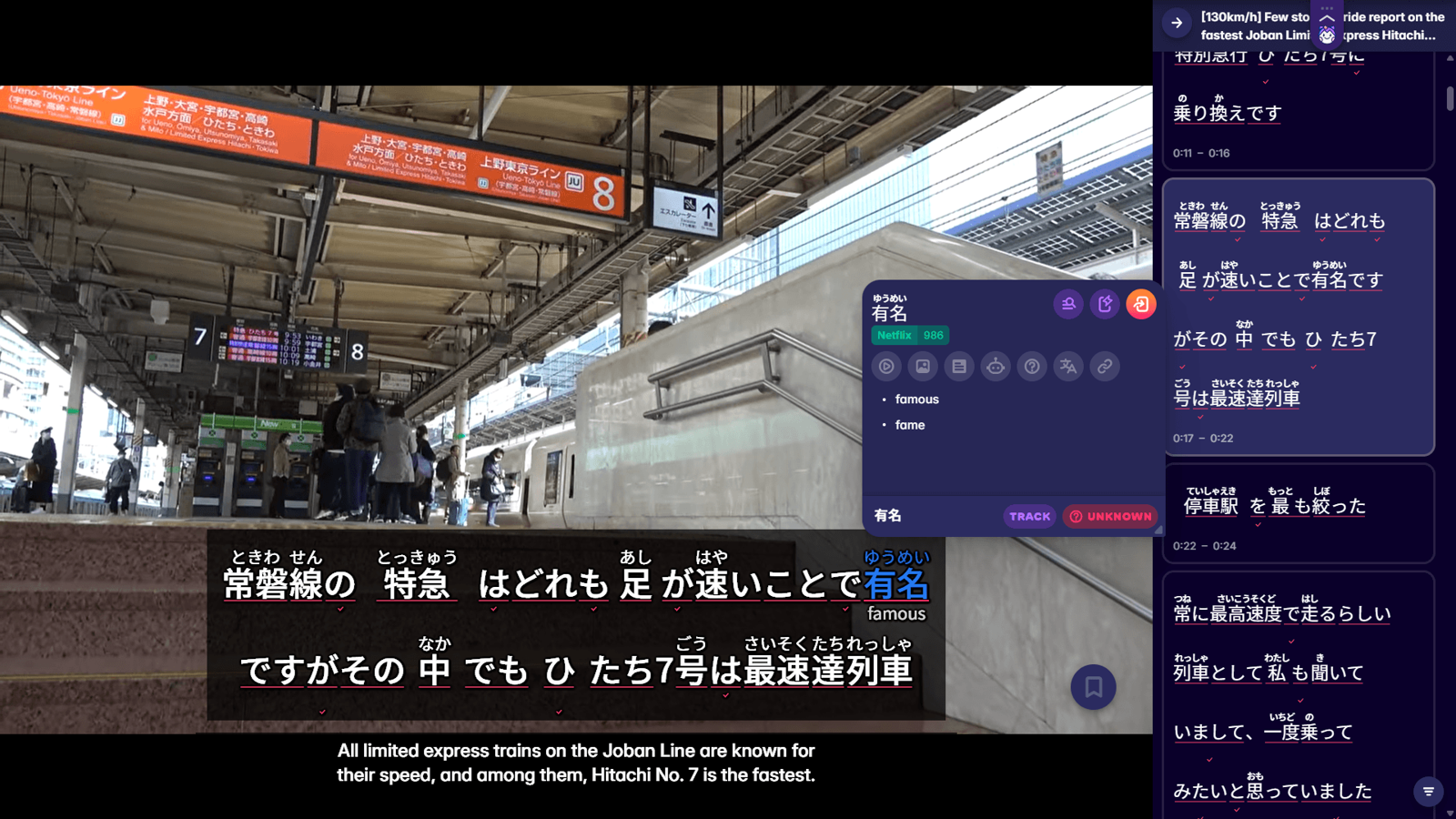
By the way, if you want to pick up medical vocabulary naturally from Japanese shows and content, Migaku's browser extension and app let you look up terms instantly while watching. You can save phrases directly to your flashcards for review later. There's a 10-day free trial if you want to check it out.
Knowing Japanese healthcare vocabulary transforms a potentially scary situation into something manageable😃
You'll walk into a clinic feeling prepared rather than anxious. You'll understand what the doctor asks and communicate your symptoms clearly. You'll pick up your prescription without confusion and take your medicine correctly. And if you're a fan of Japanese medical TV shows, all the better! Now you can understand more of the dialogue without English subtitles.
If you consume media in Japanese, and you understand at least some of the messages and sentences within that media, you will make progress. Period.
Always stay ready for the unexpected! 💪