Japanese Nature Vocabulary: Guide to Essential Outdoor Words
Last updated: April 4, 2026
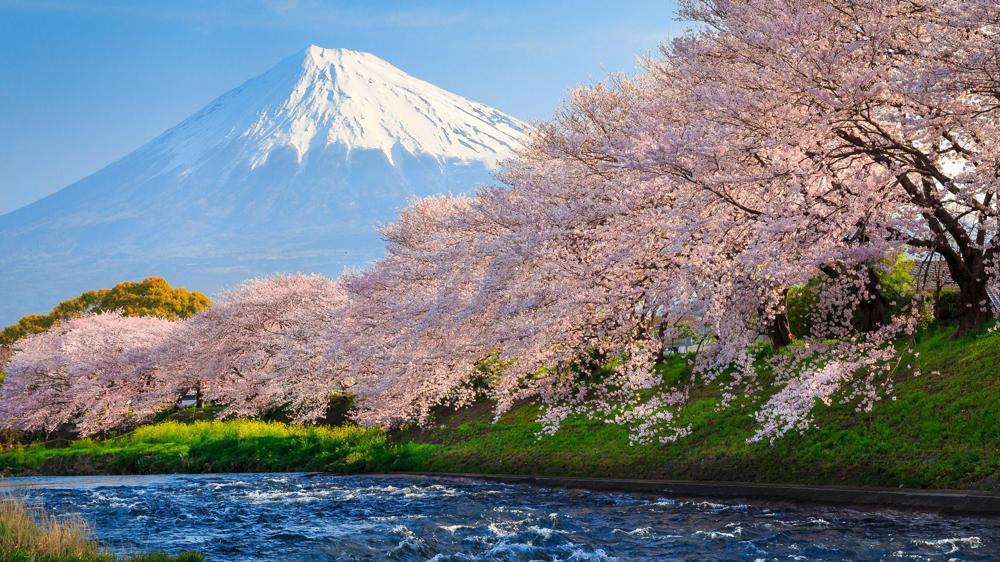
If you've been learning Japanese for a while, you've probably noticed how the language reflects Japan's deep connection with the natural world. There are dozens of words for rain, specific terms for seasonal flowers, and beautiful expressions that capture fleeting moments in nature. This vocabulary goes way beyond basic words like "tree" or "mountain." Understanding these nature-related terms opens up a whole new dimension of the Japanese language, from literature and poetry to everyday conversation. Let's explore the essential outdoor and nature vocabulary you'll encounter.
- Japanese nature words for basic landscape
- Japanese vocabulary for trees, plants, and flowers
- Japanese words for weather
- Animals and wildlife words related to nature
- Aesthetic nature words in Japanese
- Common Japanese nature verbs
- How kanji reveals connections in nature vocabulary
- Using nature vocabulary in everyday Japanese
Japanese nature words for basic landscape
Starting with the fundamentals, you'll want to master the core landscape vocabulary that appears constantly in Japanese. These words show up everywhere, from street names to song lyrics to weather forecasts.
- (yama) means mountain, and you'll see this word all over Japan. Mount Fuji is , and the kanji appears in countless place names. The character itself looks a bit like three peaks sticking up, which makes it easier to remember.
- (kawa) means river. When you combine it with other words, it often changes to "gawa" due to a pronunciation shift called rendaku. So the Sumida River becomes .
- (umi) is sea or ocean. Japan is an island nation, so this word carries a lot of cultural weight. You'll hear it in phrases like (umibe), meaning seaside or beach area.
- (mori) refers to a forest or woods, while (hayashi) also means forest but typically suggests something smaller or less dense. There's also (shinrin), which combines both characters to mean forest in a more formal or academic context.
- (sora) means sky. The same kanji can be read as "kara" in other contexts, meaning empty or void.
Japanese vocabulary for trees, plants, and flowers
Japanese has incredibly specific vocabulary when it comes to plants and flowers. This reflects the cultural importance of seasonal changes and nature appreciation.
- (ki) is the basic word for tree. You'll see this kanji everywhere because it combines with other characters to form tons of compound words. (mokuyoubi) is Thursday, literally "tree day."
-
(hana) means flower, and this is one of the most culturally loaded words in Japanese.
- Cherry blossoms are (sakura)
- Plum blossoms are (ume)
- Chrysanthemums are (kiku). Each flower carries specific associations and appears in traditional poetry.
- (kusa) means grass or weeds. When you see overgrown areas, someone might comment that the grass has gotten really tall using this word.
- (ha) refers to leaves. In autumn, you'll hear about (kouyou), the changing of leaves to red and yellow colors. Interestingly, with a different reading means maple tree specifically.
- (take) is bamboo, which grows incredibly fast in Japan and appears in everything from construction to food. Bamboo shoots are (takenoko), literally "bamboo child."
Japanese words for weather
The Japanese language has an absurd number of words related to weather and seasons. This vocabulary shows how closely Japanese culture pays attention to subtle changes in nature.
- (ame) means rain, but that's just the beginning. (kosame) is light rain or drizzle. (ooame) is heavy rain. There's even (tsuyu), the rainy season that hits Japan every June.
- (yuki) means snow. You'll find this in compound words like (yukiguni), meaning snow country, which is also the title of a famous Kawabata novel.
- (kaze) is wind. The same kanji appears in (taifuu), meaning typhoon, which literally uses the characters for "platform" and "wind."
- (kumo) means cloud. You might hear someone say the sky is cloudy using (kumori).
- (kiri) refers to fog or mist. Morning fog has a special aesthetic quality in Japanese culture and shows up frequently in poetry and art.
Animals and wildlife words related to nature
Nature vocabulary wouldn't be complete without the creatures that live in these environments. Are there wild animals in this forest? You'd use these words to describe them.
- (tori) means bird. Specific birds have their own names: (taka) is hawk, (tsuru) is crane, and (karasu) is crow.
- (sakana) is fish. Are there fish in this lake? You'd ask . The kanji alone can also be read as "uo" in some compound words.
- (mushi) covers insects and bugs broadly. Specific insects include (chou) for butterfly and (hotaru) for firefly.
- (shika) means deer. If you've been to Nara, you've definitely encountered these. They're everywhere and will bow to you for food.
- (saru) is monkey. Wild monkeys live in mountainous regions of Japan and sometimes cause problems by raiding crops or getting into hot springs.
Aesthetic nature words in Japanese
Here's where Japanese nature vocabulary gets really interesting. The language has specific words for natural phenomena that don't translate neatly into English.
- (komorebi) describes sunlight filtering through tree leaves. There's no single English word for this, but Japanese captures it perfectly. The kanji literally mean "tree leak sun."
- (sekiranun) refers to cumulonimbus clouds, those massive thunderstorm clouds. The characters mean "piled disorder cloud."
- (tsukimi) is moon viewing, a traditional autumn activity. People gather to appreciate the full moon, especially in September.
- (hanami) is cherry blossom viewing, probably the most famous seasonal activity in Japan. Millions of people participate in this every spring.
- (momijigari) literally means "autumn leaf hunting," the practice of going to see fall foliage. The word "gari" usually means hunting, which is kind of funny applied to looking at leaves.
Common Japanese nature verbs
Knowing the nouns is great, but you need verbs to actually use them in sentences.
- (furu) means to fall, used for rain and snow. means "rain falls" or "it rains."
- (fuku) means to blow, used for wind. means "the wind blows."
- (saku) means to bloom, used for flowers. means "the cherry blossoms bloom."
- (chiru) means to scatter or fall, often used for petals or leaves falling. This verb carries a poetic, somewhat melancholic feeling.
- (hareru) means to clear up, used for weather. means "the sky clears up."
These verbs combine with the nouns you've learned to create natural, useful sentences about the environment around you.
How kanji reveals connections in nature vocabulary
One beautiful aspect of learning Japanese nature vocabulary is seeing how kanji characters relate to each other and build meaning.
The tree radical appears in tons of nature words. (forest) is literally three trees stacked together. (woods) is two trees side by side. When you understand the building blocks, the vocabulary becomes way more memorable.
Water-related words often share the water radical, which looks like three drops. (sea), (lake), (pond), and (river) all contain this element.
The grass radical appears at the top of plant-related kanji. You'll see it in (flower), (grass), and (tea).
Understanding these patterns makes learning new vocabulary way faster. When you encounter a new word with the tree radical, you can guess it probably relates to wood, trees, or plants somehow.
Using nature vocabulary in everyday Japanese
So how do these words show up in conversation and media? Nature vocabulary appears constantly, even in urban contexts.
Weather discussions use these words all the time. Someone might say (kyou wa kaze ga tsuyoi desu ne), meaning "The wind is strong today." Or (ame ga furisou desu), "It looks like it might rain."
Place names throughout Japan incorporate nature vocabulary. Tokyo itself contains (east) and (capital). Yokohama has (beach). Nagano contains (field).
Literature and poetry absolutely overflow with nature vocabulary. You can't read haiku without encountering seasonal references and natural imagery. Modern novels use these words to set scenes and create atmosphere.
Anime and manga use nature vocabulary constantly, too. Characters comment on the weather, visit mountains or beaches, and reference seasonal events like hanami. If you're learning through immersion, you'll encounter these words hundreds of times.
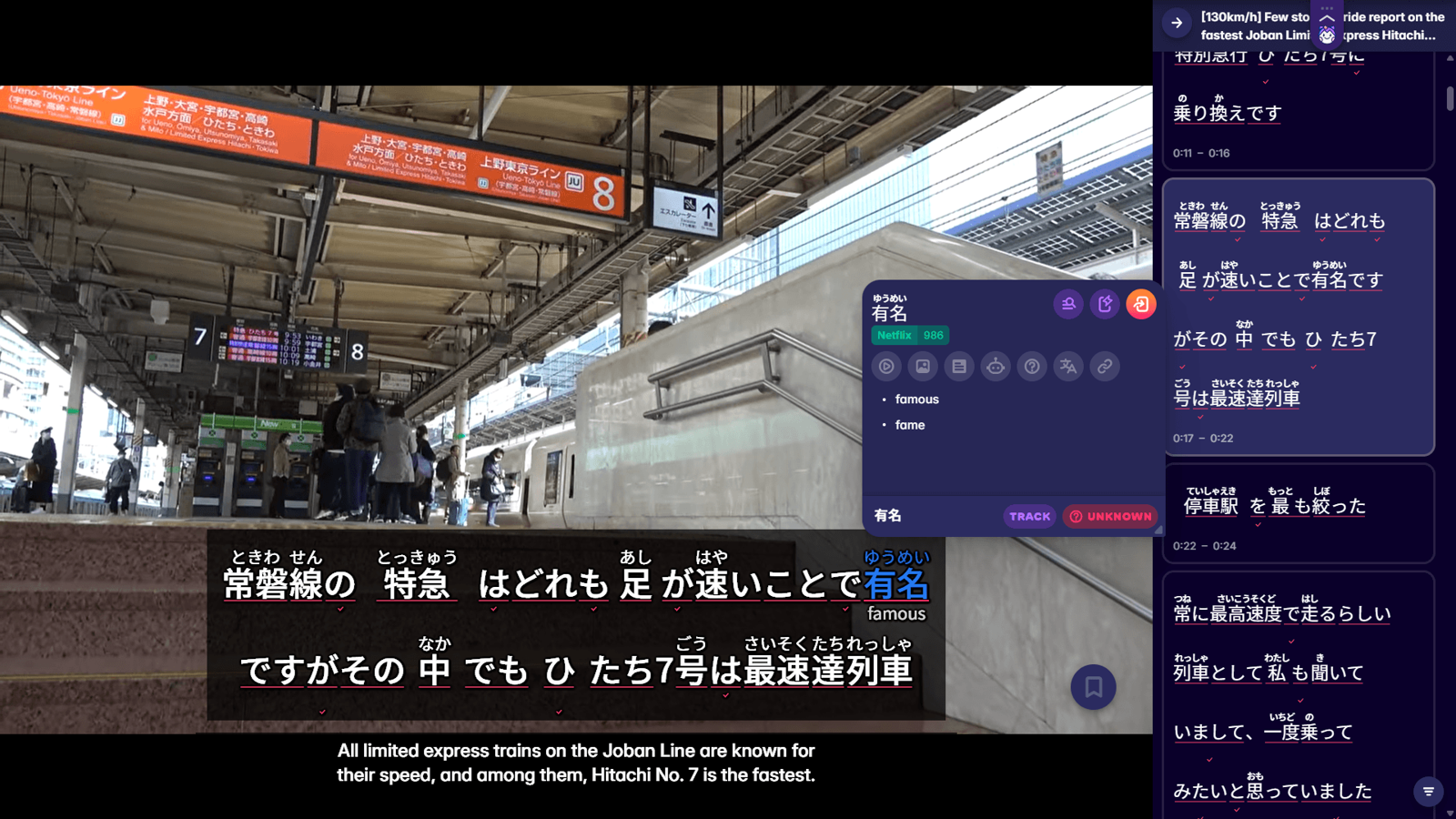
Want to actually learn these words from real Japanese content? Migaku's browser extension and app let you look up any word instantly while watching shows or reading articles, and you can save them directly to flashcards with one click. There's a 10-day free trial if you want to check it out.
Anyway, what do you think is the most beautiful scenery?
Nature vocabulary in Japanese opens up so much more than just the ability to describe your surroundings. These words connect you to centuries of cultural tradition, seasonal awareness, and aesthetic appreciation that runs deep in the Japanese language. Whether you're reading classic literature, watching anime, or just trying to understand the weather forecast, this vocabulary shows up constantly.
If you consume media in Japanese, and you understand at least some of the messages and sentences within that media, you will make progress. Period.
Learn the words, feel the moments!🍂💐