1 Week Korea Itinerary: Seoul, Busan, and Jeju Highlights
Last updated: May 27, 2026
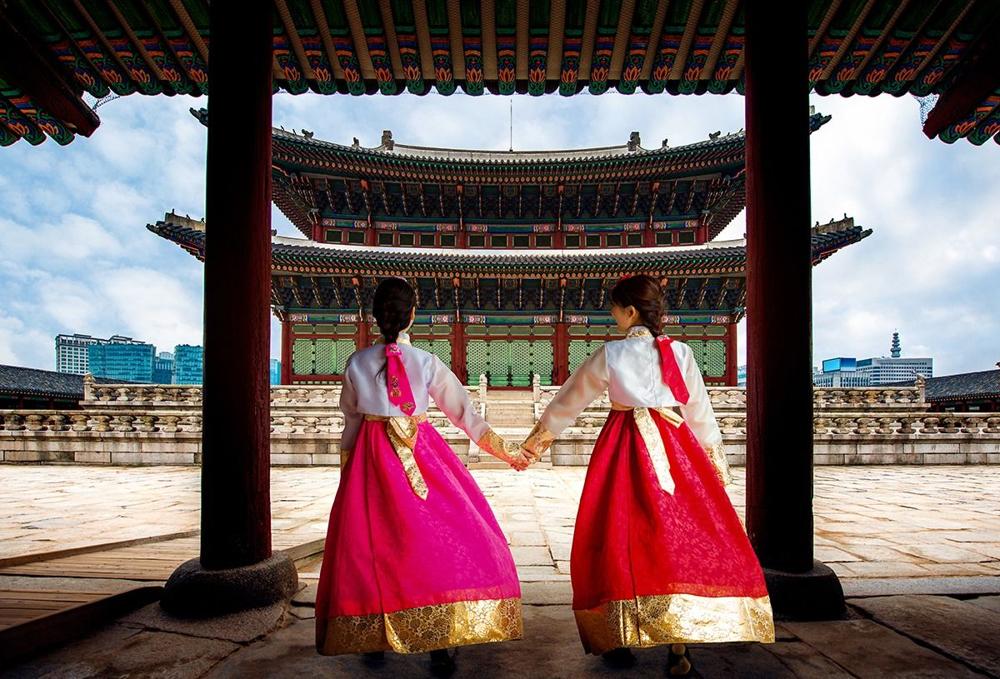
Seven days is enough to see the three sides of South Korea that most first-time visitors come for: the palaces and neon of Seoul, the beaches and seafood of Busan, and the volcanic coastline of Jeju. This itinerary moves quickly but realistically, with verified 2026 transit options, entry rules, and admission fees.
Last updated: May 27, 2026
- Before You Go: Entry Rules and Paperwork for 2026
- The Itinerary at a Glance
- Day 1: Arrival in Seoul
- Day 2: Palaces, Hanok Villages, and Myeongdong
- Day 3: Hongdae, the Han River, or the DMZ
- Day 4: KTX to Busan
- Day 5: Gamcheon, Jagalchi, and Beomeosa
- Day 6: Fly to Jeju
- Day 7: Seongsan Sunrise and Flight Home
- Budget Snapshot (One Person, 7 Days)
- Common Pitfalls
Before You Go: Entry Rules and Paperwork for 2026
South Korea's entry requirements have shifted in the past year, so check your status before booking flights.
- K-ETA exemption: South Korea's Ministry of Justice has extended the temporary K-ETA exemption through December 31, 2026 for nationals of 67 previously exempt countries, including the United States. If you do not qualify for the exemption, the K-ETA application fee is 10,000 KRW (around US$8), non-refundable, and the approval is valid for three years.
- e-Arrival Card: Since January 1, 2026, paper arrival cards have been replaced by a mandatory digital e-Arrival Card for travelers who do not hold a K-ETA. Complete it within 3 days before arrival.
- Jeju visa waiver: Ordinary passport holders (excluding certain restricted nationalities) can stay in Jeju Province for 30 days under the Jeju Visa Waiver Program, but only when entering on a direct international flight to Jeju International Airport. This does not apply if you fly into Incheon first.
For anyone planning to drive on Jeju, also see our guide on how to exchange a foreign driver's license in Korea.
The Itinerary at a Glance
Day | Base | Focus |
|---|---|---|
1 | Seoul | Arrive Incheon, Gyeongbokgung area |
2 | Seoul | Bukchon, Insadong, Myeongdong |
3 | Seoul | Hongdae, DMZ or Han River |
4 | Busan | KTX down, Haeundae evening |
5 | Busan | Gamcheon, Jagalchi, Gwangalli |
6 | Jeju | Fly to Jeju, west coast |
7 | Jeju | Seongsan sunrise, fly home |
Day 1: Arrival in Seoul
Most long-haul flights land at Incheon International Airport. From there, the AREX Airport Railroad has two services:
- AREX Express: 13,000 KRW for adults, 9,500 KRW for children. Travel time is 43 minutes from Terminal 1 or 51 minutes from Terminal 2 to Seoul Station. The last express departs around 10:48 PM and the first around 5:15 AM. Note: T-money and the Climate Card are NOT valid on AREX Express.
- AREX All-Stop: 4,150 to 4,750 KRW, just under an hour to Seoul Station. T-money works here.
- Taxi: Metered fare plus a 7,900 KRW expressway toll. Useful if you arrive late with luggage.
If you fly Asiana, note that the airline relocated to Incheon Terminal 2 on January 14, 2026. The Seoul Station City Airport Terminal check-in deadline for Terminal 2 flights is 3 hours 20 minutes before departure, which is worth knowing for the return.
Once settled, pick up a T-money card at any convenience store (2,500 to 4,000 KRW) or buy a Seoul Climate Card Tourist Pass, which gives unlimited subway and bus rides:
Duration | Price (KRW) |
|---|---|
1 day | 5,000 |
2 day | ~8,000 |
3 day | 10,000 |
5 day | 15,000 |
7 day | 20,000 |
Physical card | 3,000 |
Bus fare in Seoul is 1,500 KRW per ride (raised in August 2024), so the 3-day or 5-day Climate Card pays for itself quickly. As of April 9, 2026, Mastercard holders with iPhone or Apple Watch can also tap Apple Pay directly on Seoul Metro gates without a physical card.
Spend the first evening walking around Gwanghwamun and grabbing a casual Korean BBQ or jjigae dinner near your hotel.
Day 2: Palaces, Hanok Villages, and Myeongdong
Start at Gyeongbokgung Palace. Admission is 3,000 KRW for adults (19 to 64), 1,500 KRW for youth (7 to 18), and free for children under 7 and seniors over 65. The palace is closed every Tuesday. Hours vary by season:
- November to February: 09:00 to 17:00
- March to May, September to October: 09:00 to 18:00
- June to August: 09:00 to 18:30
If you plan to visit several palaces, the combination ticket covering Gyeongbokgung, Changdeokgung (including the Secret Garden), Changgyeonggung, Deoksugung, and Jongmyo Shrine is 10,000 KRW for adults and 5,000 KRW for children, valid for three months.
Free admission tip: Visitors wearing a complete hanbok (한복) get in free to all of Seoul's royal palaces. Partial outfits (for example a jeogori with jeans) do not qualify. Rental shops cluster around Anguk Station.
From Gyeongbokgung, walk east into Bukchon Hanok Village, then south through Insadong for tea, ceramics, and traditional crafts. End the day in Myeongdong for street food, skincare shopping, and people-watching. If you are a Muslim traveler looking for halal-certified options in this district, see our halal food in Seoul restaurant guide.
For tax refunds, the minimum purchase threshold is 15,000 KRW per receipt, and goods must be exported within 3 months. South Korea's standard VAT rate is 10%. Instant in-store refunds are capped at under 1,000,000 KRW per transaction and 5,000,000 KRW total per trip. Note that the 10% VAT refund previously available to foreign patients for cosmetic surgery and dermatology was abolished on January 1, 2026.
Day 3: Hongdae, the Han River, or the DMZ
This is your flex day. Three solid options:
- DMZ day tour: Most tours run 7 to 9 hours from central Seoul and must be booked in advance through licensed operators. Bring your passport.
- Hongdae and Yeonnam-dong: University-area cafés, indie shops, and live music after dark. Easy to combine with Ewha and Sinchon.
- Han River and Yeouido: Rent a bike, picnic with convenience-store ramyeon, and watch the Banpo Bridge fountain show after sunset (April through October).
Pack tonight. Tomorrow morning you head south.
Day 4: KTX to Busan
The KTX from Seoul Station to Busan Station is the fastest way down. The standard one-way fare is roughly 59,800 KRW (~US$44), and the fastest journey is about 2 hours 15 minutes across roughly 417 km. Book via Korail (https://www.korail.com/global/eng/main) a day or two ahead during weekends and holidays.
If you also plan to use trains heavily later, the Korail Pass (KR Pass) 2-day Select Pass is 131,000 KRW for adults and 66,000 KRW for children. The pass is valid on KTX but NOT on SRT trains departing from Suseo Station, so plan accordingly.
Arrive in Busan by lunch. Drop bags near Haeundae or Seomyeon, then head to Haeundae Beach for the afternoon. Dinner: grilled fish or milmyeon (Busan's wheat cold noodles). End the night with a walk along Gwangalli Beach, where the Gwangan Bridge lights up after sunset and drone shows run on selected weekend evenings.
Day 5: Gamcheon, Jagalchi, and Beomeosa
A full Busan day:
- Gamcheon Culture Village: A hillside neighborhood of painted houses and small galleries. Arrive by 09:30 to beat tour buses.
- Jagalchi Fish Market: Korea's largest seafood market. Pick fish downstairs, have it prepared upstairs.
- BIFF Square and Nampo-dong: Street snacks (ssiat hotteok is the local specialty) and shopping.
- Beomeosa Temple: A working Buddhist temple on the slopes of Geumjeongsan, reachable by Metro Line 1 plus a short bus.
Late flight or train? Get back to your hotel by 21:00 to pack for Jeju.
Day 6: Fly to Jeju
The Gimpo (Seoul) to Jeju route is one of the busiest in the world, but you can also fly direct from Busan (Gimhae) to Jeju in about an hour. Korean Air, Asiana, Jeju Air, and the low-cost carriers run frequent service. From Gimpo, flights average around 1 hour 15 minutes, with Korean Air operating roughly 153 weekly departures, Asiana about 142, and Jeju Air about 144.
Once on Jeju, you have two practical options: rent a car (an international or exchanged Korean license is required) or use the islandwide bus network plus taxis. Day 6 suggested route, west coast:
- Hyeopjae Beach for white sand and views of Biyangdo Island
- Hallim Park for subtropical gardens and lava tubes
- O'Sulloc Tea Museum in the green tea fields of Seogwipo
- Sunset at Suwolbong Peak
Stay overnight on the south coast in Seogwipo, which puts you closer to Day 7's east-coast highlights.
Day 7: Seongsan Sunrise and Flight Home
If you can manage one early morning, make it this one. Seongsan Ilchulbong (성산일출봉), the tuff cone on Jeju's eastern tip, is a UNESCO World Natural Heritage site and the island's signature sunrise spot. The climb takes about 25 minutes.
Afterward:
- Seopjikoji headland for coastal cliffs
- Manjanggul Lava Tube if you skipped Hallim
- A haenyeo (female free-diver) lunch in Gimnyeong or Udo
Fly back to Incheon or your home gateway in the evening. Korea's duty-free purchase limit per traveler is USD 800, worth remembering before the last-minute shopping spree.
Budget Snapshot (One Person, 7 Days)
Category | Estimate (KRW) |
|---|---|
AREX Express + 7-day Climate Card | ~33,000 |
KTX Seoul to Busan | ~59,800 |
Busan to Jeju flight | ~50,000 to 90,000 |
Jeju to Seoul return flight | ~50,000 to 100,000 |
Palace combo ticket | 10,000 |
Mid-range hotels (6 nights) | ~600,000 to 900,000 |
Food (3 meals/day, mid-range) | ~280,000 to 420,000 |
Flights vary widely by season. Cherry blossom season (late March to early April) and Chuseok (early October in 2026) push prices and crowds higher.
Common Pitfalls
- Booking Jeju as the entry point without checking nationality rules: The Jeju Visa Waiver only applies on direct international flights to Jeju International Airport. If you transit through Incheon, regular South Korean entry rules apply.
- Forgetting the e-Arrival Card: Mandatory since January 1, 2026 for travelers without a K-ETA. File it within the 3-day window before arrival.
- Visiting Gyeongbokgung on a Tuesday: It is closed. Swap to Changdeokgung, which closes Mondays.
- Trying to use T-money on AREX Express: It does not work. Use the standard ticket machines or All-Stop train instead.
- Underestimating Jeju distances: The island is bigger than it looks on a map. Driving from the airport to Seongsan takes about 90 minutes without traffic.
- Assuming KR Pass covers everything: It does not cover SRT trains from Suseo Station.
FAQs
Is one week enough for Seoul, Busan, and Jeju?
Yes, but it is tight. You will get a representative slice of each but not deep exploration. If you can extend to 9 or 10 days, add a full day in Busan and a second night on Jeju.
Should I fly or take the KTX to Busan?
The KTX is usually faster door-to-door because you depart from central Seoul. Flying makes sense only if you find a cheap Gimpo to Gimhae fare and your hotel is near either airport.
Can I drive in Jeju with my home license?
You need either an International Driving Permit or a Korean license. See the linked guide above on exchanging a foreign license.
When is the best time to visit?
Late April to early June and mid-September to late October offer mild weather and lower rain. July to August is hot, humid, and includes the monsoon. December to February is cold but uncrowded.
Do I need cash?
Cards work almost everywhere in Seoul and Busan. Carry 50,000 to 100,000 KRW for traditional markets, small Jeju restaurants, and taxis in rural areas.
How much Korean do I need?
Basic phrases for greetings, ordering, and asking directions go a long way, especially outside Seoul. English signage is good in transit hubs but thins out fast in older neighborhoods and on Jeju.
Planning longer trips elsewhere? Our two weeks in Mexico first-time itinerary follows the same practical format.
If you want to actually read menus, hear what taxi drivers tell you, and chat with the ajumma at the market, picking up real Korean from native shows and signs makes a trip like this far smoother. Try Migaku to learn Korean from the content you already enjoy.