Azores Island Hopping: Sao Miguel, Pico, and Faial Route
Last updated: May 21, 2026
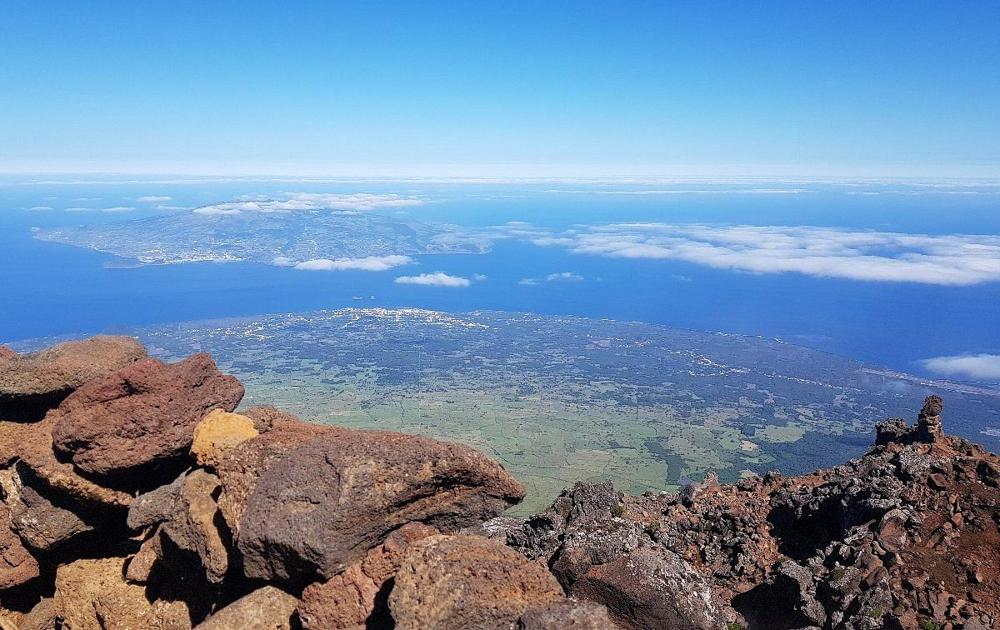
Island hopping across the Azores works best as a focused triangle: São Miguel for craters and hot springs, Pico for the summit climb and vineyards, and Faial for the marina town of Horta and the volcanic Capelinhos coast. A 9 to 12 day trip gives you enough buffer for the Atlantic weather, which is the single biggest variable in any Azores plan.
Last updated: May 21, 2026
Why a São Miguel, Pico, and Faial route
The Azores have nine islands spread across three groups. Trying to see all of them in one trip means burning days on logistics. The route below covers the largest and most accessible island (São Miguel, Eastern Group) and two of the three Triangle islands in the Central Group (Pico and Faial), which are linked by a 30-minute ferry. You get one major airport hub, one short flight, and one short ferry, with very different landscapes on each leg.
A practical reason to pick this trio: Atlânticoline runs year-round ferries between Faial, Pico, and São Jorge (the Triangle), while the wider Central Group all-island ferry network only operates from June through September. If you are traveling outside summer, this route still works. A route that includes Graciosa or Terceira by ferry does not.
Entry requirements for 2026
The Azores are part of Portugal and the Schengen Area. The rules that changed recently matter:
- The EU Entry/Exit System (EES) became fully operational on April 10, 2026. On your first arrival at a Schengen external border, including Ponta Delgada (PDL) or Horta (HOR) if you fly in directly from outside the EU, you will register fingerprints and a facial image. Build in extra time at immigration during the first months of operation.
- ETIAS is scheduled to come into force in the last quarter of 2026. The fee is €20 for travelers aged 18 to 70, free for younger and older travelers, valid up to 3 years or until your passport expires. Check whether ETIAS is live before your travel dates; if it is, apply before departure.
- Flights between mainland Portugal (Lisbon, Porto) and the Azores are treated as domestic. There is no passport control on the Lisbon to Ponta Delgada leg, but the EES registration happens at your point of entry into Schengen.
- A single ETIAS authorization covers all Schengen countries, so a stopover in Lisbon does not require anything extra.
US, UK, Canadian, Australian, and most Latin American passport holders do not need a visa for short stays. Confirm current rules with the Portuguese consulate for your country before booking.
Getting to the Azores and between the islands
Most itineraries start in Ponta Delgada (PDL) on São Miguel. Azores Airlines flies from Lisbon, Porto, Boston, Toronto, and several European cities. From the United States, the Boston route is the shortest hop.
For inter-island travel in 2026:
- SATA Air Açores plans roughly 572 inter-island flights per week on 16 routes during IATA Summer 2026, using a fleet of seven aircraft (80-seat Bombardier Q400 NextGen and 37-seat Q200).
- Together with Azores Airlines, the group plans more than 800 weekly flights to and from the archipelago in summer 2026.
- Extra capacity has been added on Ponta Delgada to Pico, Ponta Delgada to Horta, Ponta Delgada to Terceira, and Ponta Delgada to Flores after 2025 occupancy rates above 90%.
- An additional Q400 aircraft enters service from June 2026.
For this itinerary you need one inter-island flight (Ponta Delgada to Pico, around 45 minutes) and one ferry (Madalena on Pico to Horta on Faial, around 30 minutes).
The Azores Air Pass
If you hold an international, national, or charter ticket to or from the Azores, SATA's Azores Air Pass gives you a special inter-island fare. It allows up to 3 stops longer than 24 hours, plus unlimited stops shorter than 24 hours. For a three-island trip this is usually cheaper than buying individual SATA tickets, but compare prices, because last-minute single fares on busy routes are sometimes lower.
Date or itinerary changes on SATA inter-island tickets carry a €15.00 penalty plus any fare difference. Note also that a CGTP general strike is scheduled for June 3, 2026, with SATA permitting free rebooking to any date between June 1 and 7, 2026, if you are caught by it.
Atlânticoline ferries
Atlânticoline runs approximately 95 daily sailings (up to 378 weekly) across 12 routes and 10 ports. Horta is the busiest port with around 113 weekly sailings. Key facts to plan around:
- Madalena (Pico) to Horta (Faial) is the fastest crossing, around 30 minutes, with up to 10 daily sailings and roughly 69 weekly. The fare runs around €35.
- Check-in closes 1 hour before departure at all ports.
- Car ferries only run between Horta, Madalena, São Roque, and Velas. Vehicle fares do not include the driver's ticket.
- The Triangle routes (Faial, Pico, São Jorge) and Corvo to Flores operate year-round. Other Central Group connections run only June to September.
A 10-day São Miguel, Pico, and Faial itinerary
This pacing assumes you fly into Ponta Delgada and out of Horta (or back via Ponta Delgada). Renting a car on each island is the practical choice; public transport exists but is sparse.
Days 1 to 5: São Miguel
- Day 1: Arrive Ponta Delgada. Walk the old town, the marina, and Forte de São Brás.
- Day 2: Sete Cidades. Drive the crater rim to Vista do Rei, then descend to Lagoa Azul and Lagoa Verde. Parking at popular viewpoints fills up by mid-morning in summer.
- Day 3: Lagoa do Fogo and the south coast. Paid parking near the viewpoint is roughly €0.80 per 15 minutes (around €3.20 per hour). Hike down to the lake if conditions allow.
- Day 4: Furnas. Visit Parque Terra Nostra (open daily 10:30 to 16:30, last entry 30 minutes before closing, online tickets available only 15 days in advance), the fumaroles at Caldeiras, and try a cozido stew cooked in the ground. The thermal pool at Terra Nostra is the main draw.
- Day 5: Nordeste and the east coast viewpoints, or a whale-watching tour from Ponta Delgada.
Days 6 to 8: Pico
Fly Ponta Delgada to Pico in the morning. Base yourself in Madalena, which sits opposite Faial across the channel.
- Day 6: Drive the Criação Velha vineyards (UNESCO listed) and walk among the black basalt walls. Visit a wine cellar in Madalena.
- Day 7: Climb Mount Pico, Portugal's highest peak at 2,351 m, or do a half-day hike at a lower elevation. The full climb is a serious 6 to 9 hour round trip on volcanic scree. Details below.
- Day 8: Lagoa do Capitão (clear-day reflection of Pico volcano), Lajes do Pico for whaling museum, or a swim at the natural pools of Cachorro.
Days 9 to 10: Faial
Take the morning ferry Madalena to Horta (~30 min). Drop bags in Horta.
- Day 9: Walk Horta marina (paint your boat mural at Peter Café Sport), then drive west to the Capelinhos volcano, where a 1957 to 1958 eruption buried a lighthouse. The interpretation center is built underground.
- Day 10: Caldeira do Faial crater hike along the rim, then the Varadouro natural pools or the viewpoint at Monte da Guia. Fly home from Horta, or ferry/fly back to São Miguel.
Climbing Mount Pico: the rules you must know
Mount Pico is the highlight of many Azores trips and the most regulated activity in the archipelago. The numbers below come from the official platform at montanhapico.azores.gov.pt:
Item | 2026 figure |
|---|---|
Registration fee (independent climbers) | €25 per person, includes mandatory GPS tracker |
Daily access cap | 320 hikers per day |
Simultaneous trail limit | 160 hikers |
Piquinho summit (top cone) | 30 people max, 20 minutes max stay |
Crater overnight camping | Capped at 32 visitors per day, separate reservation |
Minors aged 5 to 16 | Must be accompanied by parent or legal representative who signs a liability waiver |
Casa da Montanha (the visitor center at the trailhead) hours:
- May 1 to September 30: open 24 hours
- April and October: daily 8:00 to 20:00
- November 1 to March 31: daily 8:00 to 18:00
- Closed January 1 and December 25
Book well ahead in July and August. The trail is rocky, exposed, and weather changes fast. A guided climb costs more but is worth it if you have not done volcanic terrain before.
Fees and budget basics
- São Miguel tourist tax: since January 1, 2025, all six municipalities of São Miguel (Ponta Delgada, Ribeira Grande, Lagoa, Vila Franca do Campo, Povoação, Nordeste) charge €2 per person per night, capped at 3 consecutive nights. Exemptions include guests under 13, medical-treatment travelers, people with disability of 60% or higher, and Azores tax residents.
- Pico and Faial: no tourist tax as of early 2026. None of the other 8 islands have implemented one either.
- Mount Pico climb: €25 per person.
- Madalena to Horta ferry: roughly €35 each way.
- Parque Terra Nostra entry: recent visitor reports cite around €17 for adults. The official ticketing page is the place to confirm before you go.
- SATA inter-island change fee: €15 plus fare difference.
Common pitfalls
- Booking a tight connection between an inter-island flight and an international flight on the same day. Azores weather can ground SATA flights without much warning. Leave a buffer night in Ponta Delgada or Lisbon.
- Assuming the ferry will run. The Madalena to Horta crossing is short but can be canceled in heavy swell. Have a backup SATA flight option in mind.
- Renting one car for the whole trip. You cannot easily take a rental car across islands, and car ferries only run on specific Triangle routes. Rent separately on each island.
- Forgetting that EES registration adds time on your first Schengen entry in 2026. If you connect through Lisbon from outside the EU, the queue is in Lisbon, not Ponta Delgada.
- Booking Mount Pico for your last day. If the weather closes in, you lose the climb with no rebooking buffer.
- Skipping reservations for Parque Terra Nostra in peak summer. Online tickets only open 15 days in advance.
FAQs
How many days do I need for São Miguel, Pico, and Faial?
Ten days is comfortable. Seven is possible but tight, especially if you want to climb Mount Pico. Twelve gives you a weather buffer.
Can I do this trip without a rental car?
On São Miguel, organized day tours cover the main craters. On Pico and Faial, a car is close to essential outside Horta and Madalena town centers.
What is the best time of year?
June to September has the most stable weather, the longest days, and the full Central Group ferry network. May and October are quieter and still warm, with more rain. Winter is green and dramatic but many activities, including the Mount Pico climb in poor conditions, may not run.
Do I need to speak Portuguese?
English is widely spoken in Ponta Delgada and Horta and in tourism businesses on Pico. A few Portuguese phrases (bom dia, obrigado/obrigada, por favor) go a long way with hosts and drivers outside the main towns.
Is the Azores Air Pass worth it?
For a three-island trip with at least two SATA segments, usually yes. Compare it against current single fares on your dates before committing.
Are there crowds?
Summer 2025 saw inter-island flight occupancy above 90% on some routes, and capacity has been increased for 2026. Popular trailheads and viewpoints (Sete Cidades, Lagoa do Fogo, Mount Pico) get busy from late morning. Start early.
For more on the mainland side of a Portugal trip, see our Portugal itinerary for first-timers and the Algarve road trip itinerary. If you want to pick up some travel Portuguese before you go, this guide to Portuguese connectors and phrases is a useful start.
If you want to chat with hosts in Furnas or order grilled limpets in Horta in Portuguese, learning from real Azorean and Portuguese content makes a difference, and Migaku is built for turning shows, podcasts, and articles you already enjoy into your study material.