Buying Property in Germany as a Foreigner: Process, Taxes, Costs
Last updated: May 28, 2026
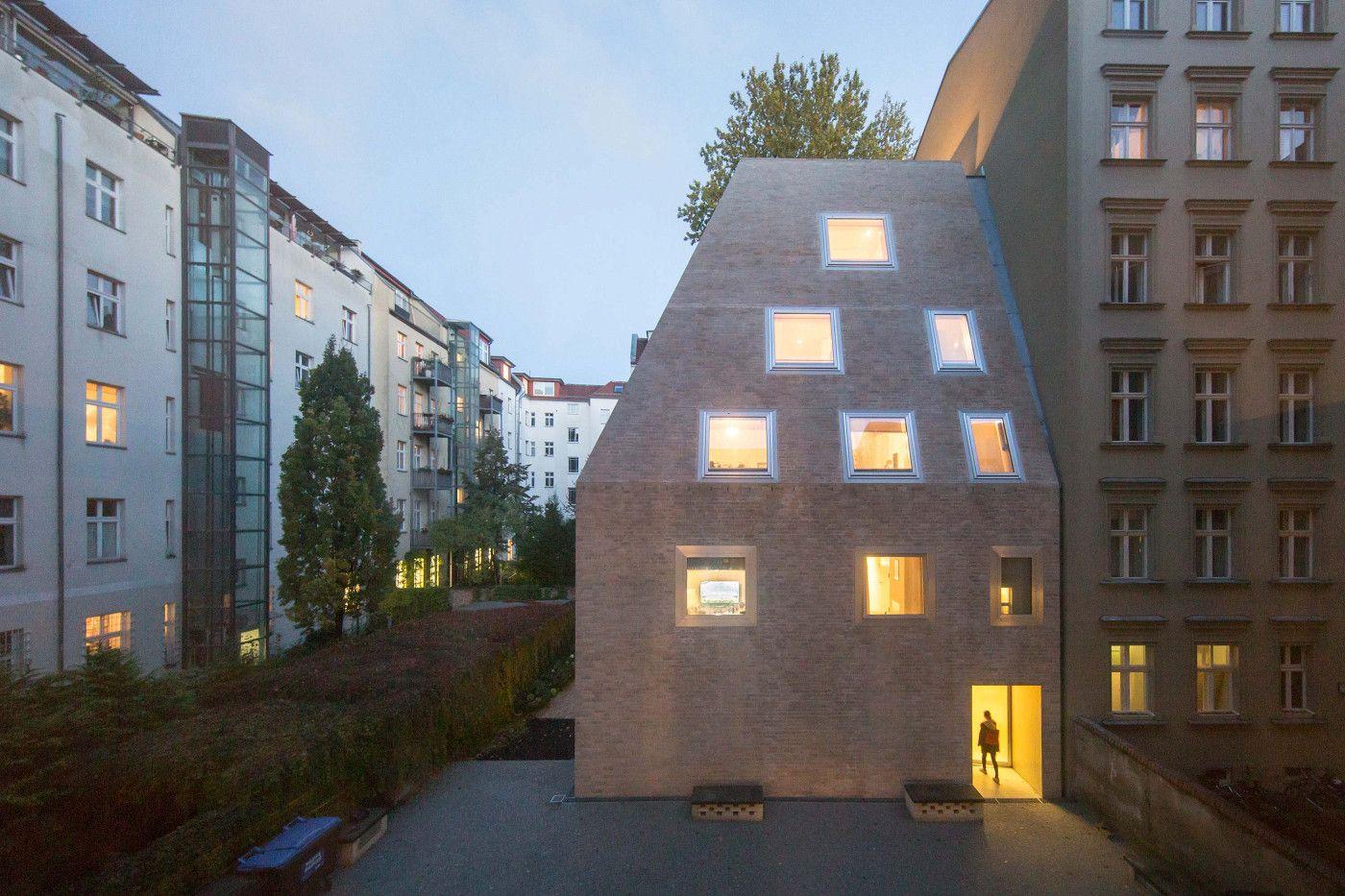
Foreigners, whether EU citizens or not, can buy property in Germany without any nationality-based restrictions, but the process involves a notary-led transaction, a federal-state transfer tax of 3.5% to 6.5%, and several 2026-specific rules around energy compliance and beneficial-ownership disclosure that catch many buyers off guard. This guide walks through the entire process, the real costs, and the regulatory traps to avoid.
Last updated: May 28, 2026
- Can Foreigners Actually Buy Property in Germany?
- The German Property Market in 2026: What You're Walking Into
- Step-by-Step: How the Purchase Actually Works
- What It Actually Costs: Fees and Taxes
- Mortgages for Foreign Buyers in 2026
- Ongoing Taxes on Owning German Property
- Common Pitfalls for Foreign Buyers in 2026
- FAQs
Can Foreigners Actually Buy Property in Germany?
Yes, and the rules are unusually open compared with neighbors like Switzerland or Denmark. Germany imposes no general restrictions based on nationality or residency for buying residential or commercial real estate. An American living in Texas, a Brazilian in São Paulo, or an Indian in Bangalore can all hold title to a Berlin apartment in their own name.
A few things ownership does not do:
- It does not grant you the right to live in Germany. You still need a separate visa or residence permit.
- It does not automatically lead to permanent residency. For that, see Germany's Permanent Residency Paths.
- It does not exempt you from German tax obligations on rental income or, in some cases, capital gains.
One narrow exception applies to corporate acquisitions: under the Foreign Trade and Payment Act, if a non-EU buyer acquires more than 10% of the voting rights in a German company operating in a security-relevant sector (such as a critical-infrastructure operator that happens to own real estate), authorities can review or block the deal. For a private individual buying a flat or house, this rule is irrelevant.
Non-EU buyers should also be aware that some municipalities, in rare cases, expect approval from the local Ausländerbehörde (Foreigner's Office) before a purchase. This is uncommon but worth confirming with your notary in advance.
The German Property Market in 2026: What You're Walking Into
Before you start house-hunting, a quick snapshot of conditions in early 2026:
- Average residential price: around €3,100 per square meter nationally, with houses at €2,900 to €3,000 and apartments at roughly €4,000 or more.
- Munich is the most expensive market, around €11,400 per square meter in central districts.
- Prices rose about 3% to 4% year-over-year: the official Destatis index showed 3.3%, the vdp transaction-based index 3.8%.
- Building-ready land averages around €250 per square meter nationally, with Bavaria several times higher.
- Supply is tight. Germany needs about 320,000 new homes per year through 2030, but only around 215,000 are expected to be completed in 2026.
This matters for your strategy. Bank appraisals in 2026 frequently come in about 10% below asking prices, and you, the buyer, must cover any gap in cash. That gap cannot be rolled into the mortgage.
Step-by-Step: How the Purchase Actually Works
From first viewing to land-register entry, the typical timeline is 8 to 12 weeks. Here is the sequence.
1. Define budget and financing
Decide whether you will pay cash or finance. Non-residents typically face loan-to-value limits of 50% to 60%, meaning a deposit of 40% to 50% plus closing costs. German lenders also cap monthly mortgage payments at a maximum of 35% of your gross monthly income.
2. Get a mortgage pre-approval (Finanzierungsbestätigung)
Approach German banks, mortgage brokers, or specialist lenders for non-residents. You'll typically need:
- Passport and (if applicable) residence permit
- Last 3 months of payslips or business income statements
- Last 2 to 3 years of tax returns
- Bank statements
- Schufa credit check if you are resident in Germany
- Proof of equity (savings, securities)
3. Find a property
Major portals include ImmoScout24, Immowelt, and Kleinanzeigen. You can engage a buyer's agent (Käufermakler), but read the commission rules below first.
4. Make an offer and negotiate
Offers in Germany are typically verbal or by email and not legally binding until notarised. A reservation agreement (Reservierungsvereinbarung) is sometimes used but is legally weak.
5. Order a property survey and review documents
Request the Grundbuchauszug (land-register extract), the Teilungserklärung (for apartments), the Energieausweis (energy certificate), and recent Wohngeld-Abrechnungen (utility statements). A surveyor is optional but often worth €500 to €1,500.
6. Notary appointment and contract
In Germany, every property purchase must be notarised. The notary, a neutral public official, drafts the purchase contract (Kaufvertrag), reads it aloud at the signing appointment, and registers the transfer. Both parties attend the same appointment, or a representative signs with notarised power of attorney.
New in 2026: before drafting the contract, the notary must check the Transparenzregister for beneficial ownership. If you are buying through a trust or foreign company, the Ultimate Beneficial Owner must be registered at least one month in advance, or the notary is legally barred from certifying the deed.
7. Pay the transfer tax and closing costs
After signing, the tax office issues a transfer-tax assessment. You have 4 weeks to pay it. Once paid, the tax office issues a clearance certificate (Unbedenklichkeitsbescheinigung). Without it, the notary cannot register the ownership change.
8. Final payment and handover
The notary instructs you to wire the purchase price once all preconditions (priority notice in the land register, clearance certificate, lien releases) are met. Keys are handed over and you become economic owner, even before the final land-register entry.
9. Land-register entry (Eigentumsumschreibung)
The formal entry can take several more weeks. From this point you are the legal owner.
What It Actually Costs: Fees and Taxes
Budget 8% to 12% on top of the purchase price for closing costs, depending on the federal state and whether an agent is involved.
Real Estate Transfer Tax (Grunderwerbsteuer) by state
State | Rate (2026) |
|---|---|
Bavaria, Saxony | 3.5% |
Hamburg | 5.5% |
Saxony | 5.5% |
Baden-Württemberg, Bremen, Lower Saxony, Rhineland-Palatinate, Saxony-Anhalt, Thuringia | 5.0% |
Berlin, Hesse, Mecklenburg-Western Pomerania | 6.0% |
Brandenburg, North Rhine-Westphalia, Schleswig-Holstein | 6.5% |
Transfers between spouses, registered civil partners, and direct-line relatives (parents and children) are exempt under § 3 GrEStG.
Notary and land-registry fees
Under the German Notary and Court Fee Act (GNotKG), notary fees usually run 1.5% to 2.0% of the purchase price, plus about 0.5% for the land-registry entry. These are non-negotiable, set by federal law.
Agent commission (Maklerprovision)
Since 23 December 2020, the party that engages the agent pays at least 50% of the fee. The buyer's maximum share is 50% of the agreed total commission. Typical total commission is 5.95% to 7.14% including VAT.
Sample closing-cost table
A €500,000 apartment in Berlin (6.0% transfer tax) with shared agent commission of 3.57% buyer share:
Item | Cost |
|---|---|
Transfer tax (6.0%) | €30,000 |
Notary (~1.75%) | €8,750 |
Land registry (~0.5%) | €2,500 |
Agent commission (buyer share, 3.57%) | €17,850 |
Total closing costs | €59,100 (~11.8%) |
Mortgages for Foreign Buyers in 2026
Mortgage conditions vary sharply by residency status.
- Residents with stable German income: LTV up to 80% to 100% is possible, though most lenders prefer 20% to 30% equity.
- Non-residents (EU and non-EU): typically capped at 50% to 60% LTV, with the rest in cash.
- Maximum repayment burden: 35% of monthly gross income.
Rates as of early 2026, per Dr. Klein and Bundesbank reporting:
- 10-year fixed: around 3.3% effective annual rate
- 5 to 10-year fixed (January 2026): around 3.73%
- Over 10-year fixed: around 3.9%
- Floating up to 1 year: around 5.53%
The ECB held its main refinancing rate at 2.15% in March 2026, which is keeping mortgage rates relatively stable rather than falling sharply.
If you're a German resident, your tax class also affects your net income calculation that lenders use. See German Tax Classes for Foreigners for the breakdown.
Ongoing Taxes on Owning German Property
Grundsteuer (annual property tax)
Germany's Grundsteuer reform is now fully in effect for 2025 and 2026, with new assessed values and new calculation methods. Effective rates typically range from 0.1% to 0.4% of a property's market value, varying by municipality.
Rental income tax
If you rent out the property, rental income is taxed progressively from 14% to 45%, with a 5.5% solidarity surcharge on top of the income tax. The basic income-tax allowance for 2026 is €12,348 (€24,696 for married couples filing jointly). Deductible expenses include mortgage interest, depreciation (typically 2% to 3% per year on the building value), repairs, and management fees.
Capital gains
Germany imposes no capital gains tax on residential property sold after 10 years of ownership. Sell sooner and gains are taxed at your personal income-tax rate.
Filing deadlines
The 2025 tax return is due 31 July 2026 if you file yourself, or 1 March 2027 if you use a registered tax advisor (Steuerberater).
Non-residents will need a German tax number (Steuernummer) from the local Finanzamt to declare rental income.
Common Pitfalls for Foreign Buyers in 2026
- Underestimating closing costs. 8% to 12% on top of the purchase price is realistic, not optional.
- The appraisal gap. Banks are appraising about 10% below asking in 2026. Any shortfall must be cash, not financed.
- Old heating systems. Under the 2026 Buildings Energy Act (GEG), any fossil-fuel heating system older than 30 years must be replaced within two years of purchase. Subtract €20,000 to €30,000 from your offer to cover the mandatory heat-pump transition.
- Energy certificates. The Energieausweis switched to a mandatory EU-standardized A to G scale in May 2026. Properties with the old H rating are increasingly being rejected by lenders.
- Transparenzregister delays. If you're buying via a foreign company or trust, register the Ultimate Beneficial Owner at least a month before the notary appointment.
- Currency transfers. Moving large sums into Germany via a regular foreign bank wire can take days and carry poor FX rates. Consider a specialist FX broker or multi-currency account. For an overview of opening a European account as a new arrival, see Opening a Belgian Bank Account for a comparable EU process.
- Skipping the surveyor. German notaries do not inspect the property's physical condition. They only check legal title and contract correctness.
FAQs
Do I need a German residence permit to buy?
No. Anyone can buy. A residence permit is needed to live in Germany, not to own.
Can I buy property to qualify for a visa?
No. Germany does not offer a golden-visa program tied to real estate.
Do I need a German bank account?
It is strongly recommended for the down payment, notary escrow (if used), and ongoing utility and tax payments, though purchases can be funded from a foreign account.
How long does the whole process take?
From offer to land-register entry, 8 to 12 weeks is typical.
Can I buy remotely?
Yes, by granting notarised power of attorney to a representative (often a lawyer) in Germany. The power of attorney must itself be notarised and, if issued abroad, apostilled.
Are foreigners taxed differently?
No. The transfer tax, notary fees, and Grundsteuer are identical regardless of nationality. Tax treaties may affect how rental income is taxed in your home country.
Is German real estate a good investment in 2026?
Prices are rising modestly (3% to 4% annually), supply is tight, and rental demand in major cities is strong. Yields in Munich and Hamburg are low; secondary cities like Leipzig and Dresden offer better yields but slower appreciation.
A Final Note
Buying property in Germany is procedurally heavy but legally predictable. The notary system protects both sides, and the rules are the same for residents and non-residents. The work is in the preparation: lining up financing, understanding state-specific transfer tax, accounting for the 2026 energy and transparency rules, and budgeting honestly for closing costs.
If you're settling in Germany for the long term, learning German will make every step of this process (and every conversation with your bank, notary, and Finanzamt) significantly easier. Migaku helps you learn German from native content like news, shows, and YouTube, so try Migaku if you want to make the language part of your move click.