Cantonese Greetings: The Essential Phrases You Actually Need (Plus a Few You Don't)
Last updated: December 22, 2025
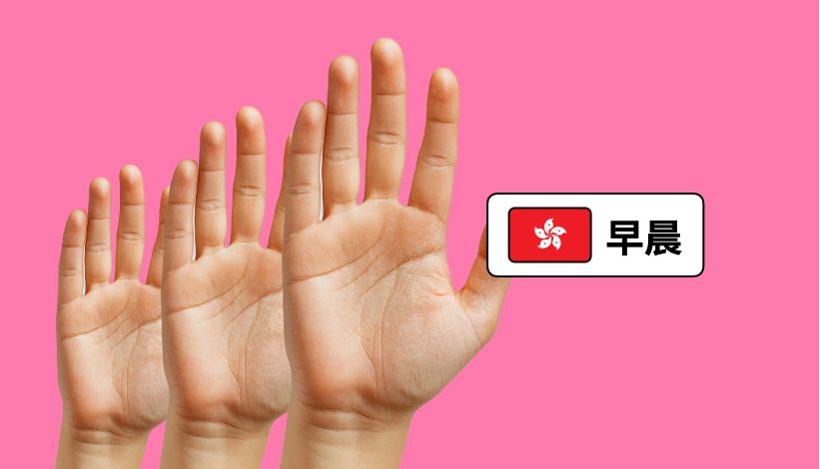
So you want to learn Cantonese greetings. Maybe you're planning a trip to Hong Kong, trying to connect with Cantonese-speaking friends or family, or just curious about this tonal language spoken by millions in southern China, Macau, and Cantonese communities worldwide.
Here's the thing—most guides dump like 50 phrases on you and call it a day. That's not helpful. You don't need 50 greetings. You need to know which ones actually matter, when to use them, and honestly, which ones native speakers barely even use anymore.
Let's fix that.
- Quick Reality Check: Cantonese Is Tonal
- The Universal Greeting: 你好 (nei5 hou2)
- The Casual Alternative: 哈囉 (haa1 lo3)
- "How Are You?" in Cantonese: 你好嗎 (nei5 hou2 maa3)
- The One That Confuses Every Foreigner: 食咗飯未呀 (sik6 zo2 faan6 mei6 aa3)
- Time-Sensitive Greetings in Cantonese
- The Phone-Only Greeting: 喂 (wai2)
- Saying Goodbye in Cantonese
- "Long Time No See": 好耐冇見 (hou2 noi6 mou5 gin3)
- A Quick Note on Mandarin and Cantonese
- Chinese New Year Greetings in Cantonese
- The Politeness Words You'll Need
- Quick Reference: The Cantonese Greetings You Actually Need
Quick Reality Check: Cantonese Is Tonal
Before we dive into how to say hello in Cantonese, you need to understand something that trips up basically every beginner: Cantonese has six tones. Same syllable, different tone, completely different word.
The greeting 你好 (nei5 hou2) uses rising tones on both syllables. If you mess up the tone on "hou" and pronounce it with a low flat tone instead of a rising tone? You're saying something entirely different. Native speakers will either be confused or politely pretend they understood you.
This isn't meant to scare you off—just to emphasize that when you practice these greetings, pay attention to the pitch patterns. The numbers after each syllable in Jyutping (the standard romanization system) tell you which of the six tones to use.
If you want to dig deeper into why Cantonese is considered a language or dialect, we've covered that whole debate before. For now, let's focus on the greetings.
~
The Universal Greeting: 你好 (nei5 hou2)
Let's start with the one you've probably already heard.
你好 literally translates to "you good" and works in virtually any situation—formal settings, casual encounters, meeting someone for the first time, greeting colleagues at work. It's the Swiss Army knife of Cantonese greetings.
Use it when:
- Meeting someone new
- Greeting service staff
- Starting any conversation where you're not sure what else to say
- Waiters bringing you food (they'll say it to you, you can say it back)
When someone says 你好 to you, just say 你好 right back. Simple.
Now here's what nobody tells you: 你好 is actually considered slightly formal by native Cantonese speakers. It's not stiff, exactly—more like how English speakers technically say "Hello" but more commonly just say "Hey" to people they know. It's perfectly correct, just not always what you'll hear among friends.
~
The Casual Alternative: 哈囉 (haa1 lo3)
Yep, this is literally "hello" with a Cantonese pronunciation. It's derived from the English word, and younger Cantonese speakers use it constantly.
哈囉 is casual and friendly—think of it as the Cantonese equivalent of "hi." Use it with friends, acquaintances, people your own age. You can even combine them: 哈囉,你好呀 (haa1 lo3, nei5 hou2 aa3) is a friendly way to greet someone you aren't super close with but want to come across as approachable.
~
"How Are You?" in Cantonese: 你好嗎 (nei5 hou2 maa3)
This one's more formal—a step up from basic 你好. It literally asks "you good?" with a question particle at the end.
Common responses:
- 好好 (hou2 hou2) — "very well"
- 幾好 (gei2 hou2) — "quite well"
- 唔錯 (m4 co3) — "not bad"
Here's a cultural quirk that'll save you some awkwardness: Cantonese speakers don't typically add "thank you" after answering. In English, saying "I'm good, thanks!" is totally normal. In Cantonese, tacking on 多謝 (thanks) after 好好 sounds weird. Instead, you'd follow up with 你呢? (nei5 ne1) meaning "how about you?"
~
The One That Confuses Every Foreigner: 食咗飯未呀 (sik6 zo2 faan6 mei6 aa3)
This is one of my favorite Cantonese greetings because it reveals so much about the culture.
食咗飯未呀 literally means "Have you eaten yet?"
And no, it's not an invitation to lunch. It's essentially "How are you?" with a Hong Kong twist. Food is central to Cantonese culture—asking if someone has eaten is a way of expressing care for their wellbeing. It's like asking "How's it going?" but through the lens of a culture that really, really cares about meals.
This is a great conversation starter among friends and acquaintances, especially around meal times. If someone asks you this, you can respond with:
- 食咗 (sik6 zo2) — "I've eaten"
- 未食 (mei6 sik6) — "Haven't eaten yet"
They might follow up asking where you ate or what's keeping you from eating. It's genuine social bonding, not just empty small talk.
~
Time-Sensitive Greetings in Cantonese
Good Morning: 早晨 (zou2 san4)
This is the one time-sensitive greeting you absolutely need. 早晨 means "good morning" and Cantonese speakers use it constantly before noon—with the security guard, the taxi driver, coworkers, the lady at the convenience store, basically anyone you encounter in the morning.
It's appropriate in both formal settings and casual situations. When someone says 早晨 to you, just say 早晨 back.
Good Afternoon/Evening: 午安 and 晚安
Here's where I'll be honest with you: 午安 (ng5 on1, good afternoon) and 晚安 (maan5 on1, good evening) exist, but native speakers barely use them in daily conversation anymore. You'll see them in writing, formal announcements, maybe hear them on TV. But if you're trying to greet someone in the afternoon or evening, just use 你好 or 哈囉.
晚安 does get used at the end of conversations—as a "goodnight" when you're parting ways for the evening.
Good Night (When Going to Sleep): 早唞 (zou2 tau2)
This one's specifically for when someone's about to sleep—like "sleep tight" in English. It literally means "early rest." Don't confuse it with 晚安; 早唞 is only for bedtime contexts.
~
The Phone-Only Greeting: 喂 (wai2)
This is interesting. 喂 is what Cantonese speakers say when they pick up the phone. It's "hello" specifically for answering calls—pronounced with a rising tone.
Important: Don't use 喂 to greet people in person unless you're really close with them. It comes across as rude or abrupt. And if you do use it in person with a friend, pronounce it with a falling tone instead.
~
Saying Goodbye in Cantonese
You can't just learn how to say hello in Chinese and ignore goodbyes. Here are the key ones:
再見 (zoi3 gin3) — "See you again." The standard, works everywhere.
拜拜 (baai1 baai3) — "Bye-bye." Casual, used among friends. Fun fact: if you pronounce 拜拜 with lower tones, it means "worship" or "pray to the gods." So... get the tones right.
係咁先 (hai6 gam2 sin1) — "That's it for now." More casual, used with friends. Don't use this with your boss or elders—it can come across as dismissive.
~
"Long Time No See": 好耐冇見 (hou2 noi6 mou5 gin3)
When you bump into someone you haven't seen in a while, this is your go-to. It expresses that happy surprise of reconnecting with someone after a long absence.
The typical response is just echoing it back: 係呀,好耐冇見 (hai6 aa3, hou2 noi6 mou5 gin3) — "Yeah, it's been a while!"
~
A Quick Note on Mandarin and Cantonese
If you're coming from Mandarin, you might recognize some of these Chinese characters. But be careful—the differences between Mandarin and Cantonese pronunciation are significant. 你好 looks identical in both, but Mandarin's "nǐ hǎo" sounds completely different from Cantonese's "nei5 hou2."
Cantonese uses traditional characters (繁體字) while Mandarin in mainland China uses simplified characters (简体字). And Cantonese has six tones compared to Mandarin's four. The tonal system alone makes them sound like entirely different languages to the untrained ear.
We've actually written about whether Japanese or Chinese is harder to learn—spoiler: Cantonese's tone system is one of the reasons Chinese often gets the edge in difficulty rankings.
~
Chinese New Year Greetings in Cantonese
Can't write a Cantonese greetings guide without covering the biggest holiday. During Chinese New Year, you'll hear these constantly:
新年快樂 (san1 nin4 faai3 lok6) — "Happy New Year!" The universal one.
恭喜發財 (gung1 hei2 faat3 coi4) — "Wishing you prosperity!" This is THE classic Chinese New Year greeting. You'll hear it everywhere during the festival.
身體健康 (san1 tai2 gin6 hong1) — "Good health!" Often paired with other wishes.
These new year greetings in Cantonese are exchanged among friends, family, coworkers, even strangers during the festival period. Knowing even one or two will earn you major points with any Cantonese speakers in your life.
~
The Politeness Words You'll Need
While we're talking about common greetings and key phrases, here are two essential politeness words:
唔該 (m4 goi1) — Use this for "please" when making requests, OR "thank you" when someone does you a service (like a waiter, bus driver, shop assistant).
多謝 (do1 ze6) — Use this "thank you" when receiving gifts, compliments, or favors.
The distinction matters. Using 唔該 when someone gives you a birthday gift sounds off. Using 多謝 when a waiter brings your food also sounds weird. Get these right and you'll sound way more natural.
For more on how Mandarin handles thank you (different but related), check out our post on Chinese words for thank you.
~
Quick Reference: The Cantonese Greetings You Actually Need
Cantonese | Jyutping | Meaning | When to Use |
|---|---|---|---|
你好 | nei5 hou2 | Hello | Universal, slightly formal |
哈囉 | haa1 lo3 | Hi | Casual, friends |
你好嗎 | nei5 hou2 maa3 | How are you? | Formal conversations |
早晨 | zou2 san4 | Good morning | Before noon |
食咗飯未呀 | sik6 zo2 faan6 mei6 aa3 | Have you eaten? | Cultural greeting |
喂 | wai2 | Hello | Phone calls only |
再見 | zoi3 gin3 | Goodbye | Universal |
拜拜 | baai1 baai3 | Bye-bye | Casual, friends |
~
Actually Learning These (Not Just Reading About Them)
Look, reading a guide like this is step one. But you won't actually remember these Cantonese phrases—or pronounce them correctly—unless you hear them used in real contexts.
The tonal nature of Cantonese means you need to hear native speakers saying these greetings in actual conversations, not just isolated audio clips from a textbook. You need to see how 食咗飯未呀 flows naturally in a conversation between friends. You need to hear the difference between 你好 said to a stranger versus 哈囉 tossed out to a buddy.
That's where immersion comes in. Watching Cantonese shows, listening to Cantonese podcasts, engaging with content from Hong Kong—that's how these greetings stop being "phrases you memorized" and become "things you actually say."
If you want to learn Chinese through immersion rather than textbook drilling, Migaku is built for exactly that. Our browser extension lets you watch Cantonese shows on Netflix or YouTube and instantly look up words and phrases you don't know—including these greetings when you hear them in context. You can turn any greeting you encounter into a flashcard with the audio, the sentence it came from, and a screenshot of the scene. Then spaced repetition helps you actually retain it.
It's the difference between reading about 早晨 in a blog post and hearing a Hong Kong drama character say it to their coworker in the morning, understanding what it means, and remembering it because it's attached to a real moment. Give it a shot—there's a 10-day free trial if you want to see how it works.