# Common English Idioms and Phrases: Sound Fluent With Everyday English Expressions
> Understand what English idioms mean and how native speakers use them every day. Learn the most common expressions you'll hear in conversation.
**URL:** https://migaku.com/blog/language-fun/common-english-idioms-meanings
**Last Updated:** 2026-04-02
**Tags:** vocabulary, culture, phrases
---
You've probably heard English speakers say things like "break a leg" or "piece of cake" and wondered what on earth they're talking about. Welcome to the world of English idioms, where words don't always mean what they literally say. These expressions pop up everywhere in conversations, movies, books, and casual chats. If you're [learning English](https://migaku.com/learn-english), understanding these phrases can be the difference between getting the joke and feeling completely lost. Let's dive into some of the most common English idioms you'll hear people use.
----
## What exactly is an idiom
> 💡 Definition 💡
An idiom is a phrase or expression where the meaning can't be figured out just by looking at the individual words. The whole thing means something completely different from what you'd expect.
For example, if someone says "it's raining cats and dogs," they're not talking about animals falling from the sky. They mean it's raining really hard.
Here's the thing about idioms: they're cultural shortcuts. Native speakers use them without thinking because they grew up hearing these phrases. But for language learners, idioms can be super confusing at first. You can know every single word in the phrase and still have no clue what the person is trying to say.
The English language is absolutely packed with these idiomatic expressions. Some estimates suggest there are over 25,000 idioms in English, though most native speakers probably use a few hundred regularly. Pretty wild when you think about it.
----
## Idioms about effort and difficulty
- **"Piece of cake" ** means something is really easy. If someone says "that test was a piece of cake," they're saying it was simple. The expression probably comes from the idea that eating cake requires zero effort and is enjoyable.
- **"Break a leg" ** is what you say to wish someone good luck, especially before a performance. Yeah, it sounds backwards. The phrase likely comes from theater superstition where wishing someone good luck directly was considered bad luck, so people said the opposite.
- **"Hit the nail on the head" ** means you got something exactly right. When you make a perfect point or correct observation, you've hit the nail on the head. This one comes from carpentry, where accuracy matters.
- **"Kill two birds with one stone" ** describes accomplishing two things with a single action. If you practice English by watching movies, you're killing two birds with one stone because you're entertaining yourself and learning at the same time. The phrase refers to the impressive feat of hitting two birds with just one throw.
----
## Idioms about time and urgency
- **"The ball is in your court" ** means it's your turn to take action or make a decision. This idiom comes from tennis, where play depends on whose side of the court the ball is on.
- **"Better late than never" ** means doing something late is still better than not doing it at all. You might use this when apologizing for showing up late to a party.
- **"Once in a blue moon" ** describes something that happens very rarely. A blue moon (the second full moon in a calendar month) only occurs every few years, so the phrase captures that rarity.
- **"Around the clock" ** means continuously, 24 hours a day. If a store is open around the clock, it never closes.
----
## Idiomatic expressions about understanding and communication
- **"Get the hang of it" ** means you're starting to understand or become skilled at something. When you're learning a new skill, and it finally starts making sense, you're getting the hang of it.
- **"On the same page" ** means everyone understands and agrees about something. In meetings, people often ask "are we all on the same page?" to make sure everyone has the same understanding.
- **"Speak of the devil" ** is what you say when the person you were just talking about suddenly appears. The full phrase used to be "speak of the devil and he shall appear."
----
## Common English idioms about situations and circumstances
- **"Under the weather" ** means you're feeling sick or unwell. You might tell your boss you're staying home because you're feeling under the weather.
- **"Blessing in disguise" ** describes something that seemed bad at first but turned out to be good. Losing a job might be a blessing in disguise if it leads you to a better career.
- **"When it rains, it pours" ** means that problems or good things tend to come all at once, not spread out. You might use this when multiple bad things happen in the same week.
- **"The elephant in the room" ** refers to an obvious problem that everyone is aware of but nobody wants to talk about. It's that awkward topic everyone is avoiding.
----
## The most popular English idiom
If one had to pick one idiom that English speakers use more than any other, "piece of cake" would be a strong contender. It's simple, positive, and comes up in all kinds of situations.
But honestly, the "most popular" idiom varies by region and context.
- In business settings, you'll hear "think outside the box" (be creative) constantly.
- In casual conversation, "no worries" (don't worry about it) is everywhere, especially in Australian and American English.
Some idioms are so common that English speakers don't even realize they're using them. Phrases like "How's it going?" or "What's up?" are technically idiomatic because their literal meanings don't match how they're used.
----
## How to learn English idioms and expressions effectively
Memorizing lists of idioms is pretty boring and doesn't really work. You need to see them used in real situations to understand the context and meaning properly.
1. The best way to learn idioms is through immersion. When you [watch English shows](https://migaku.com/blog/language-fun/best-english-shows-for-learning), read books, or listen to podcasts, you'll encounter these expressions naturally. You'll see how native speakers actually use them, what tone they use, and in what situations.
2. When you come across an idiom you don't know, write down the whole sentence, not just the idiom itself. The context helps you remember the meaning way better than a dictionary definition. If someone in a show says "I'm not going to beat around the bush," and then gets straight to the point, you'll understand that the idiom means to avoid talking directly about something.
3. Another solid approach is to focus on the most common idioms first. You don't need to know all 25,000 English idioms. Learning the 50 or 100 most frequently used expressions will cover most of what you hear in daily conversation.
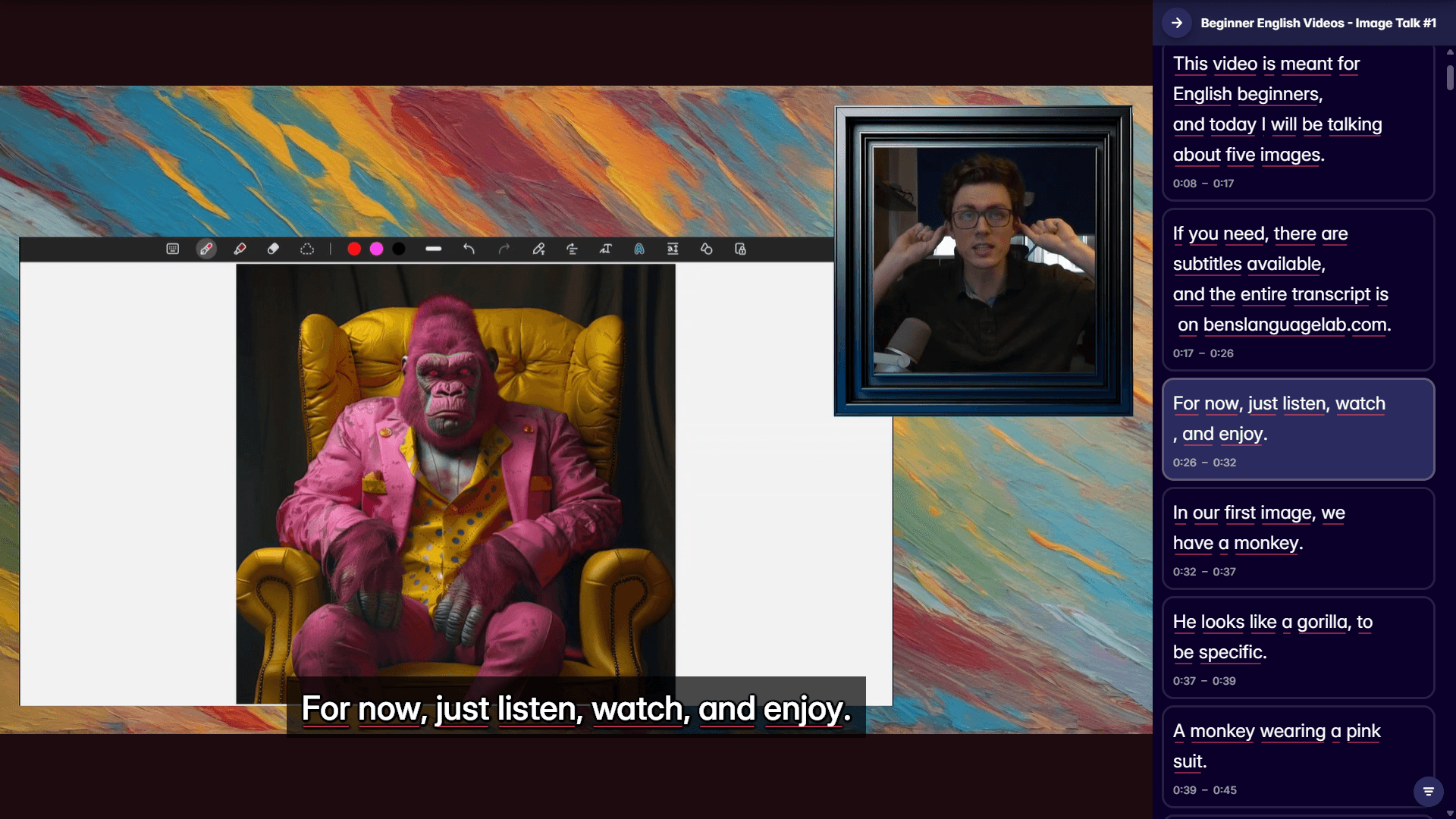
By the way, if you want to catch these idioms while watching actual English content, Migaku's browser extension and app let you look up phrases instantly without pausing your show. Makes [learning from real media](https://migaku.com/blog/language-fun/best-language-learning-methods) way more practical. There's a 10-day free trial if you want to check it out.
 ----
## FAQs
Absolutely. English speakers use idioms constantly in 2026, both in speech and writing. Some old-fashioned idioms have faded away, but new ones keep appearing too. Social media and internet culture have actually created new idiomatic expressions. Phrases like "throw shade" (to insult someone subtly) or "spill the tea" (to share gossip) are relatively new idioms that you'll hear younger English speakers use all the time.
English has absorbed vocabulary and expressions from tons of different languages over centuries. You've got influences from Latin, French, German, Norse, and dozens of other languages. Each wave of cultural contact brought new phrases and sayings. Plus, English-speaking cultures have a long tradition of creative wordplay. Shakespeare alone invented or popularized hundreds of phrases that we still use today. Things like "break the ice" came from his plays.
----
## Learning idioms makes conversations way more natural and enjoyable!
After learning common English idioms and phrases, you'll catch jokes you would have missed before. You'll understand movie dialogue without subtitles. You'll be able to express yourself with more nuance and personality. That's pretty valuable for any English learner. The best part? Once you understand the concept of idioms, you'll start noticing them everywhere, be it in media content or real life. Your brain will tune into these expressions automatically, and you'll pick them up faster and faster.
> If you consume media in English, and you understand at least some of the messages and sentences within that media, you will make progress. *Period*.
Every idiom tells an interesting cultural story.😃
----
## FAQs
Absolutely. English speakers use idioms constantly in 2026, both in speech and writing. Some old-fashioned idioms have faded away, but new ones keep appearing too. Social media and internet culture have actually created new idiomatic expressions. Phrases like "throw shade" (to insult someone subtly) or "spill the tea" (to share gossip) are relatively new idioms that you'll hear younger English speakers use all the time.
English has absorbed vocabulary and expressions from tons of different languages over centuries. You've got influences from Latin, French, German, Norse, and dozens of other languages. Each wave of cultural contact brought new phrases and sayings. Plus, English-speaking cultures have a long tradition of creative wordplay. Shakespeare alone invented or popularized hundreds of phrases that we still use today. Things like "break the ice" came from his plays.
----
## Learning idioms makes conversations way more natural and enjoyable!
After learning common English idioms and phrases, you'll catch jokes you would have missed before. You'll understand movie dialogue without subtitles. You'll be able to express yourself with more nuance and personality. That's pretty valuable for any English learner. The best part? Once you understand the concept of idioms, you'll start noticing them everywhere, be it in media content or real life. Your brain will tune into these expressions automatically, and you'll pick them up faster and faster.
> If you consume media in English, and you understand at least some of the messages and sentences within that media, you will make progress. *Period*.
Every idiom tells an interesting cultural story.😃