Cost of Living in Zurich vs Bern vs Basel: Expat Guide
Last updated: May 27, 2026
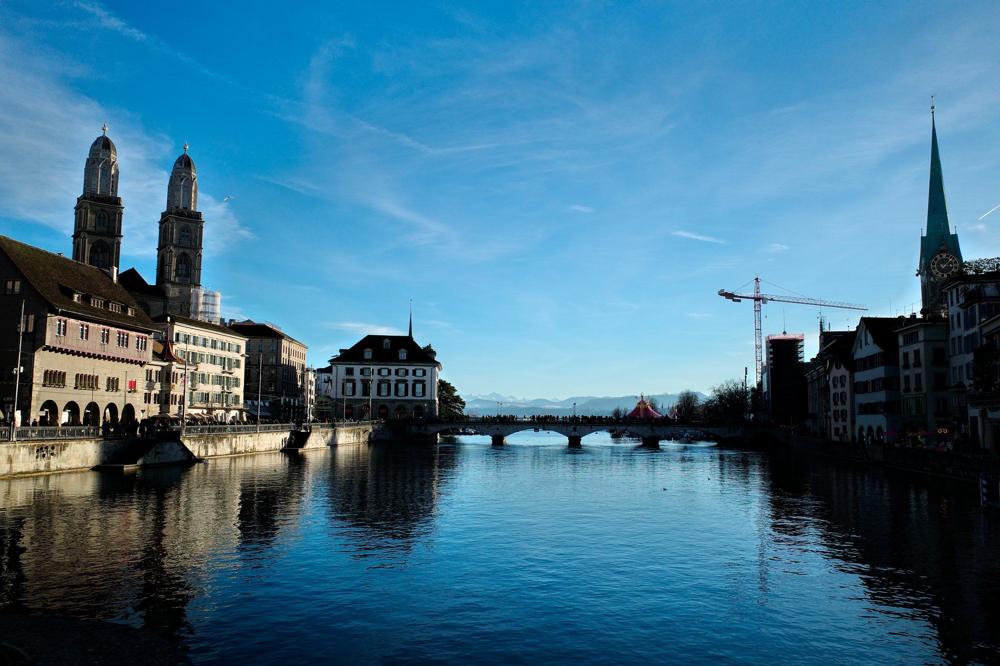
Zurich is the most expensive of the three, Basel sits in the middle on rent but can be lighter on tax for higher earners, and Bern is the cheapest to live in but carries Switzerland's heaviest combined income tax burden. Below is a realistic, line-by-line comparison for expats trying to decide where to land.
Last updated: May 27, 2026
The Short Answer
If your priority is take-home pay and you earn a strong salary, Zurich or Basel-Stadt usually win once you factor in tax. If your priority is rent and day-to-day spending, Bern is comfortably the most affordable of the three Swiss cities most expats consider. Basel is the compromise: cheaper rent than Zurich, lower health premiums than Zurich, and tax rates that compete with Zurich at the top end.
All three cities sit in a national context where the vacancy rate is around 1% and asking rents are up roughly 3% year-over-year (as of early 2026). Wherever you go, expect a tight rental market.
Rent: The Biggest Single Difference
Rent is where the three cities diverge most sharply. Zurich is in a league of its own, Basel is meaningfully cheaper, and Bern is the clear value pick.
Item | Zurich | Basel | Bern |
|---|---|---|---|
1-bedroom ("2-room") average | ~CHF 2,900/mo | Lower than Zurich | Lower than Zurich |
2-bedroom ("3-room") average | ~CHF 3,600/mo | Lower than Zurich | ~CHF 1,800–2,000/mo (3.5-room) |
Rent per m² | ~CHF 23/mo (range CHF 18–35) | Below Zurich | Below Zurich |
In Zurich, most one-bedrooms fall in the CHF 2,400–3,700 range and two-bedrooms in CHF 3,000–4,800, depending heavily on neighborhood. Zurich rents run roughly 15–20% above Geneva and noticeably above Basel and Bern.
Bern offers a 3.5-room (typically two-bedroom) apartment for roughly CHF 1,800–2,000/month, which is close to half the Zurich equivalent. Basel sits between the two, with the city's compact size and tram-friendly layout meaning you do not pay a steep premium to live within walking distance of the center.
A few practical realities:
- Most listings still go through Homegate, ImmoScout24, and Comparis. Expect to submit a dossier (employment contract, debt collection register extract, ID, residence permit) and to compete with multiple applicants.
- The Wohnungsausweis or solvency proof matters more than charm. Have it ready.
- Rents are quoted net (Nettomiete) plus Nebenkosten (utilities/service charges), so always add CHF 150–300/month on top.
Health Insurance: A Real Monthly Cost
Mandatory basic health insurance (KVG/LAMal) is required from day one of residence. Premiums are set per canton (and within Zurich and Bern, per region inside the canton). Basel-Stadt is a single premium region, which simplifies things.
Nationwide, the average mandatory premium for 2026 is CHF 393.30/month, up 4.4% from 2025. The adult (26+) average climbed 4.1% to CHF 465.30/month.
City-by-city averages for 2026:
Canton | Average premium 2026 | Increase vs 2025 |
|---|---|---|
Basel-Stadt | CHF 521/month | +2.9% |
Zurich | CHF 451/month | +5.1% |
Bern | (national average band) | +3.9% |
Basel-Stadt has the highest headline premium of the three, but its 2026 increase was below the national average. Canton Zurich's increase outpaced the national average. Within Canton Zurich, Zurich city plus Glattal is Region 1, which runs roughly 5% above Region 2.
A few things to remember:
- Outpatient care is 100% funded by your premiums. Cantons fund at least 55% of inpatient hospital costs under Article 49a KVG.
- You can switch providers each year. Your existing insurer must send a reminder letter by October 31, and you have until November 30 to switch.
- For an address-specific quote, use the Federal Office of Public Health's priminfo.ch tool rather than relying on canton averages.
Families should budget per person. Children's premiums are much lower than adult premiums, but four people on basic insurance in Basel-Stadt can easily total CHF 1,200–1,500/month before any supplementary coverage.
Taxes: Where Bern Loses Ground
Switzerland's federal income tax caps at 11.5%, but the combined rate (federal + cantonal + municipal) is what actually hits your paycheck. This is where the city you choose matters most for high earners.
Approximate combined top marginal income tax rates for 2026:
City | Top marginal rate (approx.) |
|---|---|
Zurich | 35–40% |
Basel-Stadt | 35–41% |
Bern | 40–44% |
Bern's combined tax burden is the highest of the three across most income brackets. Zurich and Basel-Stadt are broadly comparable at the top, though the exact picture depends on your municipality. In Canton Zurich, the cantonal multiplier for 2026 is uniformly 95%, but the municipal multiplier ranges from 71% (Zumikon) to 128% (Bachs). Moving one tram stop can change your tax bill.
Wealth tax also varies. Canton Bern exempts the first CHF 97,000 in assets, Canton Zurich exempts CHF 80,000 (single) or CHF 159,000 (married), and Basel-Land sits at just CHF 10,000. If you arrive with significant savings or invested assets, this matters.
For most arriving expats without a C permit, Quellensteuer (withholding tax) applies if you earn under CHF 120,000/year and are not married to a Swiss citizen. Tax is deducted at source by your employer, and reconciliation happens annually.
If you're thinking longer-term about staying in the German-speaking world, it's worth understanding permanent residency options in German-speaking countries, because Swiss tax residency is meaningfully different from German tax residency once you're settled.
Transport: The Smallest Gap Between the Cities
Public transport is genuinely good in all three cities. Monthly passes are roughly comparable.
- Zurich (ZVV): A monthly NetworkPass for the city zone is around CHF 84/month, and roughly CHF 124/month including the airport. Single tickets start at CHF 2.80 (CHF 2.40 reduced); a one-zone day pass is CHF 9.20. Verify on the ZVV site, as fares are reviewed periodically.
- Basel (TNW U-Abo): Adult monthly pass is CHF 84/month. Annual U-Abo is CHF 542, or CHF 365 for Basel-Stadt residents under 25.
- Bern (Libero): Monthly passes are in a similar band, with the exact price depending on the zones you cross. The Libero tariff network covers Bern, Solothurn, and parts of Fribourg, Jura, and Neuchâtel.
The SBB Half-Fare Card (around CHF 190/year) and the GA Travelcard remain worth considering if you travel between cities. Basel is geographically tiny, so many residents do not need a pass at all if they live centrally and bike or walk.
Groceries, Utilities, and Daily Spending
Food is expensive across Switzerland. Average grocery spending sits around CHF 550 per person per month, with food prices 20–30% above other European cities. Zurich and Basel sit at the top end; Bern is marginally cheaper.
Strategies that work everywhere:
- Shop at Aldi, Lidl, and Denner for staples, and Migros/Coop for everything else.
- Cross-border grocery runs from Basel into Germany (Weil am Rhein, Lörrach) are a normal weekend activity and can cut a family's grocery bill by 30–40%.
- Restaurant meals are not casual purchases. A simple lunch menu runs CHF 22–28 in all three cities; dinner with drinks for two easily passes CHF 120.
Utilities for an 85m² apartment in Zurich (electricity, heating, water, garbage) average around CHF 269/month. Basel and Bern are broadly similar. Internet (fiber, 1 Gbps) runs CHF 49–69/month with Swisscom, Salt, or Init7.
Switzerland's overall inflation rate was 0.3% as of January 2026, down from 0.7% in late 2024, so prices are not moving dramatically year-on-year (with the conspicuous exception of health insurance).
Common Pitfalls for New Arrivals
A few things consistently catch expats off guard in all three cities:
- Underestimating health insurance. Budget per person and per month, and treat October-November as switching season.
- Picking a municipality without checking the tax multiplier. Within Canton Zurich especially, the municipal rate swing is enormous. Run your address through a cantonal tax calculator before signing a lease.
- Assuming Basel is cheap because the city feels small. Basel-Stadt's premiums are the highest of the three, and rent in central Basel is not dramatically cheaper than outer Zurich.
- Forgetting Bern's tax bite. Lower rent does not always offset the higher combined income tax rate, especially above CHF 150,000 gross.
- Ignoring the Nebenkosten. Net rent is not the rent you pay. Always add service charges, plus Serafe (radio/TV fee) at CHF 335/year per household.
- Skipping the debt collection extract. Without a Betreibungsregisterauszug, almost no landlord will rent to you.
FAQs
Which city is cheapest overall for a single expat earning CHF 100,000?
Bern, in most cases. Lower rent and lower grocery prices outweigh its higher tax rate at that income level. The gap narrows fast above CHF 130,000.
Is Basel a good middle ground?
Yes, if you value short commutes, easy access to Germany and France, and competitive top-end tax rates. The trade-off is the country's highest cantonal health premiums.
Can I live in one canton and work in another?
Yes, and many do. You pay tax where you live (with the exception of cross-border commuters under specific treaties). Bern residents working in Zurich pay Bern's tax rate.
What about Geneva or Lausanne?
Not covered here, but for reference Zurich rents run roughly 15–20% above Geneva.
How much should I budget per month, all-in, as a single person?
A realistic floor: CHF 3,500/month in Bern, CHF 4,000 in Basel, CHF 4,500 in Zurich, assuming a modest one-bedroom, basic health insurance, public transport, and no car.
Do I need to learn the local language?
Zurich and Basel are German-speaking (Swiss German spoken, Standard German written). Bern is German-speaking with a distinct Bernese dialect. English will get you through expat-heavy jobs and central neighborhoods, but admin, leases, and most healthcare interactions happen in German.
If you want a sense of how this kind of breakdown looks elsewhere in Europe, our piece comparing cost of living between cities covers Rome vs Milan, and there's also a guide to cost of living in nearby European cities for context on the broader region.
If you're moving to Zurich, Bern, or Basel, getting comfortable in German (and ideally Swiss German for daily life) will change how quickly you settle in. Migaku helps you learn from real Swiss TV, news, and YouTube, which is the fastest way to bridge the gap between textbook German and what people actually say at the Migros checkout.