# How to Say Excuse Me in Portuguese: Com Licença, Desculpe, and Perdão
> Use com licença, desculpe, and perdão to say excuse me in Portuguese. Get the right phrase for every situation, from casual to formal contexts.
**URL:** https://migaku.com/blog/language-fun/excuse-me-in-portuguese
**Last Updated:** 2026-02-26
**Tags:** vocabulary, phrases
---
Learning how to say excuse me in Portuguese is one of those essential skills that'll make your daily interactions way smoother. Whether you're trying to squeeze past someone on a crowded bus in Lisbon, apologizing for stepping on someone's foot in São Paulo, or politely interrupting a conversation, you need to [learn the accurate Portuguese](https://migaku.com/learn-portuguese) phrases for each situation. Portuguese actually has several ways to express this concept, and using the wrong one can make you sound either too formal, too casual, or just plain awkward. Let's break down exactly when and how to use each expression so you can navigate Portuguese-speaking environments like a pro.
---
## The main ways to say excuse me in Portuguese
Portuguese gives you multiple options for saying excuse me, and they're definitely not interchangeable. Each phrase fits specific contexts, and native speakers will immediately notice if you use the wrong one. The three main phrases you'll encounter are **com licença**, **desculpe**, and **perdão**. Think of them as tools in your politeness toolkit, each designed for different jobs.
> 💡 The Three Phrases to Say Excuse Me 💡
1. **Com licença** works when you need permission to pass by someone or interrupt.
2. **Desculpe** handles most apology situations and polite interruptions.
3. **Perdão** steps in for more serious apologies where you really need to acknowledge a mistake.
Getting these right makes you sound natural instead of like you're reading from a phrasebook.
---
## Com licença for getting through and interrupting
**Com licença** is probably the phrase you'll use most often in daily life. It literally translates to "with permission" and works perfectly **when you need to physically get past someone**.
Imagine you're on a packed metro in Rio and need to exit at your stop. You'd say "com licença" as you navigate through the crowd. Same goes for reaching across someone at a restaurant table or entering a room where people are already talking.
The pronunciation is straightforward: "kohm lee-SEN-sah." The stress falls on that middle syllable of licença. You'll hear this phrase constantly in Portuguese-speaking countries because personal space tends to be closer than in English-speaking cultures, so people are always politely navigating around each other.
Here's the cool thing about com licença: it also works **when you need to interrupt a conversation politely**. If you need to ask a store employee a question while they're talking to a colleague, starting with "com licença" signals that you know you're interrupting and you're being respectful about it. It's like verbally raising your hand before speaking.
You can also use the shorter variant **"dá licença" in more casual settings**. This literally means "give permission" and sounds a bit less formal. You'd use this with friends or in relaxed environments. The pronunciation shifts to "dah lee-SEN-sah." Both work fine, but com licença is the safer choice when you're unsure about the formality level.
---
## Desculpe and desculpa for apologizing: Formality level matters
Now we get into apology territory with desculpe. This is your go-to phrase when you've made a minor mistake, accidentally bumped into someone, or need to politely get someone's attention. The word comes from the verb desculpar, which means to excuse or forgive. You'll hear this constantly in everyday Portuguese interactions.
The key distinction here is between desculpe and desculpa.
- Desculpe uses the formal você form.
- Desculpa uses the informal tu form.
In [Brazilian](https://migaku.com/blog/language-fun/brazilian-vs-european-portuguese) Portuguese, desculpa is super common among friends, family, and people your age. Desculpe sounds more polite and works in professional settings or with people you don't know well. In European Portuguese, the usage varies by region since some areas use tu more than others.
Pronunciation wise, desculpe sounds like "deh-SKOOL-peh" and desculpa like "deh-SKOOL-pah." That final vowel makes all the difference in how formal you sound. When I first started learning Portuguese, I used desculpe for everything until a Brazilian friend told me I sounded weirdly formal all the time. Switching to desculpa with friends made conversations feel way more natural.
You can also add "me" before these to emphasize the apology: "**me desculpe**" or "**me desculpa**." This intensifies it slightly, like saying "I'm sorry" instead of just "sorry." Use this when you've actually inconvenienced someone or made a real mistake, not just for tiny things like asking someone to repeat themselves.
---
## When to use perdão for serious apologies
Perdão carries more weight than desculpe. This word means "pardon" or "forgiveness" and you'd use it to apologise when you've genuinely messed up or caused someone real inconvenience.
If you accidentally spill coffee on someone's laptop, perdão is more appropriate than desculpe. If you're late to an important meeting, perdão acknowledges the seriousness better.
The pronunciation is "pehr-DOW" with that nasal final sound that Portuguese does so well. The word itself comes from the verb perdoar, to forgive, which gives you a sense of its gravity. You're literally asking for forgiveness rather than just excusing yourself.
In religious contexts, perdão shows up frequently in prayers and formal apologies. You'll also hear it in dramatic situations or when someone has caused emotional hurt. It's definitely not the phrase for everyday minor bumps and interruptions. Save this one for when you really need to express genuine remorse.
Interestingly, some Portuguese speakers use perdão similarly to desculpe in certain regions, especially in parts of Portugal. But as a learner, learn how to say perdão as the more serious option keeps you safe. Better to sound slightly too formal than not apologetic enough when the situation calls for it.
---
## Regional differences between Brazilian and European Portuguese
Brazilian Portuguese and European Portuguese handle these phrases somewhat differently, though the core meanings stay the same.
1. In Brazil, you'll hear desculpa way more often in casual contexts because Brazilians tend to use informal speech more readily. European Portuguese speakers in some regions stick to desculpe more consistently, especially with people outside their immediate circle.
2. Com licença works universally across all Portuguese-speaking regions. Whether you're in Lisbon, São Paulo, or Maputo, this phrase functions identically. The pronunciation might vary slightly with accent differences, but everyone understands it the same way.
3. One interesting variation in European Portuguese is the use of "**faz favor**" in certain polite request situations. While not exactly an excuse me equivalent, it serves similar functions when asking for something or getting someone's attention in service contexts. You might hear "faz favor" at a Portuguese café when calling the waiter, whereas in Brazil, "com licença" or "por favor" would be more common.
4. The informal "dá licença" appears more frequently in Brazilian Portuguese than European Portuguese. Brazilians generally embrace informal speech faster and more broadly, so you'll hear this casual variant in all sorts of everyday situations in Brazil.
---
## Formal versus informal contexts
Understanding when to be formal versus informal in Portuguese makes a huge difference in how people perceive you.
1. **In professional settings**, business meetings, or when speaking to authority figures, stick with desculpe and com licença. These phrases signal respect and professionalism without sounding stiff or overly ceremonial.
2. **With friends, family, or people clearly your age** in casual settings, desculpa and dá licença work perfectly. Portuguese speakers appreciate when foreigners try to match the appropriate formality level. It shows cultural awareness beyond just memorizing phrases.
### An example of real-life situations
Here's a practical example: imagine you're at a Portuguese company for a job interview.
- You arrive and need to get past someone in the hallway. "Com licença" works perfectly.
- During the interview, if you need to interrupt or didn't hear a question, "desculpe" is your phrase to get someone’s attention.
- Later, grabbing drinks with potential colleagues your age, switching to "desculpa" makes you sound friendly and approachable rather than weirdly formal.
The formality level also depends on age differences. Even in casual settings, if you're speaking to someone significantly older, erring on the side of formal (desculpe) shows respect. Portuguese culture values this kind of age-based deference more than many English-speaking cultures do.
---
## How to respond when someone says excuse me to you
When someone says com licença to you, the typical response is just moving aside or acknowledging them with a nod. Sometimes people say "**pois não**" (literally "why not") or just "**sim**" to indicate you can pass or interrupt. No elaborate response needed.
If someone apologizes with desculpe or perdão, you'd typically respond with "**tudo bem**" (It's okay), "**não tem problema**" (No problem), or "**de nada**" (You're welcome/It's nothing). These responses signal that you accept the apology and there's no hard feelings.
In European Portuguese, you might also hear "**não faz mal**" (It doesn't matter) as a response to apologies. This phrase works across all Portuguese-speaking regions but is particularly common in Portugal. It's a gentle way of dismissing minor mistakes or inconveniences.
---
## Common mistakes to avoid
1. One mistake learners make is using desculpe for everything, including situations where com licença fits better. If you need to pass someone on the street, com licença is more natural than desculpe. Save desculpe for a formal apology or polite interruptions where you're asking forgiveness rather than permission.
2. Another error is mixing up desculpa and desculpe in the wrong contexts. Using the informal desculpa with your boss or a stranger on the street sounds too casual. Conversely, using desculpe with close friends makes you sound distant or overly polite. Pay attention to the relationship and setting.
3. Some learners overuse perdão, thinking it sounds more polite. Actually, it can sound overly dramatic for minor situations. If you say perdão every time you need someone to repeat themselves, you'll sound like you're apologizing for major offenses constantly. Match the phrase to the severity of the situation.
4. Pronunciation matters too. The nasal sounds in licença and perdão can trip up English speakers. Practice these sounds because mispronouncing them can make you harder to understand. Portuguese speakers are generally patient with learners, but clearer pronunciation makes interactions smoother.
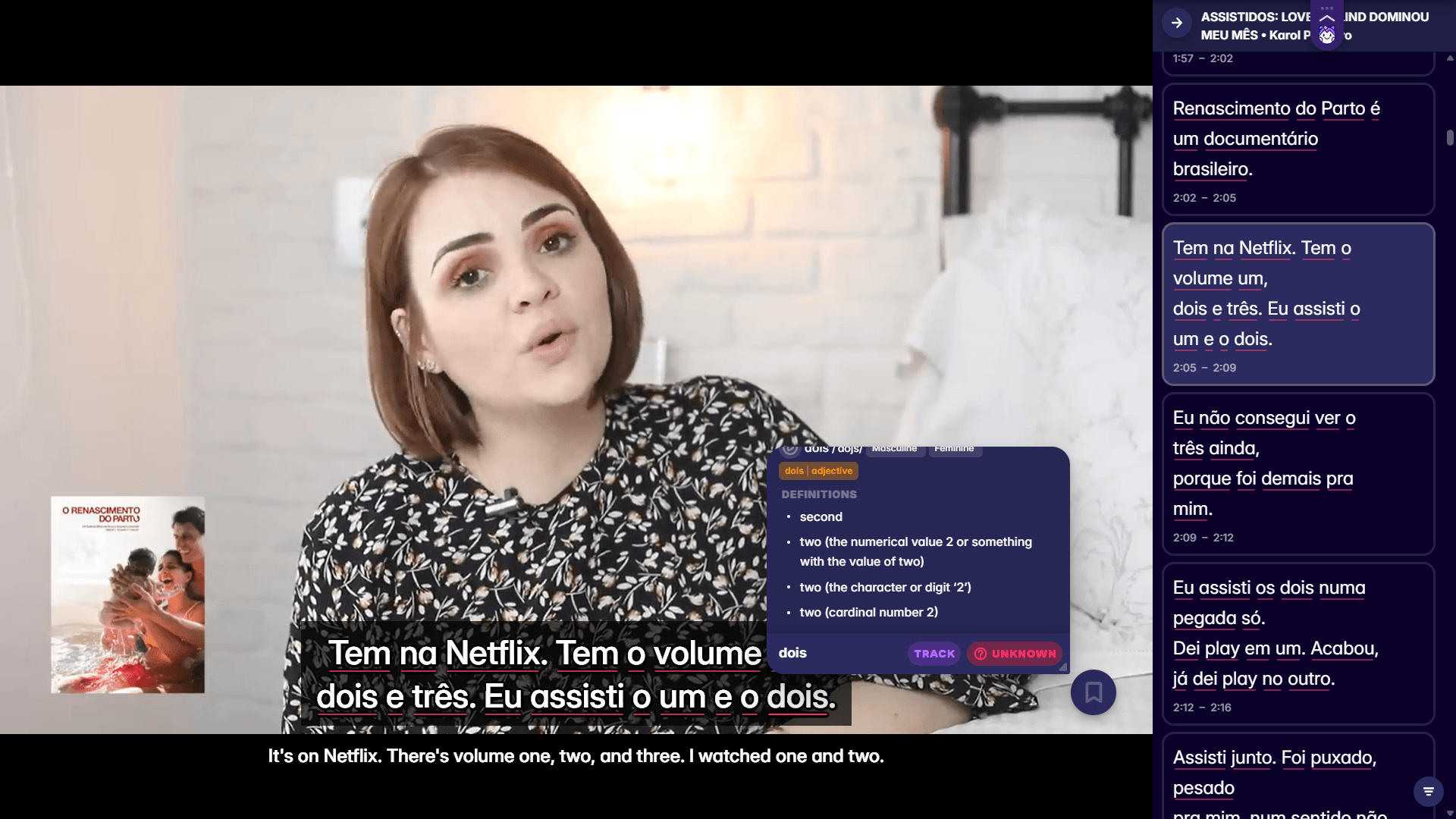
If you're serious about getting Portuguese down naturally, Migaku's browser extension and app let you learn from real content like shows, articles, and videos with instant word lookups and English translation. You'll see these excuse me phrases used in actual context, which beats [textbook](https://migaku.com/blog/language-fun/best-portuguese-textbooks) examples every time. There's a 10-day free trial if you want to check it out.
 ---
## Understand the nuances with YouTube resources!
The only way to get comfortable with these phrases is using them in real situations. Watch Portuguese shows or movies and notice different ways to say excuse me in action. You'll see characters using com licença to pass through crowds, desculpe when they've made mistakes, and perdão in emotional or serious moments. The contextual learning resources are your free Portuguese lessons, helping way more than just memorizing definitions.
> If you consume media in Portuguese, and you understand at least some of the messages and sentences within that media, you will make progress. _Period_.
Growth begins before perfection.🆙
---
## Understand the nuances with YouTube resources!
The only way to get comfortable with these phrases is using them in real situations. Watch Portuguese shows or movies and notice different ways to say excuse me in action. You'll see characters using com licença to pass through crowds, desculpe when they've made mistakes, and perdão in emotional or serious moments. The contextual learning resources are your free Portuguese lessons, helping way more than just memorizing definitions.
> If you consume media in Portuguese, and you understand at least some of the messages and sentences within that media, you will make progress. _Period_.
Growth begins before perfection.🆙